
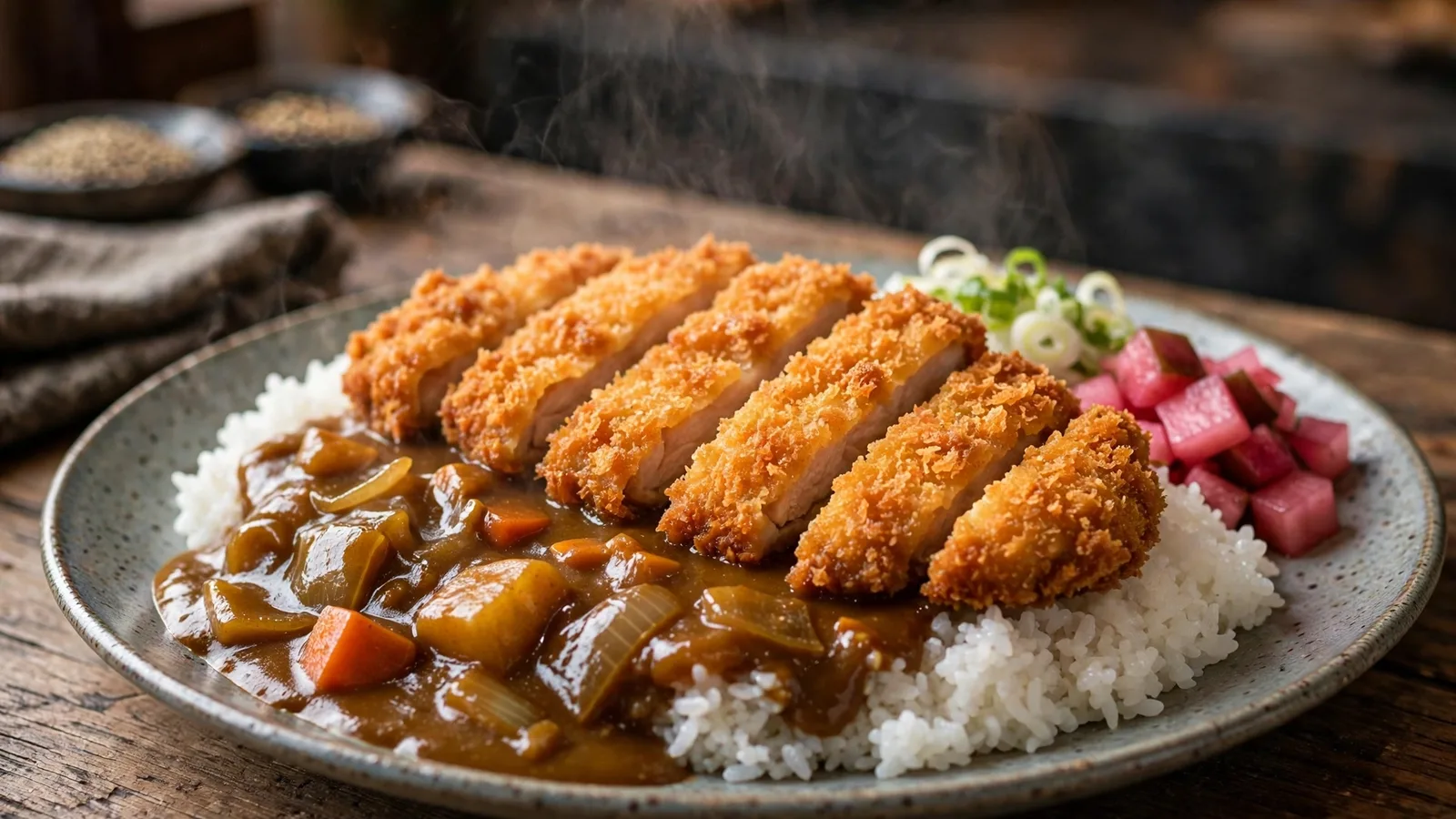
Chicken katsu curry is built on a contrast. The cutlet stays crisp and light under a panko shell, and the curry that goes over it is thick, warm, and a little sweet, with onion melted right into the sauce. Neither half is hard. The work is keeping the crisp part crisp until the curry is ready to meet it.
Japanese curry is its own thing, separate from Thai and Indian curries. It comes from curry powder brought to Japan in the Meiji era, then thickened with a roux and softened with grated apple, honey, or sweet onion. The result pours like a gravy, clings to rice, and is usually served with fukujinzuke pickles on the side.
What Sets Japanese Curry Apart
If you know the curries on this site already, use this table to place this one. The rice underneath matters here, and a pot of How to Cook Perfect Jasmine Rice Every Time is a good base, though short-grain Japanese rice is the classic choice.
| Detail | Japanese Katsu Curry | Thai Green Curry | Indian-Style Curry |
|---|---|---|---|
| Thickener | Flour-and-butter roux with curry powder | None; coconut milk body | Tomato, onion, or yogurt base |
| Heat level | Mild to medium, warmth first | Chili heat up front | Varies; chili and black pepper |
| Sweetness | Noticeable, from onion, carrot, apple | Light, from palm sugar | Usually low |
| Sauce texture | Thick, glossy, coats rice | Brothy, pourable | Varies from thin to thick |
| Served over | Short-grain rice, cutlet on top | Jasmine rice, sauce around | Basmati, naan, or roti |
The short verdict: pick katsu curry when you want the sauce to sit on top of the rice in a thick layer and carry a fried cutlet without soaking it through in the first minute.
The Sauce Ratio That Works
Store-bought curry roux blocks are convenient, and this recipe builds the same balance from scratch so you can adjust it. The ratio to remember is 3 tablespoons curry powder + 3 tablespoons flour + 3 tablespoons butter for 3 cups of stock, with 2 large onions cooked down sweet. That makes a sauce thick enough to coat a spoon and still pour.
| You want | Change this | Skip this |
|---|---|---|
| More heat | Add 1/2 to 1 teaspoon cayenne or chili flakes with the curry powder | Adding hot sauce at the end, which thins the body |
| Deeper flavor | Brown the butter and onions a full 20 minutes, add 1 teaspoon garam masala at the end | Extra soy sauce alone, which just makes it salty |
| More sweetness | Grate in 1/2 apple or stir in 1 tablespoon honey | Sugar by the spoonful, which tastes flat |
| Vegetarian sauce | Use vegetable stock and skip the Worcestershire | Nothing else changes |
Worcestershire sauce and a little soy sauce go in at the end. They are the quiet background note in most Japanese curry shops, and a teaspoon each is enough.
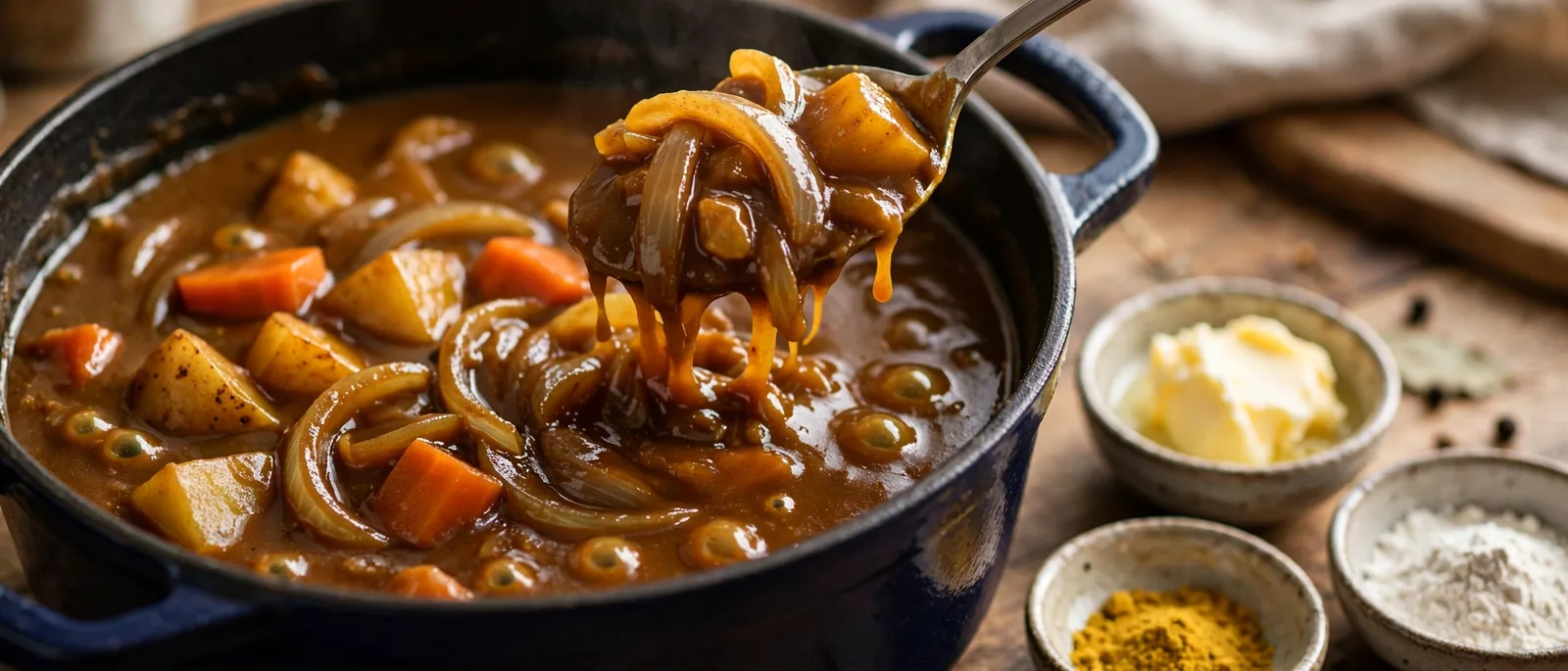
Chicken Katsu Curry
Crispy panko chicken cutlet over rice, covered with a thick Japanese curry sauce of onion, carrot, and potato.
Prep time: 20 minutes Cook time: 35 minutes Total time: 55 minutes Servings: 4 plates
Ingredients
For the curry sauce:
- 2 tablespoons neutral oil
- 2 large yellow onions (about 1 lb / 450 g), thinly sliced
- 2 medium carrots, cut into 1/2-inch chunks
- 2 medium Yukon Gold potatoes (about 12 oz / 340 g), cut into 3/4-inch chunks
- 3 cloves garlic, grated
- 1 tablespoon grated fresh ginger
- 3 tablespoons unsalted butter
- 3 tablespoons all-purpose flour
- 3 tablespoons Japanese curry powder (or mild curry powder)
- 3 cups (700 ml) chicken stock
- 1 tablespoon honey or grated apple (1/2 small apple)
- 1 tablespoon soy sauce
- 1 teaspoon Worcestershire sauce
- Kosher salt, to taste
For the chicken katsu:
- 4 boneless, skinless chicken breasts or thighs (about 1 1/2 lb / 680 g total)
- Kosher salt and black pepper
- 1/2 cup (60 g) all-purpose flour
- 2 large eggs, beaten with 1 tablespoon water
- 1 1/2 cups (90 g) panko breadcrumbs
- Neutral oil, for shallow frying (about 1 cup / 240 ml)
For serving:
- 4 cups cooked short-grain or jasmine rice
- Fukujinzuke pickles or pickled radish, optional
- 2 scallions, thinly sliced
Instructions
1. Start the sauce first. Heat the 2 tablespoons oil in a large pot over medium heat. Add the onions with a pinch of salt and cook, stirring often, for 15 to 20 minutes, until soft, sweet, and light golden. Do not rush this; the onion sweetness is the base of the sauce.
2. Add the carrots, potatoes, garlic, and ginger. Cook 2 minutes, stirring. Pour in the chicken stock, bring to a simmer, and cook 12 to 15 minutes, until the potatoes are just tender when pierced.
3. While the vegetables simmer, make the roux. Melt the butter in a small pan over medium heat. Stir in the flour and curry powder and cook, stirring constantly, for 2 minutes, until it smells warm and toasty and turns a shade darker. Take it off the heat.
4. Ladle about 1 cup of hot stock from the pot into the roux and whisk until smooth. Pour that mixture back into the pot and stir well. Simmer 5 more minutes, stirring often, until the sauce thickens and looks glossy. Stir in the honey or apple, soy sauce, and Worcestershire. Taste for salt. Keep the sauce warm over low heat; it should coat a spoon and pour slowly.
5. Prep the chicken while the sauce finishes. If using breasts, place them between sheets of plastic and pound to an even 1/2-inch thickness. Season both sides with salt and pepper.
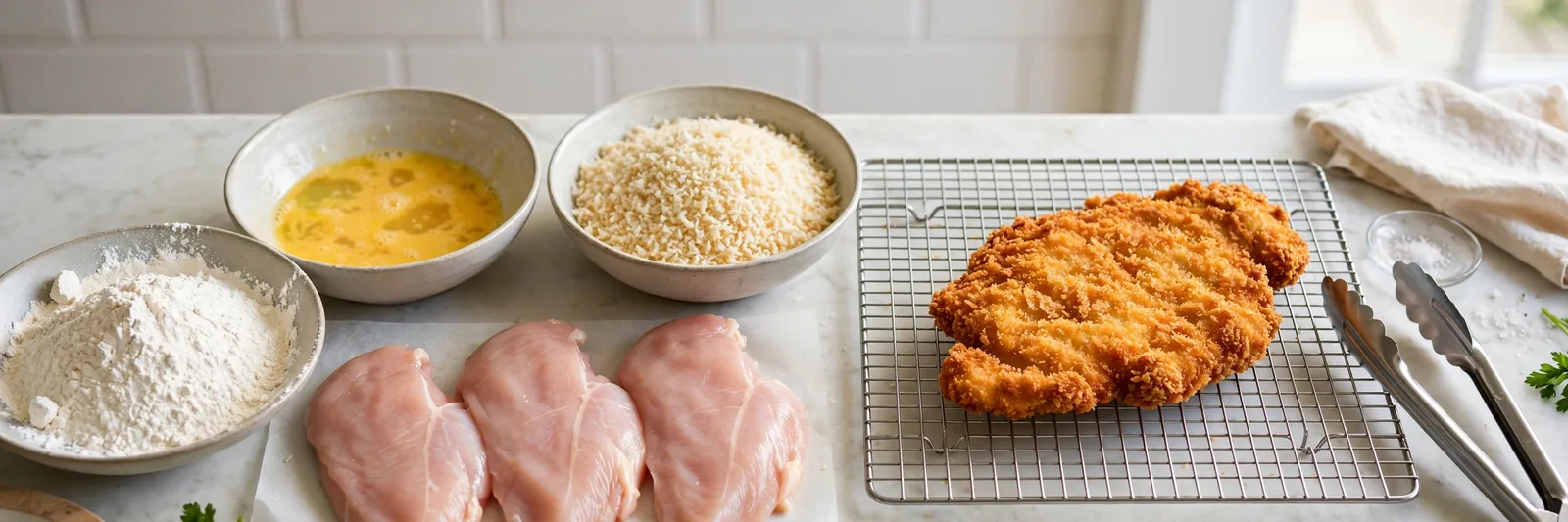
6. Set up three shallow bowls: flour in the first, beaten eggs in the second, panko in the third. Press each piece of chicken into flour, shake off the extra, dip in egg, then press firmly into panko on both sides. Set the coated cutlets on a plate for 5 minutes so the crust sets.
7. Heat about 1/3 inch of oil in a large skillet over medium-high heat until it reaches about 350°F (175°C), or until a panko crumb sizzles right away. Fry the cutlets in batches, 3 to 4 minutes per side, until deep golden and cooked through (165°F / 74°C in the thickest part). Drain on a rack, not paper towels, so the bottom stays crisp. Rest 3 minutes, then slice each cutlet into 3/4-inch strips.
8. Build the plates. Spoon rice onto one side of each plate, ladle curry sauce over the rice and partly over the empty side, then lay the sliced cutlet across the border so half stays out of the sauce. Add pickles and scallions. Serve right away.
Notes
- Slice the cutlet after resting, not before frying. The strips stay neat, and laying them across the rice-and-sauce border keeps one edge crisp.
- The sauce thickens as it stands. If it gets too thick while the chicken fries, whisk in stock a splash at a time.
- Curry powder brands vary a lot in salt and heat. Taste the finished sauce before adding soy sauce if yours is a salted blend.
Keeping the Cutlet Crisp
Three small things decide the crust. First, panko goes on dry and gets pressed in with your palm; a loose coat sheds in the oil. Second, the coated cutlets rest for 5 minutes before frying, which helps the egg layer set like glue. Third, drain on a rack. Paper towels trap steam under the cutlet and soften the bottom you worked for.
Oil temperature is the other half of it. Too cool and the panko drinks oil and goes pale and heavy. Too hot and the crumbs scorch before the chicken cooks through. If you do not use a thermometer, drop in one crumb: it should sink slightly, then rise sizzling and turn pale gold in about 20 seconds.
What to Serve With It
The classic plate needs very little else: rice, curry, cutlet, and pickles. A small bowl of Classic Miso Soup on the side keeps the meal in its home territory, and a crisp Japanese Cucumber Sunomono gives you something cold and tangy between bites of the rich sauce.
If you want a fuller spread, keep the extra dishes light and mostly raw or pickled. The curry is already the heavy element on the table.
Variations Worth Trying
- Tonkatsu curry: Swap the chicken for pork loin cutlets, pounded the same way. This is the original shop version in many Japanese curry houses.
- Vegetable katsu curry: Skip the cutlet, add cauliflower and sweet potato chunks to the sauce, and simmer until tender. Keep the stock vegetable-based.
- Cheese katsu curry: Lay a slice of mild cheese over each hot cutlet before saucing. It melts into the top of the crust, a popular curry-shop add-on.
- Extra vegetables: Stir in a cup of frozen peas or corn in the last 3 minutes of the sauce simmer.
Storing and Reheating
Store the sauce and the cutlets separately, always. The sauce keeps 4 days in the fridge and freezes well for up to 2 months; it will thicken in the fridge and loosen again as it reheats with a splash of stock or water.
Cutlets keep 2 days in the fridge. Reheat them in a 375°F (190°C) oven or toaster oven for 8 to 10 minutes until the crust crisps again. A microwave will make the panko soft, so it is the last resort. Build the plate fresh each time: hot rice, hot sauce, cutlet sliced at the last minute.
Chicken Katsu Curry
Ingredients
Method
- Start the sauce first. Heat the 2 tablespoons oil in a large pot over medium heat. Add the onions with a pinch of salt and cook, stirring often, for 15 to 20 minutes, until soft, sweet, and light golden.
- Add the carrots, potatoes, garlic, and ginger. Cook 2 minutes, stirring. Pour in the chicken stock, bring to a simmer, and cook 12 to 15 minutes, until the potatoes are just tender.
- Make the roux in a small pan: melt the butter over medium heat, stir in the flour and curry powder, and cook, stirring constantly, for 2 minutes, until warm, toasty, and a shade darker. Take off the heat.
- Whisk about 1 cup of hot stock from the pot into the roux until smooth, then pour it back into the pot. Simmer 5 minutes, stirring often, until thick and glossy. Stir in the honey or apple, soy sauce, and Worcestershire. Taste for salt and keep warm over low heat.
- Pound chicken breasts between sheets of plastic to an even 1/2-inch thickness. Season both sides with salt and pepper.
- Set up flour, beaten eggs, and panko in three shallow bowls. Coat each piece in flour, then egg, then press firmly into panko on both sides. Rest coated cutlets 5 minutes.
- Heat about 1/3 inch of oil in a large skillet over medium-high heat to about 350°F (175°C). Fry cutlets in batches, 3 to 4 minutes per side, until deep golden and cooked through (165°F / 74°C). Drain on a rack and rest 3 minutes, then slice into 3/4-inch strips.
- Spoon rice onto one side of each plate, ladle curry over the rice, then lay the sliced cutlet across the border so half stays out of the sauce. Add pickles and scallions and serve right away.