
This is the soup I make when someone in the house feels run down, and also when the weather turns. Clear chicken broth, slippery glass noodles, shredded chicken, a handful of vegetables, and a squeeze of calamansi or lemon at the table. It tastes light but lands filling, which is a useful combination on a cold night.
The whole thing cooks in one pot in about 50 minutes, most of it hands-off while the chicken simmers.

What is sotanghon?
Sotanghon is the Filipino name for cellophane noodles, sometimes sold as glass noodles or bean threads. They are made from mung bean starch, and they look like thin white wires when dry. Once soaked, they turn translucent and springy, with a chewy-slippery texture that holds up in hot broth.
This soup is a staple across the Philippines: chicken simmered with garlic and onion until the broth is clear and savory, then glass noodles and vegetables added near the end. Every family has a version. Mine leans on bone-in chicken thighs for a deeper broth, fish sauce for seasoning, and toasted garlic plus scallions on top.
The two things that make or break this soup are the broth and the noodles. The broth should taste like chicken first and seasoning second, and the noodles should go in last, because they keep drinking liquid even after you take the pot off the heat.

Ingredients
For the broth
- 1 1/2 pounds bone-in, skin-on chicken thighs (about 4 thighs)
- 8 cups water
- 1 medium onion, quartered
- 4 cloves garlic, smashed
- 1 teaspoon kosher salt, plus more to taste
For the soup
- 2.5 ounces dried sotanghon (glass noodles), about 1 large bundle
- 1 tablespoon neutral oil
- 1 small onion, finely chopped
- 3 cloves garlic, minced
- 1 medium carrot, cut into thin half-moons
- 1 1/2 cups shredded cabbage
- 2 tablespoons fish sauce, plus more to taste
- 1/2 teaspoon ground black pepper
- 1 teaspoon annatto powder (optional, for golden color)
- 2 scallions, thinly sliced, for serving
- 2 tablespoons toasted garlic, for serving
- Calamansi or lemon wedges, for serving
Why these amounts
The ratio I keep coming back to is 2.5 ounces of dry noodles to 8 cups of broth. It looks wrong at first. The noodles triple in volume as they soak and cook, and a full 3.5 ounces turns the pot into a noodle casserole. Start with less; you can always cook more noodles.
Bone-in thighs beat breast here. The bones and skin give the broth body in a 30-minute simmer, which breast meat never will. Shred the meat off the bone and return it to the pot.
How to make chicken sotanghon soup
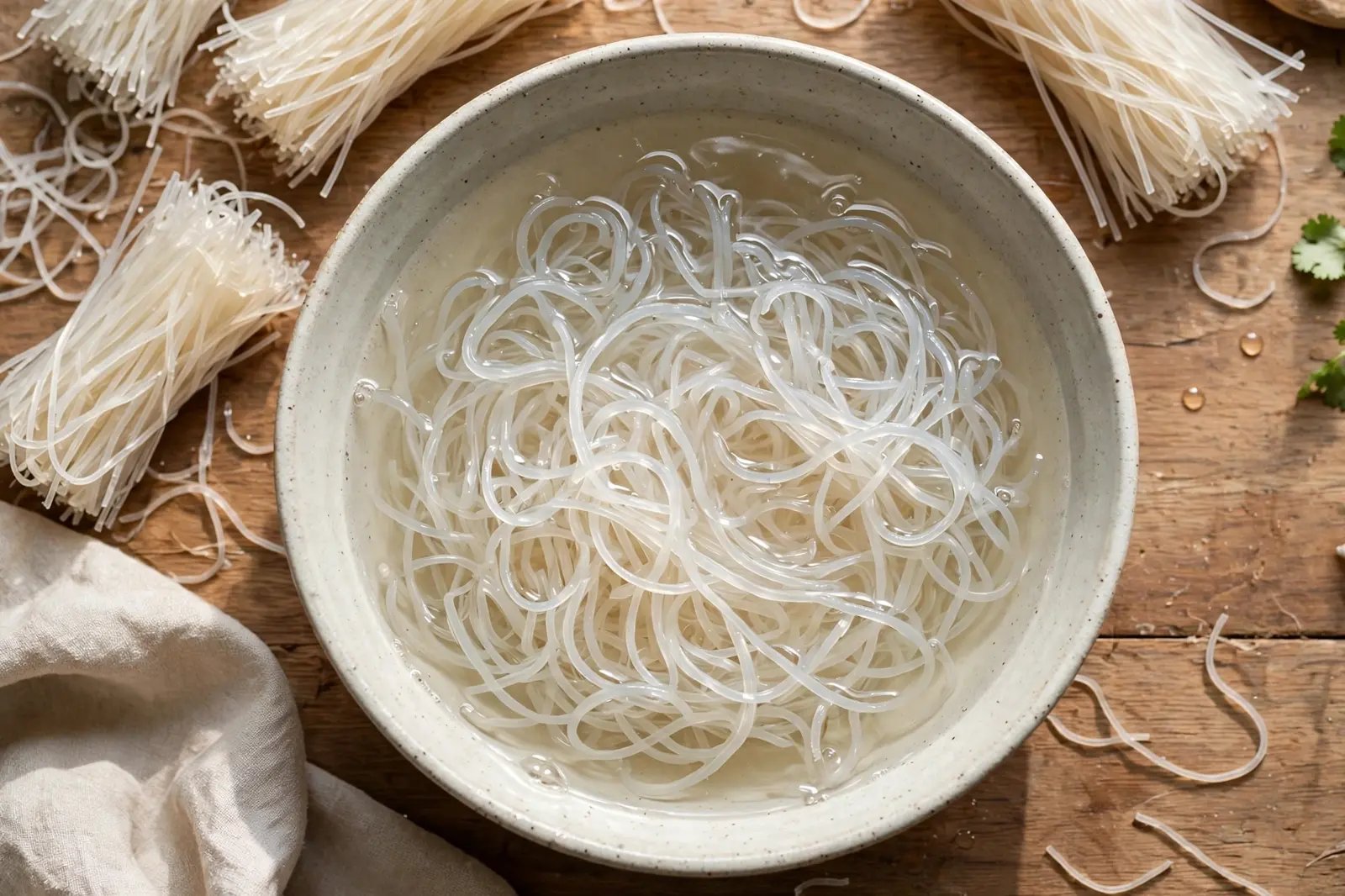
- Soak the noodles. Cover the dried sotanghon with warm tap water and soak for 10 minutes, until soft and translucent. Drain and set aside. This shortens the final cook time and keeps the broth from turning starchy.
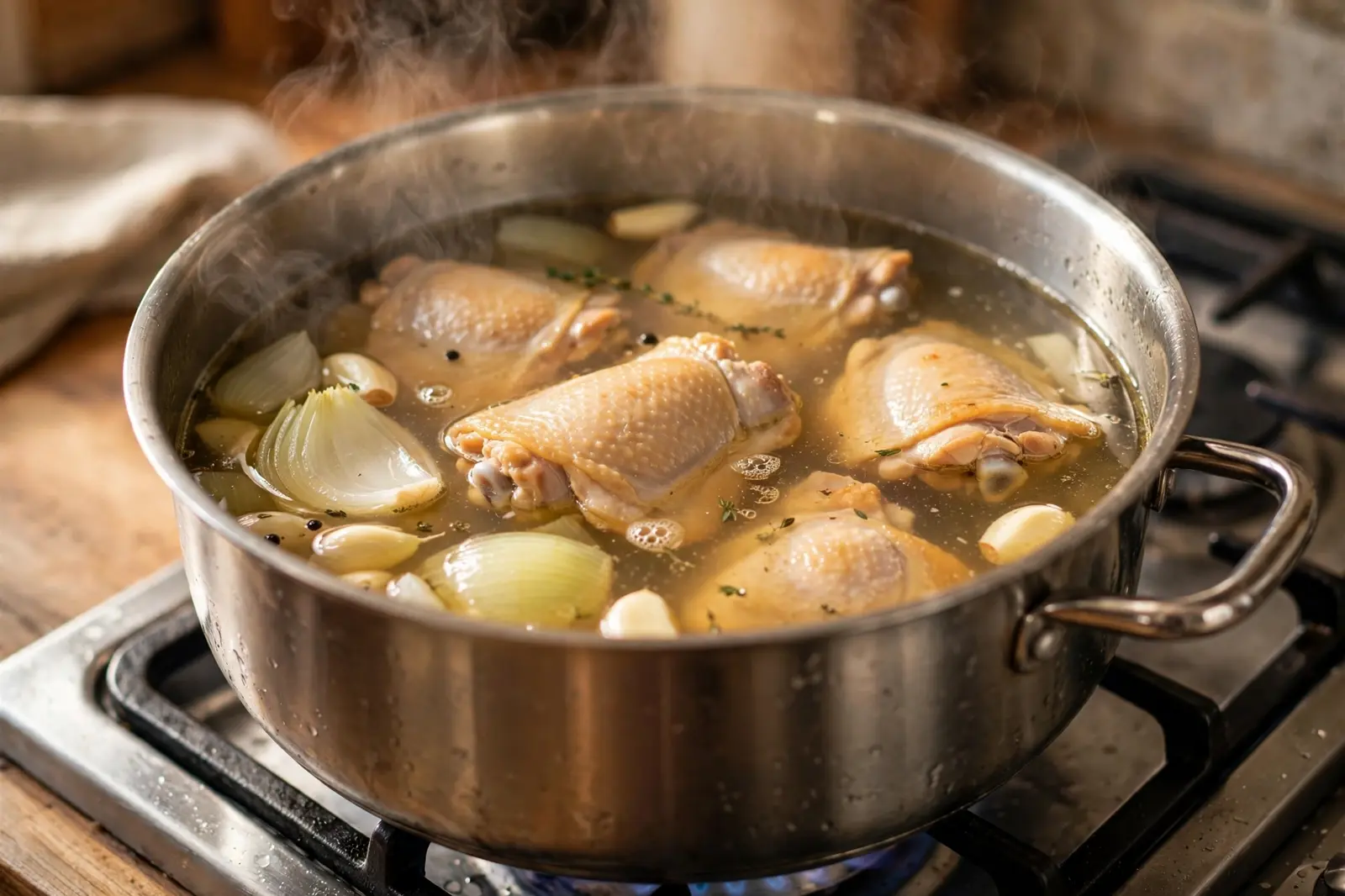
- Simmer the chicken. In a large pot, combine the chicken thighs, 8 cups water, quartered onion, smashed garlic, and salt. Bring to a boil, then lower to a gentle simmer. Skim any foam that rises. Simmer 30 minutes, until the chicken is cooked through and the broth tastes savory.
-
Shred the chicken. Lift the thighs out of the pot with tongs and let them cool until you can handle them. Shred the meat with two forks and discard the bones and skin. Strain the broth through a fine-mesh strainer and return it to the pot.
-
Sauté the aromatics. Wipe out the pot or use a large skillet. Heat the oil over medium heat. Cook the chopped onion until soft, 3 minutes, then add the minced garlic and cook until golden and fragrant, 1 minute. Stir in the shredded chicken and the fish sauce; toss for 1 minute so the meat picks up the seasoning.
-
Build the soup. Pour the strained broth back over the chicken mixture (if using one pot, add the broth back now). Stir in the carrot and simmer 8 minutes, until the carrot is just tender. Add the cabbage and simmer 2 minutes more.
-
Add the noodles last. If using annatto powder, stir it into a ladle of hot broth until dissolved, then stir it back into the pot for a golden color. Add the drained noodles and simmer 3 to 4 minutes, until they are tender and springy. Taste and adjust with fish sauce and pepper.
-
Serve right away. Ladle into bowls and top with scallions and toasted garlic. Put calamansi or lemon wedges on the table. Glass noodles keep absorbing broth, so serve the soup the moment the noodles are done.

Troubleshooting: Fix My Chicken Sotanghon Soup
Things go wrong with noodle soups mostly around timing. Here are the five failures I see most, what causes them, and how to fix each one.
HERB & LIME · KITCHEN HELP
Fix My Chicken Sotanghon Soup
Choose what went wrong to see a practical next step.
Possible cause
What to try next
For next time
From Paul's kitchen. Results vary with chicken size, oil, and stove heat, adjust timing to your setup.
Quick reference (also works without JavaScript)
The noodles turned mushy
Cause: Sotanghon (glass) noodles go from springy to mushy in just a few minutes of hard boiling; they were left in the broth too long or cooked at a rolling boil.
Try: Fish out the worst of them, add a fresh batch of soaked noodles, and simmer only 3 to 4 minutes at a gentle simmer. Serve immediately.
Prevent: Pre-soak the noodles in warm water for 10 minutes, add them to the soup last, and keep the pot at a bare simmer, not a boil.
The broth disappeared, the soup is dry
Cause: Glass noodles absorb a lot of liquid and keep drinking broth even after the pot comes off the heat.
Try: Add a cup of hot water or hot chicken broth, bring back to a simmer, and taste before adding more fish sauce.
Prevent: Always pre-soak the noodles so they arrive hydrated, use 2.5 ounces of dry noodles per 8 cups of broth, and serve the moment the noodles are tender.
The noodles clumped into one mass
Cause: The strands were never separated during the soak or went into the pot in a tight bundle, so the starches welded them together.
Try: Tease the strands apart with tongs in the hot broth; if they won't separate, lift them out, rinse under warm water while loosening, and return them to the pot.
Prevent: Soak in plenty of room-temperature water, loosen the strands by hand as they soften, and stir once or twice right after they hit the soup.
The broth tastes flat or watery
Cause: The chicken simmered too briefly to give the broth body, or the seasoning went in all at once instead of in layers.
Try: Simmer the broth 10 more minutes with the bones, then season with fish sauce a teaspoon at a time until the chicken flavor pops forward.
Prevent: Use bone-in thighs and give them a full 30-minute gentle simmer, and brown the shredded chicken with garlic, onion, and fish sauce before the broth goes back in.
The chicken is dry and tough
Cause: The meat boiled hard instead of simmering gently, or lean breast meat was cooked past the point of tenderness.
Try: Shred what you have finely and return it to the broth with the vegetables; small shreds stay pleasant even when slightly overdone.
Prevent: Keep the pot at a gentle simmer (never a rolling boil), use bone-in thighs, and pull the chicken the moment it is cooked through, about 30 minutes.
Tips and variations
- Make the broth ahead. Simmer and strain the broth a day ahead and refrigerate it. The next day, rewarm it and cook the vegetables and noodles fresh. The noodles should always be cooked right before serving.
- Swap the protein. Shrimp works well: add it with the cabbage and cook until pink, about 2 minutes. Thinly sliced pork cooks at the same stage.
- Add an egg. Halved hard-boiled eggs on top are the classic finish. A 7-minute egg with a just-set yolk is even better.
- Leftovers. The noodles will drink the broth overnight. Store the soup as-is, then add a cup of hot water or chicken broth when you reheat, and let it come back to a simmer. The flavor holds up; the texture just needs the extra liquid.
- A brighter finish. A teaspoon of calamansi or lemon juice per bowl lifts the whole soup. Add it at the table, not in the pot, so the acidity stays fresh.
If you like Filipino noodle dishes, try my Filipino Pancit Bihon next: stir-fried rice noodles with the same comforting flavor profile, but built for the wok instead of the pot.

Filipino Chicken Sotanghon Soup
Ingredients
Method
- Soak the noodles: cover the dried sotanghon with warm tap water and soak for 10 minutes, until soft and translucent. Drain and set aside.
- Simmer the chicken: in a large pot, combine the chicken thighs, 8 cups water, quartered onion, smashed garlic, and salt. Bring to a boil, then lower to a gentle simmer. Skim any foam that rises. Simmer 30 minutes, until the chicken is cooked through and the broth tastes savory.
- Shred the chicken: lift the thighs out with tongs and cool until you can handle them. Shred with two forks and discard the bones and skin. Strain the broth through a fine-mesh strainer and return it to the pot.
- Saute the aromatics: heat the oil in the pot over medium heat. Cook the chopped onion until soft, 3 minutes, then add the minced garlic and cook until golden, 1 minute. Stir in the shredded chicken and the fish sauce; toss for 1 minute.
- Build the soup: pour the strained broth back over the chicken mixture. Stir in the carrot and simmer 8 minutes, until just tender. Add the cabbage and simmer 2 minutes more.
- Add the noodles last: if using annatto, dissolve it in a ladle of hot broth and stir it back in. Add the drained noodles and simmer 3 to 4 minutes, until tender and springy. Season with fish sauce and pepper to taste.
- Serve right away: ladle into bowls and top with scallions and toasted garlic. Serve with calamansi or lemon wedges. The noodles keep absorbing broth, so serve the moment they are done.
Notes
More Filipino recipes
- Lumpia: Filipino Spring Rolls, crisp and golden, the perfect crunchy side to this soft, slurpy soup.
- Sinigang: Filipino Sour Soup, if you want a soup with a sharper, tamarind-driven tang.
- Chicken Adobo, the national dish, braised in vinegar and soy sauce until the chicken falls apart.
- Filipino Pancit Bihon, another glass-and-rice-noodle favorite, stir-fried with vegetables and shrimp.