
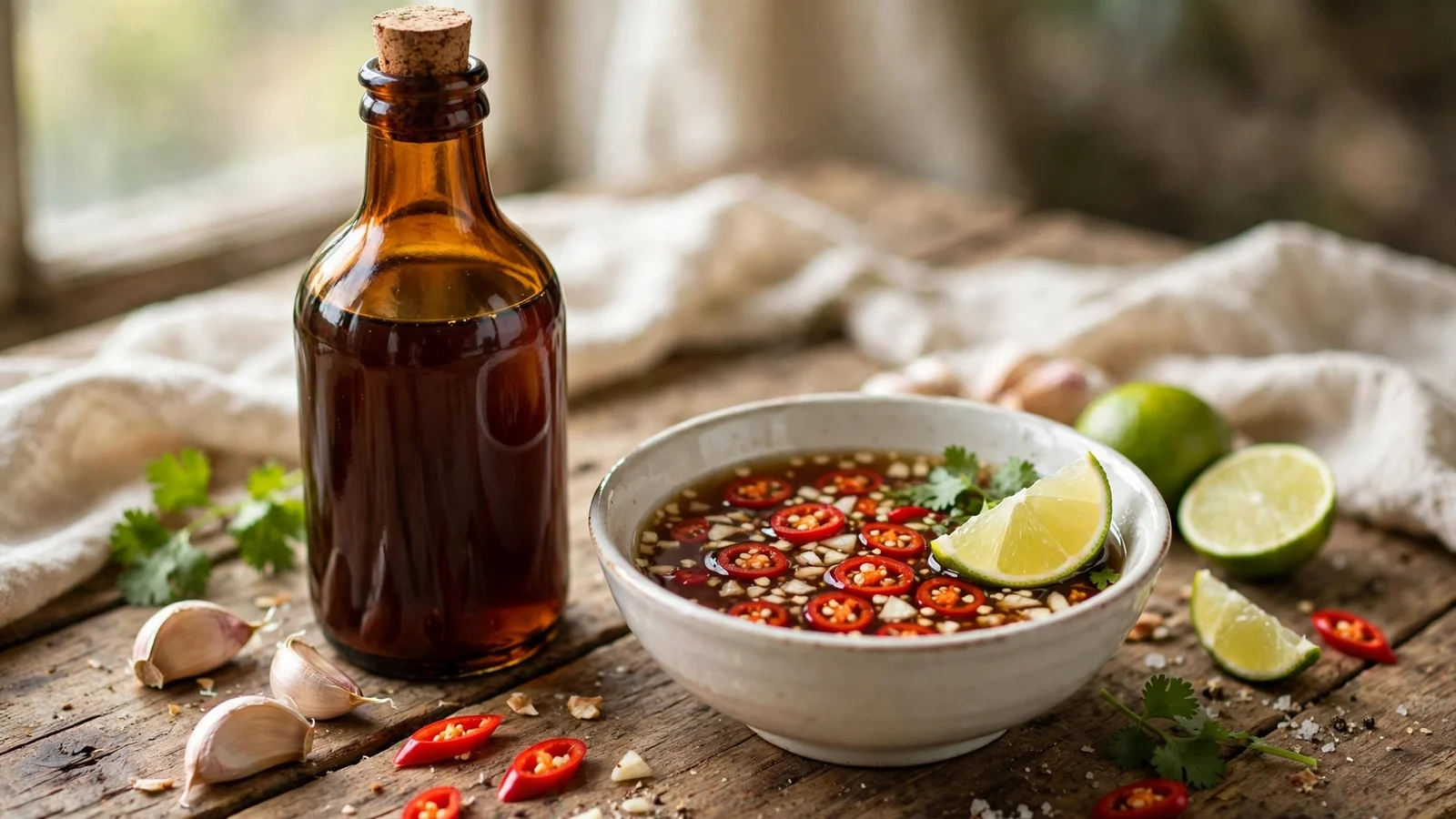
What Fish Sauce Actually Does in a Recipe
Fish sauce is not a seasoning you taste directly, the way you taste soy sauce. It is fermented from anchovies and salt, and what it contributes is deep, savory umami plus a pungent funk that cooks off almost immediately in a hot pan. In Vietnamese nuoc cham — the dipping sauce served with Cha Gio: Crispy Vietnamese Fried Spring Rolls — it is the backbone. In pad thai, it is the salty depth under the sweet and sour. In Ca Kho To: Vietnamese Caramelized Fish in Clay Pot, it melts into the caramel and stops it from reading as plain sugar.
That is why the best substitute is almost never a straight 1:1 pour of something else. A good swap has to do two jobs: replace the saltiness and replace the umami. Plain soy sauce covers the salt but leaves a dish tasting flat and a little one-dimensional. If you want to sort out exactly when each bottle earns its place, Fish Sauce vs Soy Sauce: When to Reach for Which lays out the differences side by side.
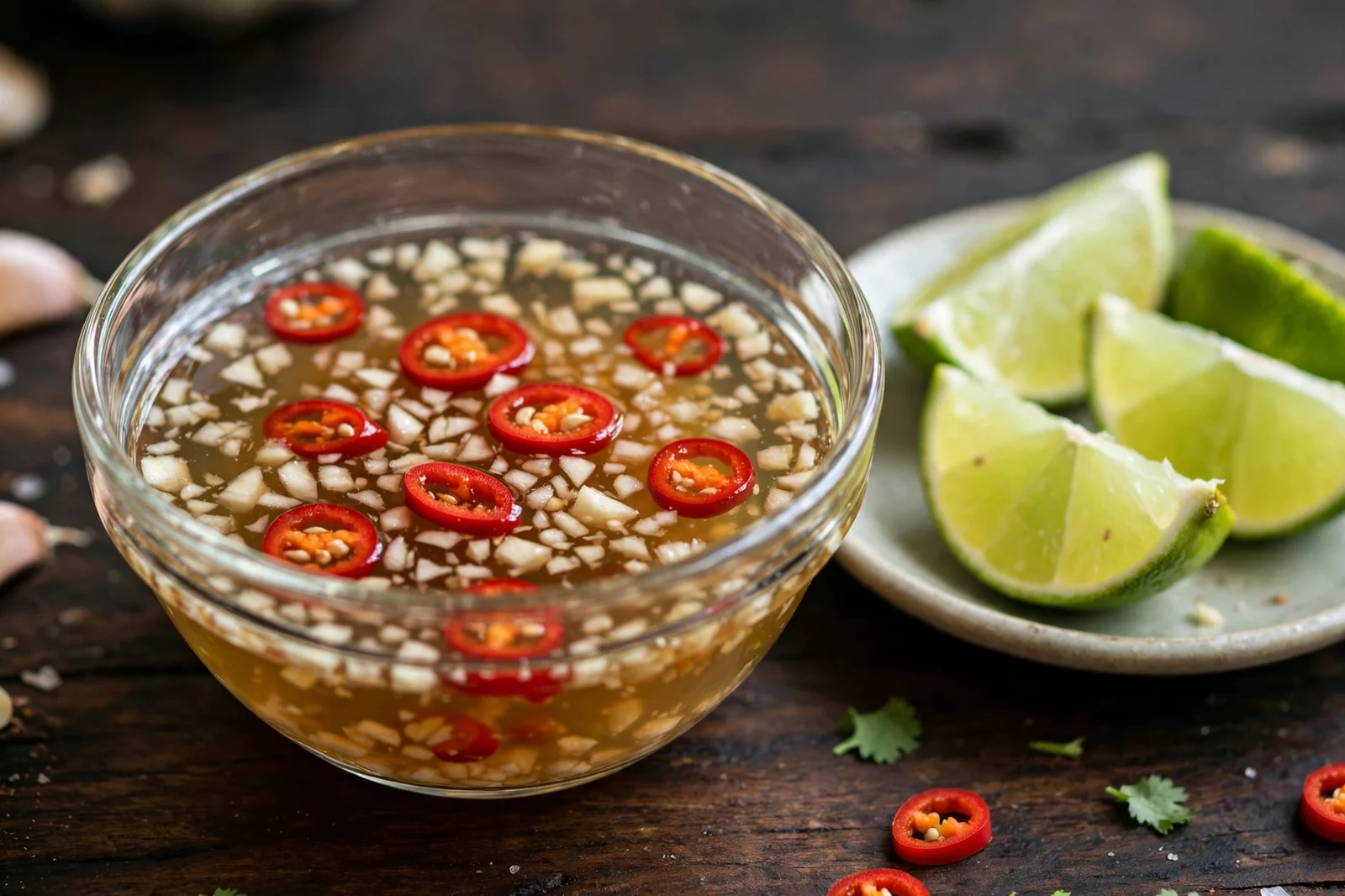
Quick Picker: Match the Substitute to the Job
| Substitute | Swap ratio (for 1 Tbsp fish sauce) | Best for | Watch out for |
|---|---|---|---|
| Soy sauce + anchovy paste | 1 Tbsp soy sauce + 1/4 tsp anchovy paste | Thai curries, stir-fries, marinades | Anchovy paste dominates past 1/2 tsp; keep it small |
| Soy sauce + rice vinegar | 1 Tbsp soy sauce + 1 tsp rice vinegar | Pad thai, dipping sauces | Thinner funk than the real thing; bump lime juice at the end |
| Tamari | 1 Tbsp, 1:1 | Gluten-free dishes, dipping sauces | Richer and less sharp; add a squeeze of lime |
| Coconut aminos | 1 Tbsp + pinch of salt | Low-sodium cooking, dressings | Much sweeter and milder; reduce other sugar slightly |
| Worcestershire sauce | 2 tsp | Emergency swap in marinades, dressings | Its spice blend shows through; best in small amounts |
| Mashed salted anchovies | 2 anchovy fillets, mashed | Stir-fries and sauces with long cook time | Melts away only with heat; never in a cold dip |
| Vegan mushroom “fish sauce” (shiitake soak liquid) | 1 Tbsp, 1:1 | Vegetarian Vietnamese and Thai dishes | No real funk; add a drop of soy for salt depth |
| Miso paste + water | 1 tsp miso whisked into 1 Tbsp warm water | Soups and braises | Clouds broths and never disappears fully; skip in clear dips |
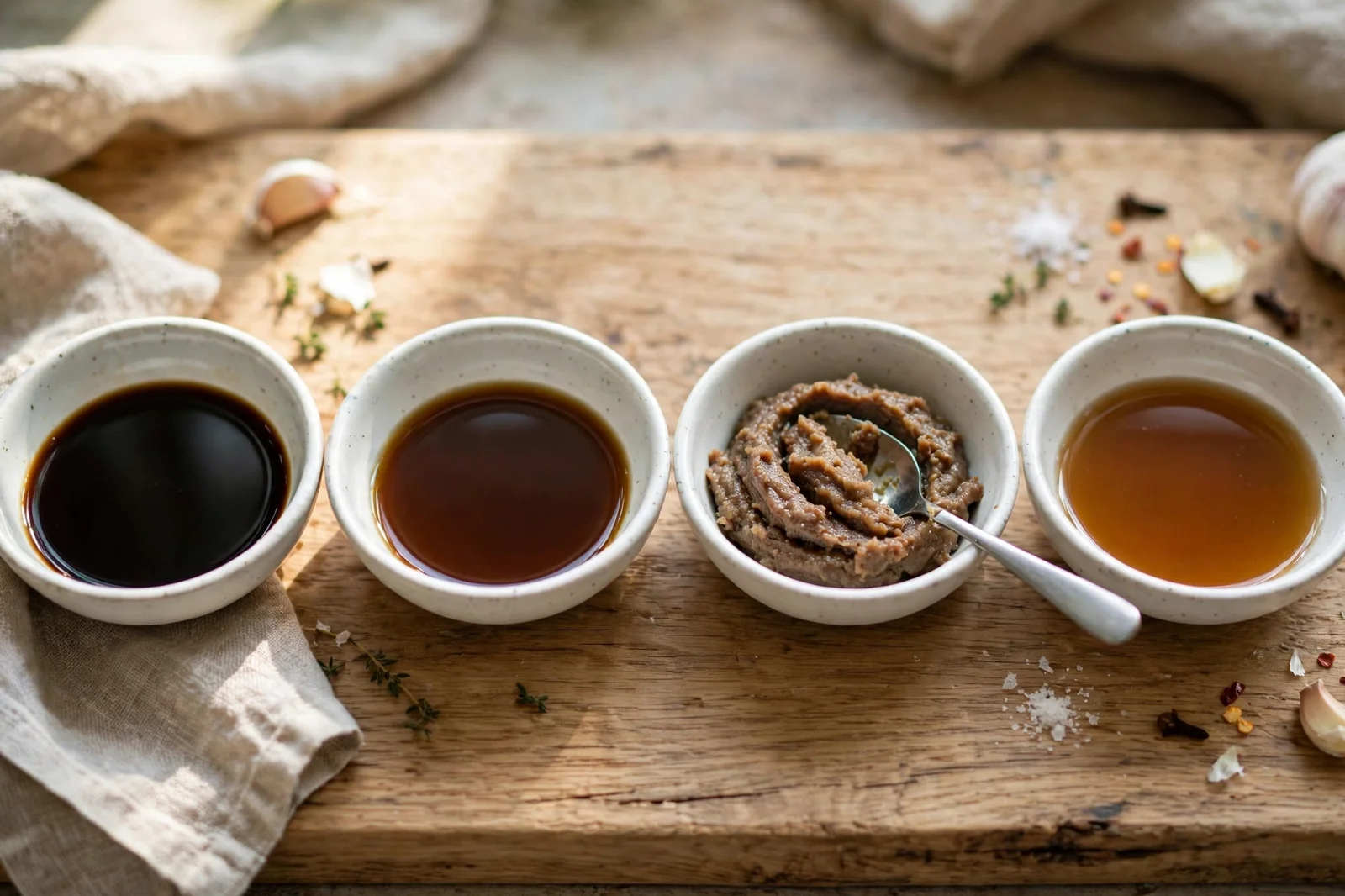
The Eight Substitutes, One by One
1. Soy Sauce Plus Anchovy Paste — The Closest Swap
This is the one I reach for first, and it is not close. Soy sauce supplies the salt and the fermented depth; a quarter-teaspoon of anchovy paste supplies the actual fish. Whisk them together before they hit the dish so the paste dissolves instead of sitting in a lump. For 1 tablespoon of fish sauce, use 1 tablespoon of soy sauce and no more than a quarter-teaspoon of anchovy paste — more than that and the anchovy stops being a whisper and starts being dinner. This blend has carried the salt load in my Thai Green Curry with Chicken more than once, and nobody at the table ever asked what was missing.
2. Soy Sauce Plus Rice Vinegar — The Pad Thai Fix
For dishes where fish sauce plays against sweetness and sourness — pad thai, dipping sauces, Thai papaya salad — the missing piece is brightness more than depth. A tablespoon of soy sauce with a teaspoon of rice vinegar approximates the salty-sour backbone, and a little extra lime juice at the end fills in the citrus top note fish sauce usually carries. It will not fool anyone in a straight nuoc cham tasting, but inside Pad Thai with Shrimp it blends in completely.
3. Tamari — The Gluten-Free Stand-In
Tamari is a Japanese soy sauce brewed with little or no wheat, and it is richer and smoother than standard soy. It swaps 1:1 for fish sauce and behaves beautifully in dipping sauces, because it has more body than regular soy and does not taste as sharp. It does not have fish sauce’s pungency, so finish with a squeeze of lime. If anyone at your table eats gluten-free, this is the bottle to keep.
4. Coconut Aminos — The Low-Sodium Option
Coconut aminos taste noticeably sweeter and milder than soy — roughly a third of the sodium by volume. Use 1 tablespoon plus a pinch of salt for each tablespoon of fish sauce, and pull back other sweeteners in the recipe by a little. This is the swap I suggest for dressings and cold sauces where you cannot cook off raw flavors, but do not use it in caramelized dishes: its sugars burn faster than soy’s, and ca kho-style caramel needs fish sauce or soy, not aminos.
5. Worcestershire Sauce — The Emergency Bottle
Worcestershire sauce is itself built on fermented anchovies, so it has real kinship with fish sauce. The catch is everything else in the bottle — tamarind, molasses, clove, onion — which shows through if you pour freely. Use 2 teaspoons where you would use 1 tablespoon of fish sauce, and keep it to marinades, dressings, and cooked sauces rather than the starring role. In a pinch it works in a spring-roll dipping sauce, but taste before you commit.
6. Mashed Salted Anchovies — The Whole-Ingredient Swap
Two oil- or salt-packed anchovy fillets, mashed to a paste with the flat of a knife, dissolve into a hot wok almost completely and give you the exact flavor fish sauce is made from. This only works with heat and time — a quick stir-fry is fine, a 20-minute braise is better. Never stir raw anchovy paste into a cold dipping sauce; it stays stubbornly fishy instead of melting into the background.
7. Shiitake Soak Liquid — The Vegetarian Answer
Soak a handful of dried shiitake mushrooms in hot water for 20 minutes and the dark, savory liquid left behind makes a surprisingly convincing vegetarian “fish sauce” — it swaps 1:1. It brings real umami but none of the fermented funk, so whisk in a teaspoon of soy sauce per tablespoon for salt depth and a few drops of lime juice for brightness. This is the swap I use for vegetarian Vietnamese dishes, and it is the only option here that keeps a Com Tam: Vietnamese Broken Rice with Grilled Pork-style nuoc cham vegetarian without tasting like a compromise.
8. Miso Plus Water — The Soup Swap
A teaspoon of white miso whisked into a tablespoon of warm water gives you fermented depth that works in soups and braises, where the miso’s cloudiness disappears into the broth. It never fully dissolves, so skip it in clear dipping sauces and anything served raw. In a simmered curry or a coconut-milk braise, it is indistinguishable.
How to Swap in Three Common Situations
In nuoc cham or any dipping sauce (fish sauce, lime juice, sugar, water, chilies): soy sauce plus anchovy paste is the best 1:1 stand-in, with tamari as the gluten-free option. The sauce from Com Tam is the one place I would not use coconut aminos — it is too sweet against the lime.
In a stir-fry or curry sauce (fish sauce added with soy and sugar at the end): soy sauce plus anchovy paste, or mashed anchovies if the dish cooks long enough to dissolve them. These are the dishes where the funk cooks off anyway, so the swap is nearly invisible.
In a caramel or braise (fish sauce melted into sugar for ca kho to, thit kho): use soy sauce plus a touch of anchovy paste and no extra acid. The long, slow cook does all the blending for you, and the dish never knows the difference.
What to Buy If You Buy One Bottle
A bottle of fish sauce costs a few dollars, keeps for years in the pantry, and a tablespoon at a time lasts forever — buying the real thing is genuinely the cheapest fix. Look for a first-press (nhi) fish sauce with only anchovies and salt on the label, and store it sealed away from heat; it does not need the fridge. If someone at your table eats vegetarian, keep dried shiitakes on hand too — the soak-liquid trick covers nearly every Vietnamese and Thai recipe you will meet.
More Vietnamese Recipes to Try
- Cha Gio: Crispy Vietnamese Fried Spring Rolls — the classic reason to keep nuoc cham on the table
- Com Tam: Vietnamese Broken Rice with Grilled Pork — sweet-savory pork that begs for the dipping sauce
- Ca Kho To: Vietnamese Caramelized Fish in Clay Pot — fish sauce melted into caramel, the deepest flavor on this list
- Pho Ga: Vietnamese Chicken Noodle Soup — a gentle broth where fish sauce seasons from the background