
Ginger tea is the drink I make when the kitchen feels cold and I want something warm without caffeine. Fresh ginger simmered in water gives a spicy, clean heat, lemon lifts it, and honey rounds the edges. The whole thing takes about 20 minutes, and most of that is the pot simmering while you do something else.
Paul simmers sliced ginger, never grated ginger, for this version. Grated ginger makes a stronger cup, but it also turns cloudy and bitter fast, and it is hard to strain out. Slices give a clear tea with a steady heat, and you can simmer them a few minutes longer if you want a stronger cup without the bitterness creeping in.
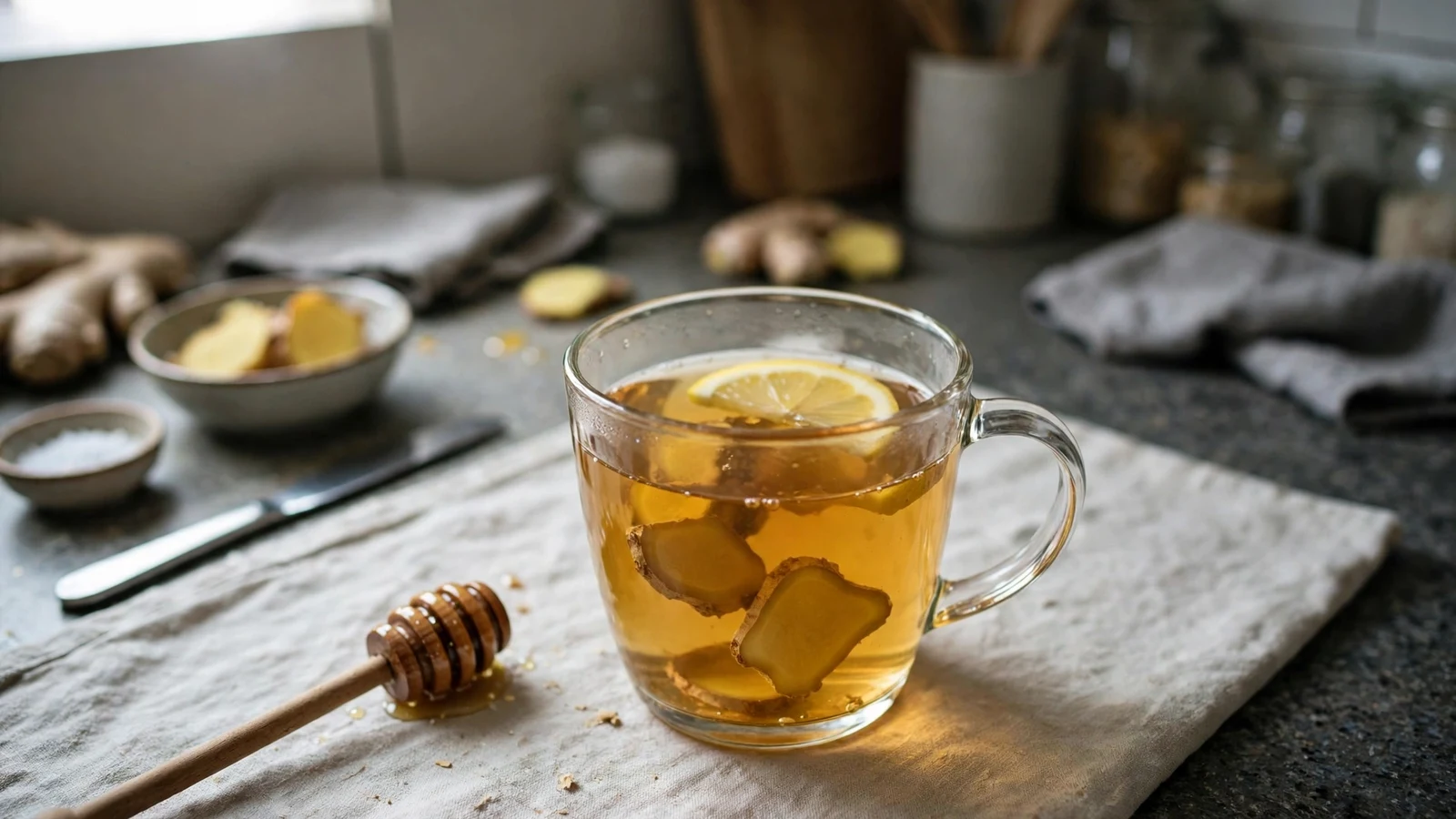
What is ginger tea?
Ginger tea is an infusion made by simmering fresh ginger root in water, then finishing it with lemon juice and honey. It contains no tea leaves, so it has no caffeine, and it sits in the same family as other fresh-root drinks that rely on simmering rather than steeping. The flavor is spicy and warming, with a lemon brightness on top and a smooth sweetness underneath when the honey is stirred in off the heat.
The ratio here is simple: 2 inches of fresh ginger to 4 cups of water, simmered 15 minutes, then split between 4 mugs. That gives a medium-strength tea. If you like it milder, use 1 1/2 inches of ginger or simmer for 10 minutes. If you like it hotter, use 3 inches and simmer for 20 minutes, but do not boil it hard, because a rolling boil pulls out bitter notes that honey cannot cover. For another way to use fresh ginger in the kitchen, our guide to shogayaki, Japanese ginger pork shows how the same root behaves in a fast pan sauce, and our how to store fresh ginger guide keeps a root fresh until you need it.
Ingredients
For the tea:
- 2 inches fresh ginger root, peeled and sliced thin
- 4 cups water
To finish:
- 2 tablespoons honey, plus more to taste
- 2 tablespoons fresh lemon juice, plus lemon wedges for serving
Steps
- Peel the ginger with a spoon and slice it into thin coins, about 1/8 inch thick.
- Put the ginger and water in a small saucepan. Bring to a gentle boil over medium-high heat, then lower the heat to a steady simmer.
- Simmer, uncovered, for 15 minutes. The liquid will turn a pale gold color and smell warm and spicy.
- Take the pan off the heat and strain the tea through a fine strainer into a pitcher or straight into mugs.
- Let the tea cool for 2 minutes, then stir in the honey and lemon juice. Taste and add a little more honey or lemon if you want it sweeter or brighter.
- Serve warm, with a lemon wedge on the side of each mug.
Slicing and simmering
Thin slices are the difference between a clear, spicy tea and a cloudy, bitter one. Thick chunks release flavor slowly and unevenly, so the first mug tastes weak and the last tastes harsh. Thin coins give up their flavor at a steady pace across the full 15 minutes. Peel with a spoon, not a peeler, because a spoon follows the knobby shape of the root and wastes less flesh.
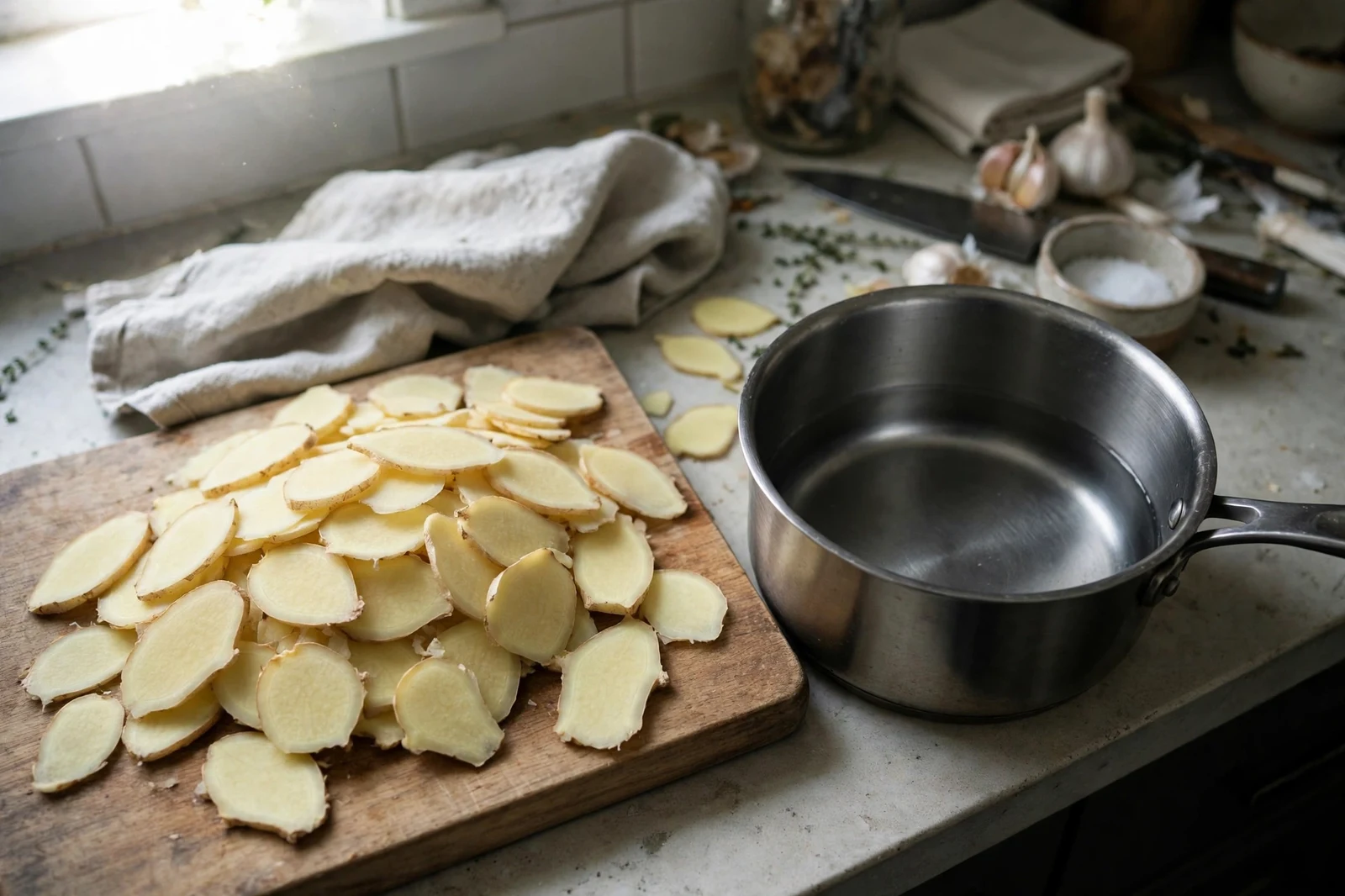
Keep the simmer gentle. Small bubbles breaking the surface are right, and a rolling boil is too much. A hard boil extracts bitter compounds from the ginger fiber, and it also reduces the water fast, so the tea turns strong in a harsh way instead of a warm way. If the pot starts boiling hard, lower the heat and add 1/4 cup of water to bring the volume back.
Honey and lemon timing
Add honey and lemon after the tea leaves the heat, not during the simmer. Honey stirred into boiling tea loses its floral notes and tastes flat, like plain sugar water. Lemon juice boiled for 15 minutes turns bitter and dull, while lemon added at the end stays bright. The 2 minute cooling pause matters: the tea is still hot enough to dissolve honey easily, but no longer hot enough to flatten its flavor.
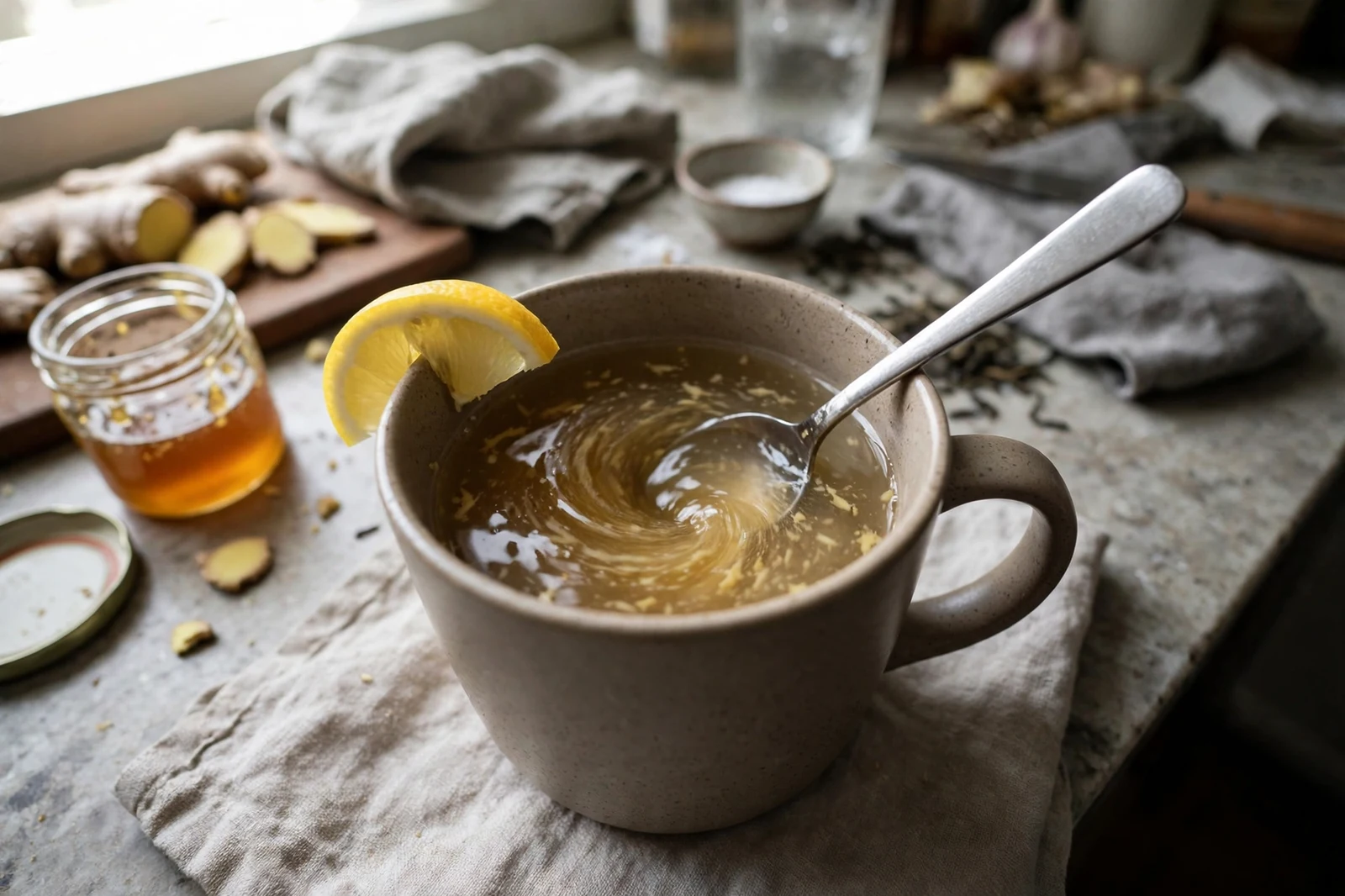
Taste before you add more. Start with 2 tablespoons of honey and 2 tablespoons of lemon juice for the full pot, then adjust one spoonful at a time. More honey does not fix a bitter tea, and more lemon does not fix a weak one. If the tea tastes bitter, the simmer ran too hot or too long, and the fix is a shorter simmer next time, not extra sweetener in this cup.
Serving and variations
Serve the tea in warmed mugs, since a cold mug drops the temperature fast and dulls the ginger heat. For an iced version, simmer the ginger as usual, cool the tea fully, then pour it over ice with lemon and honey stirred in while the tea is still warm. The iced version needs a stronger base, so simmer for 20 minutes instead of 15.
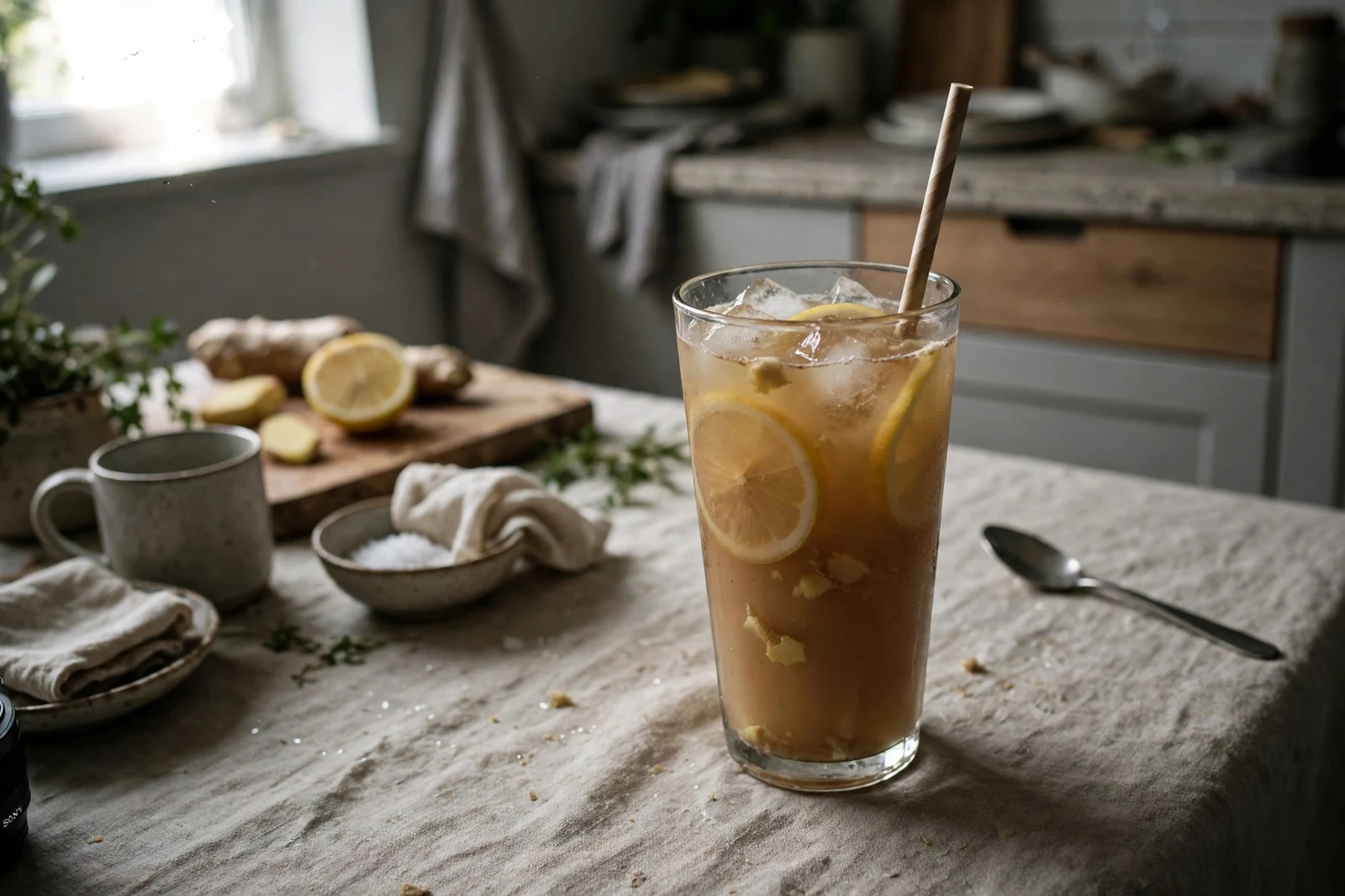
For a spiced version, add a cinnamon stick or 2 whole cloves to the pot with the ginger and remove them when you strain. For a mint version, add a small handful of fresh mint leaves after the heat is off and let them sit for 3 minutes before straining. Do not add milk to this tea, because the lemon will curdle it. If you want a creamy ginger drink, make it without lemon and stir in warm milk instead.
Tips and variations
Buy ginger that feels firm and heavy, with smooth, tight skin. Wrinkled or soft ginger gives a weak, woody tea no matter how long you simmer it. Store the root in the fridge in a paper towel inside a bag, and cut only what you need, since a cut root dries out from the cut end. Leftover tea keeps 2 days in the fridge in a sealed jar. Reheat it gently on the stove, never at a rolling boil, and add the honey and lemon fresh after reheating, since both fade in stored tea.
Prep time is 5 minutes, cook time is 15 minutes, and the recipe serves 4.
Troubleshooting: Fix My Ginger Tea
If your tea came out bitter, weak, or cloudy, the section below walks through the common fixes. Pick what went wrong to see a practical next step.
HERB & LIME · KITCHEN HELP Choose what went wrong to see a practical next step. From Paul's kitchen. Results vary with ginger freshness, root size, and stove heat, adjust timing to your setup. Quick reference (also works without JavaScript) Cause: The ginger boiled hard, or simmered too long, which pulled bitter compounds out of the ginger fiber. Try: Stir in a little more honey and a squeeze of lemon, and serve this cup, then shorten the next simmer. Prevent: Keep a gentle simmer for 15 minutes, never a rolling boil, and slice the ginger thin instead of grating it. Cause: The ginger was old or wrinkled, the slices were too thick, or the simmer was too short for the amount of water. Try: Return the strained tea to the pot with a few fresh thin slices and simmer 5 minutes more, then strain again. Prevent: Use firm, heavy ginger, slice it about 1/8 inch thick, and simmer 15 minutes for 4 cups of water. Cause: Grated ginger, or ginger pulp left in the cup, clouded the tea instead of a clean strained infusion. Try: Pour the tea through a fine strainer lined with a coffee filter, which catches the fine pulp. Prevent: Slice the ginger instead of grating it, and strain through a fine strainer before adding honey and lemon. Cause: Honey stirred into boiling tea lost its floral notes to the heat. Try: Stir a fresh spoonful of honey into the cooled cup, which restores the honey flavor at the table. Prevent: Take the tea off the heat, wait 2 minutes, then stir in the honey and lemon. Cause: Lemon juice simmered with the ginger turned bitter and flat instead of bright. Try: Add a fresh squeeze of lemon to the finished cup, which lifts the flavor back up. Prevent: Add lemon only after the tea leaves the heat, never during the simmer.Fix My Ginger Tea
Possible cause
What to try next
For next time
The tea tastes bitter
The tea tastes weak and watery
The tea turned cloudy
The honey flavor disappeared
The lemon made the tea taste dull
Ginger Tea with Honey and Lemon
Ingredients
Method
- Peel the ginger with a spoon and slice it into thin coins, about 1/8 inch thick.
- Put the ginger and water in a small saucepan. Bring to a gentle boil over medium-high heat, then lower the heat to a steady simmer.
- Simmer, uncovered, for 15 minutes. The liquid will turn a pale gold color and smell warm and spicy.
- Take the pan off the heat and strain the tea through a fine strainer into a pitcher or straight into mugs.
- Let the tea cool for 2 minutes, then stir in the honey and lemon juice. Taste and add a little more honey or lemon if you want it sweeter or brighter.
- Serve warm, with a lemon wedge on the side of each mug.
Notes
More ginger recipes
- Shogayaki: Japanese Ginger Pork
- How to Store Fresh Ginger and Galangal
- How to Make Pickled Ginger at Home
- Thai Iced Tea
From the garden
Ginger grown in pots gives shorter, thinner roots than store ginger, and those roots make a milder tea. Our guide to growing ginger in pots covers the harvest window, and for tea, Paul uses a little more root, about 2 1/2 inches, when the ginger comes from a pot, to match the heat of a store-bought piece.