
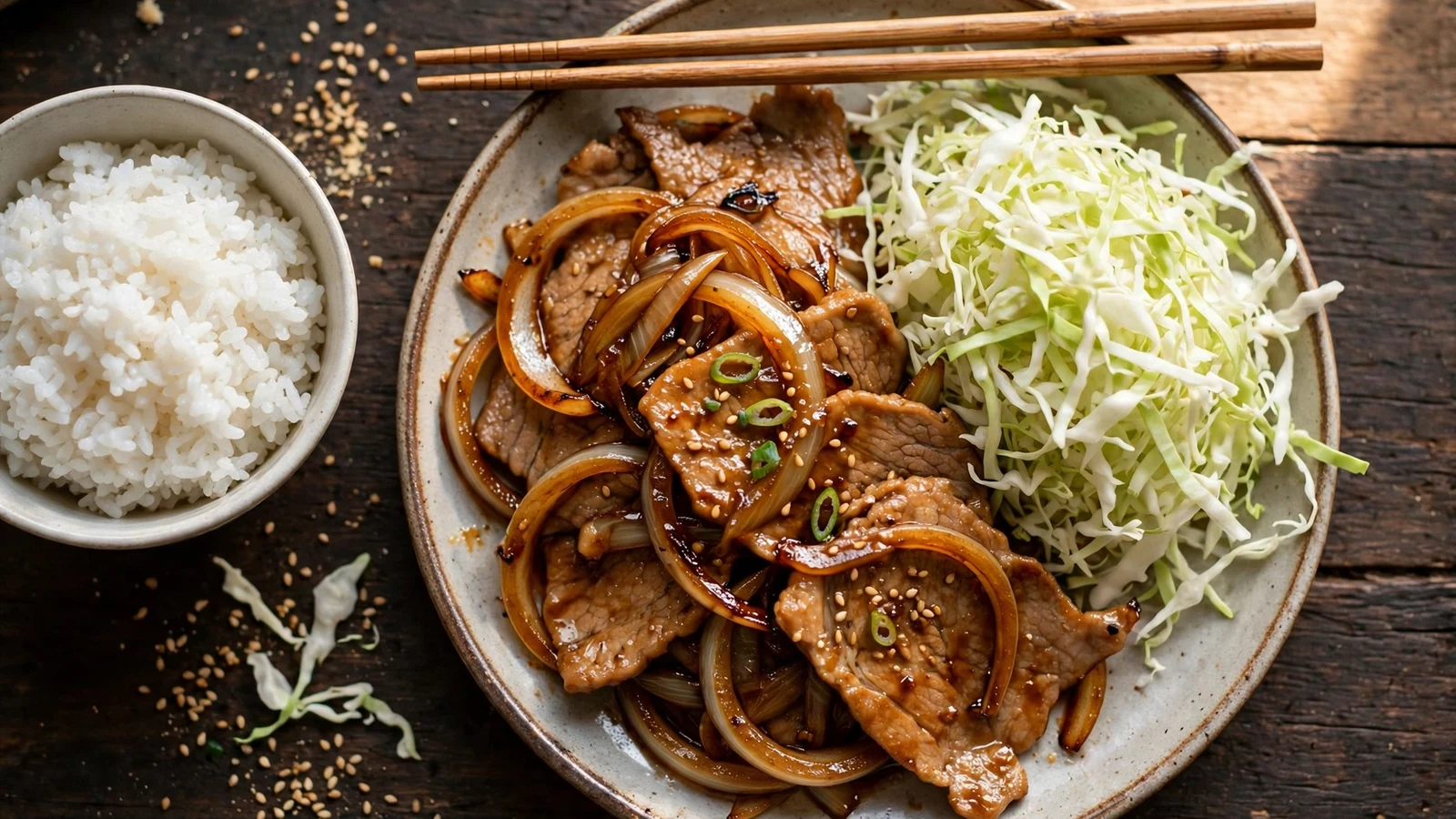
Shogayaki is the weeknight pork dish I come back to when dinner needs to be on the table in about 25 minutes. Thin slices of pork cook in a pan with onion, then get tossed in a sauce of fresh ginger, soy sauce, sake, mirin, and a little sugar until the sauce turns into a glaze that clings to every slice. It is salty, sweet, and warm from the ginger, and it belongs over rice with a pile of shredded cabbage on the side.
What is shogayaki?
Shogayaki, also called buta no shogayaki, is a home-style Japanese pork dish. The name comes from shoga, the Japanese word for ginger, and yaki, which means grilled or pan-fried. Pork loin or pork shoulder is sliced thin, cooked fast in a pan, and coated in a ginger soy sauce. It is a staple of Japanese home cooking and of lunch sets, where it usually arrives with rice, shredded cabbage, and miso soup.
Expect a sauce that tastes first of ginger, then of soy and sweetness, with soft onion underneath. The pork should stay tender because the slices are thin and the cooking time is short. If the pork sits in the pan for a long time, or if the slices are thick, it turns dry no matter how good the sauce is. Like my gyudon, this is a rice bowl dish at heart: the glaze is meant to run into the rice, so serve it over rice rather than beside it.
Get the pork and sauce ready
Ask the butcher for pork loin sliced 3 to 4 mm thick, or chill a pork loin in the freezer for 30 to 40 minutes until it firms up and slice it yourself at that thickness. A slice thicker than 5 mm needs more time in the pan, and that extra time is what dries it out. If a slice has a band of fat along one edge, snip the band every 2 to 3 cm with kitchen shears. That cut stops the slice from curling into a cup as the fat tightens in the heat.
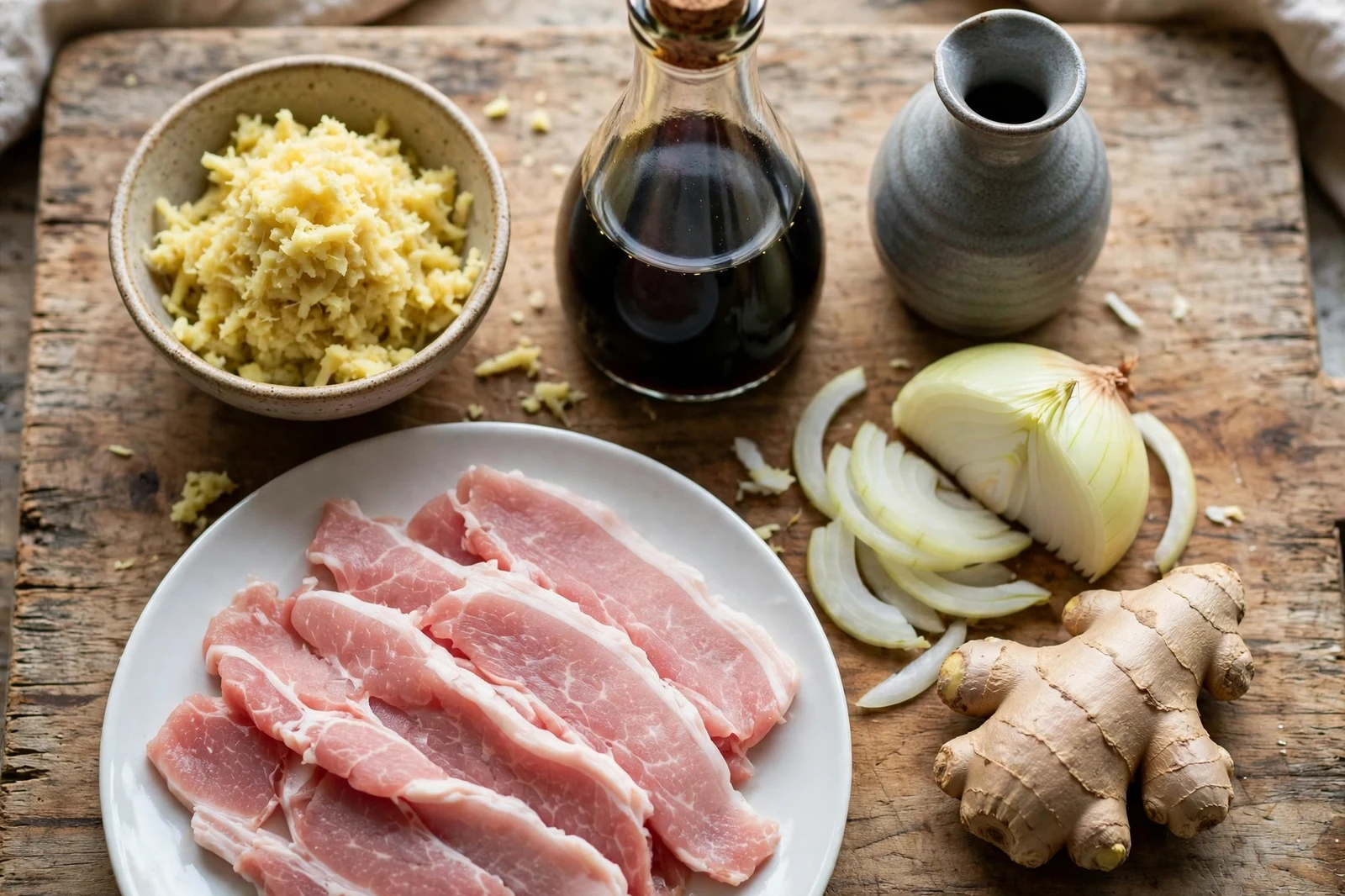
Pat the slices dry, then dust them very lightly with potato starch or cornstarch. Use about 1 tablespoon for the whole batch, shaken through a small strainer so the coat stays thin. That thin coat does two jobs: it holds juice in the pork, and it gives the sauce something to cling to. A heavy coat soaks up sauce and turns salty and pasty, so shake off any excess before the pork hits the pan.
Mix the sauce in a small bowl: 3 tablespoons soy sauce, 2 tablespoons sake, 2 tablespoons mirin, 1 tablespoon sugar, and 2 tablespoons freshly grated ginger. Grate the ginger on a fine grater and include the juice that comes with it. Ground ginger cannot replace fresh ginger here. It gives warmth without the fresh bite that defines the dish. Stir until the sugar dissolves, then set the bowl aside.
Cook the onion, sear the pork, add the glaze
Heat 1 tablespoon neutral oil in a large frying pan over medium-high heat. Add 1 thinly sliced onion and cook for 3 to 4 minutes, stirring now and then, until it softens and turns translucent at the edges. Move the onion to a plate. It will go back in at the end, and cooking it first keeps it from steaming the pork later.
Wipe the pan if the onion left dark bits, add a little more oil, and lay the pork in a single layer. Do not stack the slices or crowd the pan. If your pan is small, cook in two batches. Each side needs about 1 to 2 minutes, just until the pork loses its raw pink color and shows light browning at the edges. Thin slices cook through in that time. Pull the pork out as soon as it is done, even if the second batch is still waiting.
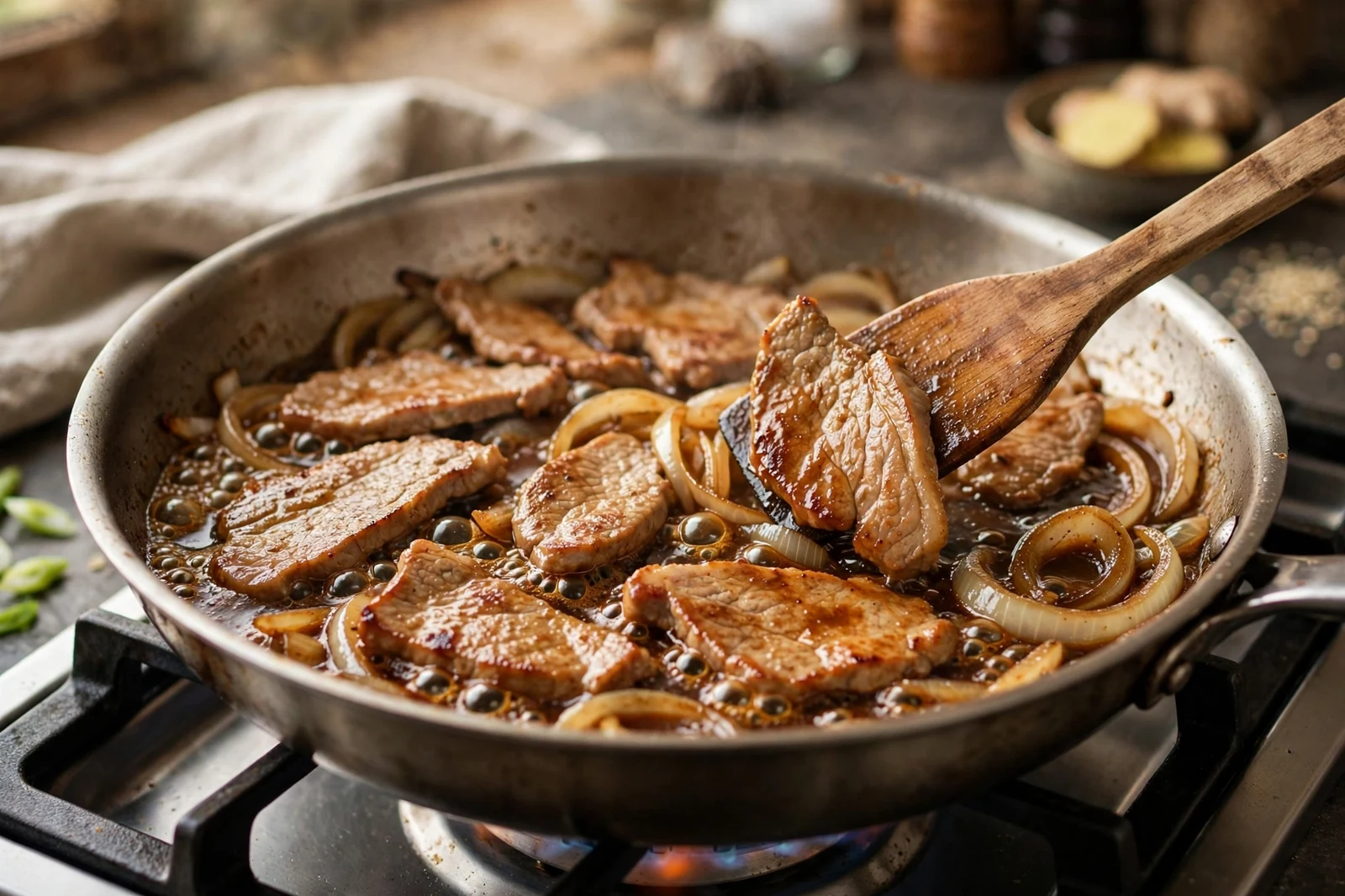
Return all the pork and the onion to the pan, pour in the sauce, and turn the heat to medium. Let it bubble for 2 to 3 minutes, turning the slices so each one gets coated. The sauce will reduce and turn glossy, and the starch on the pork will help it thicken into a glaze. Take the pan off the heat as soon as the sauce clings to the pork instead of pooling thin in the pan. If you wait for a thick syrup, the sugars in the mirin and soy sauce can catch and burn in seconds.
Serve it over rice
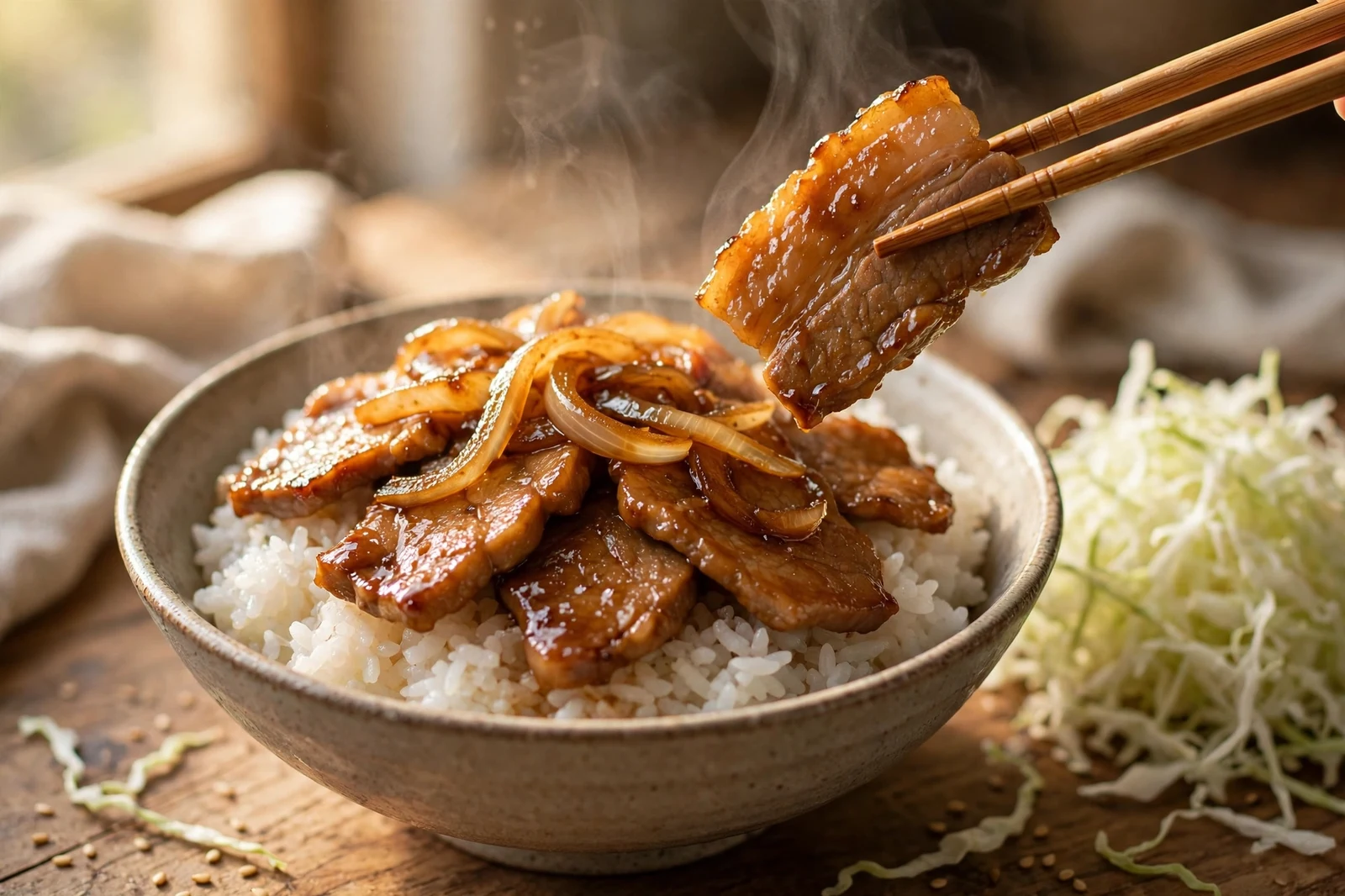
Divide steamed rice among 4 bowls and top each bowl with pork, onion, and a spoonful of the pan glaze. Add a mound of shredded cabbage to each plate. The cabbage is not decoration: its cool crunch cuts the salty sweetness of the glaze, and a little glaze spooned over it tastes good too. My guide to jasmine rice covers the pot method I use when I am not using a rice cooker.
Tips and variations
Keep the marinade short if you marinate at all. This recipe adds the sauce at the end instead of marinating the pork in it, and that is on purpose. Pork left in soy sauce for more than 30 minutes loses juice to the salt and can turn tough and too salty. A 10-minute soak in sake and ginger juice is plenty if you want a head start, but do not let thin slices sit in the full soy sauce for an hour while you do other prep.
For a pork shoulder version, use the same slice thickness and the same times. Shoulder has more fat, so it stays juicy a little longer in the pan, but it still needs the single-layer rule. For a chicken version, swap in thinly sliced chicken thigh and cook it 2 to 3 minutes per side until it reaches 165 degrees Fahrenheit inside. My chicken karaage uses a starch coat in a similar way, but it is deep-fried, so the crust stays crisp in a way this pan glaze does not try to copy.
Leftovers keep in the fridge for up to 2 days. Reheat them gently in a pan over low heat with a splash of water, just until warm. A microwave works too, but it tightens thin pork fast, so use short bursts and stop as soon as the pork is warm through.
Troubleshooting: Fix My Shogayaki
If a batch comes out wrong, the cause is usually one of five things: pork that turned tough, slices that curled up, sauce that would not cling, a batch that tastes too salty, or ginger flavor that faded in the pan. Work through them one at a time and the next batch lands closer.
HERB & LIME · KITCHEN HELP
Fix My Shogayaki
Choose what went wrong to see a practical next step.
Possible cause
What to try next
For next time
From Paul's kitchen. Results vary with pork cut, pan size, and stove heat, adjust timing to your setup.
Quick reference (also works without JavaScript)
The pork turned tough and dry
Cause: Thin slices left in the pan too long, or a very lean cut cooked past done, dry out fast.
Try: Serve this batch at once with extra pan sauce spooned over it, and pull the next batch as soon as the pink color is gone.
Prevent: Slice pork 3 to 4 mm thick, sear 1 to 2 minutes per side, and take it out of the pan before adding the sauce.
The slices curled up in the pan
Cause: The band of fat along the edge tightens in the heat and pulls the slice into a cup shape.
Try: Press the curled slices flat with a spatula while they cook, and finish them in the sauce so they soften and lie flat.
Prevent: Snip the fat edge every 2 to 3 cm with kitchen shears before cooking, and lay each slice flat in a single layer.
The sauce would not cling to the pork
Cause: Bare pork gives the sauce nothing to hold onto, so it pools in the pan instead of coating the slices.
Try: Simmer the pork in the sauce for another 1 to 2 minutes, turning the slices, until the sauce turns glossy and coats them.
Prevent: Dust the pork very lightly with potato starch or cornstarch through a strainer before searing, and shake off the excess.
The dish tastes too salty
Cause: Pork left in soy sauce too long absorbs salt, and a heavy starch coat soaks up extra sauce.
Try: Serve the pork over plain rice with shredded cabbage, and spoon less sauce over each portion.
Prevent: Keep any soy sauce soak to 10 minutes or less, dust the starch coat thinly, and taste the sauce before it goes in the pan.
The ginger flavor faded away
Cause: Fresh ginger aroma cooks off with heat, so a sauce simmered a long time loses its fresh bite.
Try: Stir in a teaspoon of freshly grated ginger off the heat, toss, and serve at once.
Prevent: Add the sauce only after the pork is browned, keep the final simmer to 2 to 3 minutes, and grate the ginger fresh.
Shogayaki: Japanese Ginger Pork
Ingredients
Method
- Prep the pork. If the pork is not pre-sliced, chill the loin in the freezer for 30 to 40 minutes until firm, then slice it 3 to 4 mm thick. Snip the fat edge every 2 to 3 cm with kitchen shears so the slices do not curl. Pat dry, dust very lightly with starch through a small strainer, and shake off the excess.
- Mix the sauce. Stir the soy sauce, sake, mirin, sugar, and grated ginger in a small bowl until the sugar dissolves. Set aside.
- Cook the onion. Heat the oil in a large frying pan over medium-high heat. Cook the sliced onion for 3 to 4 minutes, stirring now and then, until soft and translucent at the edges. Move it to a plate.
- Sear the pork. Wipe the pan if needed, add a little more oil, and lay the pork in a single layer. Cook 1 to 2 minutes per side, in two batches if the pan is small, until the pork loses its raw pink color and browns lightly at the edges. Remove as soon as it is done.
- Glaze. Return all the pork and the onion to the pan, pour in the sauce, and cook over medium heat for 2 to 3 minutes, turning the slices, until the sauce turns glossy and clings to the pork. Take off the heat at once.
- Serve. Divide the rice among 4 bowls, top with pork, onion, and pan glaze, and add shredded cabbage to each plate. Serve at once.
1 thought on “Shogayaki: Japanese Ginger Pork”