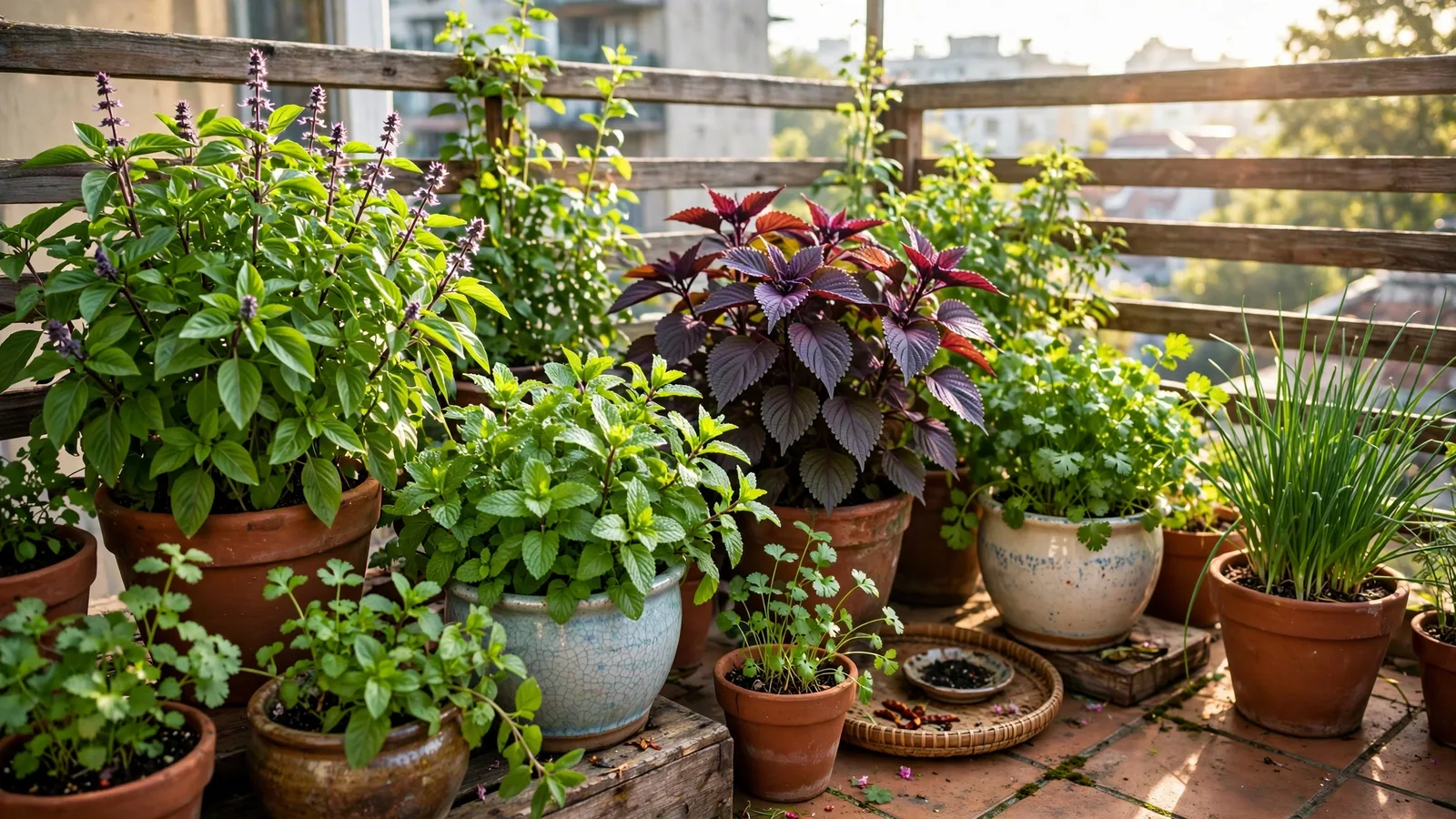
A Vietnamese kitchen runs on fresh herbs. A bowl of pho without Thai basil and cilantro tastes flat, spring rolls need mint and perilla, and a plate of grilled pork over broken rice wants a tangle of herbs on the side. The trouble is buying them: bunches from the store wilt fast, and the more specific herbs — culantro, Vietnamese coriander, perilla — can be hard to find at all.
A container garden fixes that in a surprisingly small footprint. You don’t need a yard or raised beds. A sunny balcony, a patio corner, or even a wide windowsill ledge can hold enough pots to cover most weeknight cooking. This plan lays out which herbs to grow, what size pot each one actually needs, and how to group them so watering stays simple instead of turning into a daily chore.
If you’re already growing one or two pots, this plan helps you expand without chaos. If you’re starting from zero, you can plant the whole thing in a single weekend and be picking leaves within a few weeks.
Start With How You Cook
The best herb garden is the one matched to your actual cooking, not a seed catalog. Before buying anything, think about the dishes you make most often.
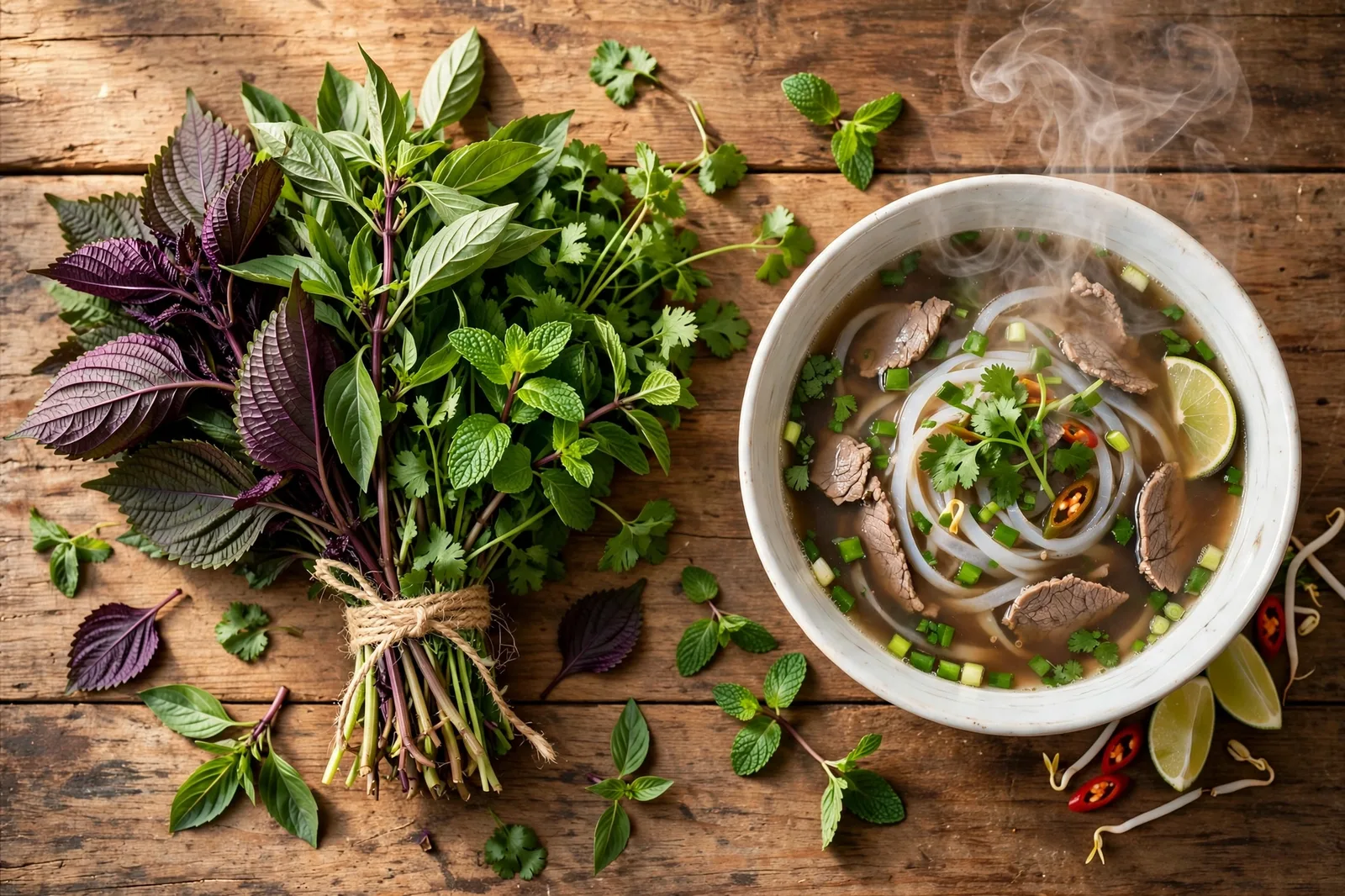
- Noodle soups (pho, bun bo Hue, hu tieu): Thai basil, cilantro, culantro (ngo gai), mint, and bean sprouts on the side. Perilla is a welcome extra.
- Spring rolls and salads: mint, perilla, Vietnamese coriander (rau ram), lettuce from a wide planter, and garlic chives for a mild onion note.
- Grilled meats and broken rice: mint, perilla, cilantro, and Thai basil for wrapping and tearing over the plate.
- Stir-fries and curries: Thai basil first, then cilantro roots if you can get them, and hot chiles.
Most home cooks land on the same core six: Thai basil, cilantro, mint, perilla, culantro, and Vietnamese coriander. Add garlic chives and a Thai chili plant if you have the sun for them, and you’ve covered the great majority of Vietnamese recipes that call for fresh herbs.
The Core Herbs and Their Pots
Pot size matters more than most people expect. Herbs crammed into tiny pots stay small, bolt early, and taste harsh. Give each plant the room below and it will reward you for months.
- Thai basil: 10- to 12-inch pot, one plant. Warm-season and sun-hungry; pinch the tips often to keep it bushy and delay flowering.
- Cilantro: wide 10-inch pot, several plants sown together. Cilantro bolts fast in heat, so sow a small fresh batch every few weeks instead of relying on one planting.
- Mint: always its own pot, 12 inches or larger. Mint spreads aggressively by runners and will swallow any neighbor you plant it with. Containment is the whole point.
- Perilla (tia to): 12-inch pot, one plant. It grows into a small bush by midsummer and self-seeds readily if you let a flower stalk finish. Our guide to growing perilla in pots covers pinching and seed saving in detail.
- Culantro (ngo gai): 8- to 10-inch pot, two or three plants. Slow to start and fond of steady moisture and a little afternoon shade. See how to grow culantro at home for the germination tricks.
- Vietnamese coriander (rau ram): 10-inch pot, kept moist. This one loves water more than most herbs and wilts dramatically when dry, then perks right back up after a drink.
- Garlic chives: 10- to 12-inch pot. Nearly indestructible once established, and it comes back year after year. Our garlic chives container guide covers dividing crowded clumps.
- Thai chili: 12-inch pot in your sunniest spot, if you want heat on demand. The Thai chili pot guide walks through feeding and overwintering.
That’s eight pots at full build-out — but you don’t need all eight on day one. Start with Thai basil, mint, cilantro, and the one or two herbs you reach for most, then add a pot each month.
Group by Water, Not by Looks
The single trick that makes a container garden easy is grouping pots by how thirsty they are. When wet-loving and dry-loving herbs sit side by side, you end up overwatering one or underwatering the other every single time.
The thirsty group: Vietnamese coriander, culantro, mint, and cilantro. These like evenly moist soil and benefit from a deep saucer or a self-watering pot. Set them together at one end of the balcony where you’ll hit them with the watering can first — or where a drip line or a morning-sun spot keeps them from drying out by noon.
The middle group: Thai basil, perilla, and garlic chives. They want regular water but need the surface to dry slightly between drinks. Standard pots with good drainage holes work fine.
The sun-and-heat group: the Thai chili, and Thai basil again if your climate is very hot. Chiles like full sun and a bit more breathing room between waterings once they’re established.
Grouped this way, watering becomes two passes instead of eight separate decisions. On a busy weeknight, that difference is what keeps the garden alive.
A Simple Balcony Layout
Picture a standard apartment balcony, roughly 4 by 8 feet, with a railing on the sunny side. Here’s a layout that fits comfortably and still leaves room for a chair:
- Sunniest railing row: Thai chili and Thai basil in their pots on the floor against the railing, where they catch six or more hours of sun. Heat-loving plants go here, never in the shaded corner.
- Middle row: perilla and garlic chives, slightly behind the basil. Perilla gets tall, so it works as a loose green backdrop and a bit of afternoon shade for its neighbors.
- Shadier end: the thirsty group — Vietnamese coriander, culantro, mint, and the cilantro pot. Afternoon shade actually suits culantro, and the whole group sits near the door so you remember to water it.
- Vertical space: a railing planter or hanging basket of extra mint or cilantro frees up floor space. Just keep mint hanging on its own, away from soil it could drop runners into.
On a patio, the same logic applies in a rough semicircle facing the sun: tall perilla at the back, mid-size pots in the middle, thirsty herbs grouped at whichever end is closest to your water source. The closer the thirsty pots are to the tap or can, the more reliably they get watered.
Soil, Drainage, and Feeding
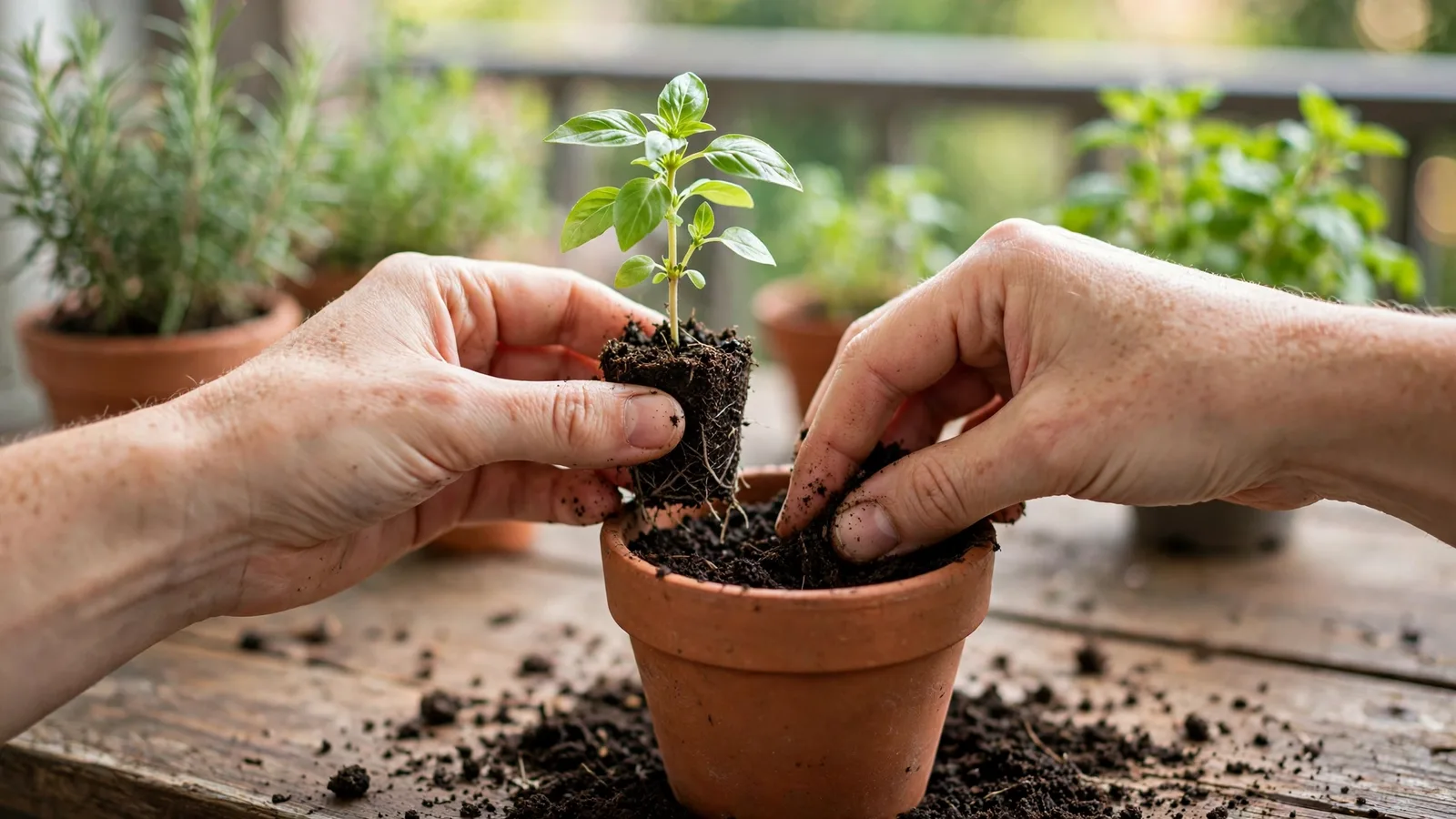
Herbs in pots live entirely on what you give them, so start with a decent potting mix rather than garden soil, which compacts and drains poorly in containers. Blend in about a quarter compost for the leafy herbs; they grow fast and feed steadily. Every pot needs a drainage hole — no exceptions — and a saucer you empty after heavy watering so roots don’t sit in standing water.
Leafy herbs are grown for foliage, so they like consistent, moderate feeding. A slow-release balanced fertilizer mixed in at planting, followed by half-strength liquid feed every two to three weeks during the fastest growth, keeps leaves large and mild-flavored. Go easy: overfed herbs can taste harsh, and cilantro and basil bolt faster when pushed. A handful of compost scratched into the surface midseason is a gentle top-up that works for the whole garden.
Keeping the Harvest Coming
A herb garden earns its keep when you pick from it often. Regular harvesting isn’t greedy — it’s what keeps the plants productive.
- Pinch basil and perilla just above a pair of leaves, every week or two. The plant responds with two new branches, and flowering gets pushed back. Leaves turn bitter once flowering starts in earnest, so pinching buys you real time.
- Cut cilantro and Vietnamese coriander from the outside in, taking the oldest stems first, and never strip more than about a third of the plant at once.
- Snip garlic chives a couple of inches above the base; they regrow quickly and tolerate this all season.
- Pick mint by the stem tip rather than leaf by leaf — it keeps the pot tidy and encourages branching.
Picked more than tonight’s dinner needs? The damp-towel method in How to Store Fresh Herbs So They Last Longer keeps most of these herbs in good shape for the better part of a week. Thai basil is the exception — it blackens in a cold fridge, so keep it in a jar of water on the counter like a small bouquet instead.
Seasonal Rhythm
Vietnamese herbs are mostly warm-season plants, and the garden follows a simple yearly cycle. Sow and transplant after the last frost, when nights stay reliably above 50°F. Growth explodes in early summer; that’s when succession sowing cilantro every few weeks matters most, because each batch bolts in the heat and needs replacing. By late summer, let one perilla plant flower if you want free seedlings next spring, and take cuttings of Vietnamese coriander and mint to overwinter on a windowsill — both root easily in water. Garlic chives and mint pots can stay outside in mild climates; in cold ones, move them against a sheltered wall and let them rest.
For a broader tour of the herbs themselves — how to recognize and use each one at the market or in the kitchen — our visual guide to Vietnamese herbs makes a handy companion to this plan.
Start Small, Then Expand
The most common way a container garden fails isn’t pests or weather — it’s planting twelve pots in April and burning out on the watering by June. Start with four pots of the herbs you cook with most, grouped by water needs, in the sunniest spot you have. Once that small garden feels effortless, add a pot at a time. By the end of one season you can realistically be picking basil, perilla, mint, and culantro minutes before they hit the plate — and that’s a flavor no grocery store bunch, however fresh, quite manages to match.
4 thoughts on “Container Garden Plan for a Vietnamese Herb Garden”