
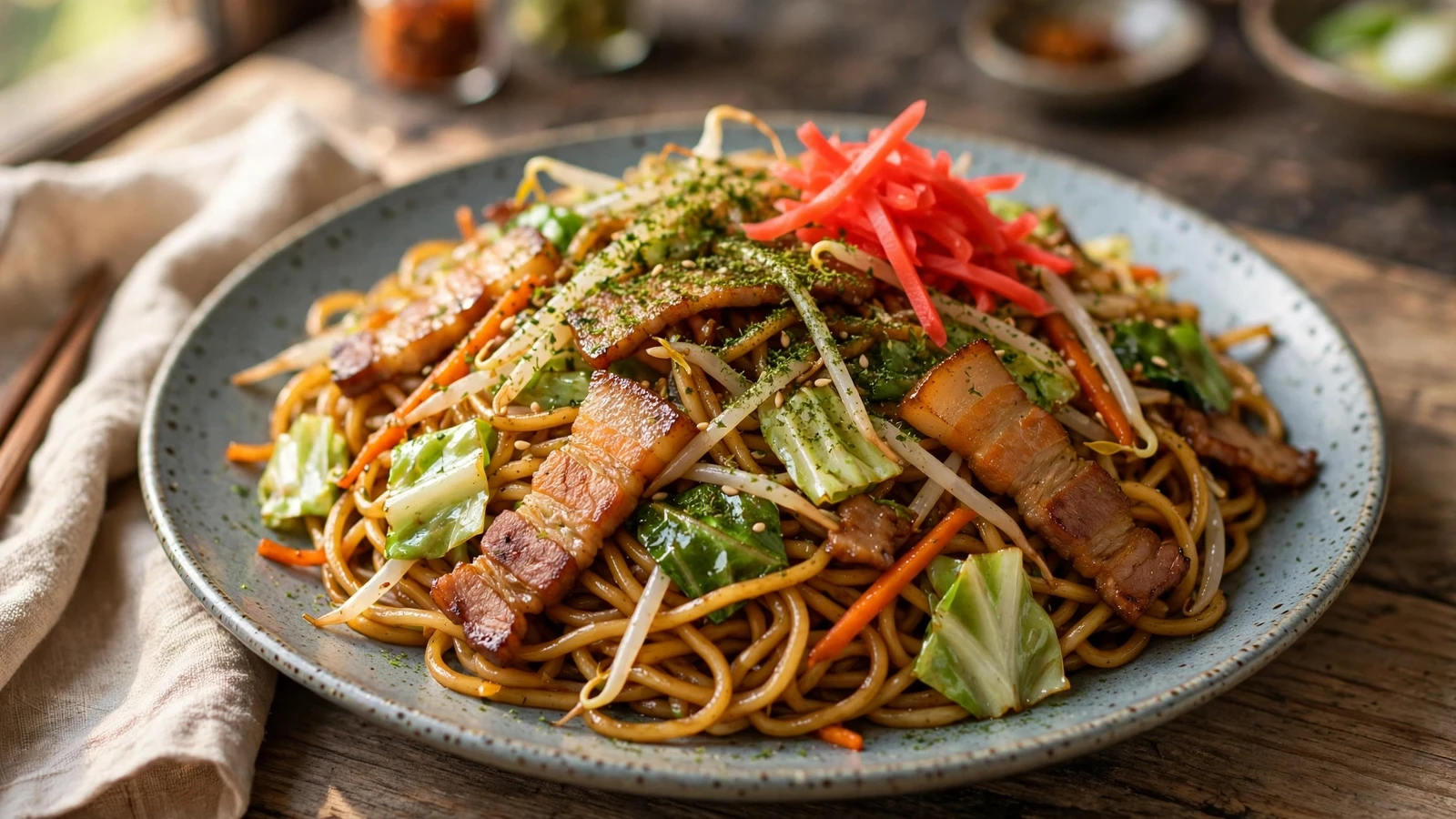
Yakisoba is the kind of weeknight food that makes you wonder why you ever order takeout: sweet-savory noodles slicked in Worcestershire-based sauce, thin ribbons of pork belly, cabbage that stays just a little crisp, and a tangle of toppings — sea-green aonori, ruby-red pickled ginger — that make the plate look like a festival stall. This version nails the two things that separate great yakisoba from limp home attempts: a from-scratch sauce with a real ratio (3-2-1-1, memorized after many plates), and a 90-second sear at the start that gives the noodles the smoky char they deserve.
What Is Yakisoba?
Yakisoba (焼きそば) literally means “fried noodles,” and it’s one of Japan’s most beloved street foods — a fixture at summer festivals, where vendors pile it onto paper plates straight off roaring griddles. Despite the “soba” in the name, it’s made with wheat noodles (mushi chukamen, pre-steamed Chinese-style noodles), not buckwheat soba. The noodles come par-cooked, so they only need a few minutes in the pan — that’s what makes yakisoba a genuine 20-minute dinner.
The flavor signature is yakisoba sauce: sweet, tangy, and fruity from Worcestershire-style fruit-and-vegetable bases, nothing like soy sauce. The classic plate is pork belly, shredded cabbage, carrot, onion, and bean sprouts tossed through, finished with aonori (green seaweed powder) and beni shoga (pickled red ginger). Expect a glossy, deeply browned tangle with a chew to it — the noodles should glisten with sauce but never sit in a puddle.
The Sauce Ratio and the 90-Second Char
Bottled yakisoba sauce exists and it’s fine, but the homemade version is one blend away: 3 tablespoons tonkatsu sauce, 2 tablespoons Worcestershire sauce, 1 tablespoon oyster sauce, 1 tablespoon sugar (stirred with a spoonful of sake). That’s the 3-2-1-1 ratio I landed on after trying sweeter, tangier, and thicker versions — this one coats the noodles in a single pass without pooling in the pan.
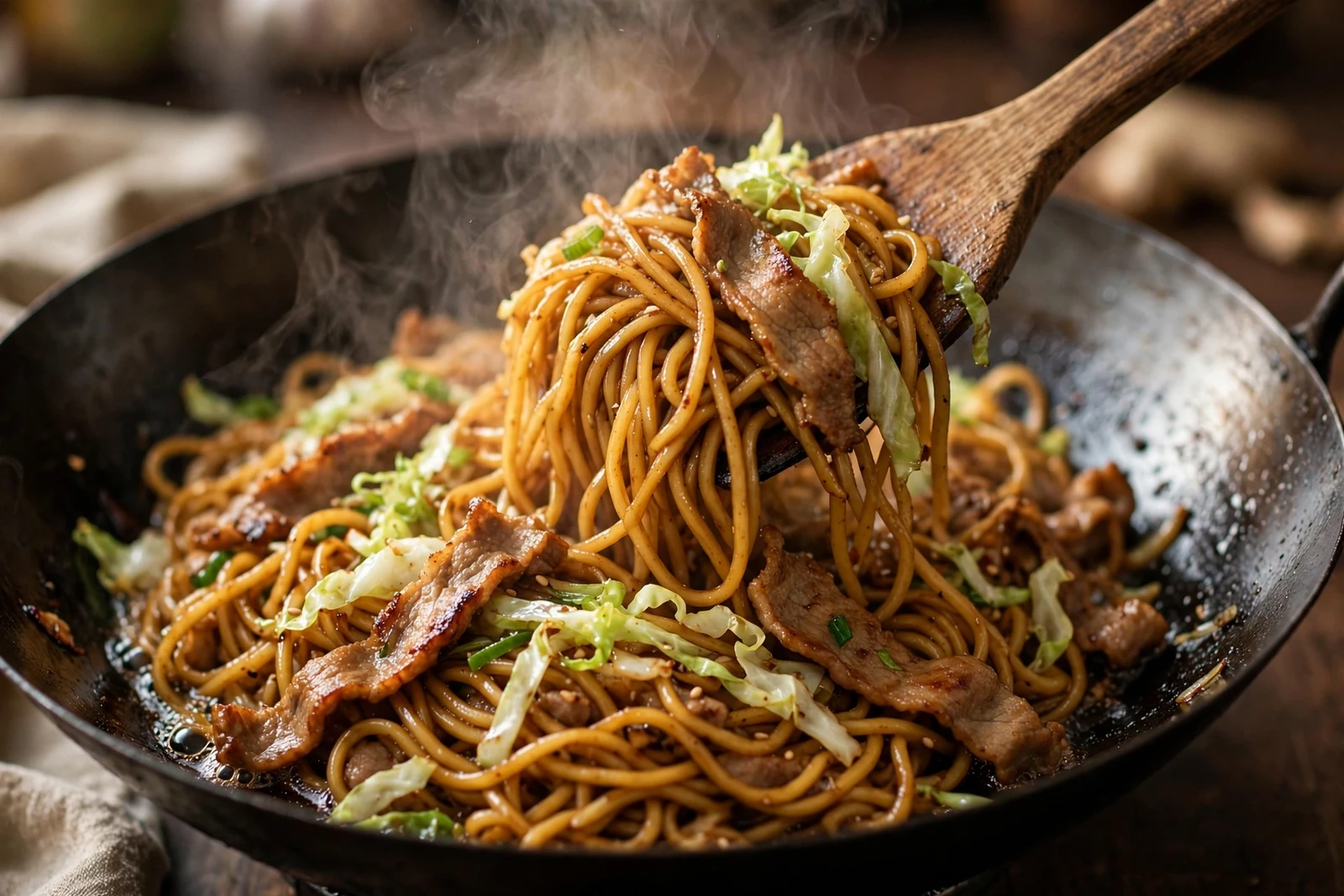
The second half of the secret is heat discipline. Yakisoba fails when noodles steam in their own moisture, which is why most home versions turn out soft and pale. The fix: get the pan (or wok) genuinely hot over high heat, lay the separated noodles in, and leave them alone for 90 seconds. They pick up golden spots and a whisper of char — the same thing that made my wok hei explainer click for readers. Only then do you start tossing. Sauce goes in during the last 60 seconds — the sugar in it burns if it hits the pan too early, and once you taste it at the end you can adjust tang with an extra drop of Worcestershire. This high-heat, quick-cook approach is the same muscle memory you build in a noodle stir-fry like japchae, just with a sweet-tangy Japanese sauce instead of a sesame-soy one.
Ingredients
For the sauce
- 3 tablespoons tonkatsu sauce (Bull-Dog is the classic)
- 2 tablespoons Worcestershire sauce
- 1 tablespoon oyster sauce
- 1 tablespoon sugar
- 1 tablespoon sake
For the stir-fry
- 400 g (14 oz) fresh yakisoba noodles (4 packets of pre-steamed noodles)
- 300 g pork belly, cut into 5 mm strips (or thinly sliced pork loin)
- 300 g green cabbage (about 1/2 medium head), cut into bite-size pieces
- 1 medium carrot, julienned
- 1 medium onion, thinly sliced
- 100 g bean sprouts
- 2 tablespoons neutral oil
- 1/2 teaspoon salt, plus more to taste
- 1/4 teaspoon ground black pepper
For serving
- 2 teaspoons aonori (green seaweed powder)
- 2 tablespoons beni shoga (pickled red ginger)
- Kewpie mayonnaise, optional, for drizzling
How to Make Yakisoba
- Mix the sauce. In a small bowl, whisk the tonkatsu sauce, Worcestershire sauce, oyster sauce, sugar, and sake until the sugar dissolves. Set it by the stove — everything moves fast from here.
- Separate the noodles. Loosen the yakisoba noodles with your hands so no clumps remain. Cold noodles straight from the fridge go in as a brick and cook unevenly; separated noodles sear instead of steam.
- Sear the pork. Heat the oil in a large wok or skillet over high heat until it shimmers. Add the pork, salt, and pepper and stir-fry 2–3 minutes until the edges turn golden and the fat starts rendering. Push the pork to the side of the pan.
- The 90-second char. Add the noodles to the empty side of the pan and spread them flat. Leave them alone for a full 90 seconds — no tossing. You want golden, slightly crisped spots. Add a tablespoon of water if the noodles look dry; it steams off almost instantly.
- Add the vegetables. Toss in the cabbage, carrot, and onion and stir-fry 2 minutes, until the cabbage just starts to wilt at the edges but keeps its crunch. Stir in the bean sprouts last — they need only about 30 seconds.
- Sauce, last. Pour the sauce over everything in the final 60 seconds and toss to coat. Taste: it should be sweet-tangy with a glossy sheen and no sauce pooling at the bottom of the pan. Adjust with another splash of Worcestershire if you like it tangier.
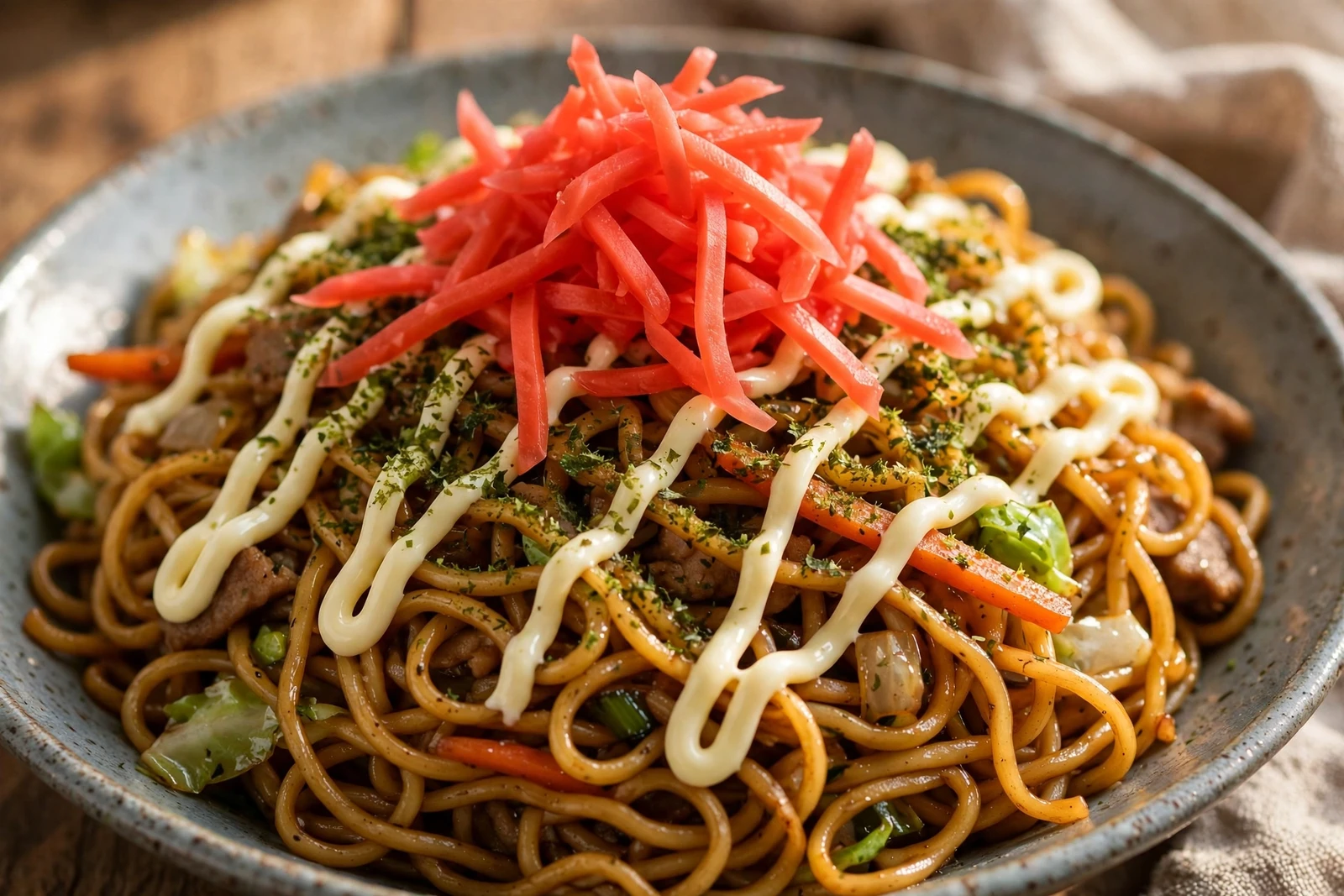
- Plate and top. Slide onto plates, then scatter the aonori over the top and pile on the beni shoga. A zigzag of Kewpie mayonnaise is the Osaka-stall move — optional but festive. Serve immediately, while the noodles are still glossy.
Troubleshooting: Fix My Yakisoba
Soggy noodles, sauce that scorched before the noodles coated, or a plate blander than the festival-stall version — each one has a cause and a fix. Tell the tool what went wrong:
HERB & LIME · KITCHEN HELP
Fix My Yakisoba
Choose what went wrong to see a practical next step.
Possible cause
What to try next
For next time
From Paul's kitchen. Results vary with noodle brand, pan heat, and portion size — adjust timing to your setup.
Quick reference (also works without JavaScript)
The noodles turned soft and soggy
Cause: Too little heat or too much water lets the par-cooked noodles steam instead of sear, and they soak up liquid and go limp.
Try: Next time, crank the heat before the noodles go in and hold off on the water. For the current plate, refry it over high heat 1–2 minutes, tossing constantly, to drive off the extra moisture.
Prevent: Start with a properly hot pan so the noodles sizzle on contact, and keep water additions to a single small splash — the noodles are already par-cooked and only need a few minutes of sear.
The sauce scorched before the noodles were coated
Cause: The sugar in the sauce burns quickly on high heat, so sauce added too early chars before it has a chance to coat the noodles.
Try: Scrape out any scorched bits, then make a fresh half-batch of sauce and add it off the heat, tossing quickly so it coats the already-cooked noodles without another trip over the flame.
Prevent: Hold the sauce until the final minute of cooking and keep the noodles moving once it hits the pan — the sugar in the sauce needs barely a minute to caramelize.
The noodles cooked as one big clump
Cause: Noodles added straight from the fridge as intact blocks fuse in the heat; separated noodles sear as individual strands instead of one mass.
Try: Break the clumps apart with tongs and a splash of warm water over the heat, loosening each bundle before you toss them with the other ingredients.
Prevent: Pull the noodle blocks apart with your hands before they touch the pan — cold, fridge-stiff noodles go in as a brick and never separate evenly in the hot pan.
The pork steamed while the cabbage went mushy
Cause: Thin pork and chunky vegetables added at the same time cook at the wrong speeds: the pork releases juices and steams while the cabbage overcooks waiting for it.
Try: Pile the pork and vegetables onto a plate, clean out the pan if it has pooled liquid, then sear the pork again over high heat for a minute before reuniting everything at the end.
Prevent: Cook the pork alone first over high heat, then add chunky cabbage and carrots later in the process — thin pork and dense vegetables need very different pan time.
The finished plate tastes flat compared to festival stalls
Cause: An under-seasoned sauce can't be rescued once the noodles have absorbed it, and extra water or mild vegetables added late thin the flavor instead of building it.
Try: Whisk an extra half-tablespoon each of tonkatsu and Worcestershire sauce into the pan and toss quickly — but stop there; more sauce after this point only makes things soupy.
Prevent: Taste the mixed sauce before it goes in and adjust the sweet-tangy balance up front, since the sauce only clings properly once — and skip watery add-ins like tomato or cucumber, which dilute everything.
Yakisoba: Japanese Stir-Fried Noodles
Ingredients
Method
- Mix the sauce. In a small bowl, whisk the tonkatsu sauce, Worcestershire sauce, oyster sauce, sugar, and sake until the sugar dissolves. Set it by the stove — everything moves fast from here.
- Separate the noodles. Loosen the yakisoba noodles with your hands so no clumps remain. Cold noodles straight from the fridge go in as a brick and cook unevenly; separated noodles sear instead of steam.
- Sear the pork. Heat the oil in a large wok or skillet over high heat until it shimmers. Add the pork, salt, and pepper and stir-fry 2–3 minutes until the edges turn golden and the fat starts rendering. Push the pork to the side of the pan.
- The 90-second char. Add the noodles to the empty side of the pan and spread them flat. Leave them alone for a full 90 seconds — no tossing. You want golden, slightly crisped spots. Add a tablespoon of water if the noodles look dry; it steams off almost instantly.
- Add the vegetables. Toss in the cabbage, carrot, and onion and stir-fry 2 minutes, until the cabbage just starts to wilt at the edges but keeps its crunch. Stir in the bean sprouts last — they need only about 30 seconds.
- Sauce, last. Pour the sauce over everything in the final 60 seconds and toss to coat. Taste: it should be sweet-tangy with a glossy sheen and no sauce pooling at the bottom of the pan.
- Plate and top. Slide onto plates, then scatter the aonori over the top and pile on the beni shoga. A zigzag of Kewpie mayonnaise is the Osaka-stall move. Serve immediately, while the noodles are still glossy.
Notes
Paul’s Notes
- Pork before vegetables, always. Thin pork strips need 2–3 minutes of direct heat to render and brown; cabbage needs barely 2. Adding them together steams the pork and overcooks the cabbage in the same sad pan.
- Don’t drown the noodles in water. One tablespoon of water or sake to loosen them is plenty — the noodles are pre-steamed, not raw. Two splashes and you’ve got steam, then soup.
- Cut the cabbage chunky. Bite-size, not shredded. Shredded cabbage collapses in a minute; chunky pieces stay crisp through the whole stir-fry.
- No pork? Thinly sliced chicken breast or shrimp work — chicken needs about the same timing as pork, shrimp about 90 seconds less.
Variations
- Seafood yakisoba: swap the pork for shrimp and squid — the festival-favorite “kai yakisoba.”
- Vegetarian: leave out the pork and oyster sauce; use a vegetarian Worcestershire-style sauce and add sliced shiitake mushrooms for depth.
- Spicy: drizzle chili oil over the finished plate — it plays beautifully against the sweet sauce.
- No tonkatsu sauce? Mix 2 tablespoons ketchup with 1 tablespoon Worcestershire sauce as an emergency substitute; it’s close enough in the blend.
More Japanese Recipes
If yakisoba hit the spot, keep the Japanese streak going: Okonomiyaki: Japanese Savory Cabbage Pancakes for the other festival-stall classic (with the batter ratio that makes flipping work), Chicken Karaage: Japanese Fried Chicken for the crispiest fried chicken you’ll make at home, Nikujaga: Japanese Simmered Meat and Potatoes for a gentle weeknight simmer, and Tamagoyaki: Japanese Rolled Omelet — the sweet rolled egg that belongs beside almost any Japanese meal.