
Japanese curry udon is the bowl I make when I want curry flavor but not a plate of rice. Thick, chewy udon noodles sit in a golden broth that tastes like Japanese curry loosened into soup: warm spices first, dashi underneath, a little sweetness at the end. The broth coats the noodles without turning into the thick sauce you spoon over rice. It takes about 40 minutes, and most of that time is the broth simmering while the noodles cook in a separate pot.

What is Japanese curry udon?
Japanese curry udon, or kare udon, is a hot noodle soup from Japan. Thick udon noodles are served in a dashi-based broth seasoned with Japanese curry roux, soy sauce, and mirin. It sits between two familiar dishes. Compared with plain udon soup, the broth is richer, darker, and spiced. Compared with curry rice, the same curry flavor is thinned with dashi until it pours like soup, so you sip it with a spoon and slurp the noodles from the same bowl.
Expect a broth that clings, not a stew. A good curry udon broth coats a spoon lightly and still flows. If it mounds on the spoon like gravy, it needs more dashi. The noodles should stay springy, the chicken tender, and the onion soft enough to melt into the broth. My Japanese curry rice uses the same roux in its thicker, rice-ready form, so tasting the two side by side shows exactly how much the extra dashi changes the dish.
Cook the noodles separately
Bring a large pot of unsalted water to a rolling boil and cook the frozen udon for 2 to 3 minutes, just until the bundles loosen and heat through. Drain the noodles and rinse them under cold running water, tossing with chopsticks so the strands separate. Rinsing washes off surface starch, which is what turns a bowl into a gummy lump if the noodles sit in a colander. Set the rinsed noodles aside. They will warm up again the moment the hot broth hits them, so there is no need to keep them hot. For a clear-broth contrast, my kitsune udon serves the same thick noodles in a light dashi soup instead of curry.
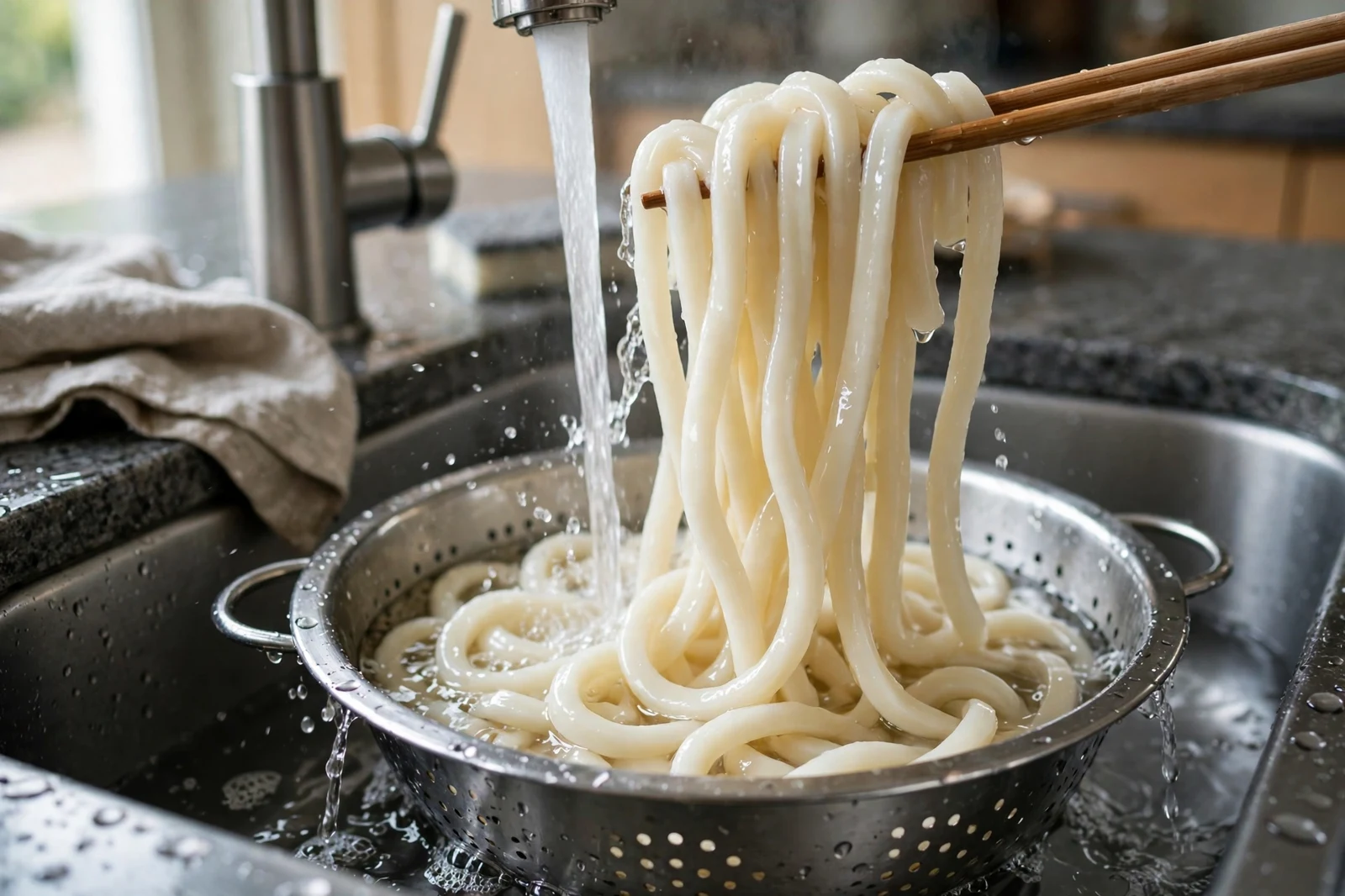
Do not cook the noodles in the curry broth. Noodles left simmering in curry soak up liquid, swell, and turn soft, and their starch thickens the broth past soup. Cooking them apart keeps both parts right: springy noodles and a broth you can adjust on its own. If dinner is delayed, keep the noodles and broth in separate pots and combine them only when everyone sits down.
Make the curry broth
Heat the oil in a large pot over medium heat. Add the onion and carrot and cook for about 5 minutes, stirring now and then, until the onion softens and turns translucent at the edges. Add the chicken, ginger, and garlic and cook for 2 to 3 minutes, just until the chicken loses its raw pink color on the outside. It will finish cooking in the broth, so do not brown it hard here.
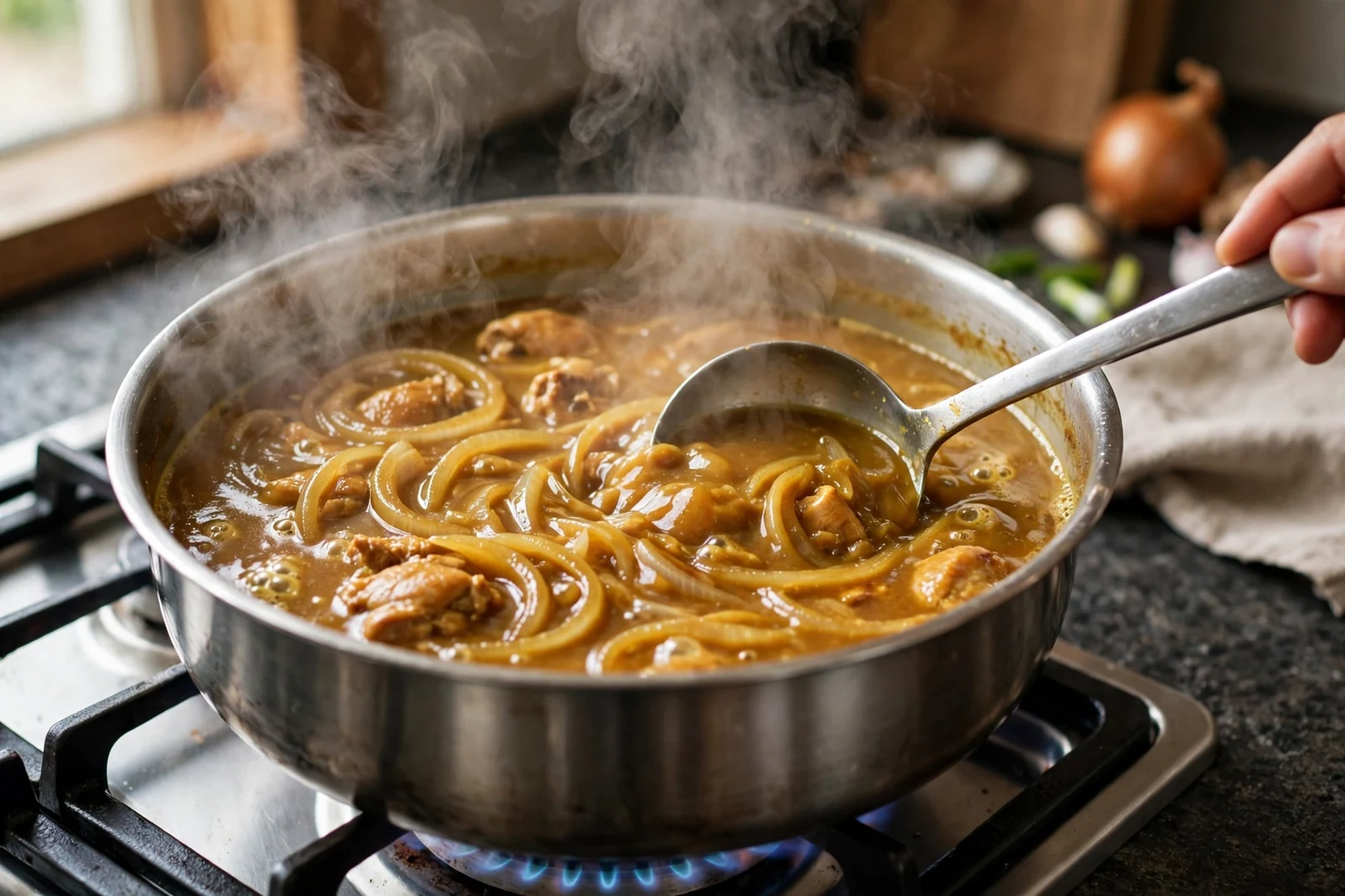
Pour in the dashi, soy sauce, and mirin. Bring the pot to a gentle simmer and cook for 10 minutes, skimming off any foam that rises. The carrot should be tender and the chicken cooked through by the end of this simmer. Take the pot off the heat and add the curry roux blocks one at a time, stirring each one in a ladleful of hot broth until it dissolves before adding the next. Roux that sinks to the bottom of a hot pot can scorch before it melts, and dissolving it off the heat avoids that. Return the pot to low heat and simmer for 5 minutes, stirring, until the broth turns glossy and coats a spoon lightly.
Taste the broth before you serve it. The ratio in this recipe is 4 roux blocks to 6 cups of dashi, which keeps the broth soupy rather than stewy. If your bowl still pours thick, stir in hot dashi a quarter cup at a time until it flows the way you like. If it tastes flat, add a small pinch of salt or another teaspoon of soy sauce, not another roux block, since more roux thickens before it seasons.
Assemble the bowls
Divide the rinsed noodles among 4 deep bowls. If the noodles have cooled and clumped, dip them in hot water for 30 seconds and drain again before dividing them. Ladle the hot curry broth over the noodles, making sure each bowl gets onion, carrot, and chicken. Top with sliced scallions and a pinch of shichimi togarashi. Serve at once. Curry udon waits badly: noodles left standing in hot broth keep drinking it up, so the last bowl served is always softer than the first.

Tips and variations
For a beef version, swap the chicken for 1 pound of very thinly sliced beef and cook it the same way, adding it with the ginger and garlic. Thin slices cook in a few minutes in the simmering broth, while thick chunks stay tough. For a meatless bowl, leave out the chicken and add a block of firm tofu cut into cubes plus a handful of mushrooms, simmering them in the dashi for the same 10 minutes. Use kombu-only dashi for that version if you want the whole bowl meat-free.
Leftovers keep best apart. Store the broth and the noodles in separate containers in the fridge for up to 2 days. Reheat the broth on the stove until it simmers, stirring from the bottom so the roux does not catch, and cook a fresh portion of noodles to go with it. Reheated noodles that sat in broth turn soft and never spring back, so the separate containers are worth the extra dish.
Troubleshooting: Fix My Japanese Curry Udon
If a bowl comes out wrong, the cause is usually one of five things: broth that turned thick like stew, noodles that went soggy, broth that tastes too salty, curry flavor that tastes weak, or noodles that clumped into a lump. Work through them one at a time and the next bowl lands closer.
HERB & LIME · KITCHEN HELP
Fix My Japanese Curry Udon
Choose what went wrong to see a practical next step.
Possible cause
What to try next
For next time
From Paul's kitchen. Results vary with noodle type, roux brand, and stove heat, adjust timing to your setup.
Quick reference (also works without JavaScript)
The broth turned thick like stew
Cause: Too much roux for the liquid, or noodles cooked in the broth added starch and absorbed liquid.
Try: Stir in hot dashi a quarter cup at a time until the broth pours like soup again.
Prevent: Use 4 roux blocks to 6 cups of dashi, and cook the noodles in a separate pot.
The noodles went soggy
Cause: Noodles left standing in hot broth keep absorbing liquid and soften past their best texture.
Try: Serve the next batch at once, and cook fresh noodles for any leftover broth instead of reheating noodles that sat in broth.
Prevent: Keep noodles and broth apart until serving, and ladle the hot broth over the noodles at the table.
The broth tastes too salty
Cause: Curry roux is already seasoned, so extra soy sauce on top of it pushes the salt too far.
Try: Thin the pot with unsalted dashi or water, a quarter cup at a time, and taste after each addition.
Prevent: Measure the soy sauce instead of pouring freely, and taste the broth before adding any extra salt.
The curry flavor tastes weak
Cause: Roux that never fully dissolved leaves its flavor in lumps at the bottom instead of spread through the broth.
Try: Take the pot off the heat, dissolve each block in a ladleful of hot broth, stir it back in, and simmer on low for 5 minutes.
Prevent: Dissolve roux off the heat one block at a time, and keep the final simmer low instead of at a hard boil.
The noodles clumped into a lump
Cause: Surface starch glues drained noodles together when they sit untouched in a colander.
Try: Rinse the noodles under cold water and toss them with chopsticks to separate the strands, then dip briefly in hot water before serving.
Prevent: Rinse noodles right after draining, and never leave them standing dry in the colander while the broth finishes.
Japanese Curry Udon
Ingredients
Method
- Bring a large pot of unsalted water to a rolling boil and cook the frozen udon for 2 to 3 minutes, until loosened and heated through. Drain, rinse under cold running water, toss with chopsticks to separate, and set aside.
- Heat the oil in a large pot over medium heat. Add the onion and carrot and cook for about 5 minutes, until the onion softens.
- Add the chicken, ginger, and garlic and cook for 2 to 3 minutes, until the chicken loses its raw pink color on the outside.
- Pour in the dashi, soy sauce, and mirin. Simmer gently for 10 minutes, skimming foam, until the carrot is tender and the chicken is cooked through.
- Take the pot off the heat. Dissolve the curry roux blocks one at a time in a ladleful of hot broth, then stir them into the pot. Return to low heat and simmer for 5 minutes, stirring, until the broth is glossy and coats a spoon lightly. Thin with hot dashi a quarter cup at a time if it pours too thick.
- Divide the noodles among 4 deep bowls, ladle the hot broth over them with onion, carrot, and chicken in each bowl, and top with scallions and shichimi togarashi. Serve at once.