
Bok choy, gai lan, yu choy, and water spinach all share the same heartbreak: they go into the pot a vivid green and come out olive and tired if the timing slips by even a minute. Blanching — a brief swim in boiling water, then a quick stop in cold water — is the technique that keeps that color locked in. It tenderizes thick stems without turning leaves to mush, and it gives you a clean, ready-to-finish vegetable that can go straight onto a plate with garlic oil or under a spoon of oyster sauce.
If you already make garlic bok choy on weeknights, blanching is the quieter cousin of that stir-fry: less oil up front, more control over texture, and a green that holds its color on the table instead of fading while the rest of dinner catches up. And if you grow your own, the harvest advice in our Asian greens planting calendar pairs naturally with this method — tender homegrown leaves need even less time than sturdy market bunches.
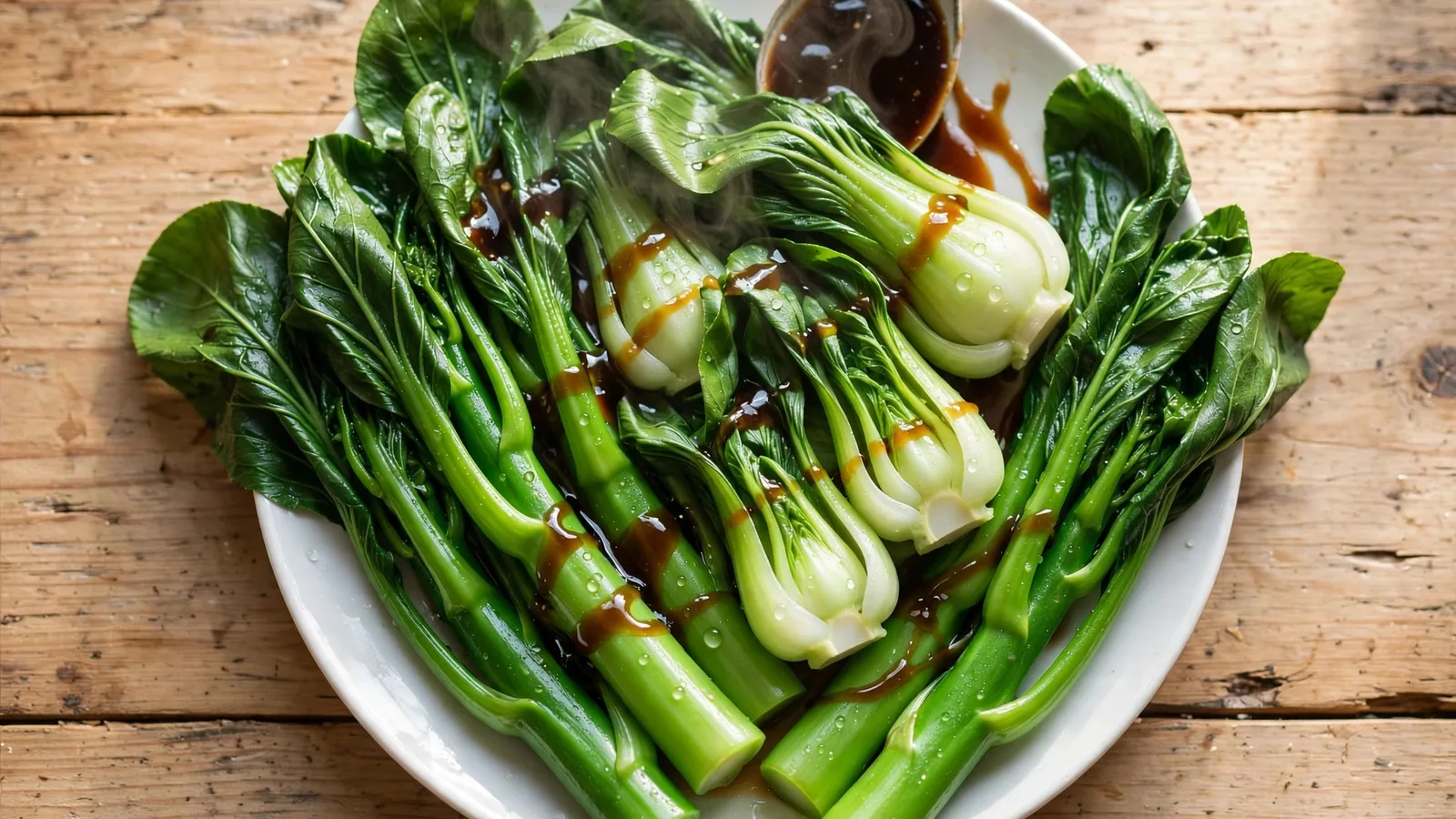
What Blanching Does, and When to Skip It
Blanching does three jobs at once. It seasons the greens lightly from the inside when the water is salted. It softens thick stems just enough that stems and leaves finish together. And it sets the green color so the vegetable stays bright through saucing and serving.
It is the right choice when you want a clean vegetable side, when greens will be dressed and served at room temperature, or when you are cooking ahead for fried rice, noodle soups, and lunch bowls later in the week. Tender leaves blanched for 30 seconds reheat gently without turning grey.
Skip it when the greens are headed straight into a hot wok for a fast stir-fry with garlic and sauce — there, the wok heat does the work and an extra blanch only adds a soggy step. Skip it, too, for very delicate herbs and lettuces that wilt on contact with heat. Save blanching for leafy cooking greens with real stems: bok choy, Shanghai bok choy, gai lan (Chinese broccoli), yu choy, choy sum, mustard greens, and water spinach.
The Setup: Water, Salt, and Ice
Color problems usually start before the greens touch the water. Use too small a pot and the temperature crashes the moment the bunch goes in; the greens then simmer instead of blanch, and simmered greens go dull.
Water: at least 4 quarts (about 4 liters) for up to 1 pound (450 g) of greens. The greens should move freely, not pack in layers.
Salt: 1 tablespoon of fine sea salt or table salt per quart of water. That sounds like a lot, and it is meant to — salty water seasons as it cooks and helps the green read brighter. Most of it stays in the pot.
A splash of oil (optional): a teaspoon of neutral oil in the water helps the leaves gloss lightly and keeps them from clinging. Cantonese kitchens often add it for gai lan and yu choy. It is optional, not required for color.
Ice bath: a large bowl of cold water with a good handful of ice, set right beside the stove before you start. If you will eat the greens hot within a minute or two, you can skip the ice and go straight to draining and saucing. If they will sit for more than a few minutes, the ice bath is what stops the cooking and holds the color.
Have a spider strainer or tongs ready, plus a clean towel or salad spinner for drying. Wet greens dilute every sauce you put on them, so the drying step matters as much as the boiling step.
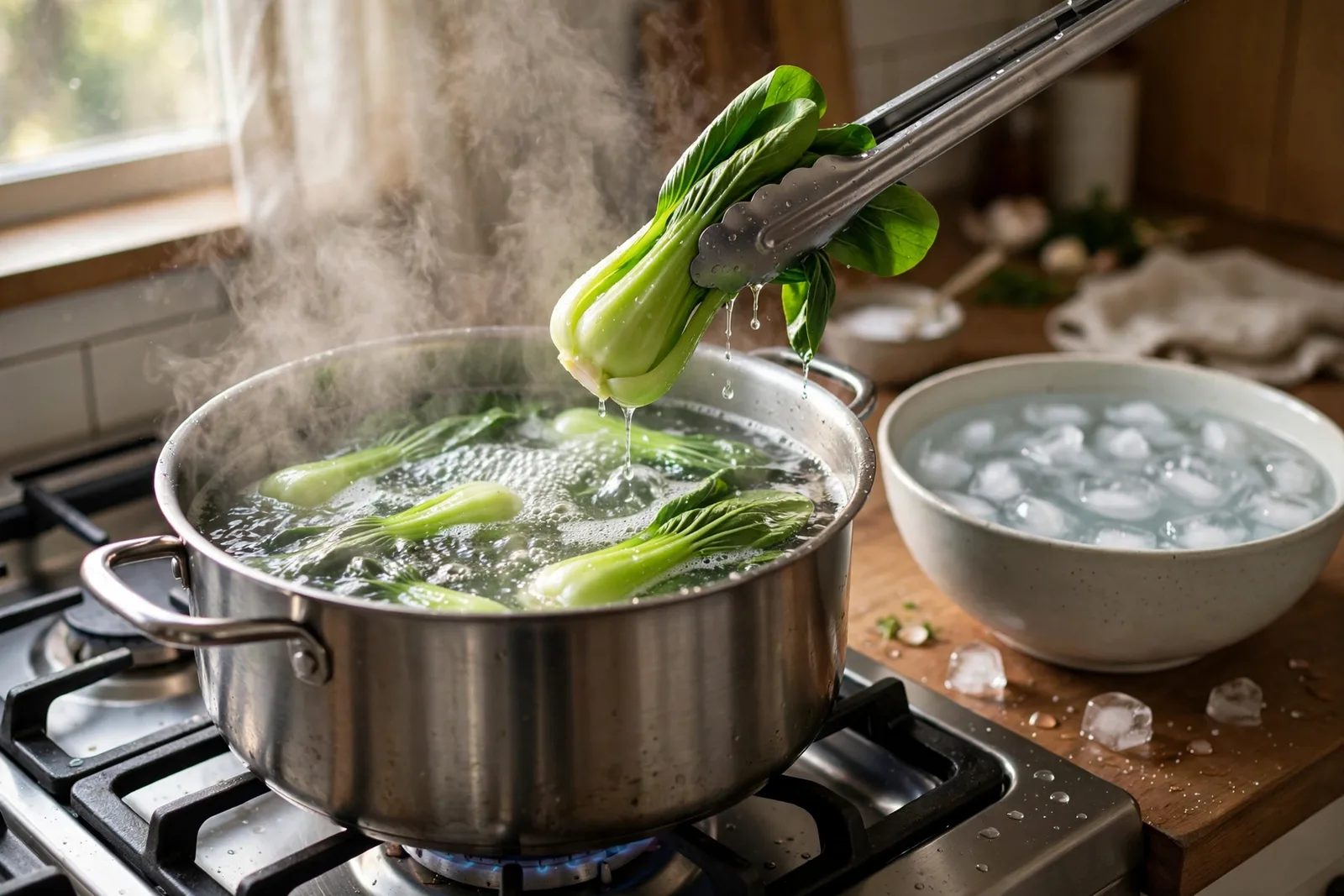
Timing by Green: Thin Leaves First, Thick Stems Last
The single rule that decides success: stems need more time than leaves. Cook by thickness, not by the clock alone, and pull the greens when the stems turn bright and just bend — they will soften a touch more as they drain.
| Green | How to cut it | Time in boiling water | What done looks like |
|---|---|---|---|
| Baby bok choy | Halve or quarter lengthwise, keep root end intact | 60–90 seconds | Stems bright white-green and just tender when squeezed |
| Shanghai bok choy | Halve lengthwise | 90 seconds to 2 minutes | Thick base yields to gentle pressure, leaves silky |
| Gai lan (Chinese broccoli) | Peel thick stems if fibrous; keep whole or halve long stems | 2–3 minutes | Stems vivid green, tender but still with a snap |
| Yu choy / choy sum | Whole stems, trim dry ends | 60–90 seconds | Stems bright, flower buds still intact |
| Water spinach (kangkong) | Cut into 3-inch lengths, stems first | 30–60 seconds (stems 30 sec before leaves) | Stems crisp-tender, leaves just wilted |
| Mustard greens | Cut into 2-inch pieces | 90 seconds to 2 minutes | Bitterness softened, color deep green |
| Tatsoi and tender bunched leaves | Whole leaves | 30–45 seconds | Leaves wilted and glossy, not limp |
If you are blanching mixed bunches, start the thickest stems first and add leaves 30 seconds later so everything leaves the water together. For water spinach, the hollow stems and the leaves cook at very different speeds — stems in first, leaves for the last half minute. This is the same bunch you might grow at home; our notes on growing water spinach cover how to harvest it young, when it needs the shortest blanch of all.
Step by Step: The Method That Keeps Color
1. Bring the water to a full boil first. Salt it once it boils, stir to dissolve, and let it return to a rolling boil. Do not add greens to water that is only simmering.
2. Set the ice bath within arm's reach. Fill a large bowl with cold water and ice. If you plan to sauce and serve immediately, set a colander in the sink instead.
3. Add greens in one loose batch. Lower them in with tongs or a spider. Stir once so no leaves hide above the water line. Start timing as soon as the water returns to a boil — about 30 seconds after the greens go in.
4. Watch color, not just the timer. The greens will turn a brighter, almost electric green in the first 30 seconds. That is your signal that you are on track. Pull them when the thickest stem bends easily but still resists a little.
5. Lift straight into the ice bath. Move the greens directly from pot to ice water and swish for 30 seconds, just until cool. Longer soaking waterlogs leaves and washes out seasoning.
6. Drain and dry well. Lift the greens out, let them drip, then press very gently between towels or spin briefly. For bok choy halves, a gentle squeeze along the stem pushes out hidden water without crushing the leaves.
From here the greens are cooked and ready. Eat them plain with a drizzle of toasted sesame oil and a pinch of salt, or finish them hot in one of the three ways below.
Three Finishes to Have Ready
Blanched greens are a base, not a finished dish. The finish takes under two minutes and is where most of the flavor lives. Keep the greens dry before saucing — sauce slides off wet leaves and pools in the plate.
Classic oyster sauce drizzle. Warm 2 tablespoons of oyster sauce with 1 teaspoon of sugar, 1 teaspoon of soy sauce, and 2 tablespoons of the blanching water until it loosens and shines. Spoon it over gai lan or yu choy in a thin line, not a flood. Our oyster sauce guide explains how to choose a bottle that tastes like oysters, not just salt and caramel color.
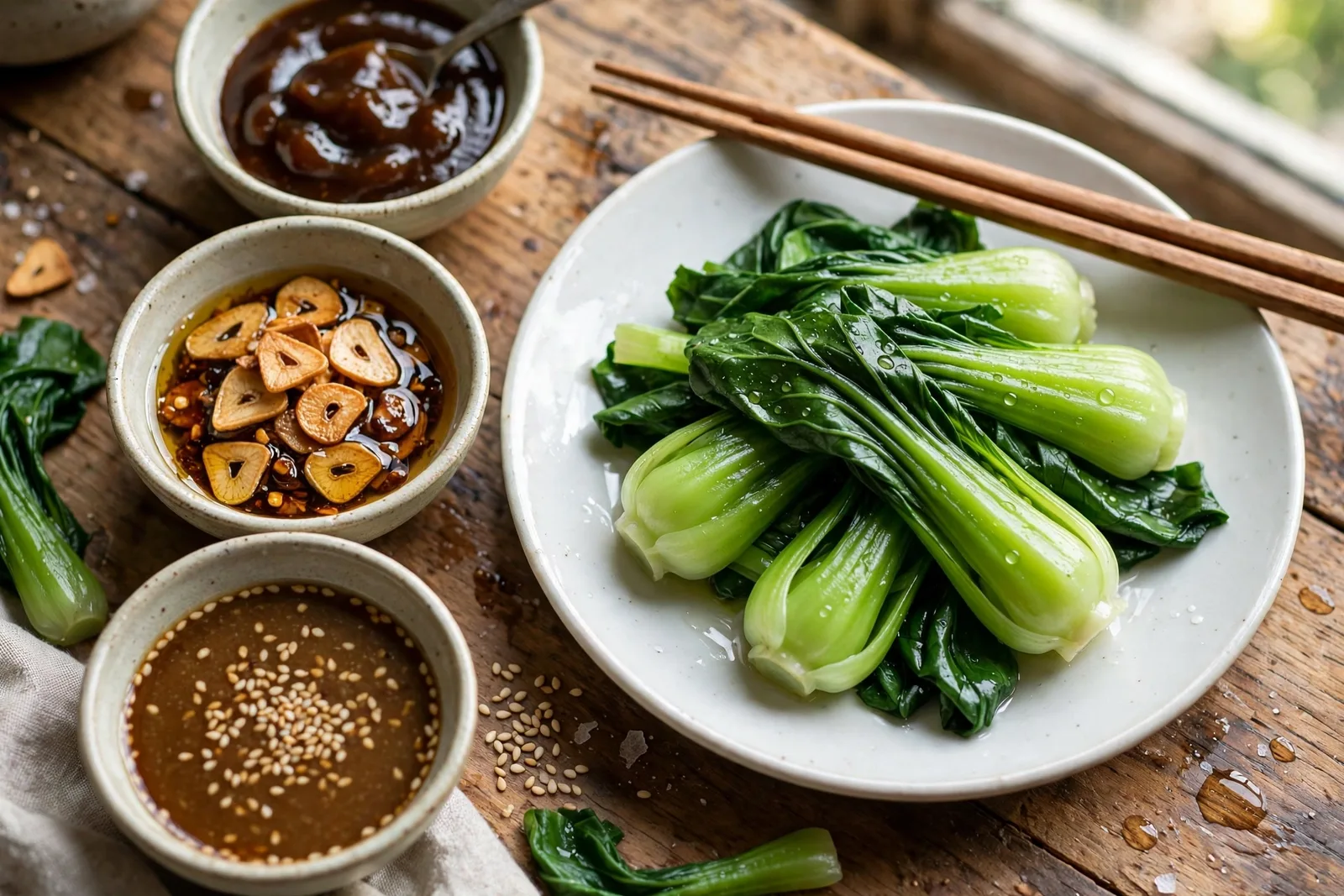
Hot garlic oil. Heat 2 tablespoons of neutral oil until shimmering, take it off the heat, and stir in 3 cloves of garlic sliced thin. Let it sizzle for 20 seconds, then pour it, garlic and all, over bok choy or water spinach. Finish with a pinch of salt. The garlic should stay pale gold — if it browns, start the oil again, because browned garlic turns the whole plate bitter.
Sesame and soy. Whisk 1 tablespoon of soy sauce, 1 teaspoon of toasted sesame oil, 1/2 teaspoon of rice vinegar, and a pinch of sugar. Toss with tatsoi or Shanghai bok choy and scatter toasted sesame seeds on top. This finish suits greens served at room temperature, alongside richer mains that want a clean, bright side.
Mistakes That Turn Greens Dull
Too little water. A crowded pot drops the temperature and the greens stew in their own steam. If you only have a small pot, blanch in two smaller batches rather than one packed one. Two bright batches beat one dull one every time.
Timing from the wrong moment. Timing starts when the water returns to a boil after the greens go in, not when they first touch the water. Greens sitting in warming water lose color before they start cooking.
Skipping the dry. Water clinging to leaves dilutes sauce, cools the finish, and makes oyster sauce look grey and thin. Thirty seconds of drying does more for the final plate than any extra seasoning.
Over-blanching to "be safe." Greens continue to soften as they drain. Pull them a shade underdone — firm stems and vivid leaves — and they will arrive at the table exactly right. Mushy greens cannot be rescued, but underdone ones can take 20 extra seconds back in hot water or a quick toss in a warm pan.
Salting after, not during. Salt in the blanching water seasons the stems from within. Salt sprinkled on afterward sits on the surface and tastes sharp in one bite, absent in the next.
Storing and Reheating Blanched Greens
Blanched greens hold well, which is part of their appeal for weeknight cooking. Cool them fully, dry them well, and store in a sealed container lined with a paper towel. They keep for 3 days in the refrigerator and stay noticeably brighter than raw greens cooked from scratch on day three.
Reheat gently. A 30-second dip in hot (not boiling) water, a brief steam, or a quick toss in a hot pan with a teaspoon of oil is enough. Microwaving works if you cover the plate and use short bursts — long microwave time is the fastest route back to olive drab.
Blanched and dried greens also fold neatly into other dishes: chopped into fried rice, laid over noodle soups at the last minute, or tucked into dumpling fillings where raw greens would release too much water. For a fuller plate, serve a pile of blanched gai lan beside a mixed vegetable stir-fry — the contrast between the clean blanched green and the saucy stir-fry is exactly why both methods earn their place.
A Quick Picker: Which Green Needs What
You want the mildest, most forgiving green. Choose baby bok choy. It tolerates an extra 20 seconds without complaint and suits garlic oil best.
You want a green with real stem crunch. Choose gai lan. Give it the full 2 to 3 minutes, peel any thick, fibrous stems, and finish with oyster sauce.
You are cooking for kids or anyone wary of bitterness. Choose yu choy or Shanghai bok choy, blanch on the shorter side, and use the sesame and soy finish. Mustard greens, even blanched, keep a peppery bite that not everyone wants.
Your greens came from the garden this morning. Cut the time by about a third. Young, just-picked leaves and stems are tender before they ever meet the water. Our guide to storing fresh herbs and greens covers how to hold that just-picked quality for a day or two if dinner plans change.
Get the water quantity, the salt, and the timing right, and blanching becomes the calmest job in the kitchen: one pot, one bowl of ice, and a plate of greens that stays as green as the bunch you brought home.