
Doenjang jjigae is the stew that shows up on Korean tables week after week, bubbling in a heavy pot and landing right in the center so everyone can spoon from it. It is built on doenjang, the fermented soybean paste that gives the broth its deep, savory, slightly funky backbone. Around that paste go the vegetables you have on hand, cubes of tofu, and a broth that comes together while you chop. Forty minutes later you have a stew that tastes like it simmered all afternoon.
If miso soup is the gentle introduction to fermented soybean pastes, doenjang jjigae is the heartier cousin. Korean doenjang is chunkier and more pungent than Japanese miso, and the stew built around it is loaded with vegetables rather than sipped from a small bowl.
What Doenjang Jjigae Is
Jjigae means stew in Korean, and doenjang jjigae is the everyday version cooks make without a special occasion or a trip to the store. The formula is loose: a quick anchovy and kelp broth, a spoonful of paste whisked in, then potatoes, onion, zucchini, mushrooms, tofu, and scallions in roughly that order. Some families add clams or shrimp. Some add thin slices of beef. Some keep it fully vegetable-based with mushroom broth. The paste holds all of it together.
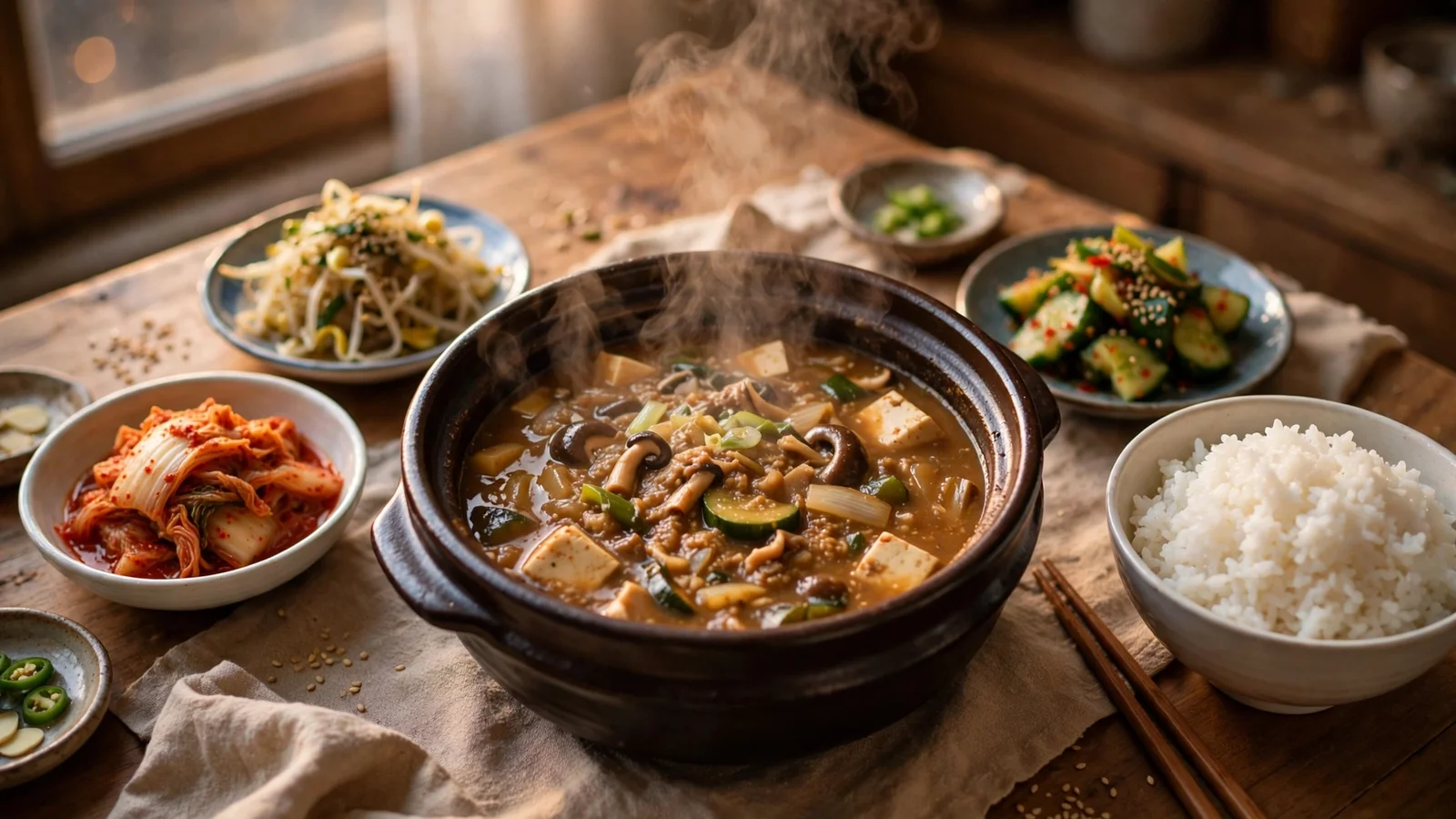
The stew is traditionally served still bubbling in a ttukbaegi, a black earthenware pot that holds heat at the table. A regular Dutch oven or heavy saucepan does the same job at home. What matters is serving it hot, with rice alongside to spoon the broth over.
The Paste Is the Whole Point
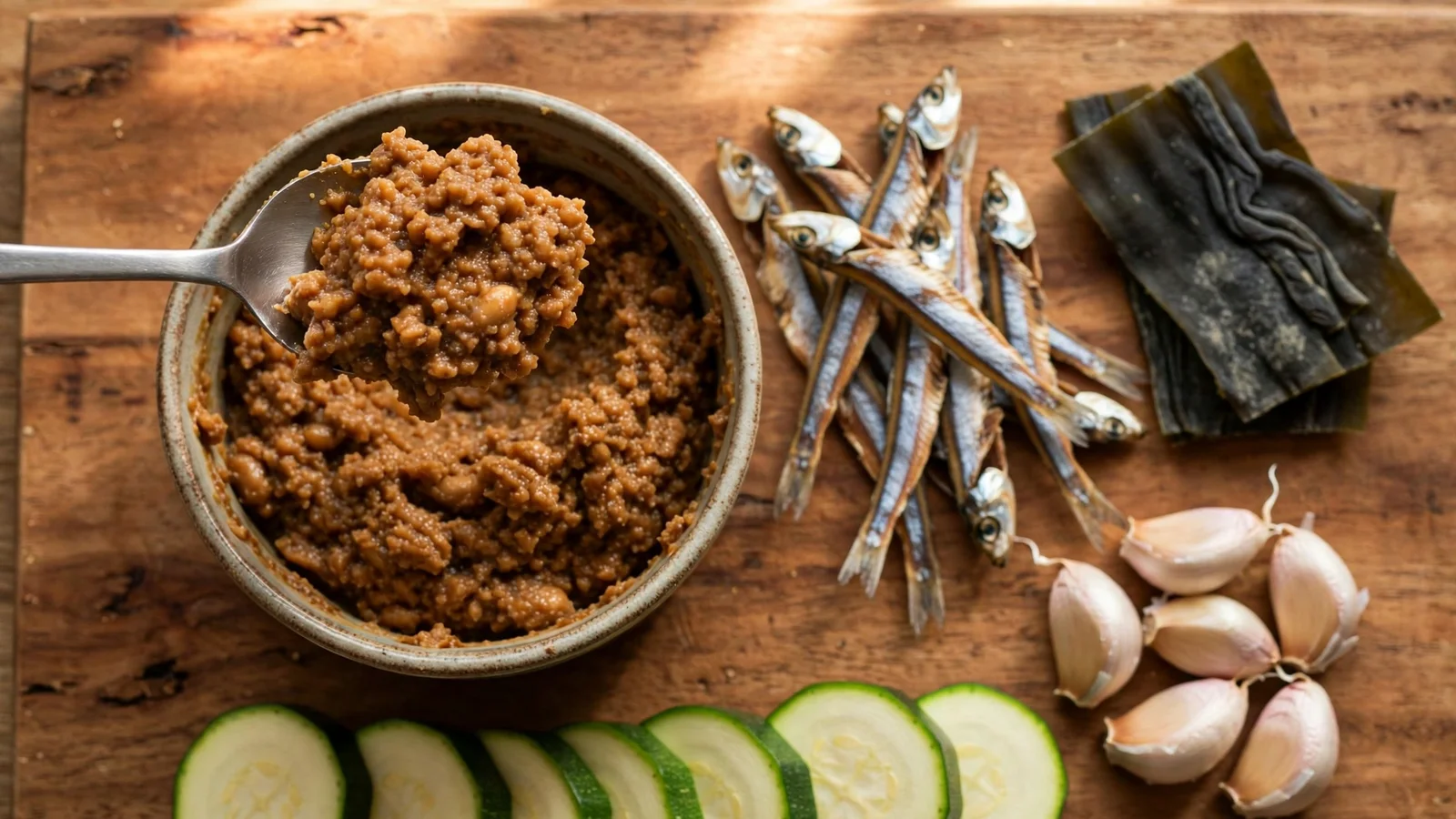
Doenjang varies a lot by brand and by how long it was fermented. A young paste tastes milder and sweeter; a long-aged paste is darker, saltier, and far more pungent. That range means the amount below is a starting point, not a law. Start with a little less than you think you need, taste the broth once the vegetables have simmered, and whisk in more if the flavor feels thin.
A few practical notes on buying it: doenjang is sold in tubs at Korean markets and in the international aisle of larger grocery stores. Check the ingredient list if you are cooking for someone avoiding gluten, since some brands include wheat. Once opened, the tub keeps in the fridge for months, and the surface darkens over time. That color change is normal.
For a sense of how doenjang compares with its Japanese relative, our Classic Miso Soup uses the lighter, smoother paste in a very different kind of bowl.
Doenjang Jjigae
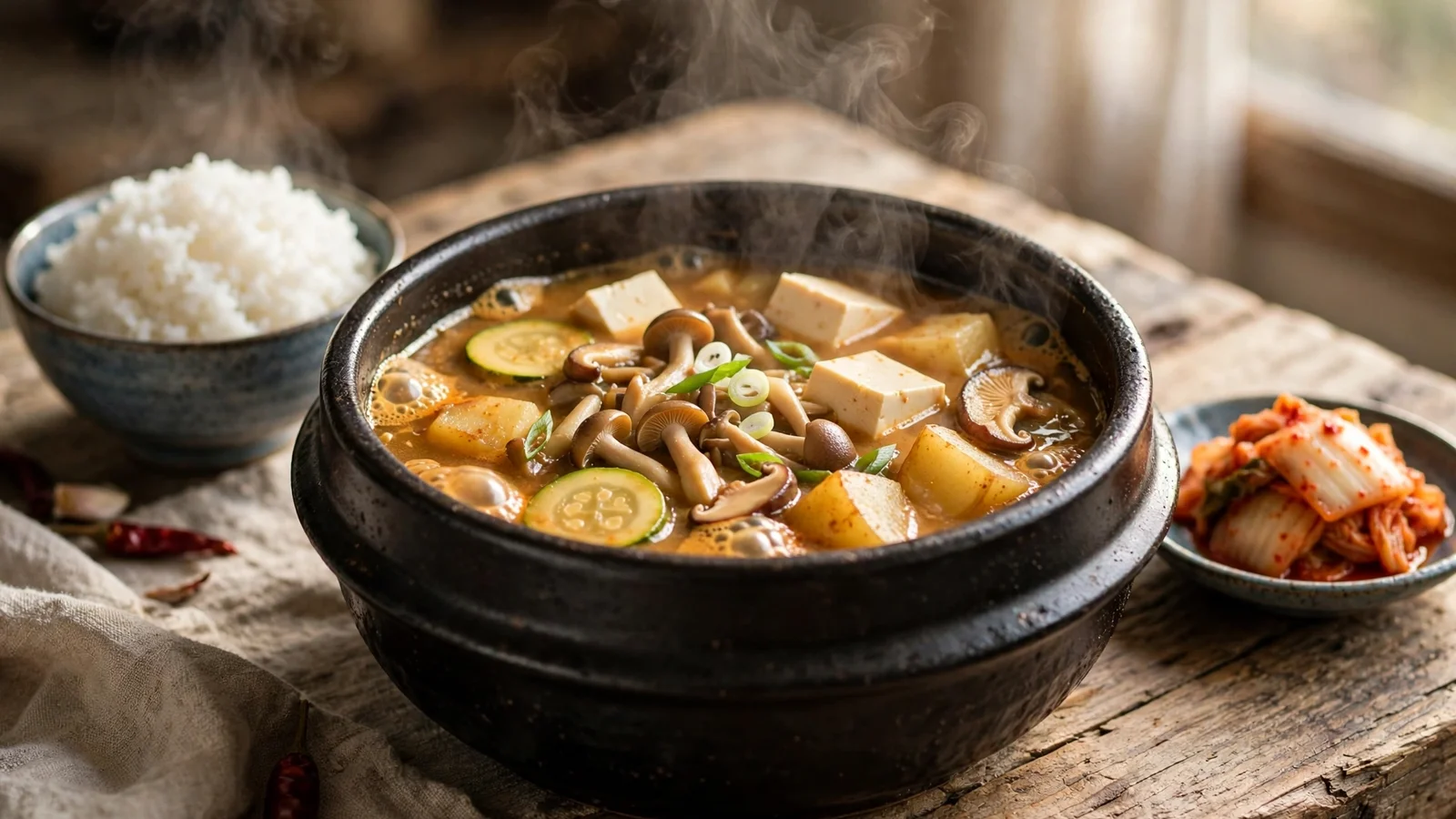
A hearty Korean soybean paste stew with tofu, zucchini, potato, and mushrooms in a quick anchovy-kelp broth, served bubbling with rice.
Prep time: 15 minutes
Cook time: 25 minutes
Total time: 40 minutes
Servings: 4
Ingredients
For the broth:
- 4 cups (960 ml) water
- 6 large dried anchovies, heads and guts removed
- 1 piece dried kelp (dashima), about 4 inches square
For the stew:
- 1/4 to 1/3 cup (60 to 80 g) doenjang (Korean fermented soybean paste), to taste
- 2 cloves garlic, minced
- 1 tablespoon gochugaru (Korean chili flakes), optional
- 1 small potato (about 5 ounces), peeled and cut into 1/2-inch chunks
- 1/2 medium yellow onion, sliced
- 1 small zucchini, cut into 1/2-inch half-moons
- 4 ounces mushrooms (shiitake, king oyster, or cremini), sliced
- 7 ounces (200 g) firm tofu, cut into 3/4-inch cubes
- 2 scallions, sliced into 1-inch pieces
- 1 green chili (Korean or jalapeño), thinly sliced, optional
- Steamed white rice, for serving
Instructions
- Make the quick broth. Combine the water, anchovies, and kelp in a medium pot and bring to a boil over medium-high heat. As soon as it boils, remove the kelp so it does not turn bitter. Lower the heat and simmer the anchovies for 8 to 10 minutes more. Strain the broth and discard the solids.
- Return the broth to the pot. Set a small strainer over the surface, add the doenjang to the strainer, and whisk it through with a spoon so it dissolves smoothly without lumps. Stir in the garlic and gochugaru if using.
- Add the potato and onion and simmer for about 5 minutes, until the potato is just starting to soften at the edges.
- Add the zucchini and mushrooms and simmer 4 to 5 minutes more, until the vegetables are nearly tender.
- Gently add the tofu, scallions, and chili if using. Simmer 3 to 5 minutes, just until the tofu is heated through. Avoid a hard boil at this stage so the tofu keeps its shape.
- Taste the broth. If it needs more depth, whisk in another spoonful of doenjang. If it tastes too salty, add a splash of water. The stew should be bold and savory, with the vegetables still distinct.
- Serve the stew bubbling, straight from the pot, with steamed rice and any small sides you like.
Notes
- Doenjang brands vary widely in saltiness. Start with 1/4 cup, taste, and add more in small spoonfuls rather than seasoning at the end with salt.
- Keep the finished stew at a gentle simmer, not a rolling boil. Hard boiling can make the paste taste harsh and break up the tofu.
- Skim any foam that rises in the first few minutes after the paste goes in. It keeps the broth cleaner-tasting.
Building the Broth Without Anchovies
The anchovy-kelp broth takes ten minutes and gives the stew its base layer of savoriness, but it is not the only way in. For a vegetarian pot, simmer dried shiitake mushrooms with the kelp instead, and use the soaking liquid as your broth. Low-sodium chicken or vegetable stock from a carton also works; if you use stock, cut back slightly on the doenjang at first, since boxed stock brings its own salt.
One thing to avoid is plain water with nothing behind it. The paste is strong, but on its own in water the stew tastes flat. Even a quick mushroom soaking liquid gives it something to stand on.
Variations Worth Trying
Once the base formula clicks, doenjang jjigae adapts to whatever is in the fridge.
- Seafood version: Add a handful of littleneck clams or peeled shrimp in the last 4 to 5 minutes of cooking. The shellfish liquor deepens the broth noticeably.
- Beef version: Stir 4 ounces of thinly sliced beef into the broth right after the paste dissolves, before the potatoes go in. Skim well.
- Leafy greens: Add a large handful of spinach or chopped Korean spinach substitute in the final minute and let it wilt into the stew.
- Extra heat: More gochugaru in the broth, plus the sliced chili on top, gets you a properly spicy pot. Fresh chili adds a sharper heat than flakes alone.
- Mushroom-heavy: Double the mushrooms and skip the tofu for a version built entirely around vegetables and broth. King oyster mushrooms hold up especially well.
On a table with this stew, a sizzling pan of Kimchi Fried Rice makes the meal feel like a full Korean dinner at home. The stew’s deep, earthy broth and the fried rice’s tangy heat play well off each other, and both lean on the same pantry staples.
What to Serve With It
Rice is not optional here; the stew is seasoned to be eaten spooned over it. Beyond that, keep the sides simple. A plate of kimchi, a small dish of seasoned bean sprouts, or a cucumber salad is plenty. For a bigger spread, our Japchae: Korean Glass Noodle Stir-Fry adds a sweet-savory noodle dish that balances the stew’s earthy depth.
For a weeknight, though, the honest version is just this: one pot of stew, one pot of rice, kimchi from a jar. That is a complete dinner, and it is the way this dish is eaten most often.
Storing and Reheating
Leftover doenjang jjigae keeps in an airtight container in the fridge for up to 3 days, and the flavor deepens as it sits. The tofu will firm up slightly and the potatoes will drink in some broth, so add a splash of water when you reheat. Warm it gently on the stove until it just simmers; avoid boiling it hard a second time.
Freezing is less kind to this stew. The tofu turns spongy and the zucchini goes soft. If you want a head start, make the broth and chop the vegetables a day ahead instead, then assemble the stew fresh.
Final Thoughts
Doenjang jjigae asks very little of you: a quick broth, a spoonful of paste, and the vegetables you already have. Cut the slow-cooking vegetables first, add the tofu last, and taste before you reach for more paste. Serve it bubbling with rice, and let the pot sit in the middle of the table where everyone can go back for more.
Doenjang Jjigae: Korean Soybean Paste Stew
Ingredients
Method
- Make the broth: combine the water, anchovies, and kelp in a medium pot and bring to a boil over medium-high heat. As soon as it boils, remove the kelp. Lower the heat and simmer the anchovies 8 to 10 minutes more, then strain and discard the solids.
- Return the broth to the pot. Set a small strainer over the surface, add the doenjang, and whisk it through so it dissolves without lumps. Stir in the garlic and gochugaru, if using.
- Add the potato and onion and simmer about 5 minutes, until the potato is just starting to soften at the edges.
- Add the zucchini and mushrooms and simmer 4 to 5 minutes more, until nearly tender.
- Gently add the tofu, scallions, and chili, if using. Simmer 3 to 5 minutes, just until the tofu is heated through; avoid a hard boil so the tofu keeps its shape.
- Taste the broth: whisk in more doenjang for depth, or add a splash of water if it is too salty. It should be bold and savory.
- Serve bubbling, straight from the pot, with steamed rice.