
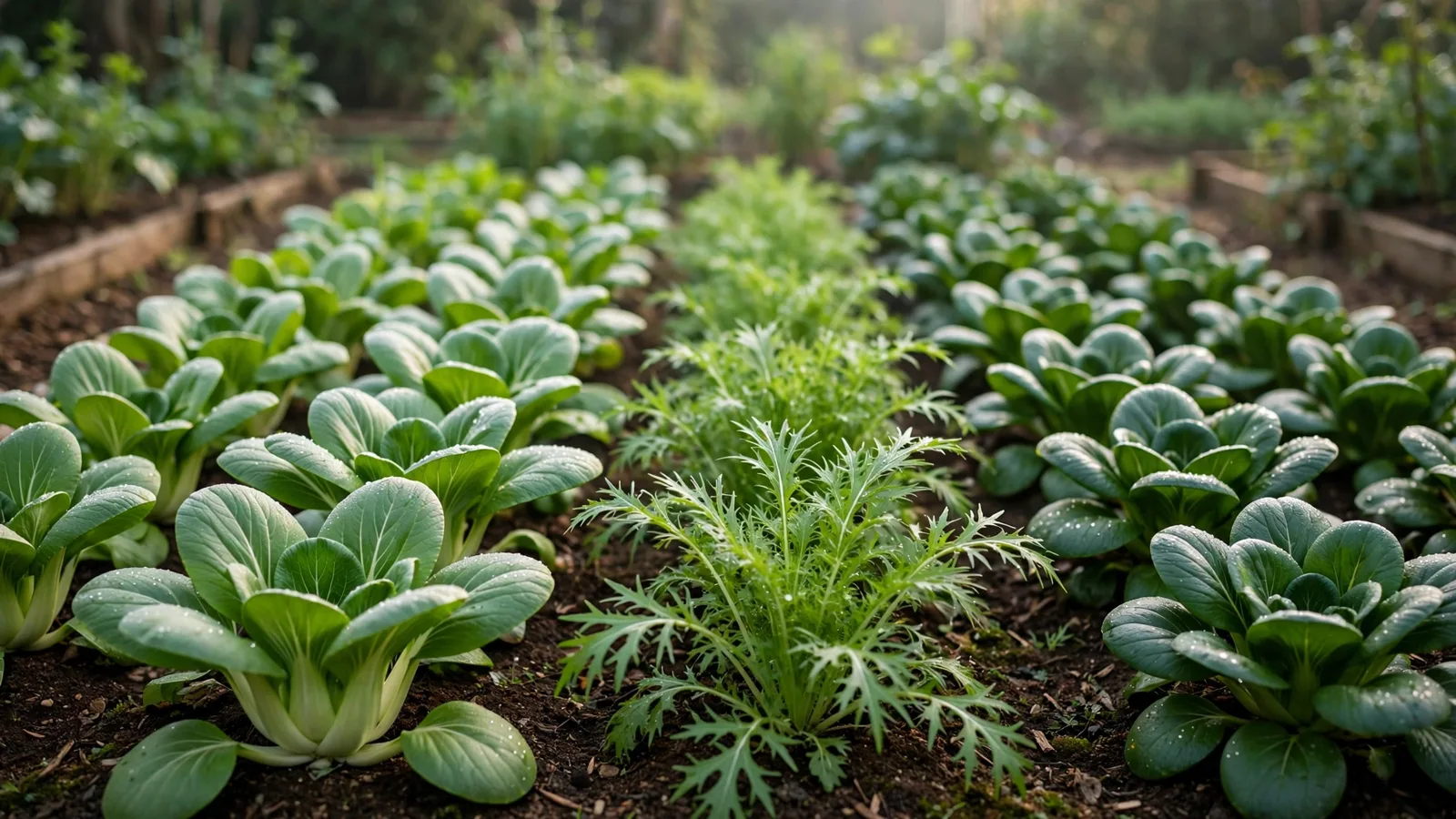
Asian greens are some of the most rewarding plants you can grow at home, in part because they are fast. Bok choy can go from seed to harvest in about 45 days. Tatsoi is ready even sooner. A small patch of mizuna can be cut and come again for weeks. That speed is also what trips people up. Plant these greens a few weeks too late in spring and they bolt, turning bitter just as they size up. Sow them at the right moment, though, and you get crisp, mild leaves with almost no fuss.
This calendar sorts the most popular Asian greens into cool-season and warm-season groups, then walks through spring, summer, fall, and winter timing. It is written for home gardeners in USDA Zones 5 through 9, where most readers grow. If you already keep a container garden plan for a Vietnamese herb garden, these greens slot right in beside the herbs you may already have on the patio.
Know Your Two Groups
Almost every Asian green you will find at the seed rack falls into one of two camps. Getting the camp right matters more than memorizing an exact date.
Cool-season greens want mild weather, roughly 45°F to 75°F. They grow fast in spring and fall, and they bolt, flower, and turn bitter when hot nights arrive. This group includes bok choy (also sold as pak choi), tatsoi, mizuna, komatsuna, choy sum, yu choy, and most mustard greens.
Warm-season greens need real heat to thrive. They sulk in cold soil and shine from late spring through summer. Water spinach (ong choy or kangkong), Malabar spinach, and amaranth greens belong here. If you are curious about heat lovers, see the notes on growing water spinach at home planned for a later season, and keep that warm-season mindset for now.
A good rule: if the green wilts in a hard frost but loves a jacket-weather afternoon, it is cool-season. If it looks happiest next to basil and peppers in July, it is warm-season.
Spring Planting: The First Big Window
Spring is the opening act, and for cool-season greens it starts earlier than many gardeners expect.
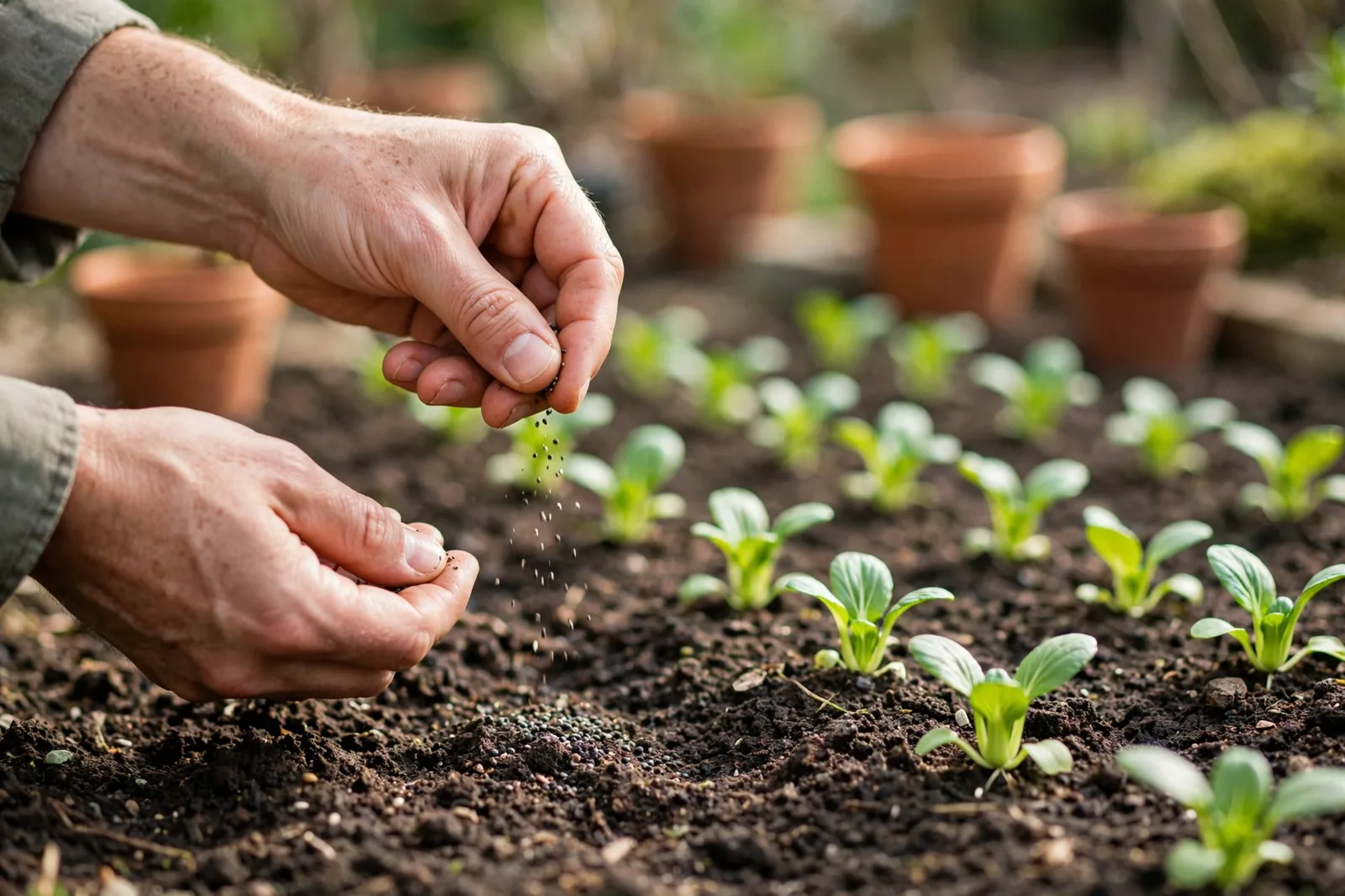
Four to six weeks before your last frost, you can direct-sow hardy greens like tatsoi, mizuna, and komatsuna outdoors under a light row cover. These three handle a light frost and even taste sweeter after one. Bok choy and yu choy do better sown two to four weeks before the last frost, or started indoors three weeks ahead and transplanted out as the soil warms a bit.
Soil temperature helps more than the calendar alone. Cool-season greens germinate well in soil as cool as 40°F, but they sprout faster and more evenly at 55°F to 65°F. A cheap soil thermometer takes the guesswork out. If the soil is still cold and soggy, wait a few days rather than sowing into mud, which invites seeds to rot.
Succession planting is the secret to a steady harvest. Instead of sowing the whole packet at once, sow a short row or a single container every 10 to 14 days. Bok choy heads all mature at about the same time, so three small sowings spaced two weeks apart beat one big sowing that leaves you with nine heads ready on the same Tuesday. Baby-leaf greens like mizuna forgive an all-at-once approach, since you can cut them young for weeks, but even they last longer with a second sowing in reserve.
For gardeners growing garlic chives in containers, spring is also when those established clumps wake up and push tender new leaves, a nice companion harvest while the first greens size up.
Summer: Pause the Cool Greens, Feed the Heat Lovers
By the time daytime highs sit in the mid-80s and nights stay warm, most cool-season greens are done. They bolt, the leaves thin out, and the flavor sharpens past pleasant. Pull spent plants and compost them instead of coaxing them along. That space is better used in summer.
Warm-season greens take the stage now. Sow water spinach, Malabar spinach, and amaranth after all danger of frost has passed and the soil has warmed to at least 65°F, ideally above 70°F. In most Zones 6 through 9, that means mid-May through early June for a first sowing, with repeat sowings possible into July in warmer areas. These plants grow vigorously in heat and humidity, often faster than you expect, so give them room and steady water.
Shade cloth can stretch the cool-season harvest a little. A 30% to 50% shade cloth over a late-spring bed of bok choy or tatsoi can buy you one to two extra weeks. It will not carry them through a hot July, so treat shade cloth as a bridge, not a fix. In very warm Zones 8 and 9, many gardeners skip summer cool-season greens entirely and wait for fall.
Containers help in summer, too. A pot of greens can move to afternoon shade on a brutal day and back into sun when the heat breaks. That mobility is one reason growing Thai chili peppers in pots and other container crops do so well in small spaces, and the same logic applies here.
Fall Planting: The Best Window of the Year
If spring is good for Asian greens, fall is often better. The soil is warm, so seeds sprout fast. The air cools week by week, which is exactly what cool-season greens want. Pest pressure usually drops, and a light frost sweetens many leaves instead of hurting them.
Count backward from your first fall frost. Find your average first frost date, then count back the days to maturity on the seed packet, and add about 10 days because fall daylight is shorter and growth slows. As a working example, bok choy listed at 45 days should be sown about 55 days before the first frost for full heads. Baby-leaf sowings can start two weeks later than that and still give you plenty to cut.
A simple fall rhythm works for most Zones 6 through 8:
- Late July to early August: sow heat-tolerant mustards and komatsuna for late-summer cuts.
- Mid-August: sow bok choy, yu choy, choy sum, and Chinese broccoli (gai lan) for main fall harvests.
- Late August to early September: sow tatsoi, mizuna, and spinach-style greens for fall and early-winter picking.
- Mid-September (Zones 7 and warmer): one last baby-leaf sowing under row cover.
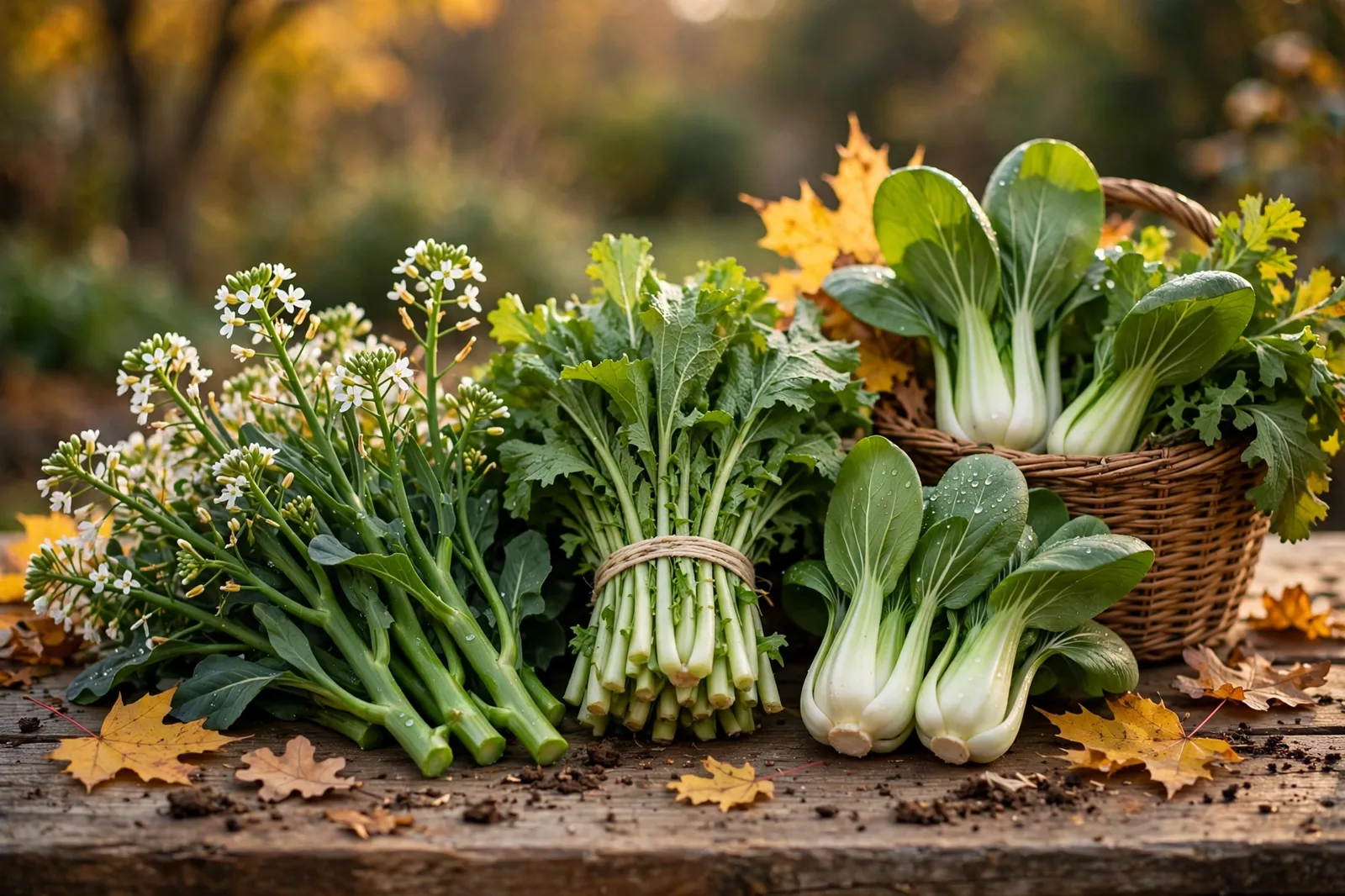
Gai lan deserves a special note. It is grown for its tender stems and small florets, not just its leaves, and it rewards fall planting with thick, sweet stems. Harvest it just as the first white flowers open for the best texture.
Winter Growing in Mild Climates and Under Cover
Gardeners in Zones 8, 9, and 10 can keep cool-season greens going through much of the winter outdoors, sowing small batches every few weeks from October into February. The growth is slower in short days, so patience helps, but the flavor is excellent and the plants rarely bolt.
In Zones 5 through 7, winter harvests call for cover. A cold frame, a low tunnel with row cover, or even a clear storage tote flipped over a container can keep tatsoi and mizuna alive through cold snaps. These two are the winter champions of the group. Tatsoi in particular can survive temperatures well into the teens under cover, lying flat in a rosette and perking back up on mild days.
Herbs overwintered indoors, like the plants covered in notes on how to overwinter lemongrass, free up outdoor space in fall, which is another reason to plan the swap in September rather than scrambling in October.
A Quick-Reference Seasonal Calendar
Here is the year at a glance for a Zone 6 to Zone 7 garden. Shift dates about two weeks earlier per zone warmer, and two weeks later per zone cooler, as a starting estimate.
Early spring (soil 40°F to 55°F): Direct-sow tatsoi, mizuna, and komatsuna under cover. Start bok choy indoors.
Mid-spring (after last frost nears): Transplant bok choy and yu choy. Keep sowing baby greens every two weeks.
Late spring to early summer: Harvest cool greens steadily. Sow warm-season greens once soil tops 65°F.
Mid-summer: Cool greens rest. Warm-season greens produce heavily. Plan fall seed orders.
Late summer: Begin fall sowings of mustards, gai lan, and bok choy.
Early fall: Sow tatsoi and mizuna for fall and winter. Keep succession sowing baby leaves.
Mid- to late fall: Harvest under row cover. Sow winter batches in mild zones.
Winter: Pick hardy greens under cover in cold zones; keep sowing in mild zones.
Seeds, Spacing, and Small Details That Matter
Seed depth is shallow. Most Asian green seeds go about 1/4 inch deep. In warm fall soil, they can emerge in three to five days. Keep the seedbed evenly moist until sprouts appear, since a crusted, dry surface is the most common reason for a patchy stand.
Spacing depends on the harvest style. For full heads of bok choy, thin plants to 6 to 8 inches apart. For baby-leaf picking, sow thickly in a wide band and cut the outer leaves or shear the tops at 3 to 4 inches tall. Crowded full-head plantings invite slugs and poor air flow, so thin without mercy and eat the thinnings.
Soil and feeding can stay simple. Greens are leafy crops, so they appreciate steady nitrogen and consistent moisture more than fancy inputs. Work compost into the bed before sowing, water so the soil stays evenly damp, and side-dress with a balanced organic fertilizer if leaves pale. Mulch once plants are up to hold moisture and keep soil off the leaves.
Watch for the usual visitors. Flea beetles pepper tiny holes in mustard-family leaves in spring; a floating row cover from day one prevents most of that damage. Aphids gather on tender fall growth and wash off with a firm spray of water. Slugs love a damp bed of tatsoi, so check at dusk and pick them off if numbers climb.
Putting It Together
You do not need a big garden to eat well from this calendar. Two containers of bok choy sown three weeks apart, a wide pot of mizuna, and a fall row of gai lan will carry a small household through months of stir-fries and noodle bowls. Start with one spring and one fall sowing in your first year, note what bolted and what thrived, and adjust the dates to your yard. The calendar gets more accurate every season you use it.