
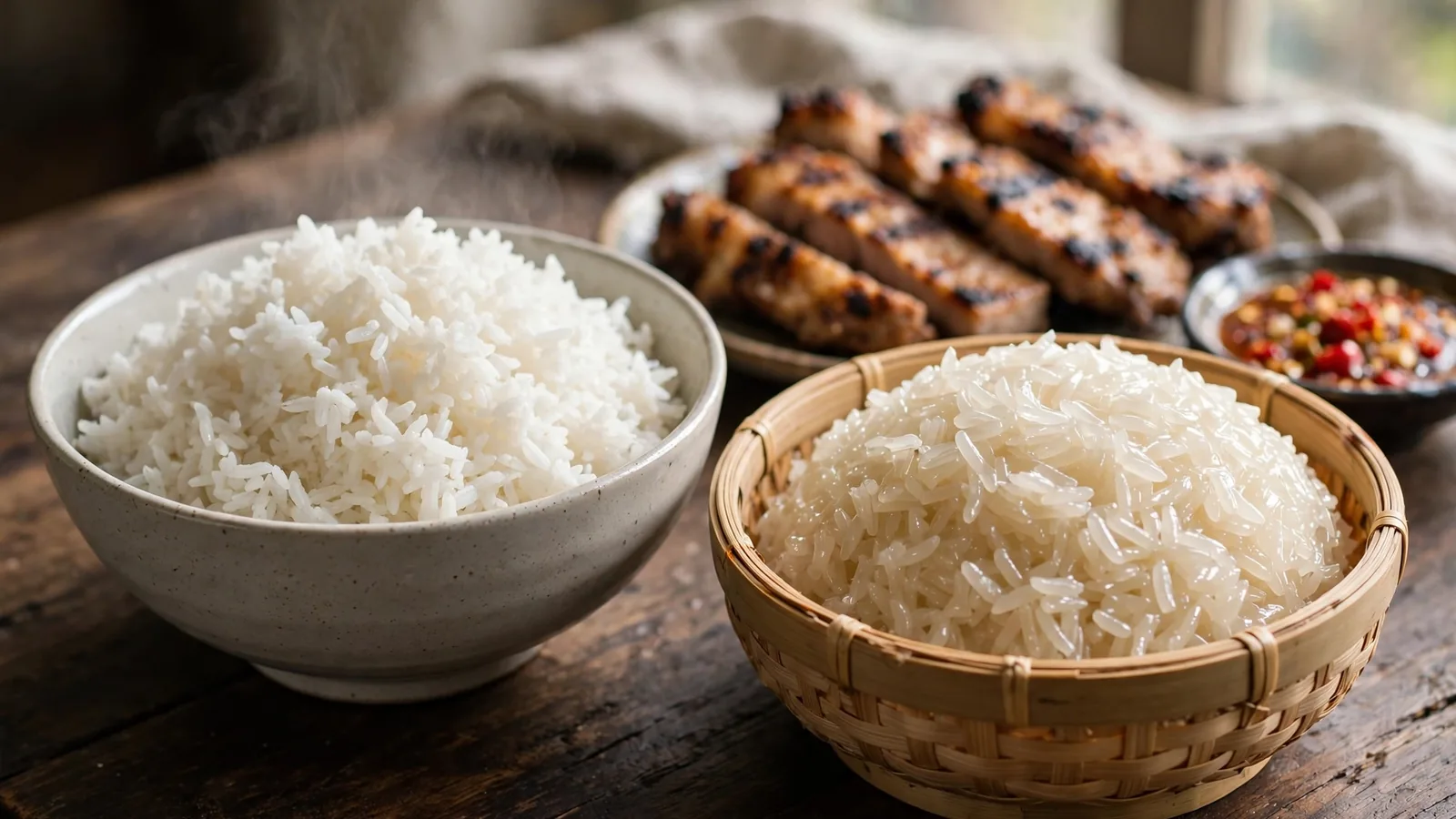
They sit next to each other in the pantry, both white, both mild, and both central to Southeast Asian cooking. That is where the similarity ends. Jasmine rice cooks into soft, separate grains you can scoop with a spoon. Sticky rice cooks into a chewy, clumping mass you can pinch with your fingers. Pick the wrong one and a meal still tastes fine, but it will not eat the way it was meant to.
At a Glance
Jasmine rice is a long-grain rice, most associated with Thailand. Cooked well, it is tender, slightly floral, and fluffy enough that the grains stay mostly distinct. It is the everyday table rice for curries, stir-fries, and soups across much of mainland Southeast Asia.
Sticky rice, also called glutinous rice or sweet rice, is a different type of grain altogether. The word glutinous refers to its glue-like texture, not gluten — it is naturally gluten-free. Cooked, it turns translucent, dense, and chewy, and the grains stick together firmly.
A quick way to remember: jasmine rice is a side you serve with a spoon. Sticky rice is often a side you shape with your hand.
The Grain Itself
Raw, the two are easy to tell apart once you know what to look for.
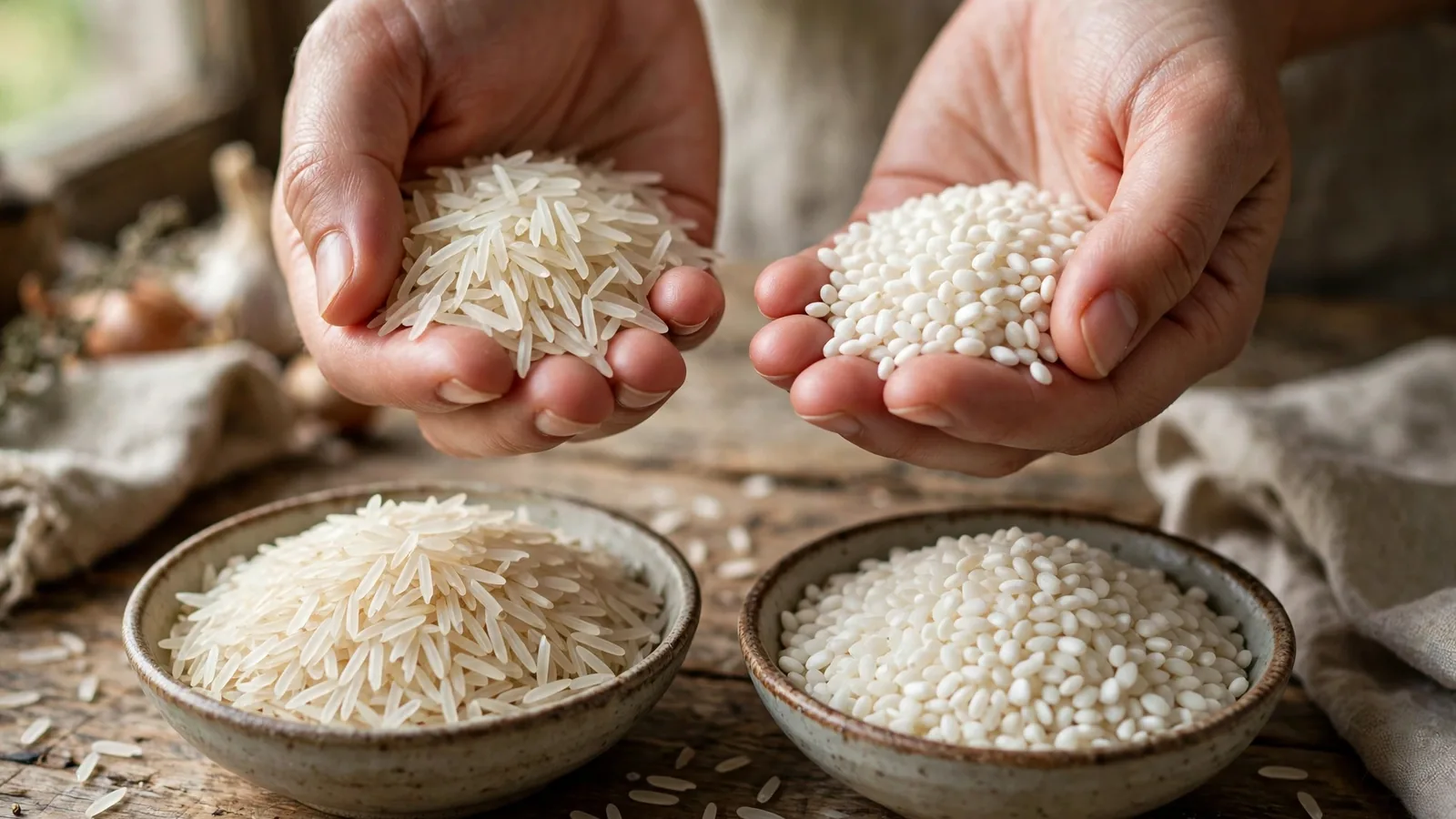
Jasmine rice grains are long, slender, and slightly translucent. Rinse a handful and the water turns cloudy from surface starch, then the grains stay firm and distinct. Good jasmine rice also carries a faint pandan-like aroma, which becomes clearer as it steams.
Sticky rice grains are shorter, rounder, and chalky white, almost opaque. That chalky look comes from its starch makeup. Sticky rice is made up almost entirely of amylopectin, the starch that turns sticky and elastic when cooked. Jasmine rice has more amylose, which helps the grains hold their shape and stay separate.
That starch difference explains everything that follows, from soaking to serving.
Texture and Flavor
Jasmine rice is soft and light. A fork lifts clean grains, sauce coats them without turning them heavy, and each bite feels distinct. The flavor is gentle and a little sweet, with that floral note in the background. It supports a dish without competing with it.
Sticky rice is chewy and substantial. You tear off a small piece, press it into a ball, and use it to scoop up grilled meat, salad juices, or a swipe of chili sauce. The flavor is also mild, but the texture does the work. It feels filling in a way fluffy rice does not, which is why a smaller portion often satisfies.
Freshness matters for both. Jasmine rice loses aroma as it ages in an open bag, so buy amounts you will use within a few months and store it sealed. Sticky rice keeps its chewy character well, though it is best eaten the day it is steamed because it firms up fast as it cools.
How Each One Cooks
This is the biggest practical split, and the one that trips people up.
Jasmine rice is usually cooked by absorption: rinsed rice, measured water, a covered pot or rice cooker, then a short rest off the heat. It is forgiving within a small range. A little too much water makes it soft, a little too little leaves a bite, but it still reads as rice. If you want the step-by-step, see our guide on how to cook jasmine rice.
Sticky rice needs soaking first, then steaming, not simmering in water like regular rice. Soak the grains for at least four hours, or overnight, then drain and steam them over boiling water until tender and translucent. Boil sticky rice directly in a pot of water and you will get a gummy porridge instead of distinct chewy grains. Our Sticky Rice 101 walks through the soak, the steam, and how to keep it warm.
Timing differs, too. Jasmine rice is weeknight-fast: rinse, cook, rest, serve. Sticky rice asks you to plan ahead because of the soak, though the hands-on time is short.
Best Uses at the Table
Reach for jasmine rice when:
- You are serving curry, stir-fry, or anything saucy that needs a soft base to soak it up.
- The rice goes under or beside the main dish, like grilled pork over broken-style plates or a bowl of soup on the side.
- You need fried rice the next day. Day-old jasmine rice, chilled and dried slightly in the fridge, fries up into separate, chewy-edged grains.
- You want an everyday rice that works for most meals without much planning.
Reach for sticky rice when:
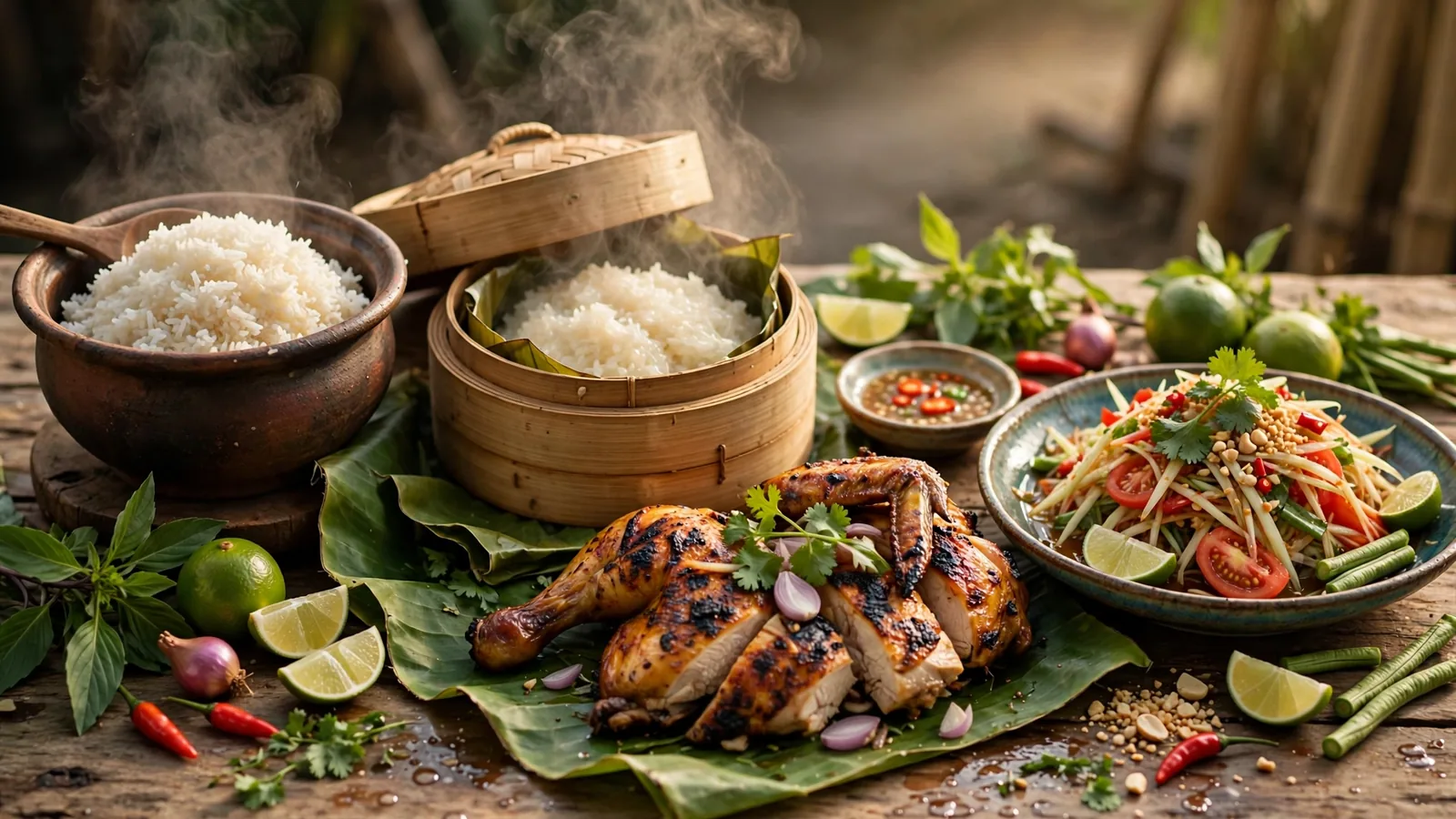
- The meal is built around eating with your hands, like Northeastern Thai and Lao spreads with grilled meats and spicy salads.
- You are making mango sticky rice, where the chewy grains hold sweetened coconut milk in every bite.
- You need a rice that can be shaped, wrapped, or packed for picnics and travel. Wrapped in banana leaf or kept in a bamboo basket, it stays pliable for hours.
- You want a smaller, more filling portion that carries bold, salty, sour flavors.
Some dishes sit in between. A rich curry is happy over jasmine rice, but a dry, intensely flavored salad often wants sticky rice to tame the heat and give you something to chew.
Can You Swap One for the Other?
In a pinch, yes, with expectations adjusted.
Jasmine rice can stand in where sticky rice is called for if you cook it with a touch less water so it clumps a little more, but it will never get truly chewy and it falls apart when pinched. It works as a base, not as a scoop.
Sticky rice is a harder swap for jasmine. Serve it under a curry and the chew fights the sauce, and the portion feels heavy fast. It also does not make good fried rice; the grains cling instead of crisping.
A closer emergency swap for jasmine rice is another long-grain rice cooked the same way. For sticky rice, there is no real substitute in the pantry. If a recipe depends on that chew, it is worth a trip to the store.
Buying and Storing
For jasmine rice, look for Thai jasmine rice in a sealed bag, check that the grains look whole rather than broken, and give the bag a sniff if you can. A faint sweet aroma is a good sign. Store it in an airtight container away from heat.
For sticky rice, the bag may say glutinous rice, sweet rice, or sticky rice — all the same thing. The grains should look evenly chalky white. Store it sealed like any rice, and remember it needs that soak, so factor the time in when you plan a meal.
Both rices benefit from rinsing. Jasmine rice rinses to remove loose surface starch so the grains stay separate. Sticky rice rinses before soaking for the same clean start.
The Bottom Line
Jasmine rice is the versatile everyday choice: fluffy, fragrant, fast, and happy under almost any curry or stir-fry. Sticky rice is the specialist: soaked, steamed, chewy, and made for hand-held bites, grilled meats, and coconut desserts. Stock both if you cook Southeast Asian food often. Once you have steamed a batch of sticky rice and fluffed a pot of jasmine side by side, you will never confuse them again.