
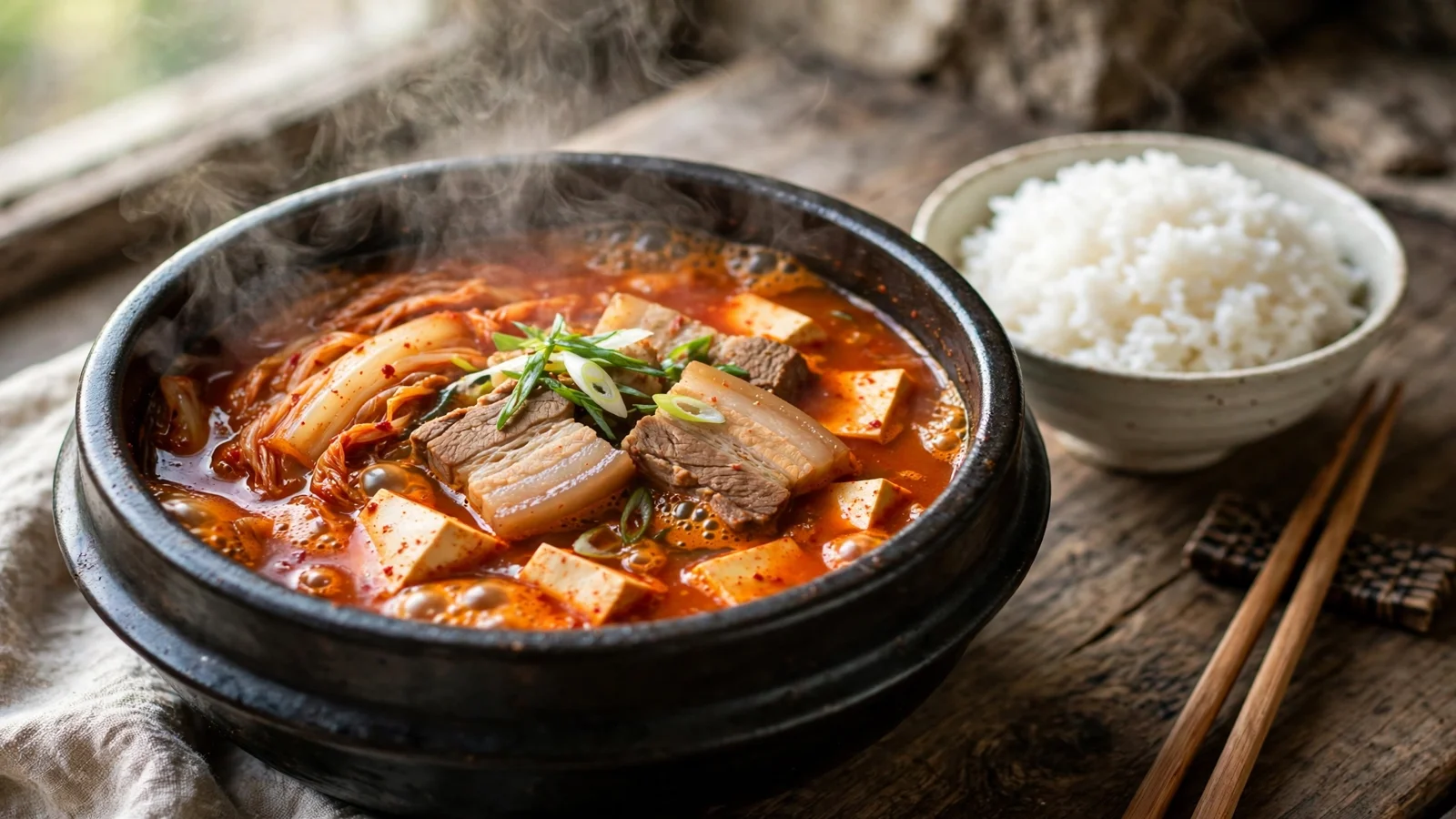
The Stew That Turns Old Kimchi Into Dinner
Kimchi jjigae is what happens when a jar of kimchi gets really sour. Fresh kimchi is crisp and bright, good for eating straight from the container. Week-old, month-old kimchi is too sharp to snack on, but it is perfect for stew. Simmered with pork, tofu, and a little broth, the acidity mellows into something deep and round, the cabbage softens without falling apart, and the whole pot turns a brick-red color that looks as warm as it tastes.
It helps to place it next to its cousins. Doenjang Jjigae: Korean Soybean Paste Stew is earthy and mild, built on fermented soybean paste. Budae Jjigae: Korean Army Stew is a loaded, everything-in pot with sausage and beans. Kimchi jjigae sits in between: fewer ingredients, sharper flavor, and a broth that is mostly kimchi juice and stock. The starting point is always the same one used for Kimchi Fried Rice — the older and more sour the kimchi, the better the result.
The one decision that makes or breaks this stew is the kimchi itself. If your kimchi is still sweet and fresh, the stew will taste thin no matter how long you simmer it. If it is properly aged and sour, you barely need to do anything else.
What Makes the Broth Work
| Element | What it does | What goes wrong without it |
|---|---|---|
| Aged, sour kimchi | Provides acidity, heat, and the main flavor of the stew | Fresh kimchi gives a flat, sweet broth that never deepens |
| Kimchi brine | Adds concentrated tang and color to the broth | Skipping it leaves the stew pale and one-note |
| Pork belly or shoulder | Fat renders into the broth and sweetens the acidity | Lean meat alone makes the stew taste sharp and thin |
| Anchovy or dashi stock | Savory base that stands up to the kimchi | Water alone dilutes the flavor; plain water needs extra soy sauce to compensate |
| Tofu added late | Stays soft and silky, soaks up broth without breaking apart | Tofu added at the start crumbles and clouds the broth |
That pork fat is not optional in spirit, even if you swap the protein. A spoonful of sesame oil at the end helps, but the stew really wants some richness melted into the broth from the start.
Ingredients
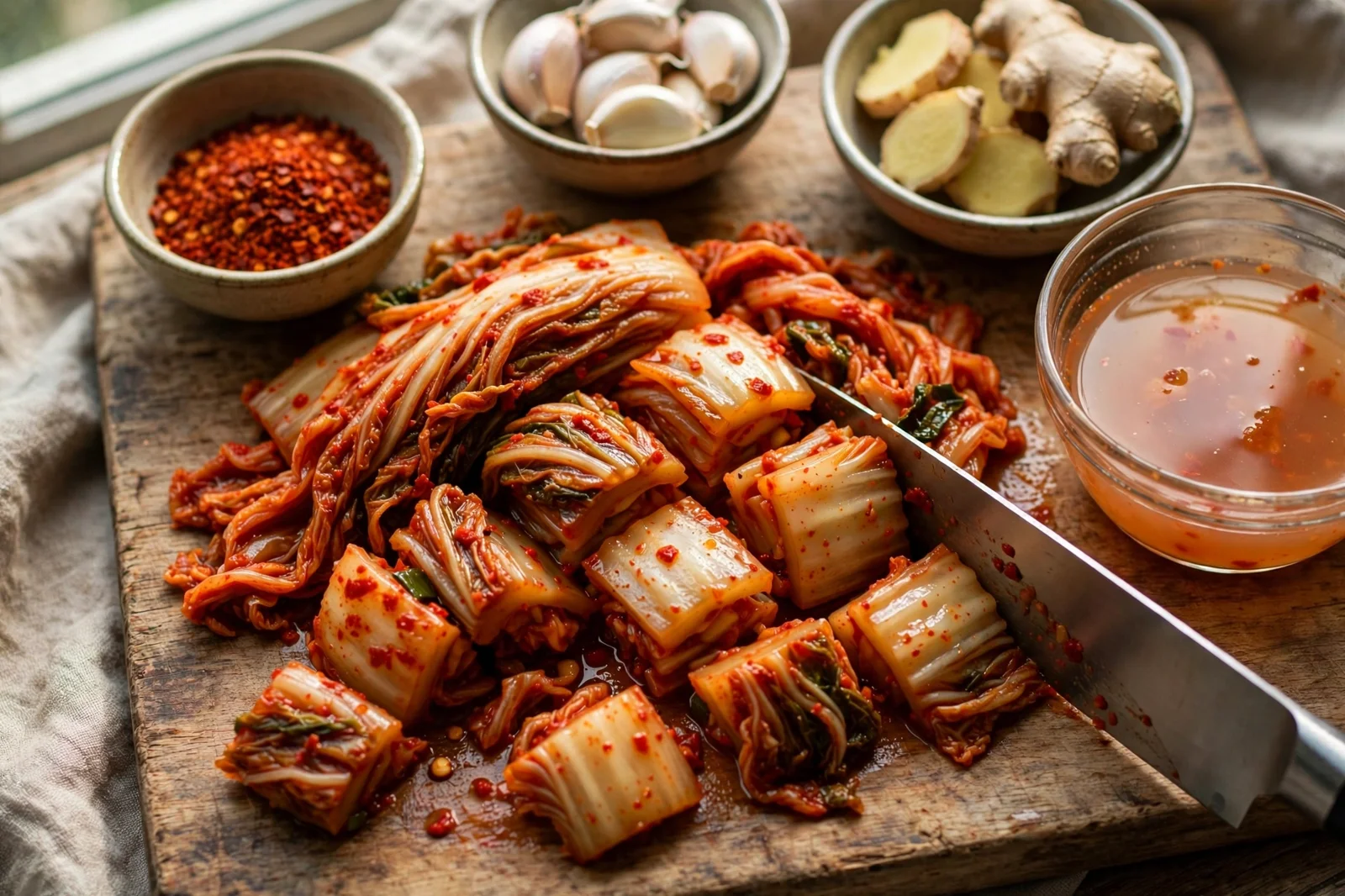
- 2 cups (about 14 oz / 400 g) aged napa cabbage kimchi, cut into 1-inch pieces, plus 1/2 cup (120 ml) kimchi brine
- 8 oz (225 g) pork belly or pork shoulder, cut into bite-size pieces (about 1/2-inch thick)
- 1 tablespoon neutral oil
- 1 small yellow onion (about 5 oz / 140 g), thinly sliced
- 3 garlic cloves, minced
- 1 teaspoon grated fresh ginger
- 1 tablespoon gochugaru (Korean chili flakes), plus more to taste
- 1 tablespoon soy sauce, plus more to taste
- 1 teaspoon sugar
- 3 cups (720 ml) anchovy stock, dashi, or low-sodium chicken stock
- 7 oz (200 g) medium-firm or soft tofu, cut into 1/2-inch slices
- 2 scallions, cut into 1-inch pieces
- 1 teaspoon toasted sesame oil
- Cooked rice, for serving
Prep: 15 minutes. Cook: 25 minutes. Total: 40 minutes. Serves 3 to 4 with rice and side dishes, or 2 as a generous main.
How to Make It, Step by Step
1. Prep the kimchi and pork. Cut the kimchi into bite-size pieces over a bowl so you catch the brine. You want about 2 cups of chopped kimchi and 1/2 cup of brine. If your kimchi is in large pieces, kitchen scissors right in the jar work well. Cut the pork into pieces about the same size as the kimchi so everything cooks evenly.
2. Start the pork and aromatics. Heat the oil in a heavy pot or Dutch oven over medium heat. Add the pork and cook, stirring occasionally, until the edges lose their raw color and some fat has rendered, 3 to 4 minutes. Add the onion and cook until it softens slightly, about 2 minutes. Stir in the garlic and ginger and cook for 30 seconds, just until fragrant.
3. Add the kimchi and fry it briefly. Add the chopped kimchi and cook, stirring often, for 4 to 5 minutes. The cabbage will darken slightly and the edges will look a little translucent. This brief fry cooks off some of the raw sharpness and concentrates the flavor before any liquid goes in.
4. Build the broth. Pour in the kimchi brine and the stock. Stir in the gochugaru, soy sauce, and sugar. Bring to a boil, then lower the heat to a steady simmer. The sugar is not there to make the stew sweet. It rounds the acidity so the broth reads savory first, then tangy.
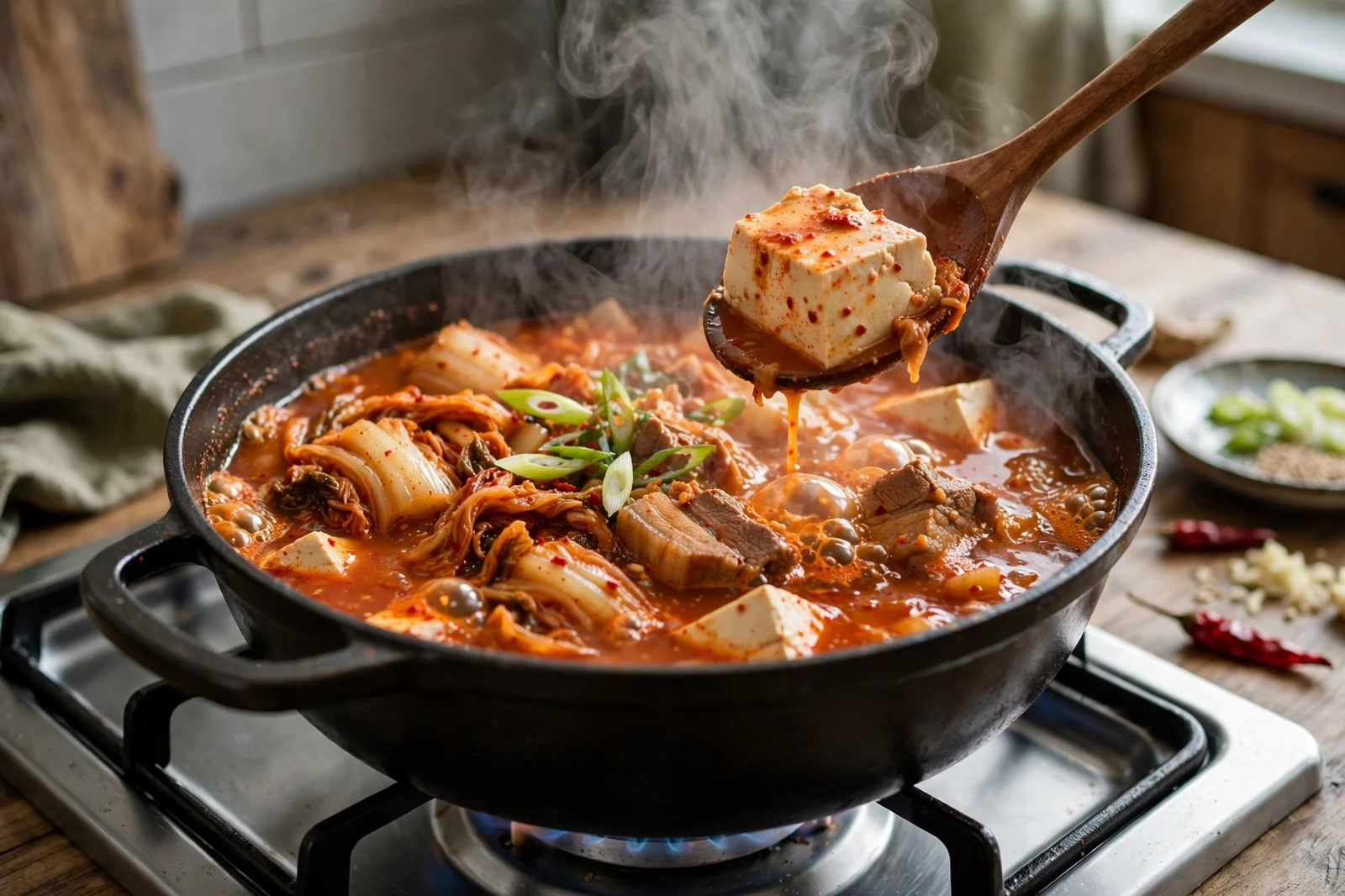
5. Simmer until the cabbage is tender. Simmer, partially covered, for 15 to 18 minutes. The kimchi should be soft and silky but still hold its shape, and the broth should taste deep and balanced. Taste and adjust: more soy sauce for salt, a pinch more sugar if it is still harsh, or a spoonful of brine if it needs brightness.
6. Add the tofu and scallions. Lay the tofu slices on top of the stew and spoon broth over them. Scatter the scallions over the top. Simmer for 3 to 4 more minutes, just until the tofu is heated through and has soaked up some broth. Do not stir hard at this point or the tofu will break apart.
7. Finish and serve. Drizzle the sesame oil over the top and take the pot straight to the table if you can. The stew should still be bubbling when it arrives. Serve with plain steamed rice. The method in How to Cook Perfect Jasmine Rice Every Time gives you the fluffy, separate grains that hold up best against a soupy stew, though short-grain rice is the more common Korean pairing.
Choosing the Right Kimchi
Age matters more than brand. Look for kimchi that has been fermenting at least 2 to 3 weeks and tastes distinctly sour when you eat a piece straight. If you only have fresh kimchi, leave it on the counter for a day or two until it sours, or add a teaspoon of rice vinegar to the pot to help it along.
Whole cabbage vs. cut. Both work. Whole (pogi) kimchi needs cutting; pre-cut (mat) kimchi is ready to go. Avoid sweet, freshly made varieties labeled for immediate eating if you can. The stew needs the fermented funk.
Brine is liquid gold. Do not drain it away. That 1/2 cup of brine carries more concentrated flavor than the cabbage itself. If your jar is low on brine, make up the difference with extra stock and a small splash of vinegar.
Variations
- With tuna (chamchi jjigae): Skip the pork and add a 5 oz (140 g) can of tuna in oil, drained, in the last 5 minutes. This is a pantry version that comes together even faster.
- Vegetarian: Use mushroom or kelp stock, skip the pork, and add 4 oz (115 g) of sliced shiitake or king oyster mushrooms with the onion. A tablespoon of doenjang stirred in at the end adds depth.
- With noodles: Add a handful of dangmyeon (sweet potato glass noodles), soaked in warm water for 10 minutes, in the last 5 minutes of simmering. They soak up broth fast, so serve right away.
- Extra spicy: Add a sliced fresh chili or a teaspoon of gochujang with the gochugaru. Gochujang also adds a little sweetness and body.
Serving and Leftovers
Serve kimchi jjigae bubbling hot, right in the pot if you have a stone pot or heavy Dutch oven that holds heat. Plain rice is the essential partner. A simple side of seasoned bean sprouts or a rolled omelet rounds out the table without competing.
Leftovers keep in a covered container in the refrigerator for up to 3 days. The flavor deepens overnight as the kimchi continues to season the broth. Reheat gently on the stovetop until it just comes back to a simmer. The tofu will be softer the second day, which is expected. This stew does not freeze well because the tofu turns spongy after thawing.
Recipe Card Summary
Kimchi jjigae: aged napa cabbage kimchi simmered with pork belly, onion, garlic, gochugaru, and anchovy or dashi stock into a brick-red, tangy broth, finished with soft tofu, scallions, and sesame oil. The kimchi must be properly sour and aged. Serve bubbling with steamed rice. Prep 15 minutes, cook 25 minutes, total 40 minutes. Serves 3 to 4.
Kimchi Jjigae: Korean Kimchi Stew
Ingredients
Method
- Prep the kimchi and pork: cut the kimchi into bite-size pieces over a bowl to catch the brine, measuring about 2 cups chopped kimchi and 1/2 cup brine. Cut the pork into pieces about the same size as the kimchi.
- Start the pork and aromatics: heat the oil in a heavy pot over medium heat. Add the pork and cook 3 to 4 minutes until the edges lose their raw color and some fat renders. Add the onion and cook 2 minutes until slightly softened. Stir in the garlic and ginger and cook 30 seconds until fragrant.
- Fry the kimchi briefly: add the chopped kimchi and cook, stirring often, for 4 to 5 minutes until the cabbage darkens slightly and the edges look translucent.
- Build the broth: pour in the kimchi brine and stock. Stir in the gochugaru, soy sauce, and sugar. Bring to a boil, then lower to a steady simmer.
- Simmer until tender: simmer, partially covered, for 15 to 18 minutes until the kimchi is soft and silky but still holds its shape. Taste and adjust with more soy sauce, sugar, or brine as needed.
- Add tofu and scallions: lay the tofu slices on top and spoon broth over them. Scatter the scallions over the top. Simmer 3 to 4 minutes until the tofu is heated through. Do not stir hard or the tofu will break.
- Finish and serve: drizzle the sesame oil over the top and serve bubbling hot with steamed rice.
2 thoughts on “Kimchi Jjigae: Korean Kimchi Stew”