
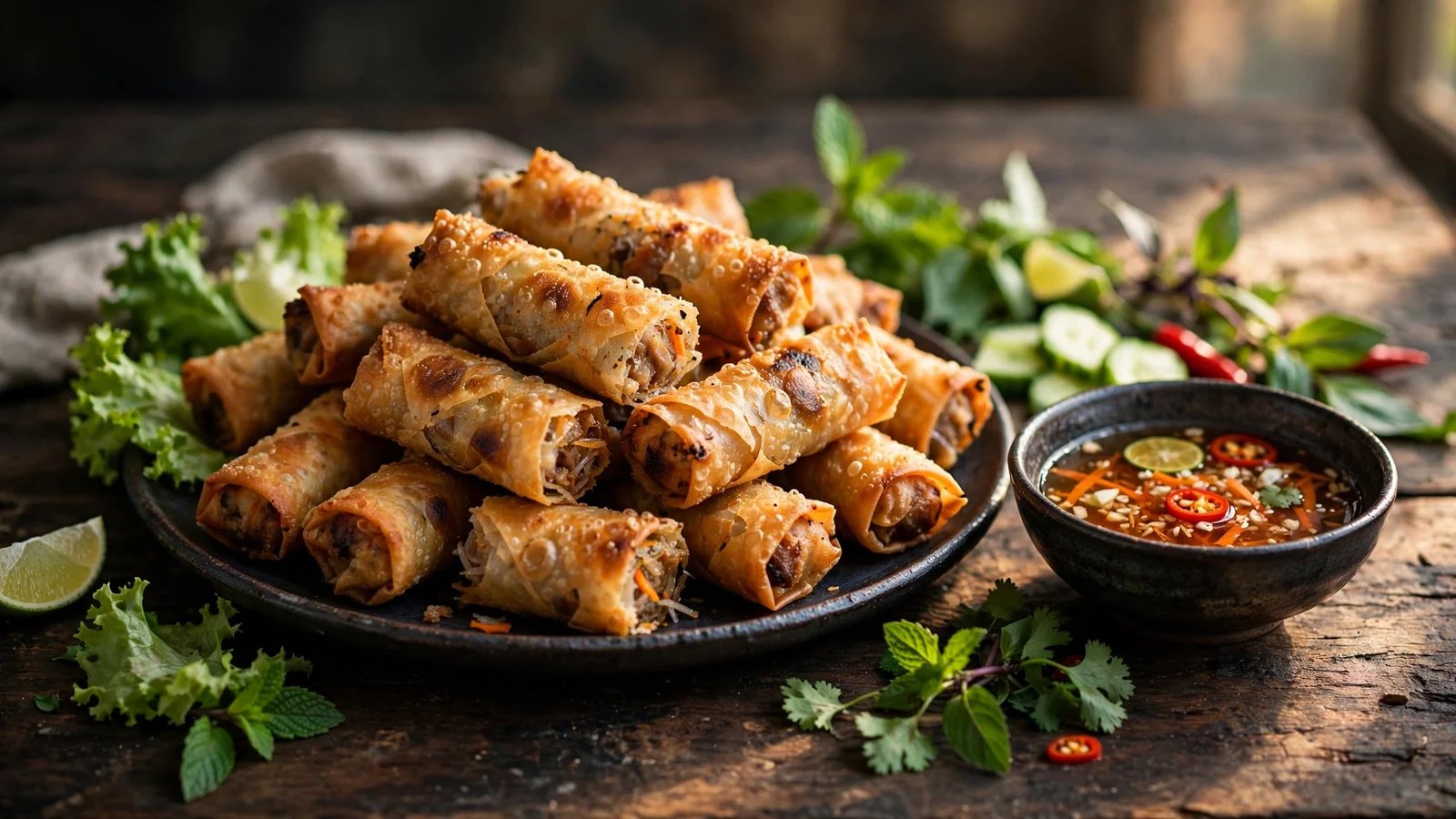
Ask for spring rolls at a Vietnamese restaurant in the United States and you will probably get the fresh kind — soft rice paper, shrimp, herbs, peanut sauce. But in Vietnam, cha gio (chả giò) is something else entirely: long, slender rolls wrapped in rice paper, filled with seasoned pork, shrimp, wood ear mushrooms, and shredded taro, then fried until the wrapper shatters like glass and turns a deep, blistered gold. They arrive at the table crackling, served with lettuce for wrapping and a bowl of nuoc cham — sweet-salty-limey fish sauce — for dipping.
Cha gio are the celebratory cousin of the more familiar fried rolls. They show up at Lunar New Year gatherings, family parties, and wedding banquets, piled high on platters and eaten by hand. Unlike the wheat-based wrappers of Chinese egg rolls or Filipino lumpia, Vietnamese cha gio use rice paper — the same translucent sheets used for fresh rolls — which blisters and crisps in hot oil instead of going puffy. That is what gives them their signature crackle.
Why Rice Paper Makes the Difference
Wheat spring roll wrappers fry up puffy and golden. Rice paper fries up shattering and blistered. The difference is in the starch: rice paper is essentially a thin sheet of rice starch, and in hot oil it bubbles into a lacy, crisp shell with tiny blisters all over the surface. It is also naturally gluten-free, which makes cha gio an easy option for guests who avoid wheat.
Rice paper comes in several thicknesses. For frying, use a medium-thick rice paper — the thinner "salad roll" sheets tear when wrapped around a full filling, and the extra-thick ones fry up chewy in the center. A 22-centimeter round is the standard size for cha gio.
Here is the trick Vietnamese cooks use for extra crunch: dip the rice paper in warm water for just two or three seconds — no longer. If it feels stiff when you wrap, that is fine; it softens as it sits and then dries slightly before hitting the oil, which is exactly what you want. A wrapper that goes into the fryer slightly tacky and partly dried fries crisp instead of gummy.
The Filling: A Pork-and-Shrimp Balance
A good cha gio filling is seasoned, juicy, and bound together without egg. The base is ground pork with enough fat to stay moist — 80/20 is ideal. Finely chopped shrimp add sweetness and a snappy bite. Rehydrated wood ear mushrooms bring chew, and dried shiitake mushrooms bring depth. But the ingredient that separates restaurant-quality cha gio from average ones is shredded taro.
Taro does two jobs. It soaks up the juices the pork releases as it cooks, keeping the roll from getting soggy inside, and it fries into tender little threads with a faintly sweet, nutty flavor. Yam bean (jicama) or sweet potato can stand in if you cannot find taro, but taro is the classic.
Mung bean vermicelli (glass noodles), snipped into short lengths after soaking, ties the filling together and keeps each bite from feeling dense. Season simply: fish sauce, a pinch of sugar, black pepper, and minced garlic. Fish sauce and soy sauce are not interchangeable here — the fish sauce's funk and saltiness define the flavor of the filling. And while we are on the subject of the two great rolls, the fried vs. fresh spring roll debate has a clear winner at a Vietnamese party table: the fried one, every time.
How to Roll Cha Gio
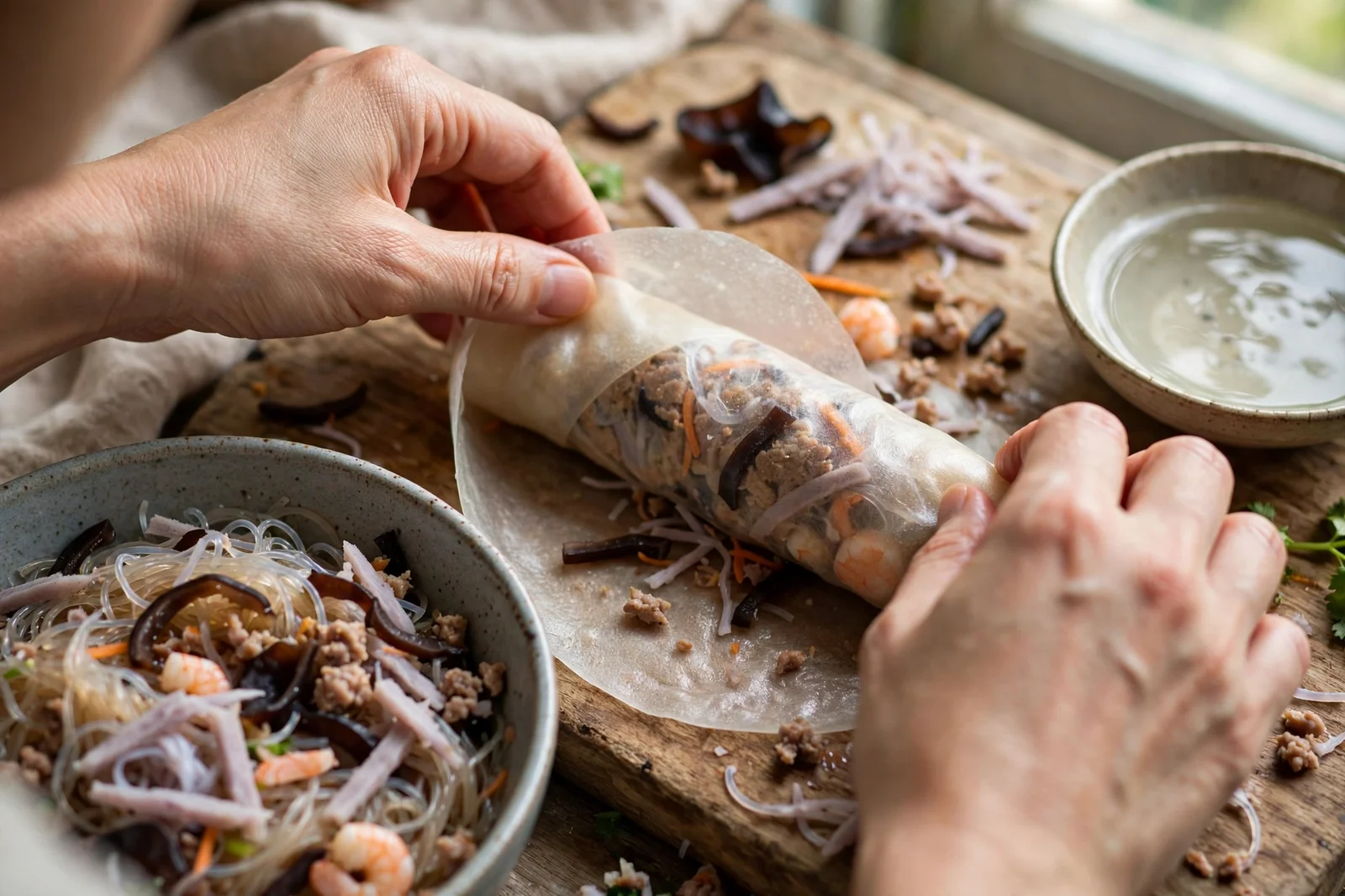
Rolling cha gio is the same technique as rolling any spring roll, with one important rule: roll them snug but not tight. The filling needs a little room to steam and swell as it cooks. Overstuffed, tightly rolled cha gio split in the fryer; loosely rolled ones unravel. Aim for about 3 tablespoons of filling per roll, spread into a log about as long as your palm.
Set up a station: a bowl of warm water, your rice paper stack, the filling bowl, and a tray lined with a clean kitchen towel. Dip one sheet of rice paper, lay it smooth, place the filling log just below center, fold the sides in, and roll away from you. Press the seam to seal — the rice paper sticks to itself. Let the finished rolls rest seam-side down for 10 minutes so the seams dry and set before frying. This resting step is not optional; it is what keeps the rolls from bursting.
Frying: The Temperature Rules
Hot oil is everything. The target is 350°F (175°C) — hot enough that the wrapper crisps immediately, cool enough that the pork cooks through before the wrapper burns. Work in batches and never crowd the pan; too many rolls at once drop the oil temperature and you get greasy, limp cha gio instead of crisp ones.
Fry for 7 to 9 minutes, turning once or twice, until deep golden and audibly crisp. Drain them on a wire rack, not paper towels — paper traps steam underneath and softens the bottom. Some cooks swear by a double fry: fry once at 325°F to cook through, rest, then fry again at 375°F for the final shatter. It works, but a single steady fry at 350°F gets you 95% of the way there with half the fuss.
The rolls are at their best within 15 minutes of leaving the oil. If you are making a big batch for a party, fry in two rounds so there is always a fresh plate arriving.
Nuoc Cham: The Sauce That Ties It Together
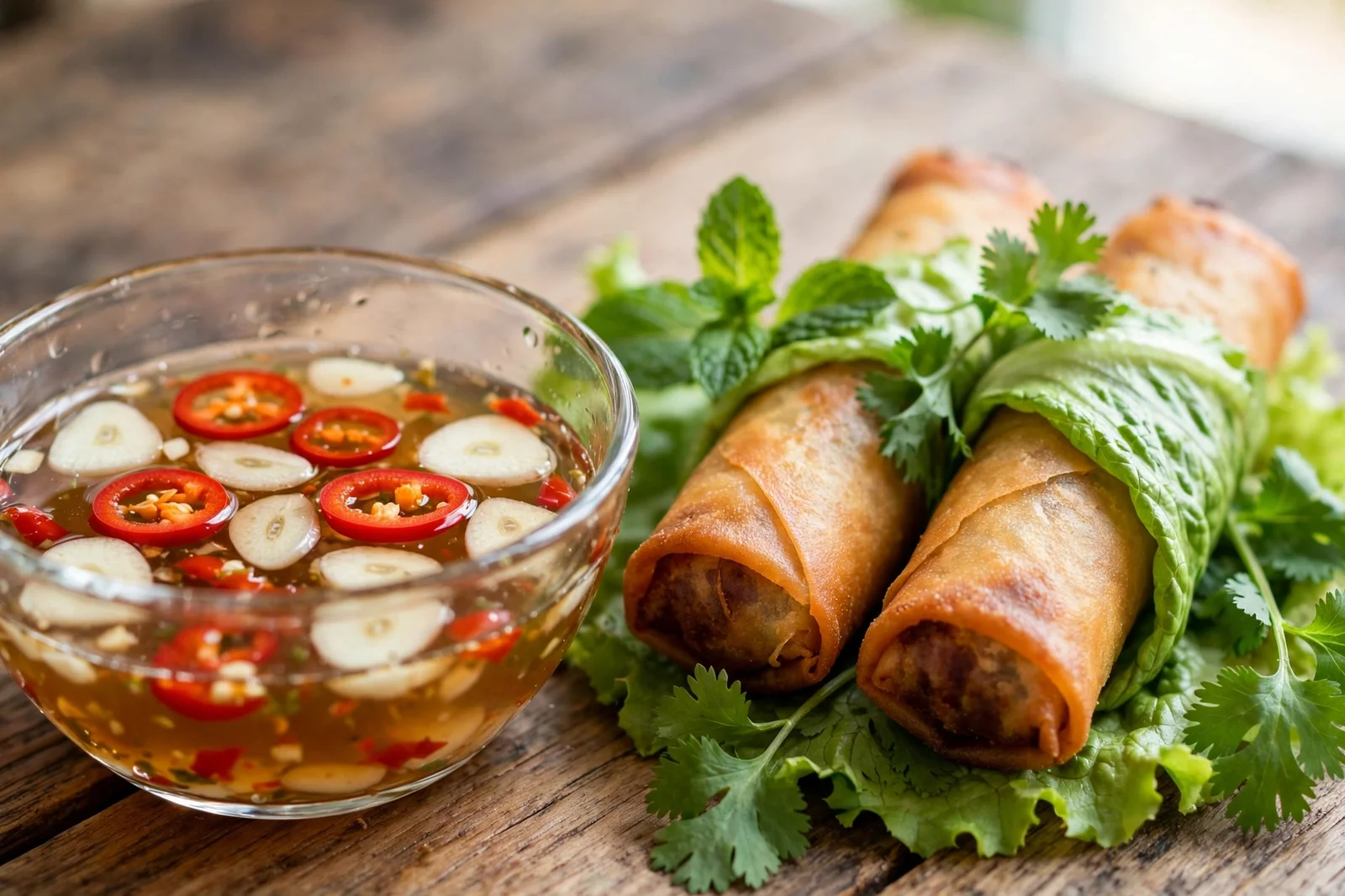
Cha gio without nuoc cham is only half a dish. The classic dipping sauce is a balance of five flavors: fish sauce for salt and funk, sugar for sweetness, lime juice for sourness, water to soften the edges, and fresh chile and garlic for heat and bite. A common ratio is 1 part fish sauce, 1 part lime juice, 1 part sugar, 3 parts water — then adjust until it tastes bright and punchy. The garlic floats and the chile slices sink; both are normal.
Serve the rolls with lettuce leaves and herbs — mint, cilantro, Thai basil — and let everyone wrap, dip, and eat with their hands. A small dish of pickled carrots and daikon on the side is traditional and takes two minutes to throw together.
Tips and Variations
Ingredients
- Make-ahead: Roll the cha gio up to a day ahead and refrigerate uncovered for the first hour (so the skins dry), then cover. Fry straight from the fridge; add a minute to the time.
- Freeze them: Arrange uncooked rolls on a tray, freeze solid, then bag. Fry from frozen at 325°F for 10–12 minutes — do not thaw, or the rice paper turns gummy.
- Chicken version: Swap the pork for ground chicken thigh (not breast; breast dries out). Keep everything else the same.
- Vegetarian version: Replace the meat with firm tofu, crumbled and squeezed dry, plus extra mushrooms and shredded carrots. The taro stays — it does the heavy lifting on texture.
- Do not soak the rice paper too long. Two to three seconds in warm water, no more. A mushy wrapper tears and fries gummy.
For the cha gio (makes about 20 rolls):
- 1 pound ground pork (80/20)
- 1/2 pound shrimp, peeled, deveined, and finely chopped
- 1 cup shredded taro (about 1/4 of a medium taro root), peeled and shredded
- 1 ounce dried mung bean vermicelli, soaked in hot water 10 minutes and snipped into 1-inch pieces
- 1 ounce dried wood ear mushrooms, soaked 20 minutes and finely chopped
- 2 dried shiitake mushrooms, soaked 20 minutes and finely chopped
- 1 small yellow onion, finely minced
- 3 cloves garlic, minced
- 1 tablespoon fish sauce
- 1 teaspoon granulated sugar
- 1 teaspoon freshly ground black pepper
- 20 round rice papers (22 cm), medium thickness
- Neutral oil, for deep frying (about 6 cups)
For the nuoc cham:
Instructions
- 1/4 cup fish sauce
- 1/4 cup fresh lime juice
- 1/4 cup granulated sugar
- 3/4 cup warm water
- 2 cloves garlic, thinly sliced
- 1 fresh Thai chile, thinly sliced (optional)
- Prepare the filling. In a large bowl, combine the ground pork, chopped shrimp, shredded taro, vermicelli, wood ear mushrooms, shiitake mushrooms, onion, garlic, fish sauce, sugar, and black pepper. Mix with your hands until evenly combined, then let it rest 15 minutes so the flavors meld.
- Soften the rice papers. Fill a wide shallow bowl with warm water. Dip one rice paper sheet for 2 to 3 seconds, shake off the excess, and lay it flat on a clean damp towel. The sheet will continue to soften as you work.
- Roll. Place about 3 tablespoons of filling in a log just below the center of the rice paper. Fold the bottom edge over the filling, fold in the sides, and roll snugly (not tightly) into a cylinder. Place seam-side down on a tray. Repeat with the remaining rice paper and filling.
- Rest the rolls. Let the rolled cha gio rest, uncovered, for 10 minutes. This dries the seams and keeps them from bursting in the fryer.
- Heat the oil. Pour oil into a wok or deep heavy pot to a depth of 2 inches and heat to 350°F (175°C). Line a wire rack over a baking sheet.
- Fry in batches. Add rolls to the oil in batches of 5 to 6, leaving space between them. Fry 7 to 9 minutes, turning once or twice, until deep golden, blistered, and crisp. Lift out with a slotted spoon and drain on the wire rack.
- Make the nuoc cham. While the first batch fries, dissolve the sugar in the warm water, then stir in the fish sauce, lime juice, garlic, and chile. Taste and adjust — it should be bright, punchy, and balanced.
- Serve. Pile the cha gio on a platter with lettuce leaves and fresh herbs. Serve with the nuoc cham for dipping. Eat within 15 minutes of frying for maximum crunch.
Ingredients
Method
- In a large bowl, combine the ground pork, chopped shrimp, shredded taro, vermicelli, wood ear mushrooms, shiitake mushrooms, onion, garlic, fish sauce, sugar, and black pepper. Mix with your hands until evenly combined, then let it rest 15 minutes so the flavors meld.
- Fill a wide shallow bowl with warm water. Dip one rice paper sheet for 2 to 3 seconds, shake off the excess, and lay it flat on a clean damp towel. The sheet will continue to soften as you work.
- Place about 3 tablespoons of filling in a log just below the center of the rice paper. Fold the bottom edge over the filling, fold in the sides, and roll snugly (not tightly) into a cylinder. Place seam-side down on a tray. Repeat with the remaining rice paper and filling.
- Let the rolled cha gio rest, uncovered, for 10 minutes. This dries the seams and keeps them from bursting in the fryer.
- Pour oil into a wok or deep heavy pot to a depth of 2 inches and heat to 350F (175C). Line a wire rack over a baking sheet.
- Add rolls to the oil in batches of 5 to 6, leaving space between them. Fry 7 to 9 minutes, turning once or twice, until deep golden, blistered, and crisp. Lift out with a slotted spoon and drain on the wire rack.
- While the first batch fries, dissolve the sugar in the warm water, then stir in the fish sauce, lime juice, garlic, and chile. Taste and adjust - it should be bright, punchy, and balanced.
- Pile the cha gio on a platter with lettuce leaves and fresh herbs. Serve with the nuoc cham for dipping. Eat within 15 minutes of frying for maximum crunch.
1 thought on “Cha Gio: Crispy Vietnamese Fried Spring Rolls”