
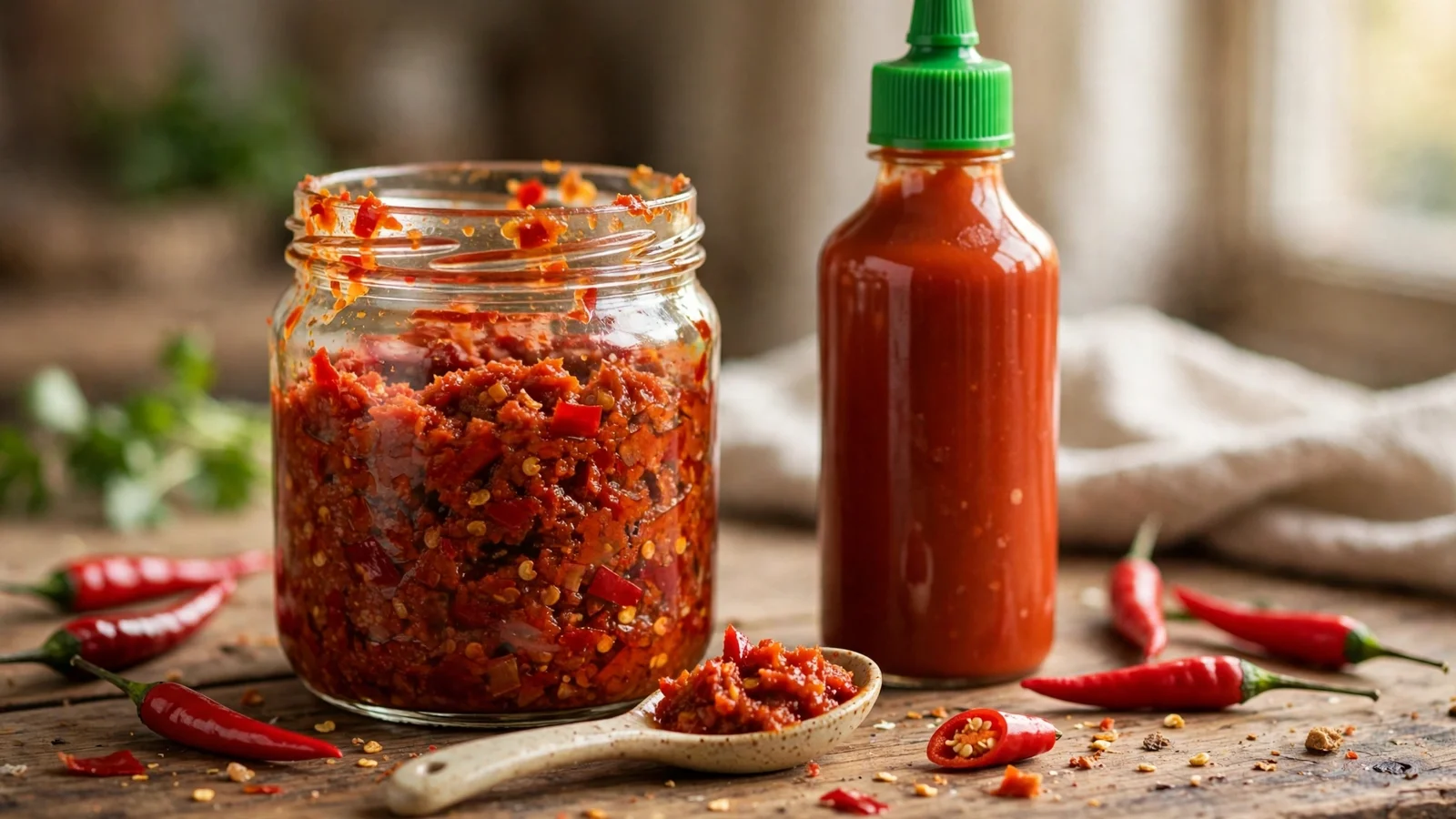
Both bottles live in the same corner of the Asian grocery aisle, both are red, and both are chili heat you spoon out of a jar. That is about where the resemblance ends. Sambal oelek is a coarse, barely-processed chili paste — ground fresh red chilies, salt, and a splash of vinegar. Sriracha is a smooth, pourable hot sauce — fermented chili, sugar, garlic, and vinegar, blended until silky.
Think of it this way: sambal oelek is crushed chilies that still taste like chilies, while sriracha is a finished sauce with sugar and garlic built in. One adds raw heat; the other adds heat plus its own flavor. Knowing which job you need done is the whole trick.
This guide puts them side by side: what is in each, how the heat actually behaves, where each one shines in the kitchen, and how to swap one for the other without wrecking the dish.
The Quick Verdict
- Reach for sambal oelek when you want clean, bright chili heat that disappears into the dish — stir-fries, fried rice, noodle soups, and anywhere the other ingredients should stay in charge.
- Reach for sriracha when you want a ready-made dipping or finishing sauce with garlic sweetness built in — pho, eggs, sandwiches, roasted vegetables, and anything you would squirt a bottle of sauce over.
- If you only stock one, pick based on how you cook. Cooks who season woks and soup pots from scratch get more from sambal oelek's neutral heat. Cooks who reach for a bottle at the table get more from sriracha's grab-and-go smoothness.
If you are building out your chili shelf, our homemade chili oil guide covers the third essential: a fragrant, crunchy oil for dishes that need heat plus texture.
Sambal Oelek vs Sriracha at a Glance
| Detail | Sambal oelek | Sriracha |
|---|---|---|
| Form | Coarse, chunky paste with visible chili flecks | Smooth, pourable sauce |
| Chilies | Fresh red chilies, ground; minimal processing | Red jalapeños, fermented before blending |
| Other ingredients | Salt, a little vinegar (classic Huy Fong style adds nothing else) | Sugar, garlic, distilled vinegar, salt, preservatives |
| Sweetness | None — no sugar added | Noticeable sweetness from added sugar |
| Garlic | None in the classic version | Distinct garlic flavor, front and center |
| Heat character | Bright, raw, peppery heat; hits fast | Gentler first sip, then a lingering warm burn |
| Typical heat | Sharp but clean; varies by brand | Milder per spoonful, thanks to sugar and dilution |
| Best role | Cooking ingredient: seasoning heat into dishes | Finishing and dipping sauce, right at the table |
| Texture in food | Melts into sauces and soups, leaves tiny chili flecks | Coats evenly; no chunks, no seeds |
The one-line version: sambal oelek is a cooking ingredient, sriracha is a table sauce. You can cross over — people do it constantly — but each one is built for its own job.
What Sambal Oelek Actually Is
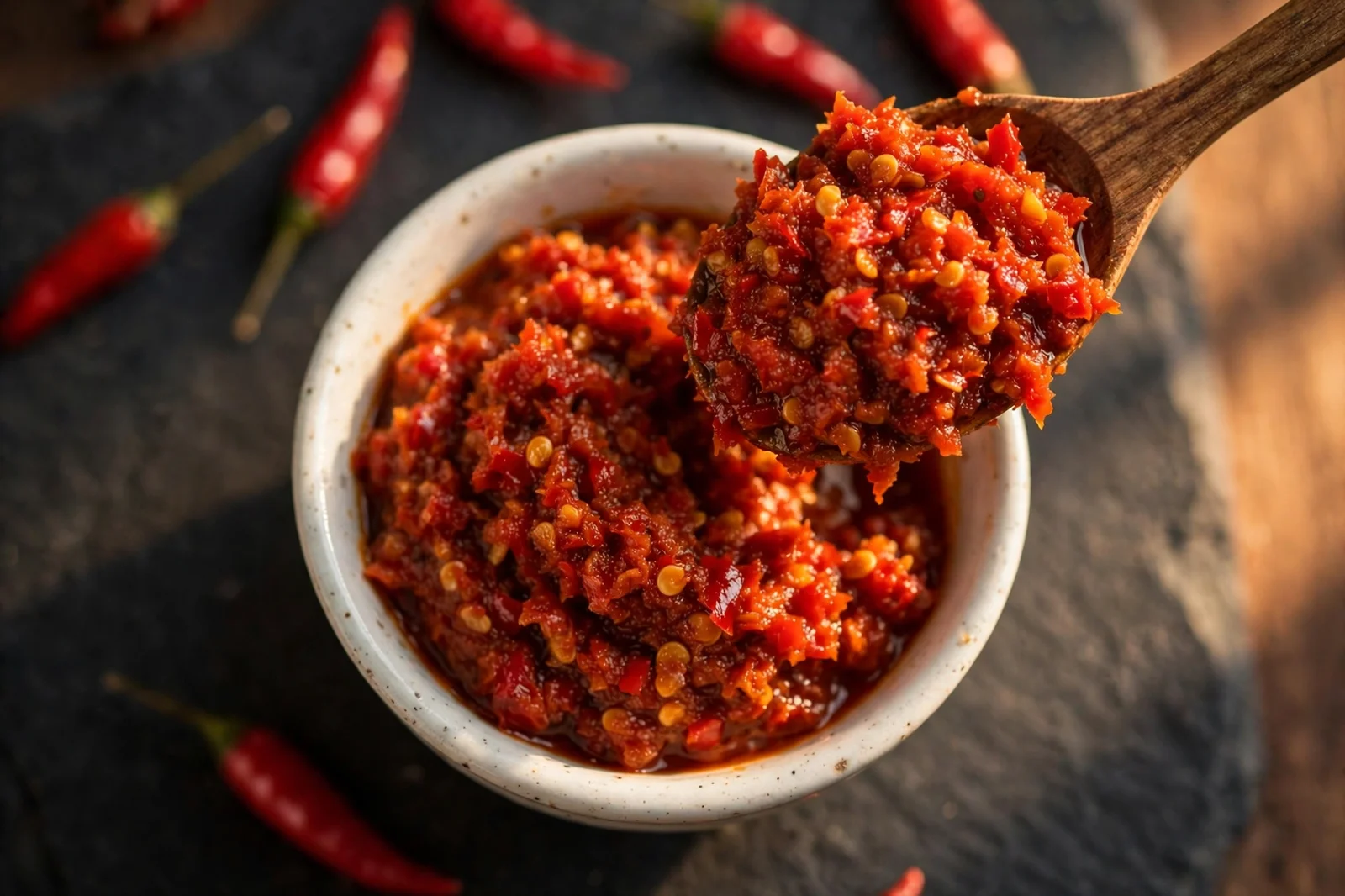
Sambal oelek ("sambal" = chili relish in Indonesian/Malay, "oelek" from the mortar-and-pestle grinding motion) is one of the simplest chili products in the Asian pantry: fresh red chilies ground to a coarse paste with salt and a little vinegar. The most common US brand, Huy Fong's, keeps the ingredient list to just those — chilies, salt, vinegar. No sugar, no garlic, no fermentation.
That simplicity is the selling point. Because nothing else is in the jar, sambal oelek adds heat without adding flavor opinions. A spoonful goes into a stir-fry or soup and raises the temperature while leaving the dish's own character alone. The texture helps too: the coarse grind softens as it cooks and its little chili flecks distribute evenly, so you do not get one searing bite and one bland one.
It also travels well across cuisines. It works in Southeast Asian and Chinese dishes naturally, but there is nothing in it that fights with, say, a Mexican salsa base or a Mediterranean marinade. Plain heat is plain heat.
What Sriracha Actually Is
Sriracha is named after the Thai coastal city of Si Racha, and it is a very different product from sambal oelek: red jalapeños that are fermented for weeks, then blended with sugar, garlic, distilled vinegar, and salt into a thick, smooth sauce. The rooster-bottle version most Americans know is the Vietnamese-American Huy Fong style — thick enough to squeeze in a swirl, sweet enough to read almost like a chili ketchup.
Fermentation plus sugar changes everything about the heat. The acid and sweetness soften the chili's edge, so sriracha tastes milder than the same amount of sambal oelek, with a rounded, lingering warmth instead of a sharp bite. The garlic is not background either — it is one of the first things you taste, which is why sriracha announces itself in anything you add it to.
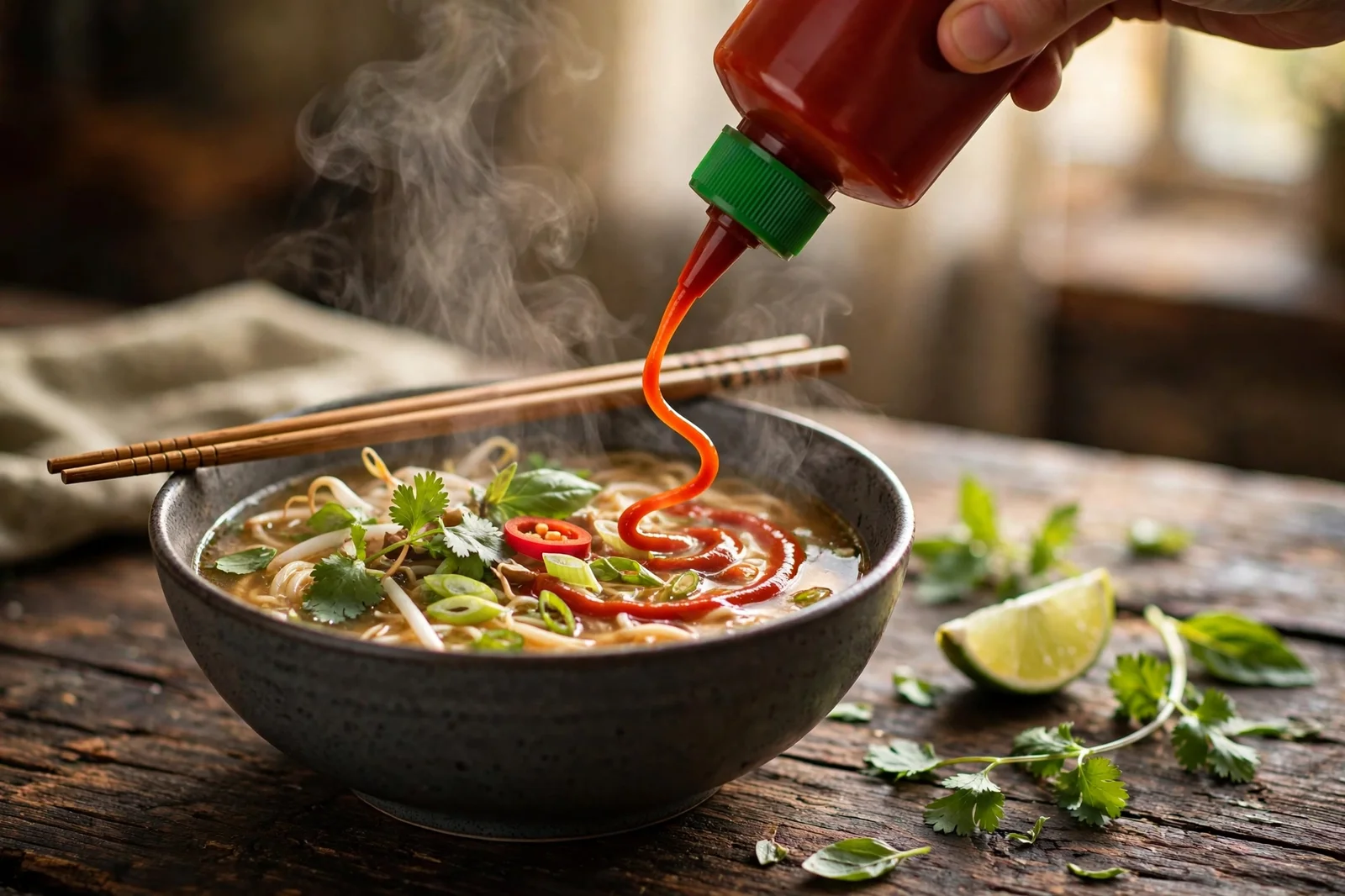
That assertive flavor is exactly why people love it as a finishing sauce. A swirl over a bowl of pho, a squiggle across fried eggs, a dipping base mixed with mayonnaise — those are jobs where "tastes like sriracha" is the point, not a problem. It earns its place as one of the sauces people put out for fried or fresh spring rolls, where a sweet-hot dip does half the work of the appetizer.
Heat: Which One Is Hotter?
Spoonful for spoonful, sambal oelek is the hotter of the two. It is essentially undiluted ground chilies, while sriracha's heat is padded out by sugar, vinegar, and fermentation. If you swap them 1:1 in a cooked dish, the sriracha version will taste sweeter and gentler; the sambal oelek version will taste hotter and plainer.
Heat also behaves differently because of texture. Sambal oelek's chunky grind can land in little pockets if you do not stir it in well — most of the bowl tastes right and one bite tastes like the sun. Sriracha blends in seamlessly, which makes it forgiving for cautious cooks and children.
A practical rule for seasoning: when a recipe calls for sambal oelek and you only have sriracha, use about the same amount but pull back a pinch of sugar or sweet sauce elsewhere in the recipe, and expect a garlic note that was not invited. When a recipe calls for sriracha and you only have sambal oelek, start with half the amount and add a pinch of sugar and a small grating of garlic to approximate what the sauce would have brought. Our gochujang substitutes guide walks through the same kind of rebuild-for-the-swap logic for another fermented chili paste.
Which Sauce for Which Job?
| Dish or situation | Better first pick | Why |
|---|---|---|
| Stir-frying vegetables or meat | Sambal oelek | Neutral heat that melts into the wok without sweetening the sauce |
| Fried rice | Sambal oelek | Seasons evenly; keeps the rice from turning sweet |
| Noodle soups and broths | Sambal oelek | Dissolves into the broth; chili flecks look like they belong there |
| Pho at the table | Sriracha | The classic finishing swirl; sweetness suits the anise-scented broth |
| Dipping for spring rolls or dumplings | Sriracha (or a mix) | Smooth, clings well; the garlic-sweet profile flatters fried foods |
| Fried eggs or breakfast | Sriracha | Designed for squeezing over finished food |
| Marinades for grilling | Either | Sambal for heat-only; sriracha when you want a sticky, caramelizing glaze |
| Seafood pasta or tomato sauces | Sambal oelek | Garlic-free heat that does not argue with Italian flavors |
| Mixing into mayo or sour cream | Sriracha | Blends silky-smooth; instant spicy mayo |
Can You Substitute One for the Other?
Yes, with adjustments, and this is the section that matters most for weeknight cooking.
Using sambal oelek in place of sriracha is the easier direction for cooked dishes. Both deliver chili heat; you are mostly missing the sugar and garlic. Fix it in two moves: cut the amount by about a third (sambal is hotter), then add a pinch of sugar and a small amount of minced or grated garlic per tablespoon of sriracha called for. In a dipping sauce where sriracha's smoothness matters, whisk the sambal mixture well — it will never be perfectly silky, but it gets close enough for a casual table.
Using sriracha in place of sambal oelek is the trickier direction, because you are removing heat and adding sweetness plus garlic. In stir-fries and soups, add roughly a third more sriracha than the recipe's sambal oelek amount, and reduce any sugar in the recipe slightly so the dish does not drift sweet. If the recipe has its own garlic already (most do), the extra garlic from the sriracha usually folds in without complaint.
One swap to avoid: sriracha in long-simmered sauces where the recipe counts on neutral heat. The sugar in sriracha can over-caramelize and darken a sauce over a long braise, and its garlic note concentrates. That is sambal oelek territory — buy the one small jar.
Storage and Buying Tips
Both keep for a very long time in the fridge — a year or more, thanks to the vinegar and salt. A darkened color at the top of a sambal oelek jar is just oxidation; stir it in or skim it off. Sriracha can separate a little in the squeeze bottle; shake it back together.
Brand matters less than ingredient label for sambal oelek: the classic version has three ingredients. If the label lists sugar or garlic, it is a different product wearing the name. For sriracha, the post-2023 chili-supply disruptions mean some bottles vary batch to batch in heat and color — buy the small bottle first if you are trying a new brand.
The Bottom Line
Stock sambal oelek if you cook from scratch and want heat you can direct. Stock sriracha if you finish and dip at the table and want flavor that does the work for you. Stock both — they cost a few dollars, last forever, and between them cover every job chili heat can do in an Asian (or any) kitchen. Neither one is "better" in the abstract. The right question is the one on your counter: are you seasoning the pan, or saucing the plate?