
Japan’s Fried Chicken, and Why It Wins the Crunch Contest
Chicken karaage is Japan’s answer to fried chicken, and once you’ve had it, the thick-battered kind starts to feel like it’s trying too hard. Bite-size pieces of chicken thigh spend half an hour in a marinade of soy sauce, sake, and grated ginger, get a thin, craggy coat of potato starch, and hit hot oil twice. What comes out is deeply savory, audibly crisp, and light enough that “just one more piece” happens about six times.
Karaage is everywhere in Japan — tucked into bento boxes, piled on izakaya tables next to cold beer, warming in convenience-store cases at midnight. It’s weeknight-friendly too: the marinade takes five minutes of actual work, and the whole thing lands on the table in about an hour.
If you’re new to deep-frying at home, the oil-temperature control in this recipe is the same skill my shrimp tempura post walks through. A $12 thermometer takes all the guessing out of it.
What Is Chicken Karaage?
“Karaage” (kara-age) is the Japanese technique of marinating bite-size pieces of protein, coating them lightly in starch, and deep-frying — no batter, no breading. Chicken is the default: when someone in Japan says “karaage” with no qualifier, they mean chicken.
The classic marinade is simple — soy sauce, sake, grated ginger, and garlic — and the classic coating is potato starch (katakuriko), sometimes cut with a little flour. That thin starch layer is the whole point. Where American-style fried chicken wears a thick, craggy flour crust, karaage wears something closer to a crisp shell: it shatters when you bite it instead of pulling away in a sheet.
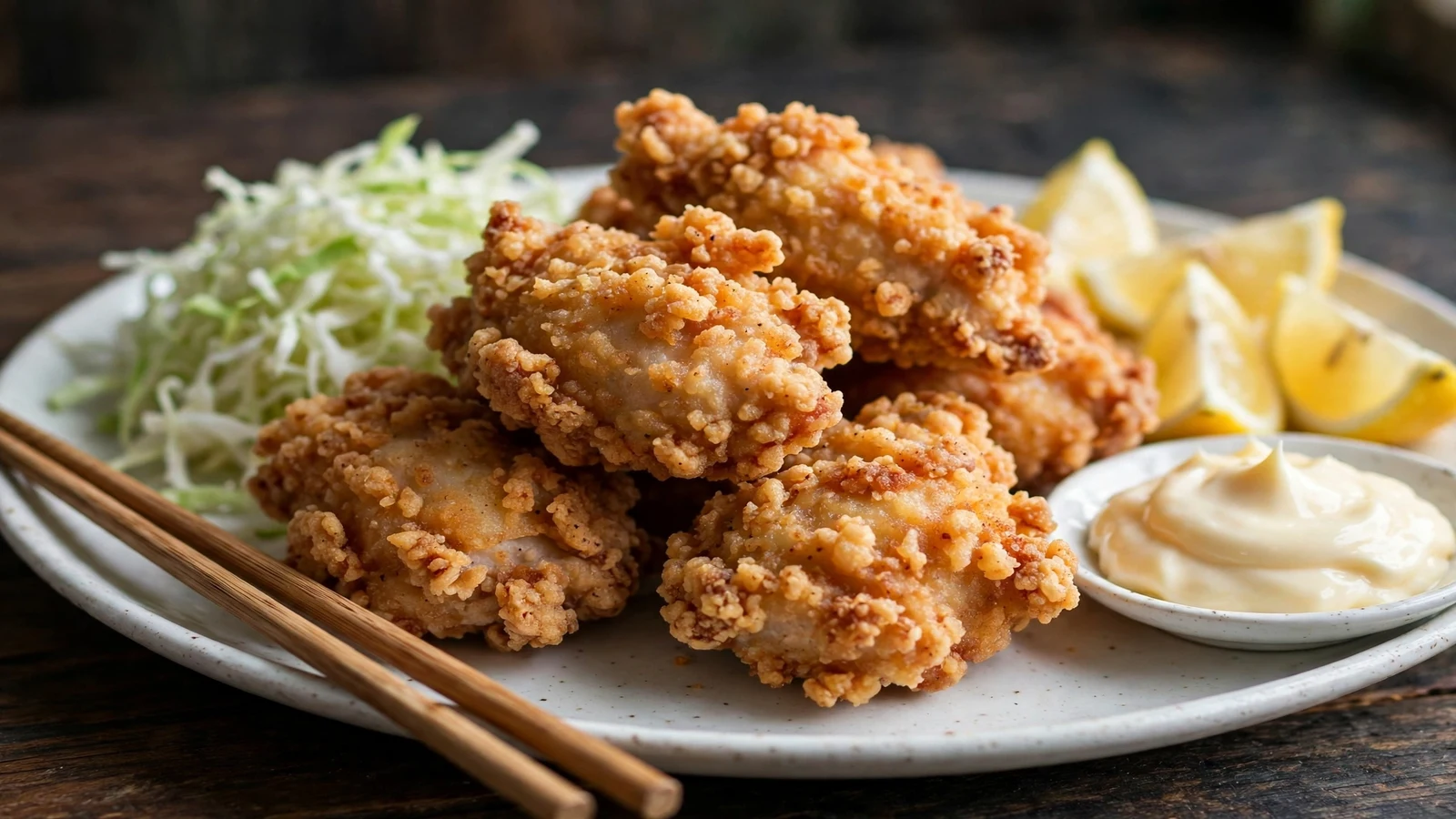
Expect savory first, with ginger warmth underneath and a squeeze of lemon on top. Karaage is usually served hot with lemon wedges, Japanese mayonnaise, and shredded cabbage — a plate built for picking at, not for sitting down to with a fork and knife.
The Ratios and Timings That Make It Work
I’ve made enough batches of this to know where it goes wrong, and every failure traced back to one of four numbers.
- Marinade ratio: 3-2-1. Three tablespoons soy sauce, two tablespoons sake, one tablespoon grated ginger for 1.5 pounds of chicken. The sake’s alcohol helps the surface of the chicken dry out slightly in the fridge, which is what lets the starch bond. Skip the sake and the coating is noticeably more fragile.
- Marinate 30 minutes, no more than 2 hours. Under 30 minutes, the flavor sits on the surface and the center tastes plain. Past two hours, the salt in the soy sauce starts breaking down the texture, and the chicken turns soft in a way frying can’t fix. Set a timer.
- Potato starch beats cornstarch — I tested both. Fried side by side, the potato-starch batch came out craggier and stayed audibly crisp about 15 minutes longer at room temperature than the cornstarch batch. A spoonful or two of flour in the starch (about 2 tablespoons per half cup) helps it cling without softening the crunch.
- Fry twice: 170°C then 180°C. The first fry (340°F, 3–4 minutes) cooks the chicken through and sets a pale, soft crust. A 3-minute rest lets interior moisture migrate out. The second fry (355°F, 45–60 seconds) drives off that surface moisture and locks in the shattering crisp. Single-fried karaage tastes fine for about five minutes, then steams itself soft from the inside.
Ingredients
For the marinade:
- 1.5 lb (680 g) boneless, skinless chicken thighs, cut into 2-inch pieces
- 3 tablespoons soy sauce (a standard all-purpose koikuchi; my soy sauce guide explains which bottle to grab)
- 2 tablespoons sake, or dry sherry
- 1 tablespoon freshly grated ginger (about a 1-inch piece)
- 2 cloves garlic, grated
- 1 teaspoon toasted sesame oil
For the coating and frying:
- 1/2 cup (65 g) potato starch (katakuriko)
- 2 tablespoons all-purpose flour
- 1/2 teaspoon kosher salt
- 4 cups neutral oil with a high smoke point (canola, peanut, or rice bran)
For serving:
- Lemon wedges
- Japanese mayonnaise (Kewpie)
- Finely shredded cabbage or a simple green salad
Prep: 45 minutes (includes 30 minutes marinating). Cook: 15 minutes. Total: 1 hour. Serves 4.
How to Make Chicken Karaage, Step by Step
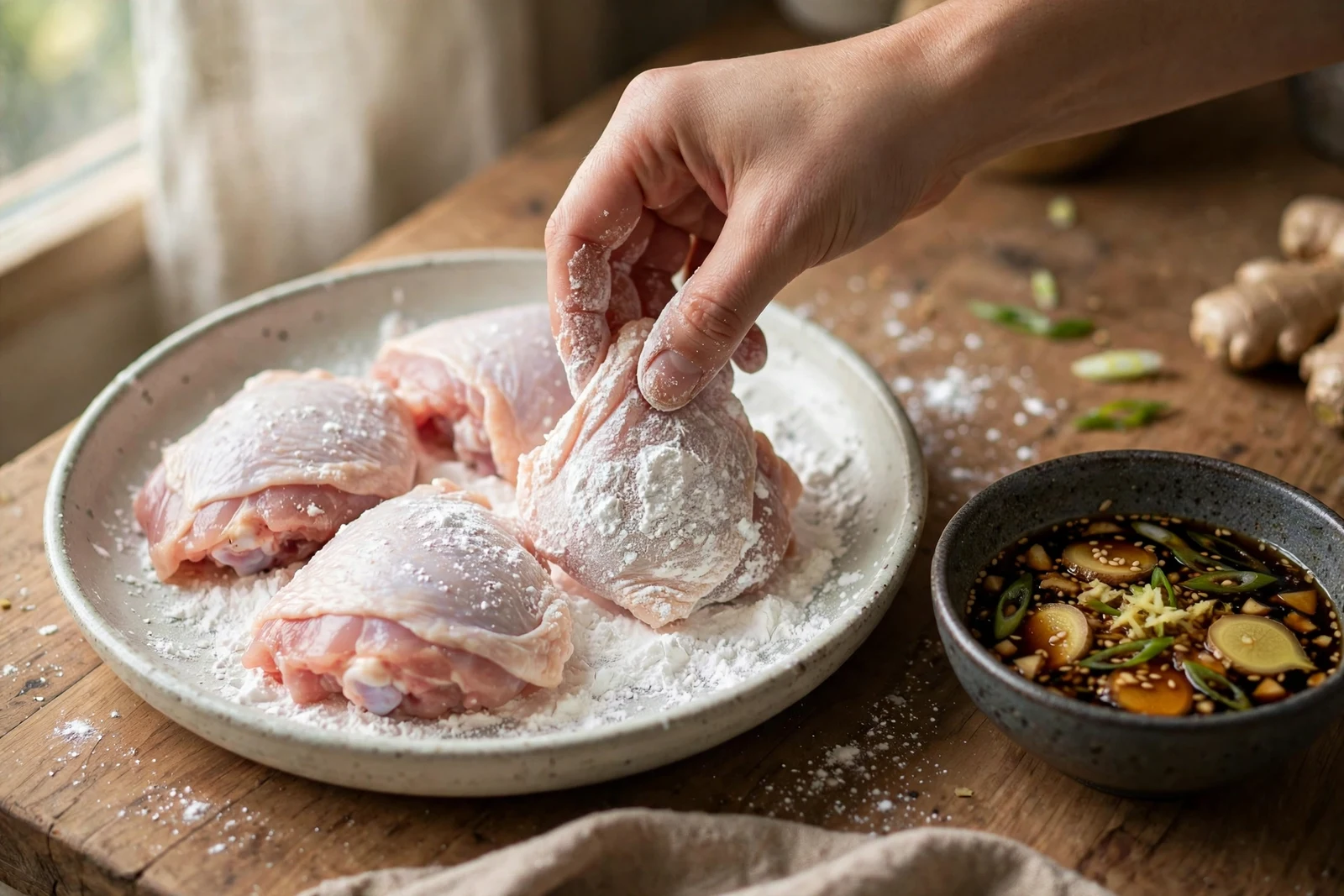
- Cut the chicken evenly. Slice the thighs into 2-inch pieces, roughly walnut-sized. Even pieces cook in the same time; odd sizes mean some are raw while others overcook.
- Marinate. Whisk the soy sauce, sake, ginger, garlic, and sesame oil in a bowl. Add the chicken, turn to coat, cover, and refrigerate for 30 minutes (up to 2 hours).
- Drain, don’t dry. Lift the chicken out and let the excess marinade drip back into the bowl. You want a thin film clinging to the surface — that’s what the starch grabs — but the pieces shouldn’t be dripping.
- Dredge and rest. Stir the potato starch, flour, and salt together in a shallow dish. Coat each piece, pressing lightly, and set on a tray in a single layer. Rest 5 minutes. The coating hydrates and turns slightly tacky, which keeps it bonded in the oil instead of sloughing off.
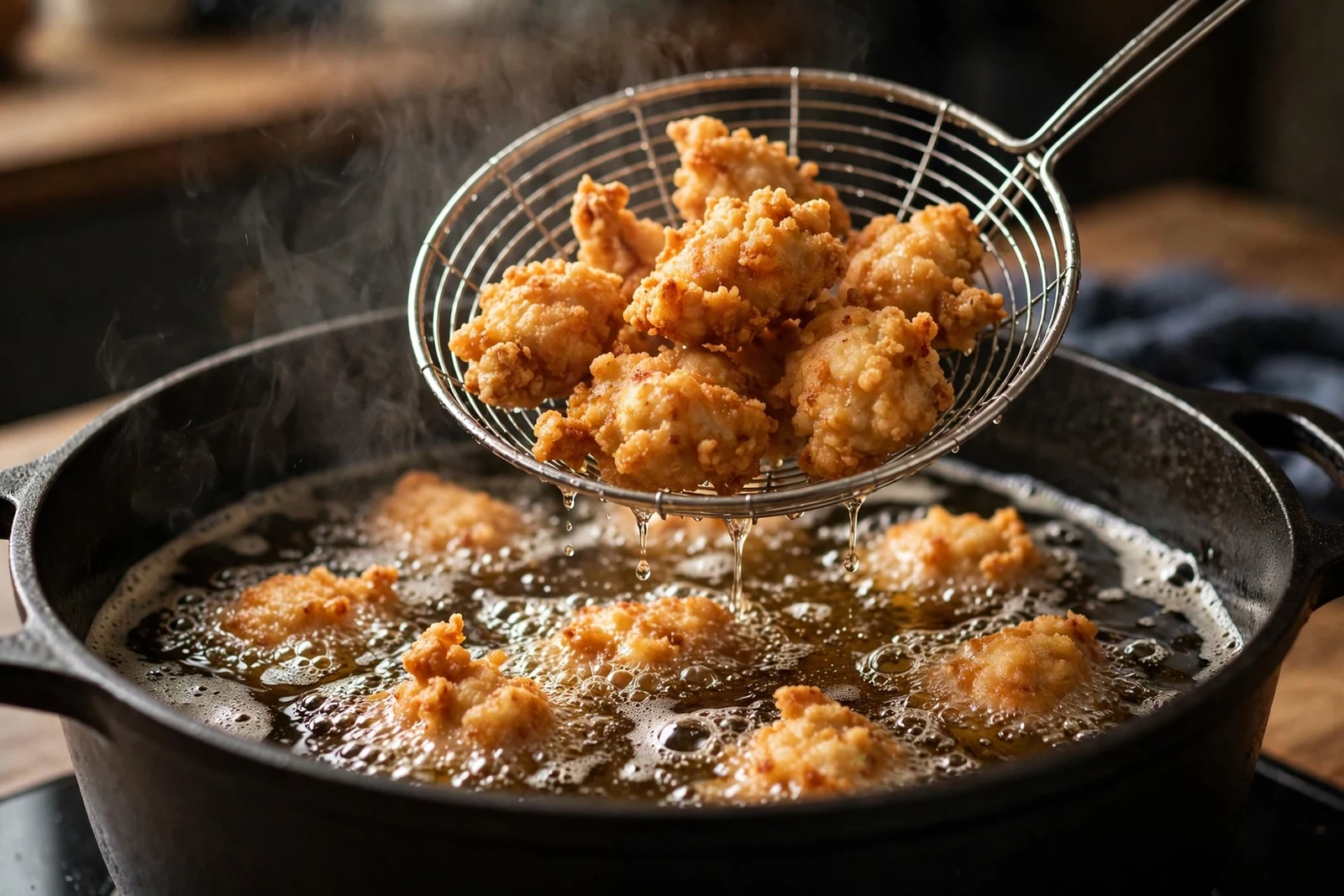
- First fry at 170°C (340°F). Pour oil 2 inches deep into a heavy pot and heat to 170°C. Fry in two batches, 3–4 minutes per batch, turning once, until pale gold. Lift out to a wire rack — not paper towels, which trap steam under the crust — and rest 3 minutes.
- Second fry at 180°C (355°F). Raise the heat. Fry the chicken again, 45–60 seconds per batch, until deep golden and crisp. Back to the rack, a light sprinkle of salt if you like, and serve immediately with lemon, Kewpie, and cabbage.
What Goes Wrong (and the Fix)
- The coating falls off in the oil. The chicken went in too wet, or the oil was too cool. Fix: let the marinade drip off well, rest the dredged pieces 5 minutes, and don’t start frying until the oil holds 170°C.
- Crisp for five minutes, then soggy. The second fry was skipped, or the pot was crowded and the oil temperature crashed. Fix: fry in batches and always do the 45-second second fry.
- Dark outside, raw inside. The first fry ran too hot. Fix: keep it at 170°C — karaage gets its color in the second fry, not the first.
- Greasy, heavy pieces. Same cause as soggy: oil too cool or too much chicken at once. The crust should feel dry to the touch within a minute of leaving the oil.
Variations and Ways to Serve It
- Spicy karaage: Add 1 teaspoon chili oil or 1/2 teaspoon shichimi togarashi to the marinade. The heat blooms in the oil and stays in the crust.
- Extra garlicky: Double the garlic. It won’t burn at these fry times the way it would in a screaming-hot stir-fry.
- Chicken nanban-style: After the second fry, toss the hot pieces in a quick sweet-vinegar dressing (3 tablespoons rice vinegar, 2 tablespoons sugar, 1 tablespoon soy sauce, warmed to dissolve) and serve with tartar sauce. It’s a different dish — from Miyazaki, not Tokyo — but it starts from the same chicken.
- Make it a meal: Karaage, rice, miso soup, and a quick pickle is a complete Japanese set meal. For lunchboxes, pack it with onigiri — both travel well at room temperature.
From the Garden
Shiso is karaage’s classic bento partner — a leaf or two tucked under the chicken, there as much for aroma as for color. If you grow perilla (shiso) in a pot, my growing guide covers the whole thing, and a few torn leaves scattered over the hot chicken right before serving is the simplest possible use of a homegrown harvest.
More Japanese Recipes
- Agedashi Tofu — another crisp-then-savory classic, fried tofu in dashi broth
- Classic Miso Soup — the bowl that belongs next to the rice
- Tamagoyaki: Japanese Rolled Omelet — a bento-box partner that reheats beautifully
- Onigiri: Japanese Rice Balls Three Ways — pack them with karaage for a picnic that needs no reheating
Recipe Card
Chicken Karaage (Japanese Fried Chicken)
Ingredients
Method
- Cut the chicken thighs into 2-inch pieces, roughly walnut-sized, so they cook in the same time.
- Whisk the soy sauce, sake, ginger, garlic, and sesame oil in a bowl. Add the chicken, turn to coat, cover, and refrigerate for 30 minutes (up to 2 hours).
- Lift the chicken out and let the excess marinade drip back into the bowl. You want a thin film clinging to the surface, but the pieces should not be dripping.
- Stir the potato starch, flour, and salt together in a shallow dish. Coat each piece, pressing lightly, and set on a tray in a single layer. Rest 5 minutes so the coating hydrates and turns slightly tacky.
- Pour oil 2 inches deep into a heavy pot and heat to 170°C (340°F). Fry in two batches, 3-4 minutes per batch, turning once, until pale gold. Lift out to a wire rack and rest 3 minutes.
- Raise the oil to 180°C (355°F). Fry the chicken a second time, 45-60 seconds per batch, until deep golden and crisp. Return to the rack, sprinkle lightly with salt if you like, and serve immediately with lemon wedges, Kewpie, and cabbage.
Notes
Prep time: 45 minutes (includes 30 minutes marinating) · Cook time: 15 minutes · Total time: 1 hour · Servings: 4
1 thought on “Chicken Karaage (Japanese Fried Chicken)”