
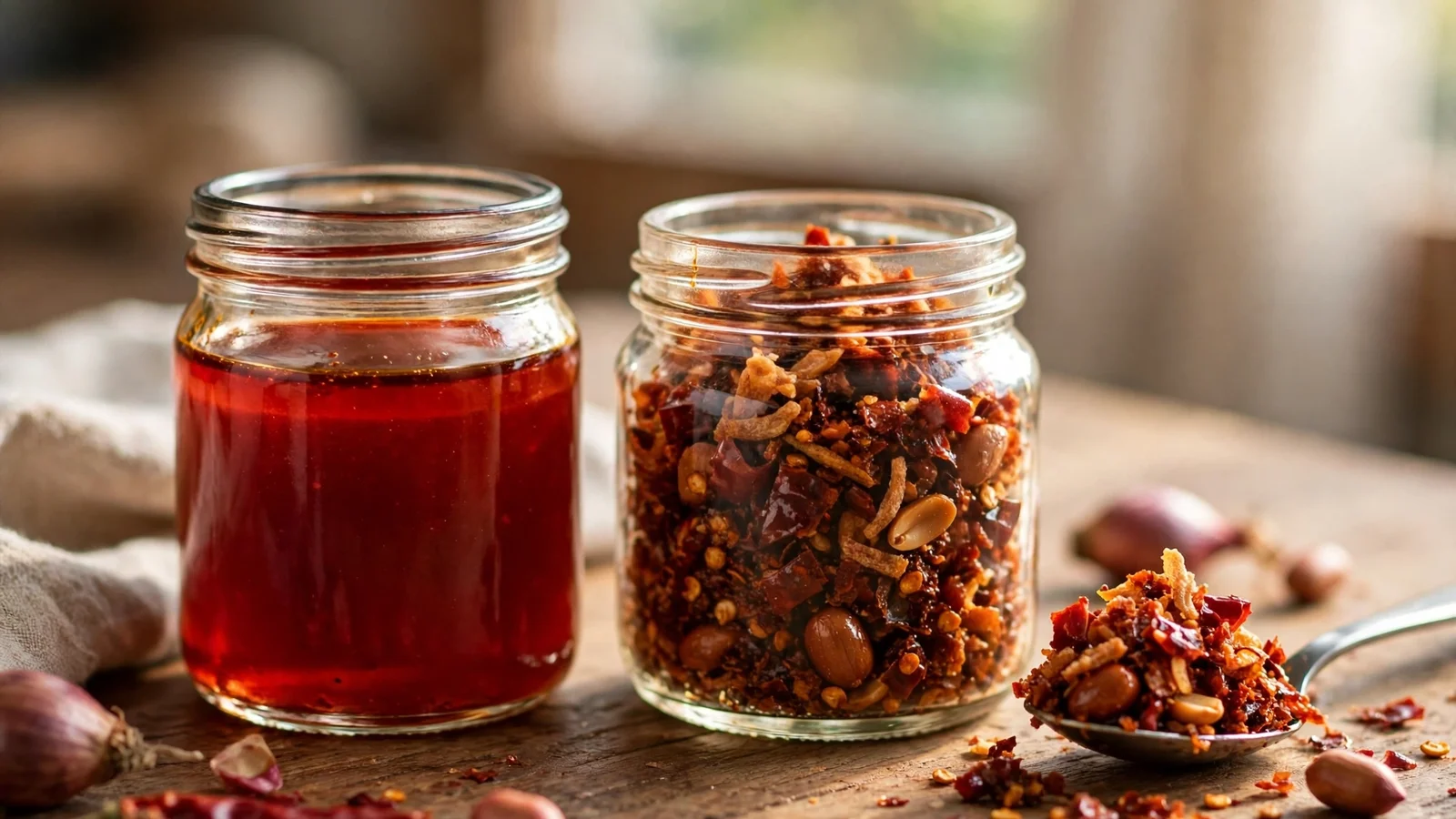
They sit next to each other on the shelf, both red, both built on chili-infused oil, and both go by names that sound almost interchangeable. But the moment you open the jars, the difference is obvious: one pours as a smooth, fragrant oil; the other spoons out as a crunchy, chunky condiment.
Chili oil is a seasoning — hot oil infused with chili flakes and spices, usually strained or settled so the oil runs clear and clean. Chili crisp is a topping — that same chili oil, but loaded with crunchy fried bits: toasted chili flakes, shallot, garlic, peanuts, and sometimes fermented soybeans. One flavors the pan; the other finishes the plate. This guide puts them side by side so you know which jar to reach for, and when.
The Quick Verdict
- Reach for chili oil when you want to season cooking — a spoonful into a wok, a drizzle into a marinade or dressing, a fragrant base for noodle sauces and dumpling dips. It adds heat and aroma without changing a dish’s texture.
- Reach for chili crisp when you want crunch and heat on finished food — spooned over noodles, eggs, rice, roasted vegetables, or even vanilla ice cream. It adds texture as much as flavor.
- If you only stock one, pick chili oil if you cook Asian food from scratch often — it goes into more dishes. Pick chili crisp if you mostly finish and garnish at the table and want the most dramatic flavor per spoonful.
If you want the full story on making the smooth kind at home, our homemade chili oil guide walks through the whole process, from choosing flakes to getting the pour temperature right.
Chili Crisp vs Chili Oil at a Glance
| Detail | Chili oil | Chili crisp |
|---|---|---|
| Form | Smooth, pourable oil (may be strained clear) | Chunky condiment: oil plus crunchy solids |
| Solids | Little to none — flakes settled or strained out | Plenty — fried chili flakes, shallot, garlic, peanuts, soybeans |
| Texture in food | Disappears into the dish | Adds crunch you can feel |
| Flavor | Clean heat plus infused aromatics (star anise, Sichuan pepper, bay) | Toasty, savory, umami-rich from the fried bits |
| Heat character | Even, all-over warmth | Heat arrives with the crunch — bolder first bite |
| Typical use | Cooking ingredient and seasoning oil | Finishing spoonful and table condiment |
| Famous example | Sichuan red oil (hong you) | Lao Gan Ma Spicy Chili Crisp |
The one-line version: chili oil is an ingredient, chili crisp is a topping. You can eat either straight from the jar, but each is built for its own job.
What Chili Oil Actually Is
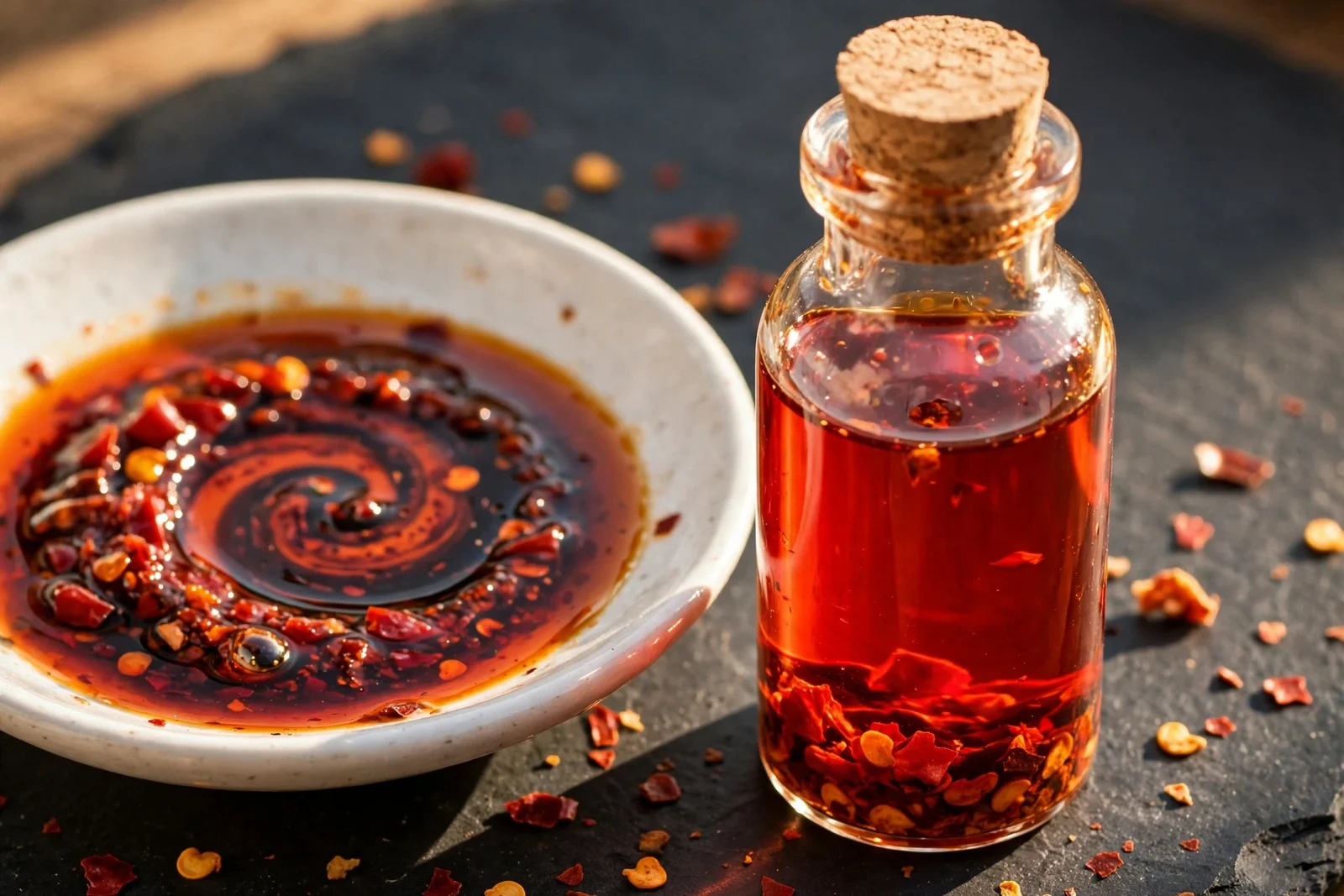
Chili oil is exactly what it sounds like: a neutral oil heated and poured over (or simmered with) dried chili flakes and whole spices, then left to infuse. The classic Sichuan version — hong you — gets its deep red color and fragrance from dried chilies plus star anise, cassia, bay leaf, and sometimes black cardamom, all strained out after infusing. What you keep is a clear, ruby-red oil that tastes like toasted chili with a warm, numbing background.
Because the solids are strained or settled out, chili oil behaves like any cooking oil with a personality. It melts into a wok sauce, emulsifies into a dumpling dipping sauce, and blooms beautifully in hot broth — a teaspoon swirled into wonton soup turns the whole bowl fragrant without adding a single chewy bit. It is the workhorse of the two: quieter, but it goes everywhere.
The make-or-break detail is temperature. Pour the oil over your flakes at roughly 225–250°F (110–120°C) — hot enough to toast and bloom the chilies, not so hot that they scorch. Oil poured at a full sizzle, 350°F and up, turns the flakes bitter and muddy in seconds, and no amount of straining fixes it. I use about a 2:1 ratio by volume — one cup of neutral oil to half a cup of chili flakes — which gives a strongly flavored oil without wasting flakes that will never fully give up their flavor.
What Chili Crisp Actually Is
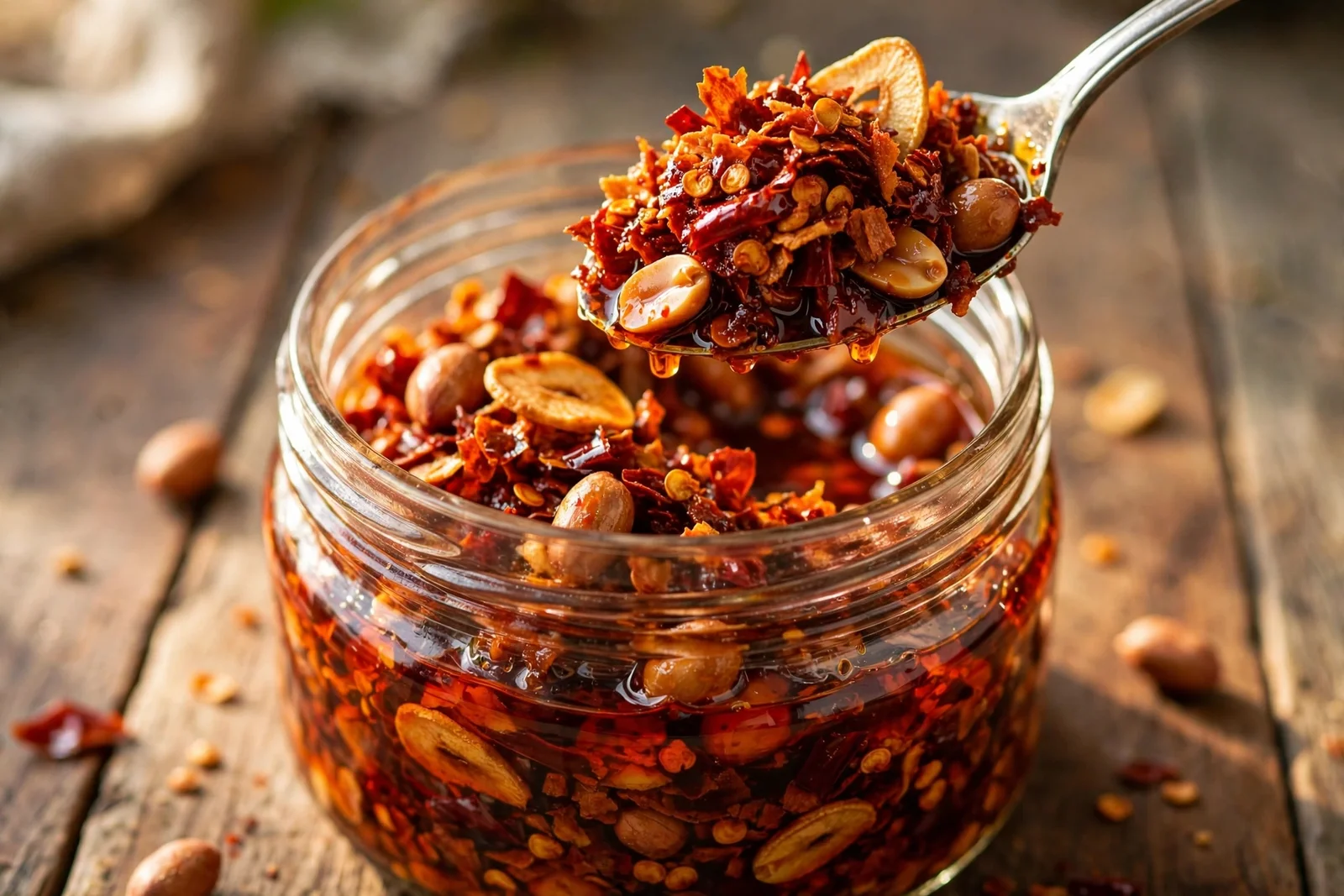
Chili crisp is chili oil’s louder sibling. It starts the same way — oil infused with chilies — but instead of straining the solids out, you fry them until shatteringly crisp and leave them in the jar. The famous Lao Gan Ma version made the style global: fried chili flakes, fermented black soybeans, and a savory depth that reads almost meaty. Modern versions add crispy shallot, garlic chips, peanuts, and sesame seeds.
That sediment is the whole point. A spoonful of chili crisp is two things at once: flavored oil and crunchy topping. The oil seeps into noodles and rice; the crunchy bits sit on top and give you something to bite into. This is why chili crisp shines on simple foods — plain rice, fried eggs, steamed greens, a bowl of congee — where the crunch is the most interesting thing happening.
One practical rule I cook by: the jar has two zones. The oil floating on top is seasoning — drizzle it into sauces and dressings like any chili oil. The crunchy layer settled at the bottom is the topping — dig deep and spoon it over finished dishes. Shake or stir before serving so every spoonful gets both, and always use a clean, dry spoon: water in the jar is what makes the crisp go stale and soft.
Heat: Which One Is Hotter?
It depends on the jar, not the category. A Sichuan red oil made with facing-heaven chilies can out-burn a mild, peanut-heavy chili crisp, and a fiery small-batch crisp can out-burn a gentle store-bought chili oil. Heat comes from the chilies used, not from whether the jar has crunch in it.
That said, chili crisp usually *tastes* hotter spoonful for spoonful, for two reasons. First, you are eating the actual fried chili flakes, not just oil that touched them — the capsaicin is right there. Second, the savory crunch (garlic, shallot, fermented soybean) makes each bite more intense overall, so your brain reads it as stronger. A teaspoon of chili oil stirred into a whole pot of soup distributes its heat; a teaspoon of chili crisp on one bowl of noodles concentrates it.
If you are heat-sensitive, treat chili crisp as the stronger of the two and start with half a spoonful. You can always add more — you cannot take it back.
Which One for Which Job?
| Dish or situation | Better first pick | Why |
|---|---|---|
| Seasoning a stir-fry or fried rice | Chili oil | Melts into the wok; no crunchy bits to burn on high heat |
| Dumpling or noodle dipping sauce | Chili oil | Emulsifies smoothly with soy sauce and vinegar |
| Swirled into soup or congee | Chili oil | Blooms through the broth; keeps the texture clean |
| Topping dan dan noodles | Chili crisp | The crunch is half the dish — oil alone tastes flat here |
| Fried or steamed eggs | Chili crisp | Crunchy, savory spoonful over a soft egg is the classic move |
| Roasted vegetables | Chili crisp | Adds texture and umami to caramelized edges |
| Pizza, avocado toast, sandwiches | Chili crisp | Western foods love a crunchy, savory topper |
| Marinades and dressings | Chili oil | Smooth oil blends evenly; solids would sink and clump |
| Cold noodle salads | Either | Chili oil in the dressing, chili crisp spooned over at the table |
One combination worth knowing: use both. Chili oil in the sauce for even background heat, chili crisp on top for crunch and punch. A bowl of scallion oil noodles or a plate of dumplings treated this way gets the best of both jars.
Can You Substitute One for the Other?
Mostly yes, with one honest caveat: you can replace the heat and flavor, but you cannot fake the crunch.
Using chili oil in place of chili crisp works wherever the oil is doing the flavor work — sauces, dressings, soups, stir-fries. What you lose is texture. To get some of it back, spoon the oil over the dish and add a separate crunchy element: toasted peanuts, fried shallots, or crispy garlic. It will not be the same as the real thing, but it gets you 80% of the way there.
Using chili crisp in place of chili oil works best in cooked dishes where the solids can soften in — stir-fries, braises, noodle sauces. Scoop from the top of the jar where the oil pools, or push the solids aside. Avoid it in smooth emulsified sauces and clear soups if the floating bits would look or feel out of place; that is chili oil territory. And never put chili crisp through sustained high wok heat expecting it to behave like plain oil — the already-fried bits go from crisp to bitter fast.
Storage and Buying Tips
Both live happily at cool room temperature for months — the oil protects the contents — but the fridge extends both to a year or more. The one rule that matters: seal the jar only after homemade oil has cooled completely. Closing a warm jar traps steam, and steam is what turns shatteringly crisp bits soft and stale within days. I learned that one the impatient way.
When buying chili crisp, check the solids-to-oil ratio through the glass. A good jar looks generous with its crunch — flakes, shallot, and garlic visibly packed in, not a thin sprinkle floating on a sea of oil. For chili oil, look for a deep red color and an ingredient list you recognize: chilies, oil, whole spices. If the label leads with “chili extract” and artificial color, keep walking.
The Bottom Line
Stock chili oil if you cook — it seasons everything from the inside. Stock chili crisp if you finish — it makes simple food exciting from the top down. They are not rivals; they are the same idea at two different volumes. Between the two jars, there is no dish in the pan-Asian kitchen that cannot get exactly the heat and texture it needs.
More Condiment and Pantry Guides
- Homemade Chili Oil: Make It at Home — the smooth, fragrant base for everything above
- Sambal Oelek vs Sriracha: Which Chili Sauce Should You Buy? — two more chili jars, compared the same way
- Gochujang vs Doubanjiang: A Chili Paste Showdown — fermented chili pastes from Korea and Sichuan
- How to Use Toasted Sesame Oil Without Burning It — the other finishing oil every Asian pantry needs
### From the Garden
If you grow your own chilies — even a single Thai chili plant in a pot gives you more peppers than you expect — the dried harvest is what makes homemade chili oil and crisp genuinely yours. Our guide to growing Thai chili peppers in pots covers the whole cycle. Homegrown dried chilies toast up more fragrant than store-bought flakes, and you will taste the difference in the finished oil.