
They share the first five letters, they both come from the same Korean pepper, and they sit side by side in the international aisle. But gochujang and gochugaru are not two versions of the same thing. One is a thick fermented paste, sweet and savory with a slow-building warmth. The other is a dry flake, smoky and fruity with a cleaner, sharper heat. Mix them up and a recipe can go wrong in ways that are hard to fix after the fact: a kimchi paste made with gochujang instead of flakes turns gummy and too sweet, while a tteokbokki sauce built on flakes alone tastes flat and one-note.
The names tell you the difference if you know where to look: in Korean, “jang” means paste and “garu” means powder. This guide puts the two side by side, with the numbers and the swap rules, so you always reach for the right jar.
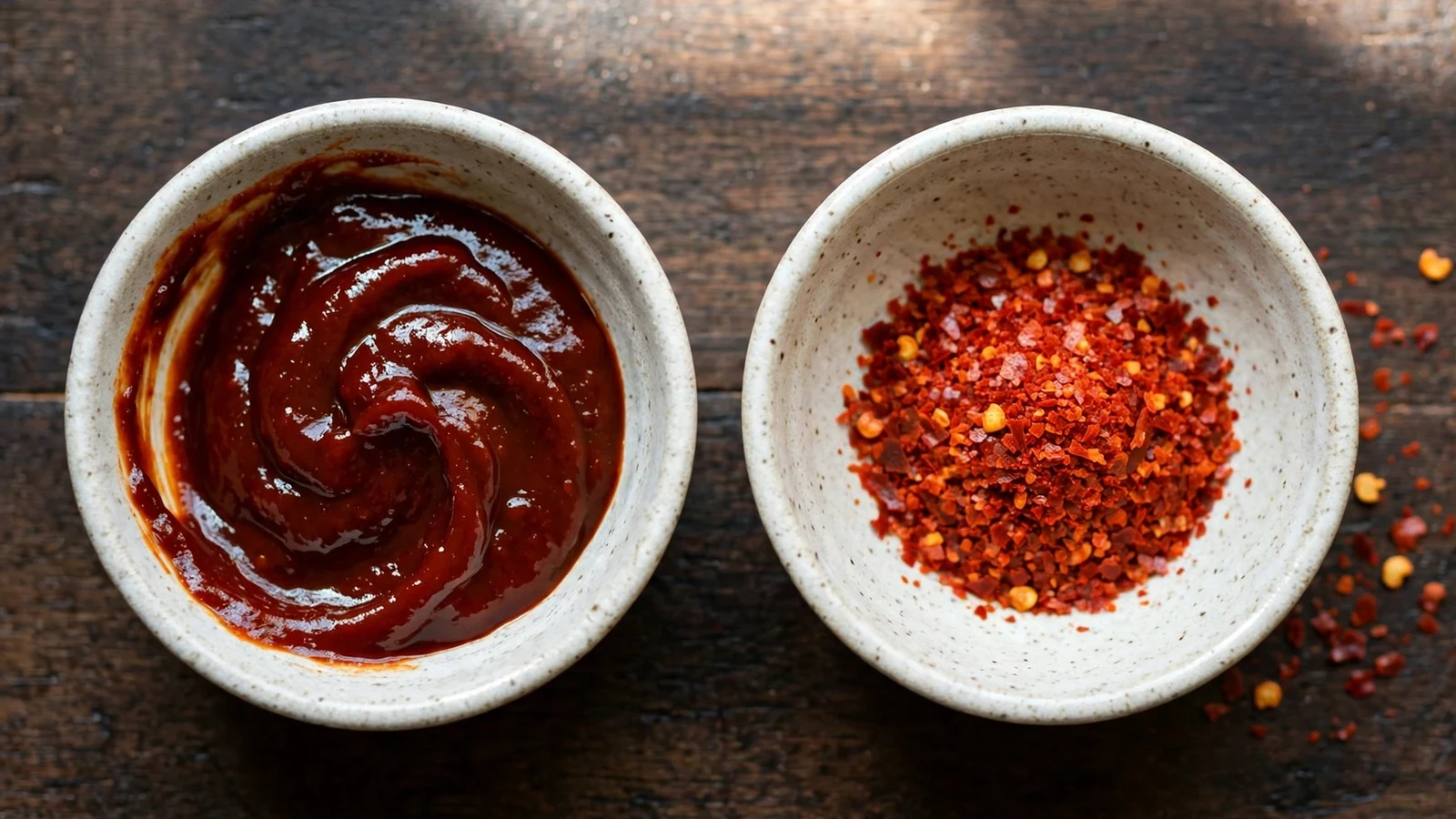
The Quick Verdict
- Reach for gochujang when the dish needs body, sweetness, and fermented depth in one spoonful: tteokbokki sauce, bibimbap, marinades for bulgogi, ssamjang, stews, and glazes. It dissolves into liquids and clings to food.
- Reach for gochugaru when you want pure chili flavor and color without sweetness or paste: kimchi, seasoned vegetable sides, dipping sauces, dry rubs, and anywhere you want visible red flakes.
- If you only stock one, pick gochugaru if you make kimchi or Korean vegetable sides regularly, because nothing else gives kimchi its exact flavor. Pick gochujang if you cook more stir-fries, rice bowls, and marinated meats, because it covers more dishes on its own.
- They are not interchangeable, but in a pinch you can fake one with the other using the ratios below.
What Gochujang Is
Gochujang is a fermented chili paste, and fermentation is the whole story. It starts with gochugaru, then adds glutinous rice, fermented soybean powder, barley malt powder, and salt. The mixture ferments for around three months, during which enzymes break down the rice starches into sugars. That is where gochujang’s signature sweetness comes from: not added sugar, but starch turned sweet by fermentation.
The result is a thick, sticky, brick-red paste with a layered flavor: sweet first, then savory and a little tangy from the fermented soybeans, with warmth that builds slowly instead of hitting all at once. Most commercial tubs print a heat scale from 1 to 5 on the label, 1 being mild and 5 very hot. For everyday cooking, a 2 or 3 gives you room to adjust: you can always add more heat with gochugaru, but you cannot take it out.
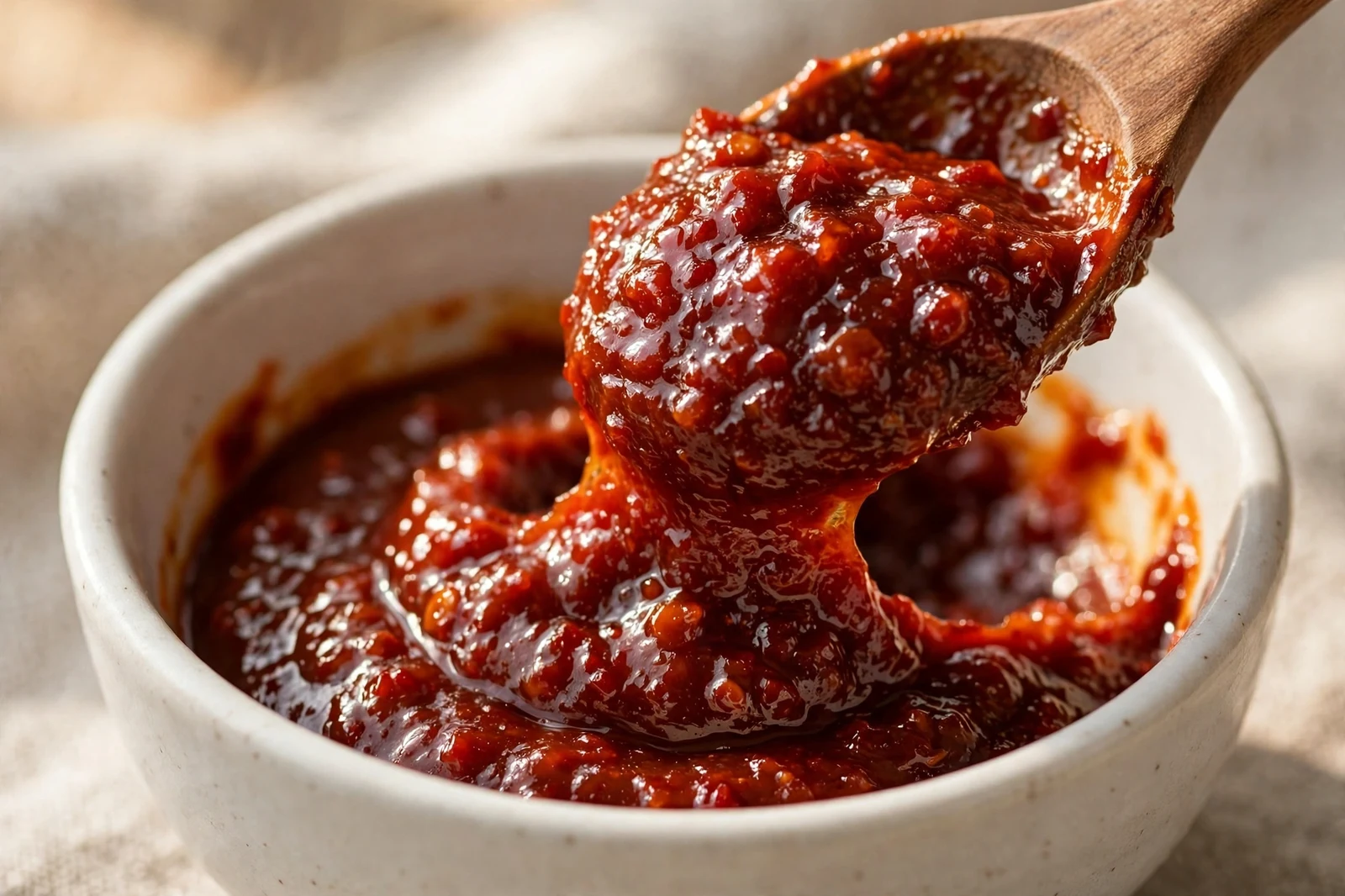
Gochujang lives in the saucy, clinging part of Korean cooking. It is the backbone of tteokbokki sauce, the red smear that makes bibimbap bibimbap, a base for ssamjang when mixed with doenjang, and a marinade workhorse for bulgogi and spicy pork. Because it is already seasoned, dishes built on gochujang need less added salt and sugar than you might expect. For a full rundown of what to do when the tub runs dry, our gochujang substitutes guide walks through the closest swaps for each situation.
What Gochugaru Is
Gochugaru is simpler: dried Korean red peppers (usually the sun-dried taeyangcho variety), deseeded and ground. No fermentation, no added ingredients. The seeds are removed before grinding, which is why gochugaru tastes rounder and less harsh than the crushed red pepper flakes sold for pizza: most of the bitterness lives in the seeds.
It comes in two grinds, and the grind matters. Coarse flakes go into kimchi, where the bigger pieces coat each cabbage leaf and keep their texture through fermentation. Fine powder goes into sauces, soups, and anywhere you want the chili to disappear into the liquid, and it is also the grind used to make gochujang itself. Bags labeled “taeyangcho” or “sun-dried” generally mark the better stuff: deeper red color, fruitier aroma. Store it in the freezer. Cold keeps the color bright red for months; a bag left in a warm pantry fades to a dull brick brown and takes its aroma with it.
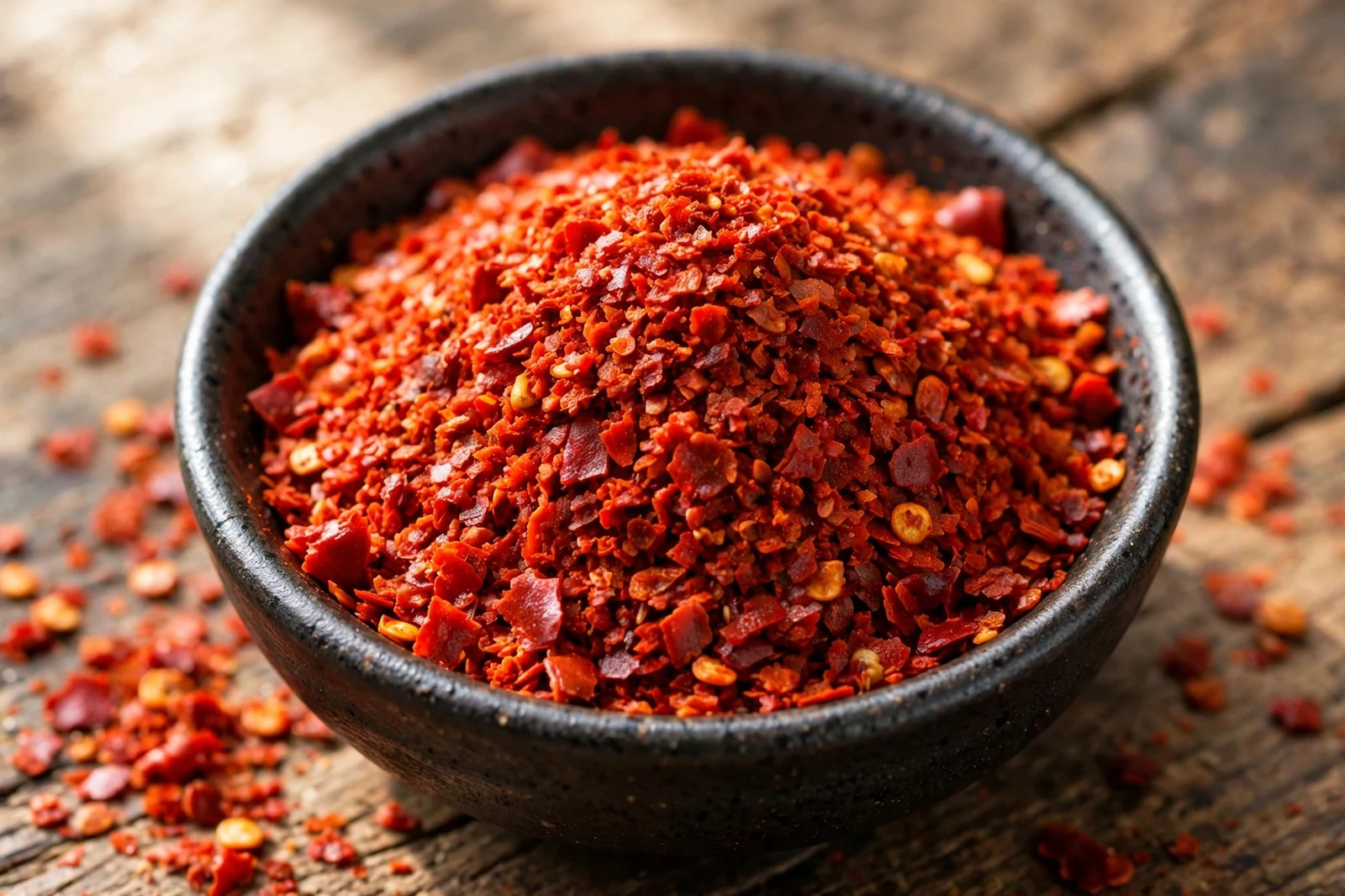
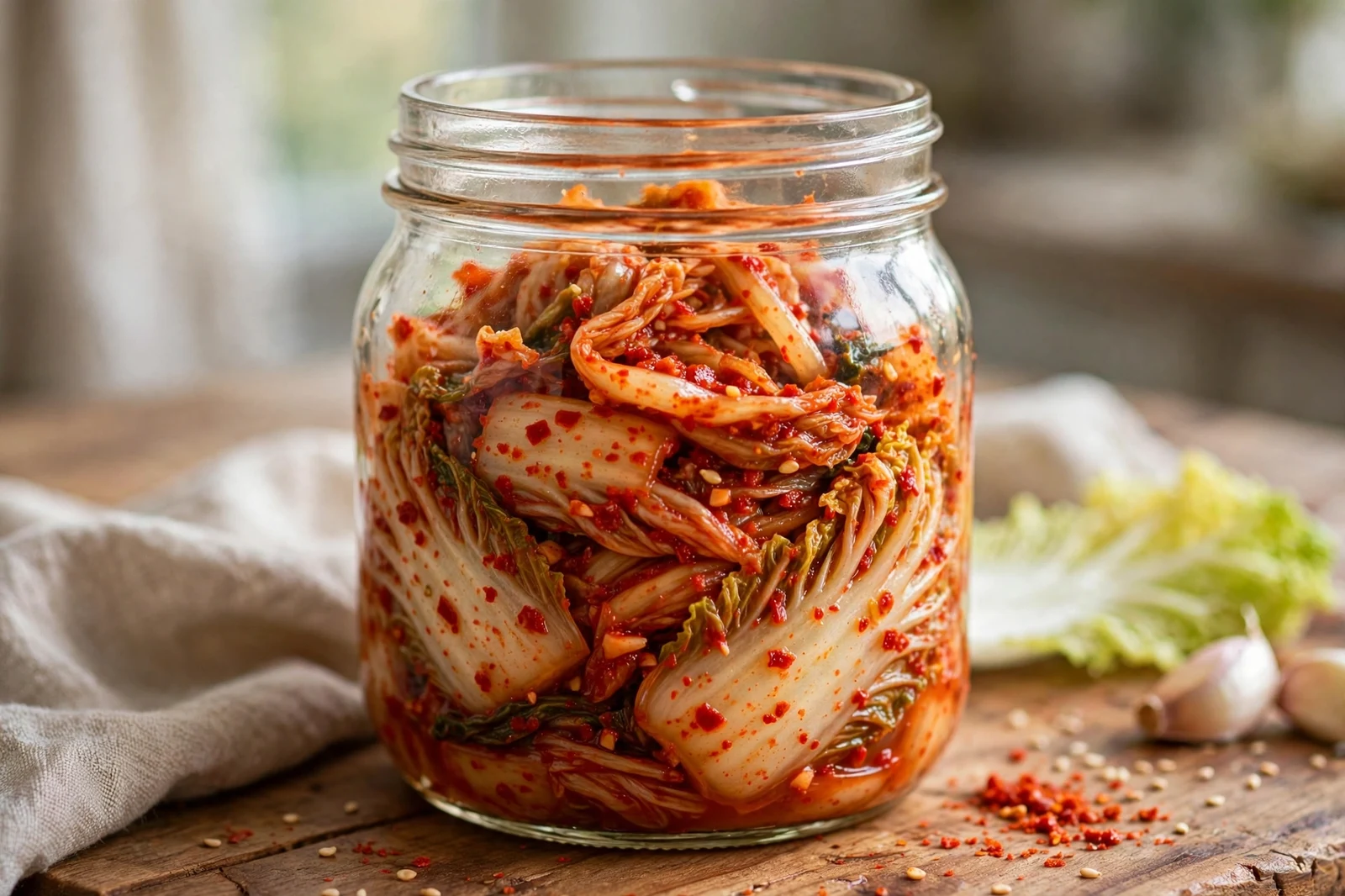
The flavor is smoky, fruity, and clean: all chili, without the sweetness or tang of the paste. That purity is why kimchi depends on it. Kimchi gets its funk from fermentation over days and weeks, and starting with an already-fermented paste like gochujang would push it in the wrong direction while making the seasoning gummy. Our easy napa cabbage kimchi shows the coarse grind doing exactly this job.
Gochujang vs Gochugaru at a Glance
| Detail | Gochujang | Gochugaru |
|---|---|---|
| Form | Thick, sticky paste | Dry flakes or powder |
| Main ingredients | Gochugaru, glutinous rice, fermented soybean powder, barley malt, salt | Dried Korean red peppers, deseeded and ground |
| Fermented? | Yes, about 3 months | No |
| Flavor | Sweet, savory, a little tangy, umami depth | Smoky, fruity, clean chili flavor |
| Heat (Scoville) | Under ~1,000 SHU; diluted by rice, soybeans, and salt | ~1,500 to 10,000 SHU depending on grade |
| Heat label | Numbered 1 to 5 on most commercial tubs | Sold as coarse (kimchi) or fine (sauces) grind |
| Texture in food | Dissolves into sauces, clings to food | Stays visible as flakes, or dissolves if finely ground |
| Already seasoned? | Yes: brings salt and sweetness with it | No: pure chili, you season around it |
| Storage | Refrigerator; keeps fermenting slowly, darkens over time | Freezer; cold keeps the color and aroma bright |
| Shelf life | Months in the fridge, effectively indefinite | 6 to 12 months at peak color and flavor |
How the Heat Compares
Gochugaru is the hotter of the two in almost every case. Its heat is undiluted chili, generally cited between 1,500 and 10,000 Scoville units depending on the pepper grade, which puts the hottest gochugaru around the top end of a jalapeno (2,500 to 10,000 SHU) and the mildest well below it. Gochujang lands under 1,000 SHU because the chili is stretched with rice, soybeans, and salt, and the sweetness rounds off the burn.
That gap explains the most common beginner mistake: tasting gochujang from the tub, deciding Korean food must be mild, and then using a full spoon of gochugaru where a recipe meant paste. Respect the flake. Start with half of what looks right, taste, and add more.
When to Reach for Each
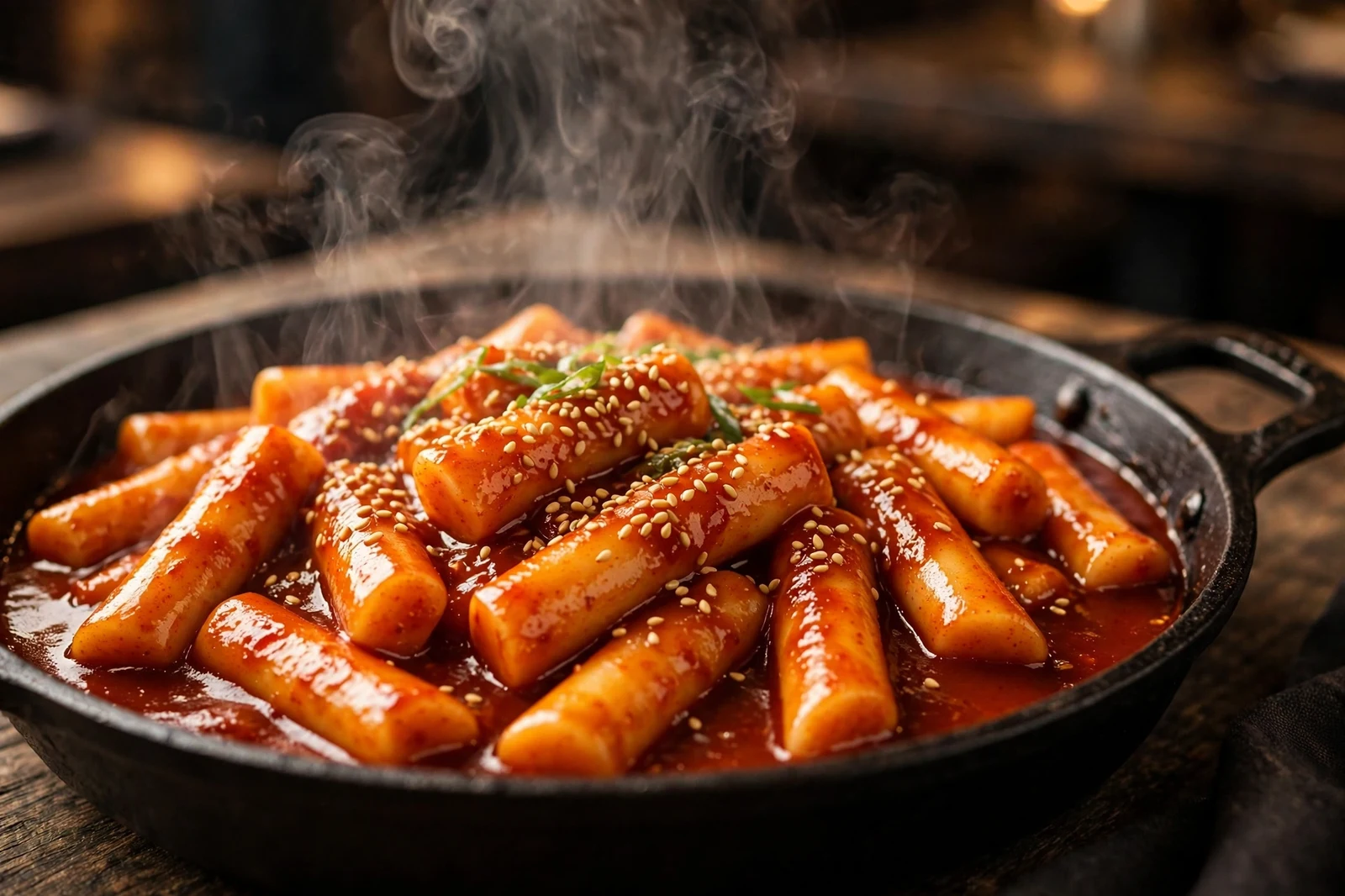
Think of it as a division of labor. Gochujang builds the base: any dish where chili should arrive as part of a sweet-savory sauce. Tteokbokki is the classic example, those chewy rice cakes lacquered in a glossy red sauce that would be impossible with flakes alone. Bibimbap, bulgogi marinade, spicy braised chicken, and ssamjang all sit on the gochujang side.
Gochugaru finishes and seasons: any dish where chili should taste like chili and look like chili. Kimchi is the non-negotiable one. Then come the vegetable sides, oi muchim and the like, where flakes cling to cucumber and stay bright; dipping sauces for dumplings and pancakes; dry rubs; and the final dusting over a finished dish when it needs color and a little lift.
One more distinction worth knowing: because gochujang is already salted and sweetened, recipes built around it need a lighter hand with soy sauce, salt, and sugar. Gochugaru adds nothing but chili, so you season the dish yourself. If a recipe calls for one and you only have the other, the substitution rules below keep the seasoning balanced.
Can You Swap One for the Other?
They are not direct substitutes, but both directions have a workable fix when the pantry forces your hand.
To stand in for gochugaru with gochujang: use about half the amount the recipe calls for, cut back on any added salt and sugar by roughly a third, and only do this in wet dishes like stews, braises, and sauces, where the paste can fully dissolve. Do not use this swap for kimchi, where the paste makes the seasoning gummy and too sweet, or for dry rubs, where the moisture throws off the crust.
To stand in for gochujang with gochugaru: build a quick dupe instead of swapping straight across. For each 1 tablespoon of gochujang, stir 1 tablespoon of fine gochugaru with 1 teaspoon of miso or doenjang, 1/2 teaspoon of sugar, and a splash of water until it loosens into a paste. The miso supplies the fermented depth, the sugar stands in for the saccharified rice starch, and the water fixes the texture. It will not fool anyone in a side-by-side taste, but in a cooked sauce or marinade it gets you most of the way there.
If you are out of gochugaru entirely and need flakes, Aleppo pepper or Kashmiri chili powder swap in at a 1:1 ratio with a similar color and a comparable mild heat. Save the cayenne for emergencies: it is much hotter and lacks the fruity sweetness, so halve it and accept a different flavor.
Buying Tips
Buy gochujang by the heat number, not the brand art. The 1-to-5 scale on the tub is the most useful thing on the label: 2 or 3 for a household that likes flavor with manageable heat, 4 or 5 only if everyone at the table genuinely likes it hot. Check the ingredient list for glutinous rice and fermented soybean content near the top; tubs padded with corn syrup and wheat tend to taste one-dimensionally sweet.
Buy gochugaru by the grind and the drying method. Keep both grinds if you cook Korean food often: coarse for kimchi and vegetable sides, fine for sauces and soups. Look for “taeyangcho” or “sun-dried” on the bag, and check the color through the packaging if you can. Bright, almost glowing red means fresh; dull brown-red means it has been sitting around. And remember the freezer rule: a bag that lives in the freezer keeps that bright color for the better part of a year, while a pantry bag fades within months.
More Korean Recipes
Once the two jars make sense, put them to work: Tteokbokki: Spicy Korean Rice Cakes for the glossy gochujang sauce at its best, Easy Napa Cabbage Kimchi for the coarse flake doing the job nothing else can, Kimchi Fried Rice for a weeknight pan that uses both, and Gochujang vs Doubanjiang: A Chili Paste Showdown if you want to keep comparing pastes across borders.
Two red jars, two different jobs. Stock both, and the Korean shelf of your pantry is essentially complete.