
Oi sobagi is the cucumber kimchi I make when I want a cold, spicy side dish without waiting weeks for a jar to ferment. Small cucumbers get cut into pockets, salted until they bend without breaking, and stuffed with garlic chives, carrot, and a gochugaru paste. The result stays crisp, salty, sweet, and hot in the same bite, and it is ready to eat the same day. It goes best next to grilled meat, a bowl of rice, or a hot stew that needs something cold beside it.

What is oi sobagi?
Oi means cucumber in Korean, and sobagi means stuffed. Oi sobagi is a cucumber cut lengthwise into quarters that stay joined at one end, then filled with seasoned vegetables. It is a type of kimchi, but it behaves differently from cabbage kimchi. Cabbage kimchi is made to ferment for weeks. Oi sobagi is eaten fresh or after a short ferment of about a day, while the cucumber still has a snap to it.
Expect a cold, crunchy side dish, not a soft pickle. The stuffing tastes salty and garlicky, with heat from gochugaru and a little sweetness to round it out. After a day at room temperature, the flavor turns a little sour. After that, the fridge keeps it crisp for several days. If you have made my easy napa cabbage kimchi, this one uses the same idea on a smaller scale: salt first, season second, and let time do the rest.
Pick small cucumbers with thin skins
Look for Korean cucumbers, kirby cucumbers, or Persian cucumbers, about 4 to 5 inches long, with thin skins and few seeds. In my kitchen, large slicing cucumbers with thick, waxy skins and big seed cavities turn watery no matter how long I salt them. Small cucumbers hold their shape after salting, and the pockets stay open for stuffing. Pick cucumbers that feel firm and heavy for their size, with no soft spots or yellowing ends. For this recipe, 8 small cucumbers weigh about 1 1/2 pounds.
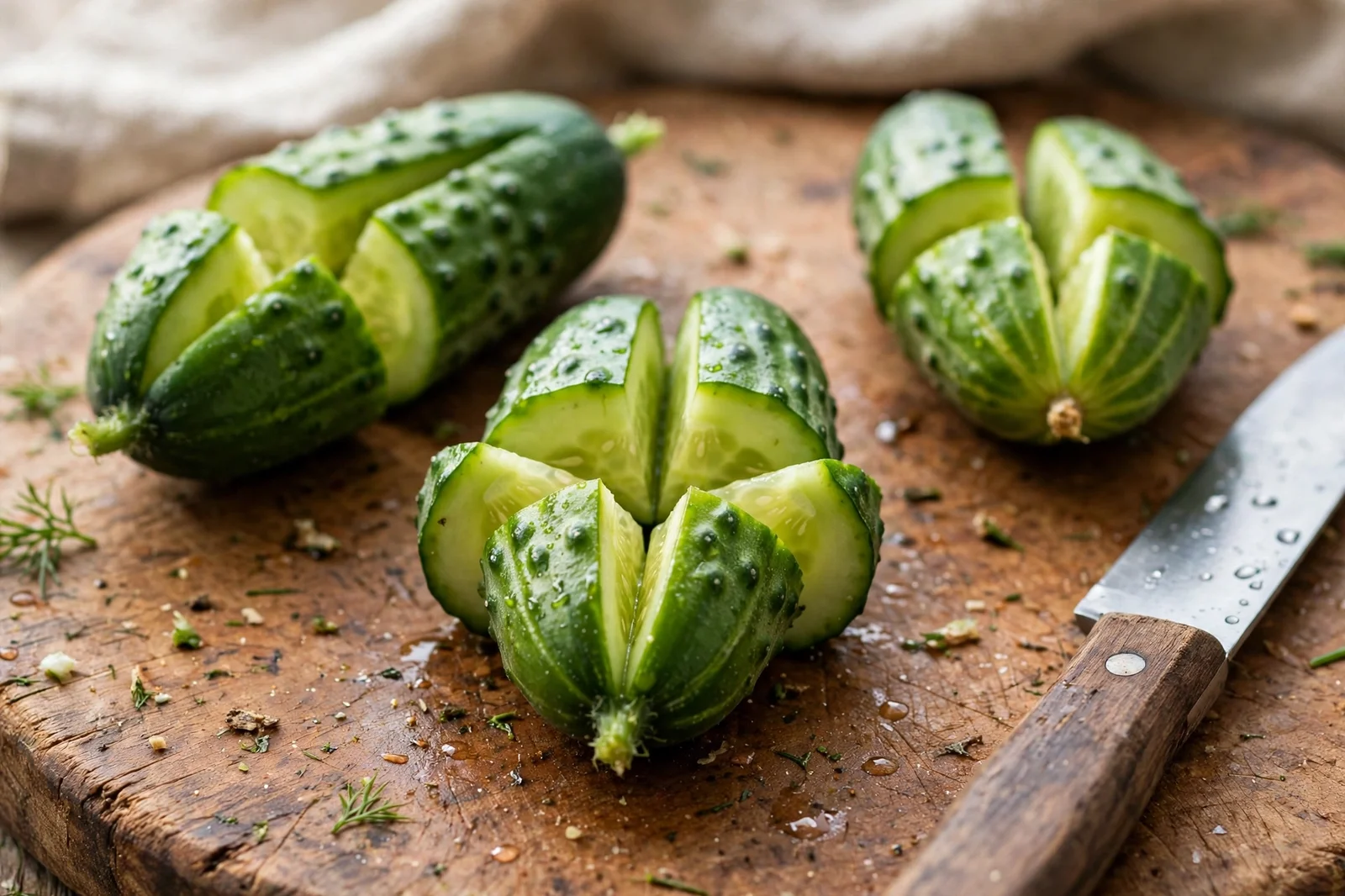
Trim a thin slice off each end, then cut each cucumber in half crosswise so each piece is about 2 to 3 inches long. Stand a piece upright, cut down through the center, and stop about 1/2 inch from the bottom. Turn it 90 degrees and cut down through the center again, stopping at the same point. The piece should open like four petals joined at the base. If you cut all the way through, the quarters fall apart and you lose the pocket. That 1/2 inch of uncut cucumber at the base is what holds the whole thing together.
Salt for 20 minutes, then drain well
Put the cut cucumbers in a large bowl and rub 2 tablespoons kosher salt over them, inside the slits and outside. Let them sit for 20 minutes, turning them once halfway through so every side meets the salt. For 1 1/2 pounds of cucumbers, 2 tablespoons of salt is the amount I use. Less salt leaves the cucumbers stiff and hard to stuff. More salt, or a soak past 30 minutes, leaves them limp.

Rinse the cucumbers in cold water two times to wash off extra salt, then drain them well and pat each one dry with a clean towel. This step matters more than any other. Cucumbers that go into the stuffing still dripping wet water down the paste and turn soft in the jar. Cucumbers that are drained and patted dry stay crisp for days. When I skipped the pat-dry step once, the jar had a pool of pink liquid at the bottom by the next morning and the cucumbers had lost their snap. Drain, pat dry, then stuff.
Mix the stuffing and fill each pocket
Put 1 cup garlic chives cut into 1-inch pieces, 1/2 cup julienned carrot, 2 sliced green onions, 3 minced garlic cloves, 1 teaspoon minced ginger, 3 tablespoons gochugaru, 2 tablespoons fish sauce, 1 tablespoon sugar, and 1 teaspoon toasted sesame seeds in a bowl. Mix well with a spoon. For this amount of vegetables, the ratio I use is 3 tablespoons gochugaru to 2 tablespoons fish sauce to 1 tablespoon sugar. That ratio gives heat first, salt second, and just enough sweetness to keep the paste from tasting harsh. Taste the stuffing before you fill anything. It should taste a little too salty and a little too hot on its own, since the plain cucumber will soften both flavors.
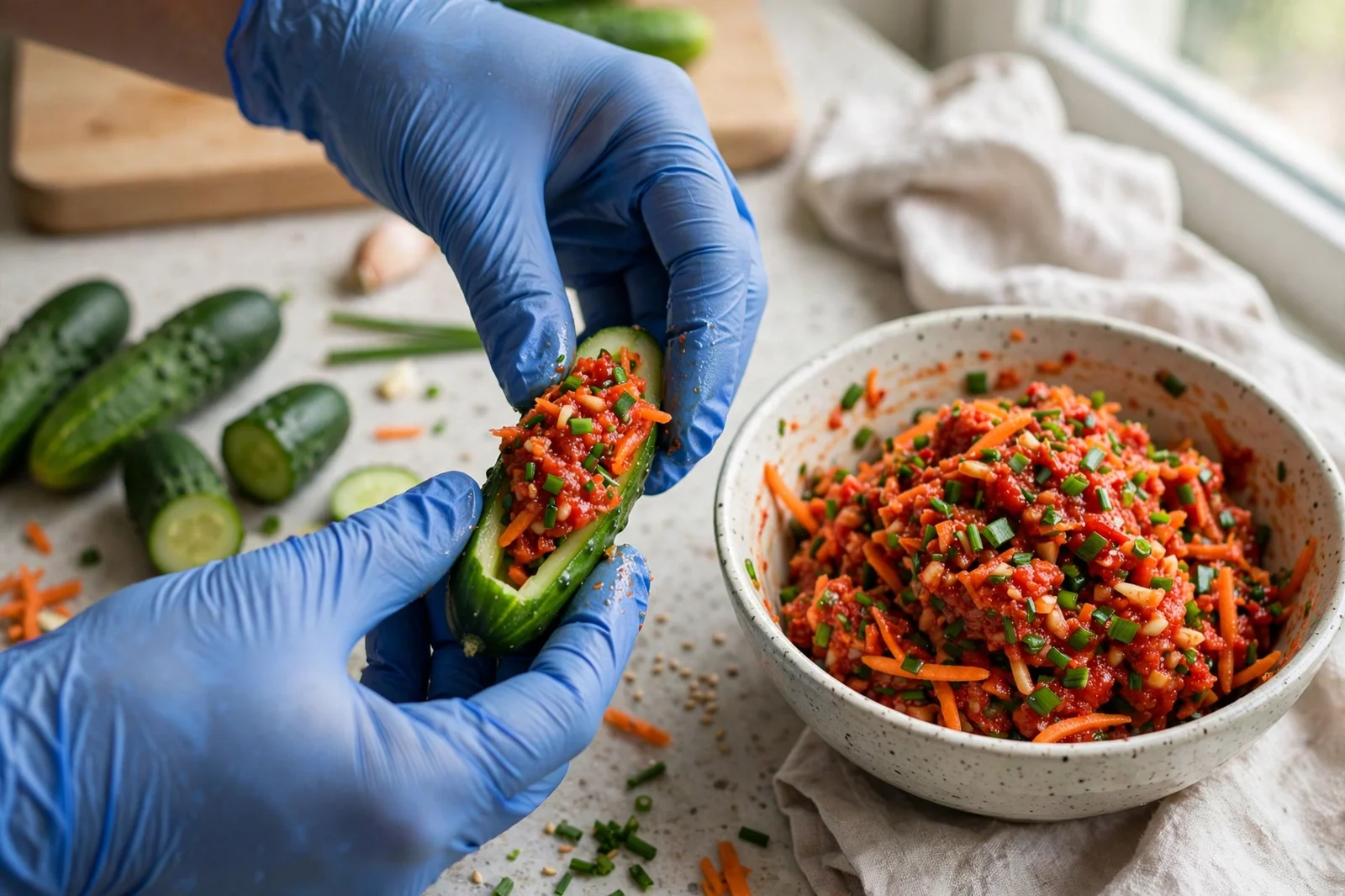
Wear gloves for this part, since gochugaru stains hands and stings small cuts. Hold a cucumber by its uncut end, open the quarters gently with your fingers, and press stuffing into the center and into each slit. Do not force the quarters wide open. A gentle press fills the pocket without snapping the base. Pack the stuffed cucumbers snugly into a clean glass container, cut side up, and spoon any leftover stuffing over the top. Cover the container tightly.
Serve the oi sobagi right away for a fresh, salad-like crunch, or leave it at room temperature for about a day until it smells pleasantly sour, then move it to the fridge. I serve it chilled, cut into bite-size pieces at the table or left whole for guests to cut themselves. It keeps in the fridge for up to 5 days. Past that point, the cucumbers soften and the flavor turns too sour for a side dish. Serve it with steamed rice, following my jasmine rice guide, or next to kimchi fried rice when you want a full Korean table.
Troubleshooting: Fix My Oi Sobagi
If a batch comes out wrong, the cause is usually one of five things: soggy cucumbers, cucumbers that split open, a stuffing that tastes too salty, a jar that turns too sour too fast, or cucumbers that go watery even after salting. Work through them one at a time and the next batch lands closer.
HERB & LIME · KITCHEN HELP
Fix My Oi Sobagi
Choose what went wrong to see a practical next step.
Possible cause
What to try next
For next time
From Paul's kitchen. Results vary with cucumber size, salt, and room temperature, adjust timing to your setup.
Quick reference (also works without JavaScript)
The cucumbers turned soggy
Cause: The cucumbers were not salted long enough, or they were stuffed while still wet, so liquid pooled in the jar and softened them.
Try: For the batch you have, drain off the liquid and serve it the same day while it still has some crunch. Next time, salt for a full 20 minutes, rinse two times, drain well, and pat each cucumber dry before stuffing.
Prevent: Always salt, rinse, drain, and pat dry before the paste goes in, and never add water to the stuffing.
The cucumbers split apart when stuffed
Cause: The lengthwise cuts went all the way through the cucumber, so nothing held the quarters together.
Try: Serve the pieces as a tossed cucumber salad with the same stuffing spooned over the top. Next time, stop each cut about 1/2 inch from the bottom so the quarters stay joined at the base.
Prevent: Cut with the piece standing upright, and check the base before the second cut to make sure the first cut did not go too far.
The stuffing tastes too salty
Cause: Salt left on the cucumbers after salting combined with the full amount of fish sauce in the paste.
Try: Rinse the stuffed cucumbers lightly and add a little extra chive and carrot to the leftover paste to spread the salt over more vegetables.
Prevent: Rinse the salted cucumbers two times in cold water, taste the stuffing before filling, and hold back a little fish sauce until you know how salty the batch tastes.
The kimchi turned too sour too fast
Cause: The jar sat at room temperature too long, so fermentation ran past the lightly sour stage.
Try: Move the jar to the fridge at once and serve it cold with rice or grilled meat, where the sour note works as a contrast. Do not leave it out again.
Prevent: Leave the jar out for about a day until it smells pleasantly sour, then refrigerate it, and eat it within 5 days.
The cucumbers went watery even after salting
Cause: Large slicing cucumbers with thick, waxy skins and big seed cavities give up too much water for this dish.
Try: Drain the jar well and eat the batch within a day or two, while it still has texture. For the next batch, buy small Korean, kirby, or Persian cucumbers instead.
Prevent: Pick cucumbers about 4 to 5 inches long with thin skins and few seeds, and skip any with soft spots or yellowing ends.
Oi Sobagi: Korean Stuffed Cucumber Kimchi
Ingredients
Method
- Trim a thin slice off each end of the cucumbers, then cut each cucumber in half crosswise into pieces about 2 to 3 inches long. Stand each piece upright, cut down through the center stopping about 1/2 inch from the bottom, turn 90 degrees, and cut down through the center again to the same point, so the quarters stay joined at the base.
- Put the cut cucumbers in a large bowl and rub with 2 tablespoons kosher salt, inside the slits and outside. Let sit for 20 minutes, turning once halfway through.
- Rinse the cucumbers in cold water two times, drain well, and pat each one dry with a clean towel.
- Mix the garlic chives, carrot, green onions, garlic, ginger, gochugaru, fish sauce, sugar, and sesame seeds in a bowl until well combined. Taste and adjust salt or heat before filling.
- Wearing gloves, hold each cucumber by its uncut end, open the quarters gently, and press stuffing into the center and each slit. Pack the stuffed cucumbers snugly into a clean glass container, cut side up, and spoon any leftover stuffing over the top. Cover tightly.
- Serve right away for a fresh crunch, or leave at room temperature for about a day until pleasantly sour, then refrigerate. Serve chilled, cut into bite-size pieces if you like. Eat within 5 days.
Notes
Tips and variations
If you cannot find garlic chives, use green onions cut into 1-inch pieces, about 1 cup, but the flavor will be milder. If you cannot find Korean cucumbers, kirby cucumbers are the closest swap. For a milder batch, cut the gochugaru back to 2 tablespoons and taste the stuffing before filling. For a fish-free batch, swap the fish sauce for soy sauce in the same amount. Do not add water to the stuffing. Cucumbers give up liquid on their own, and added water thins the paste and softens the crunch. If you have leftover stuffing, spoon it over cold noodles or rice the next day instead of throwing it out.
More Korean recipes
- Kimchi Fried Rice
- Japchae: Korean Glass Noodle Stir-Fry
- Korean Bulgogi Chicken
- Easy Napa Cabbage Kimchi at Home
From the garden
Garlic chives are one of the easiest kimchi ingredients to grow in a pot. Our garlic chives container guide covers the same plant, and a pot of chives cut fresh on cooking day gives longer, greener pieces than a bunch that has sat in the fridge for a week.