
Kongnamul muchim is the side dish I make when the main dish is already doing plenty. It is a bowl of blanched soybean sprouts tossed with garlic, sesame oil, and scallions, served cool or at room temperature, and it takes 15 minutes from rinsing to serving. The sprouts stay tender with a snap, the seasoning stays light, and the whole bowl tastes clean next to grilled meat or a spicy stew.

What is kongnamul muchim?
Kongnamul muchim is a Korean banchan, a small side dish served with rice and other dishes at the table. Kongnamul means soybean sprouts, and muchim means seasoned or mixed. The sprouts are blanched, drained, and tossed with sesame oil, garlic, scallions, salt, and toasted sesame seeds. Some versions add gochugaru for heat. The mild version is the one to learn first, since it lets the nutty taste of the sprouts come through.
Do not swap in mung bean sprouts for this dish. Soybean sprouts have a yellow bean head and a thicker stem that holds its bite after blanching. Mung bean sprouts are thinner and softer, and they turn limp in the same treatment. At the store, look for firm, pale sprouts with yellow heads and no slimy feel. A bag that smells sour or looks brown at the tips has sat too long, and no amount of seasoning will fix it.
Expect a cool, lightly salty bowl with a nutty scent from the sesame oil and a small bite from raw garlic. It pairs with almost any Korean main dish, and it is one of the vegetables that goes into bibimbap, where its crunch sits against rice, egg, and sauces. My bibimbap, Korean mixed rice bowl, uses the same kind of seasoned vegetables, so if you like this salad, that bowl is a natural next cook.
Rinse and sort the sprouts
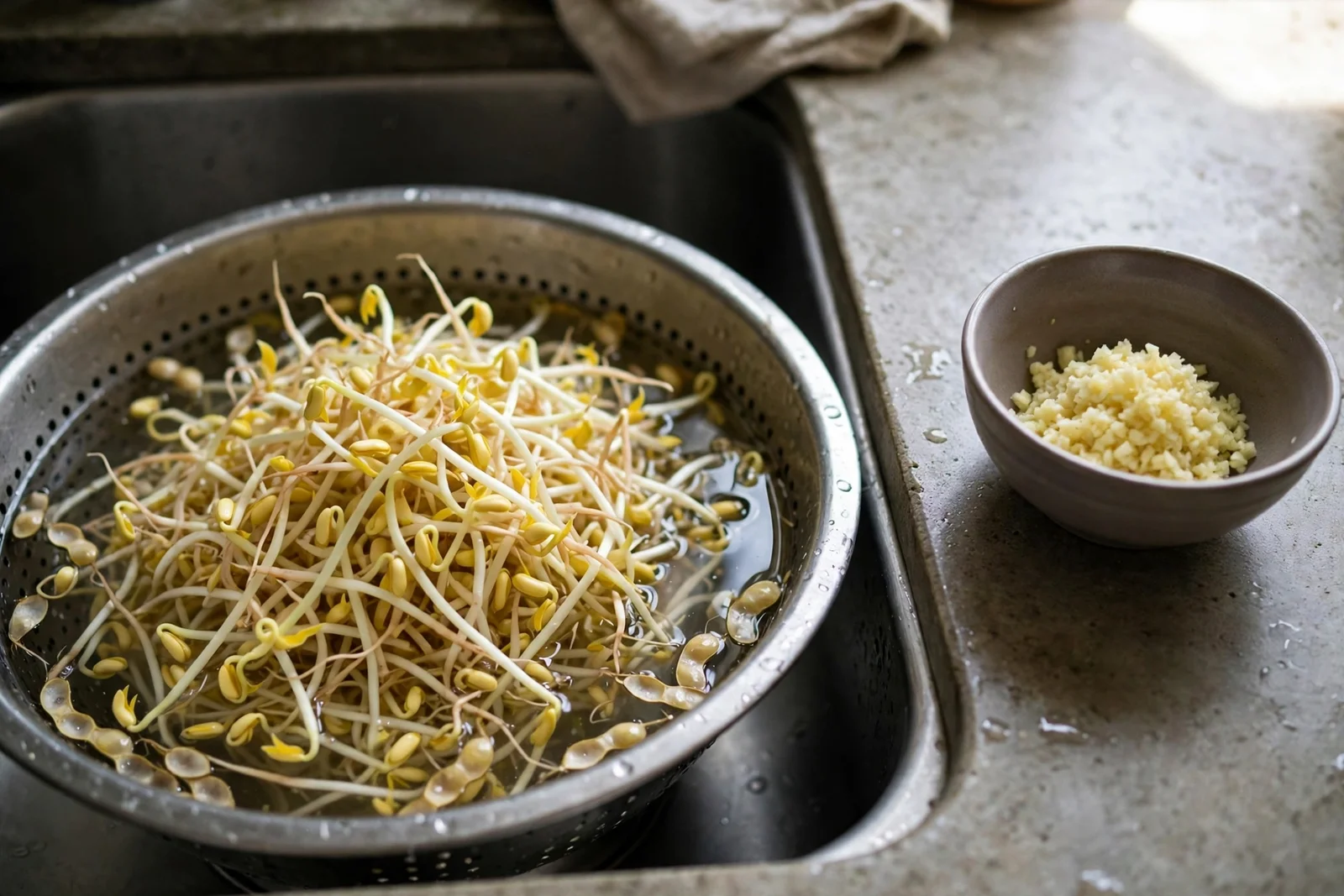
Rinse 12 ounces of soybean sprouts twice in cold water and lift out any skins floating on top. Skins left in the bowl feel gritty, and two rinses take less than a minute. Pick out any sprouts that are brown, soft, or broken. Snipping off the thin root ends is optional. It makes the finished bowl look tidier, but the roots are fine to eat, and I skip the snipping on weeknights when the sprouts will be tossed and served in a small bowl anyway.
Blanch with the lid on
Pour 1 cup of water into a medium pot, add the sprouts, cover with a tight lid, and bring to a boil over high heat. Cook for 3 to 4 minutes without lifting the lid. This is the rule that decides the dish. Lifting the lid while the sprouts cook lets a raw, beany smell settle into the pot, and it stays in the finished salad. Set a timer, leave the lid alone, and check the sprouts only when the time is up. They should be tender with a snap left in the stem, not soft and not raw.
One cup of water is enough on purpose. The sprouts give up water as they cook, and a full pot of boiling water overcooks the outer sprouts before the center ones catch up. With just a cup, the sprouts steam in a shallow layer and cook evenly. The same lid rule applies to the soup version of this ingredient, my kongnamul guk, Korean soybean sprout soup, where the broth also depends on the sprouts cooking undisturbed.
Drain well, then squeeze gently
Drain the sprouts at once and rinse briefly under cold water to stop the cooking. Let them sit in the colander for 10 minutes, then squeeze small handfuls gently with your hands to press out the water trapped between the stems. Do not wring them hard. A hard squeeze breaks the stems and turns the salad mushy. A gentle press leaves the sprouts intact and dry enough that the seasoning coats them instead of sliding off into a puddle.
This drain is the second rule that decides the dish. Sprouts that go into the bowl still wet make a watery salad within minutes, and the seasoning tastes washed out no matter how much salt you add. If you have time, let the drained sprouts sit for a full hour in the colander, which gives the same result with no squeezing at all.
Season in two passes
Put the drained sprouts in a large bowl with 2 minced garlic cloves, 2 sliced scallions, 1 tablespoon of toasted sesame oil, 1 teaspoon of soy sauce, and 1/2 teaspoon of salt. Toss gently with your hands or chopsticks until every strand is coated. Add 1 tablespoon of toasted sesame seeds and 1 teaspoon of gochugaru if you want the spicy version, and toss once more.
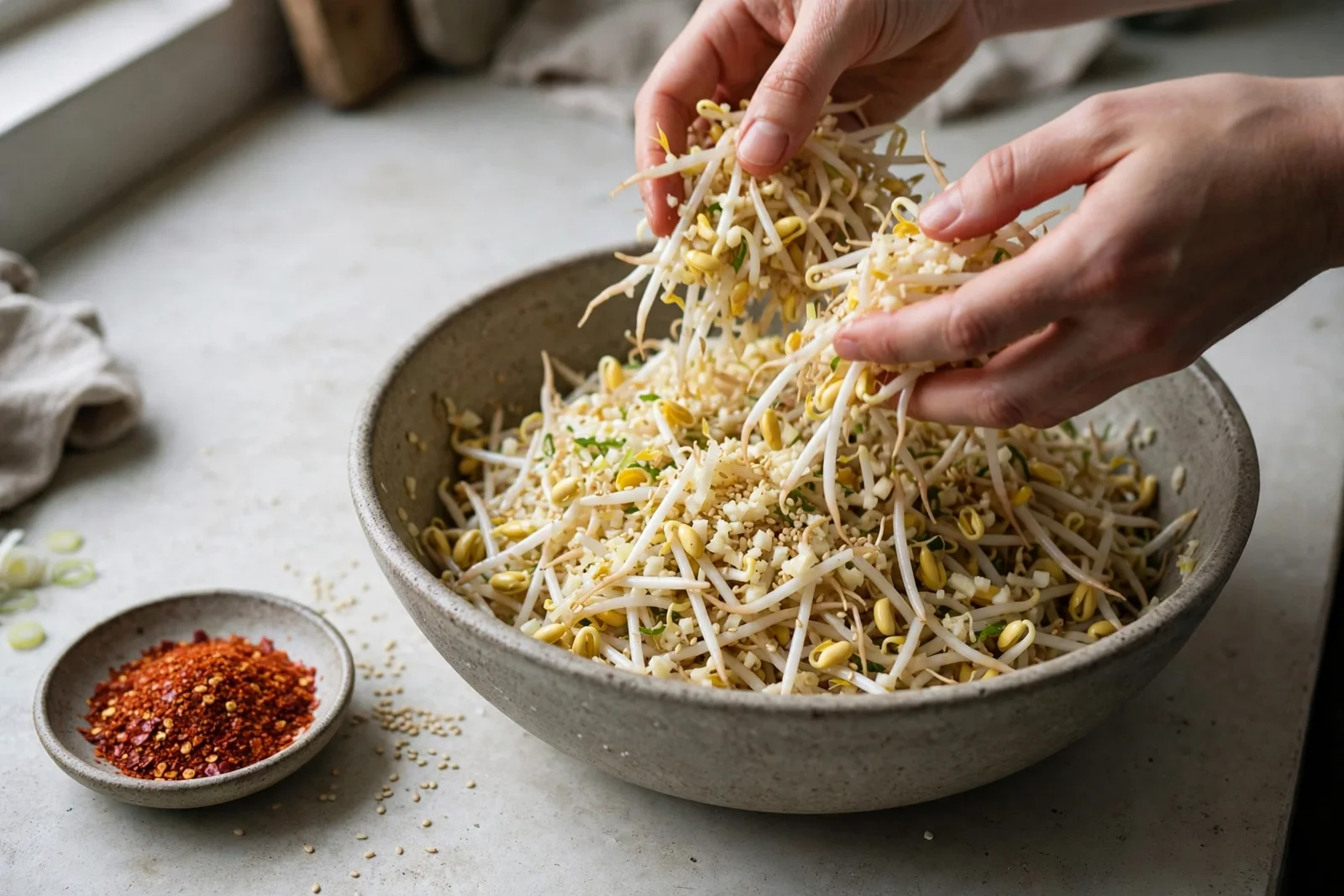
Season in two passes, not one. Sprouts keep giving up water as they sit, so a bowl that tastes right the second you mix it can taste flat ten minutes later. Add half the salt and soy sauce first, wait 10 minutes, taste, and then add the rest until the flavor sits where you want it. Garlic should be minced fine, not chopped in chunks, so it spreads through the bowl instead of landing in sharp bites.
Serve cool with rice and a main dish
Serve the salad cool or at room temperature, never hot from the pot. The sesame oil scent fades when the sprouts are steaming, and the crunch softens as they sit in their own heat. A 10-minute rest in the fridge after seasoning is enough on a warm day. Leftovers keep in a covered container in the fridge for up to 3 days, and the flavor deepens overnight. Taste and add a pinch of salt before serving leftovers, since cold food reads as less salty than the same bowl at room temperature.
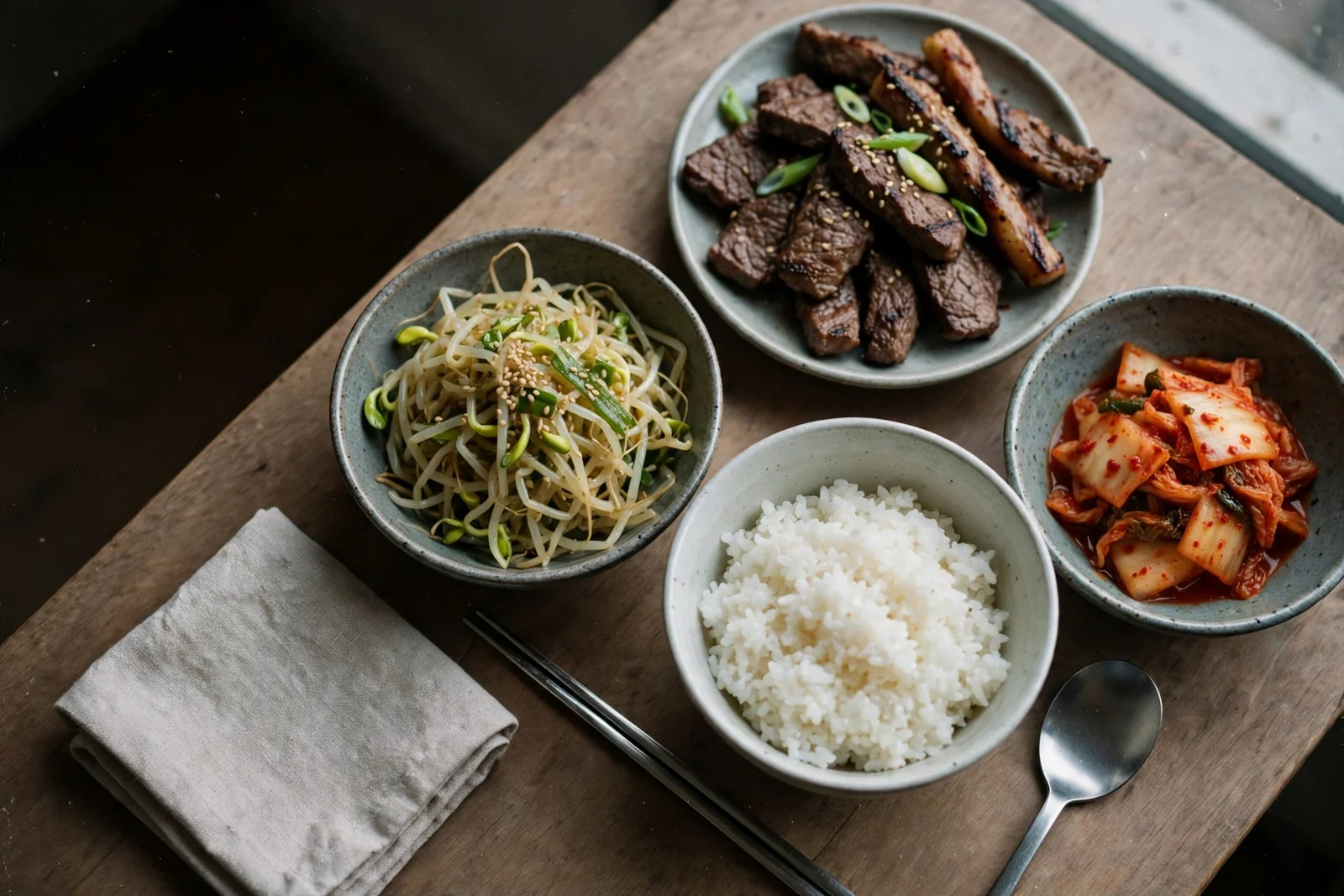
Steamed rice is the base this salad expects. My guide to how to cook jasmine rice covers the pot method I use, and a bowl of rice turns this side dish into part of a full small meal. Serve it next to grilled meat, a stew, or noodles, where a cool, lightly seasoned bowl gives the plate a break from heat and salt.
Troubleshooting: Fix My Kongnamul Muchim
Most problems with this salad trace back to the lid, the clock, or the drain. Pick the problem that matches your bowl and the fix that fits it.
HERB & LIME · KITCHEN HELP Choose what went wrong to see a practical next step. From Paul's kitchen. Results vary with sprout size, pot, and stove heat, adjust timing to your setup. Quick reference (also works without JavaScript) Cause: The lid was lifted while the sprouts cooked, so the raw bean smell settled into the pot instead of cooking off. Try: For the next batch, keep the lid on for the full 3 to 4 minutes and check the sprouts only when the timer ends. Prevent: Set a timer before the sprouts go in, and do not open the lid to peek while they cook. Cause: The sprouts cooked past 4 minutes, or they sat in hot water after the heat went off. Try: Next time, drain at once at 3 to 4 minutes and rinse briefly under cold water to stop the cooking. Prevent: Use a timer, and have the colander ready before the sprouts go into the pot. Cause: Water trapped between the stems thinned the seasoning after mixing. Try: Drain the sprouts for 10 minutes, squeeze small handfuls gently, then season again lightly and taste after a 10 minute rest. Prevent: Let the sprouts drain fully and squeeze them gently before any seasoning goes in. Cause: Sprouts keep giving up water as they sit, so seasoning judged right after mixing changes as the bowl rests. Try: Add half the salt and soy sauce first, wait 10 minutes, taste, then add the rest a little at a time. Prevent: Always taste the bowl after a rest, not only right after mixing. Cause: Mung bean sprouts were used instead of soybean sprouts, and their thinner stems cannot hold up to the same blanch. Try: Buy soybean sprouts with yellow heads and thicker stems for the next batch, and cook them for 3 to 4 minutes with the lid on. Prevent: Check the bag at the store: yellow bean heads and sturdy stems mean soybean sprouts, not mung bean sprouts.Fix My Kongnamul Muchim
Possible cause
What to try next
For next time
A raw, beany smell lingers in the finished salad
The sprouts turned soft and mushy
The salad turned watery and bland
The seasoning tasted flat, then suddenly salty
The sprouts fell apart and lost their crunch
Kongnamul Muchim: Korean Soybean Sprout Salad
Ingredients
Method
- Rinse the sprouts: rinse 12 ounces of soybean sprouts twice in cold water, lift out any skins floating on top, and pick out any brown or soft sprouts.
- Blanch with the lid on: pour 1 cup of water into a medium pot, add the sprouts, cover with a tight lid, and bring to a boil over high heat. Cook for 3 to 4 minutes without lifting the lid, until the sprouts are tender with a snap left in the stem.
- Drain and cool: drain the sprouts at once, rinse briefly under cold water to stop the cooking, and let them sit in the colander for 10 minutes.
- Squeeze gently: press small handfuls of sprouts gently with your hands to remove the water trapped between the stems, without wringing hard enough to break them.
- Season in two passes: toss the sprouts with 2 minced garlic cloves, 2 sliced scallions, 1 tablespoon of toasted sesame oil, 1 teaspoon of soy sauce, and 1/2 teaspoon of salt. Wait 10 minutes, taste, and add more salt a little at a time until the flavor sits where you want it.
- Finish and serve: toss in 1 tablespoon of toasted sesame seeds and 1 teaspoon of gochugaru if you want the spicy version. Serve cool or at room temperature with steamed jasmine rice.
Notes
More Korean recipes
If this salad worked for you, kongnamul guk, Korean soybean sprout soup, uses the same sprouts in a clear broth. Kimchi fried rice is the fast, savory main dish this salad cools down well. Japchae, Korean glass noodle stir-fry, brings a sweet-savory noodle dish to the same table, and bibimbap, Korean mixed rice bowl, is the mixed rice bowl where seasoned sprouts belong.