
Cornstarch does three different jobs in an Asian kitchen, and the right substitute depends on which job you need. It thickens a sauce to a clear shine, it gives fried food a light crisp coat, and it sets a fruit filling so a pie slice holds its shape. One swap cannot cover all three jobs well, so pick by the job first, then by what is in your pantry.
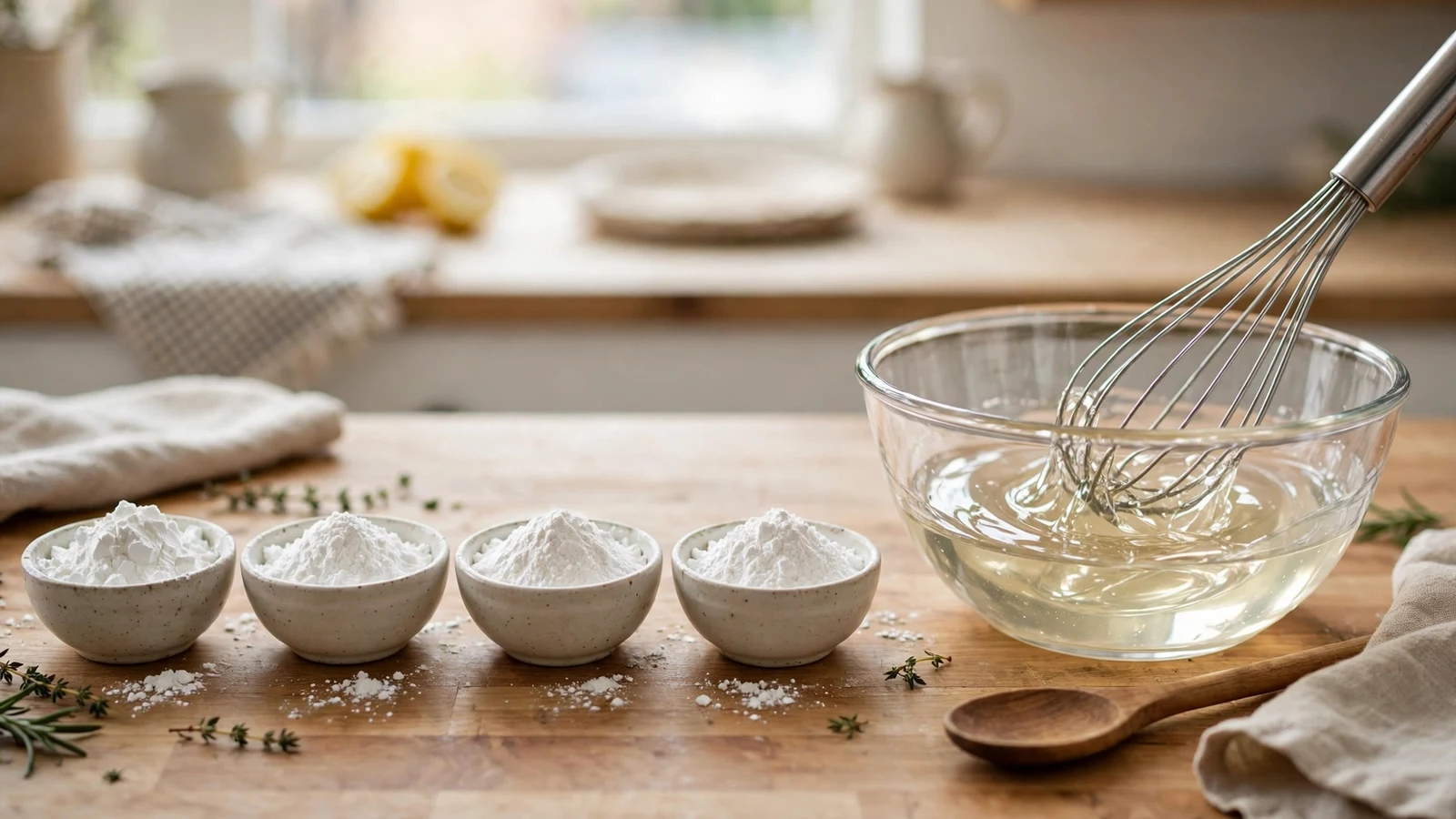
Quick picker: match the substitute to the job
| Substitute | Start with, for 1 Tbsp cornstarch | Best for | Watch out for |
|---|---|---|---|
| Potato starch | 1 Tbsp | Soups, sauces, and frying | Loses power if boiled hard for a long time |
| Arrowroot powder | 1 Tbsp | Clear sauces and fruit glazes | Turns thin with dairy and long cooking |
| Tapioca starch | 2 Tbsp for pies, 1 Tbsp for sauces | Fruit pies, puddings, and glazes | Loses power if boiled hard for a long time |
| All-purpose flour | 2 Tbsp | Gravies, stews, and pan sauces | Cloudy finish and a raw taste if undercooked |
| Rice flour | 2 Tbsp | Clear soups and crisp coatings | Can taste chalky if the grind is coarse |
| Sweet rice flour | 2 Tbsp | Frying and chewy baked goods | Not a match for a clear sauce |
| Xanthan gum | 1/4 tsp | A small amount of thickening without grain | Slimy if you use even a little too much |
How to use any starch swap
Starch clumps when it hits hot liquid dry, so mix it with cold water first. In my kitchen, the working mix is 1 tablespoon of starch stirred into 2 tablespoons of cold water until no dry bits remain. Pour that slurry into liquid that is simmering, stir, and let it simmer for about 1 minute. The sauce should turn clear and thick at a gentle simmer. If it still looks thin after that minute, mix a second small slurry and add half of it, then wait another minute before adding more. Adding dry starch straight to a hot pot is the usual cause of lumps, and adding a full second dose at once is the usual cause of a sauce that turns to paste.

The seven substitutes, one by one
1. Potato starch: the closest all-round swap
Potato starch swaps 1:1 with cornstarch in most sauces and soups, and it gives a silky finish that stays clear. Add it near the end of cooking, since long hard boiling thins it out. It also fries well, with a crisp coat that stays light. For the head-to-head on frying, Cornstarch vs Potato Starch: Which One for Frying? compares the two starches side by side.
2. Arrowroot powder: the clear-sauce pick
Arrowroot swaps 1:1 with cornstarch as a starting point, and it thickens at a lower temperature, so it suits a sauce you want to keep gentle. It handles acid better than cornstarch, which helps in a fruit glaze or a sharp pan sauce. It does not suit dairy sauces, where it can turn thin and slick, and it does not reheat well. Use it in dishes served soon after cooking.
3. Tapioca starch: the pie-filling pick
Tapioca starch, sold as tapioca flour, soaks up fruit juice and sets clear, which is why it suits pie fillings and puddings. For a pie, start with 2 tablespoons of tapioca starch for each tablespoon of cornstarch in the recipe. For a sauce, start with 1 tablespoon. Like potato starch, it loses power under long hard boiling, so add it late and keep the heat at a simmer.
4. All-purpose flour: the pantry fallback
Flour is the swap most kitchens already have, and it needs twice as much as cornstarch: 2 tablespoons of flour for each tablespoon of cornstarch. Flour has protein and fiber alongside its starch, so the sauce turns cloudy instead of clear, and it needs a few minutes of simmering to lose its raw taste. Cook it in fat first for a gravy, or whisk it with cold water into a slurry for a soup. It is a poor pick for a fruit pie, where the cloudy finish and pasty bite show.
5. Rice flour: the clear-soup pick
Rice flour swaps at 2 tablespoons for each tablespoon of cornstarch, and it keeps a soup or broth fairly clear. It also gives a crisp coat for frying, though the coat is a little harder than a cornstarch coat. Buy a fine grind if you can. A coarse grind can leave a chalky feel in a sauce, while a fine grind blends in cleanly.
6. Sweet rice flour: the frying and baking pick
Sweet rice flour, sold as mochiko, is ground from glutinous rice, and it contains no gluten despite the name. Use 2 tablespoons for each tablespoon of cornstarch in a coating or a baked good, where it gives a crisp outside and a chewy bite inside. It is not a good sauce thickener, since it does not set clear the way cornstarch does.
7. Xanthan gum: the tiny-dose pick
Xanthan gum thickens without grain, and it needs only about 1/4 teaspoon for each tablespoon of cornstarch. Sprinkle it in slowly while whisking, since a dump of xanthan gum forms lumps that are hard to break up. It suits a dressing or a small pan sauce. It is a poor pick for a large pot of soup, where the texture can turn slick if the dose drifts high.
For sauces and soups
For a stir-fry sauce or a soup, potato starch and arrowroot are the closest matches to cornstarch, since both keep the finish clear. Flour works when a cloudy finish is fine, as in a stew gravy. Add the slurry at the end, simmer for about 1 minute, and taste before adding more. My Egg Drop Soup shows the slurry method in a soup that thickens in under a minute, and the same timing applies to most thin soups.
For frying and coating
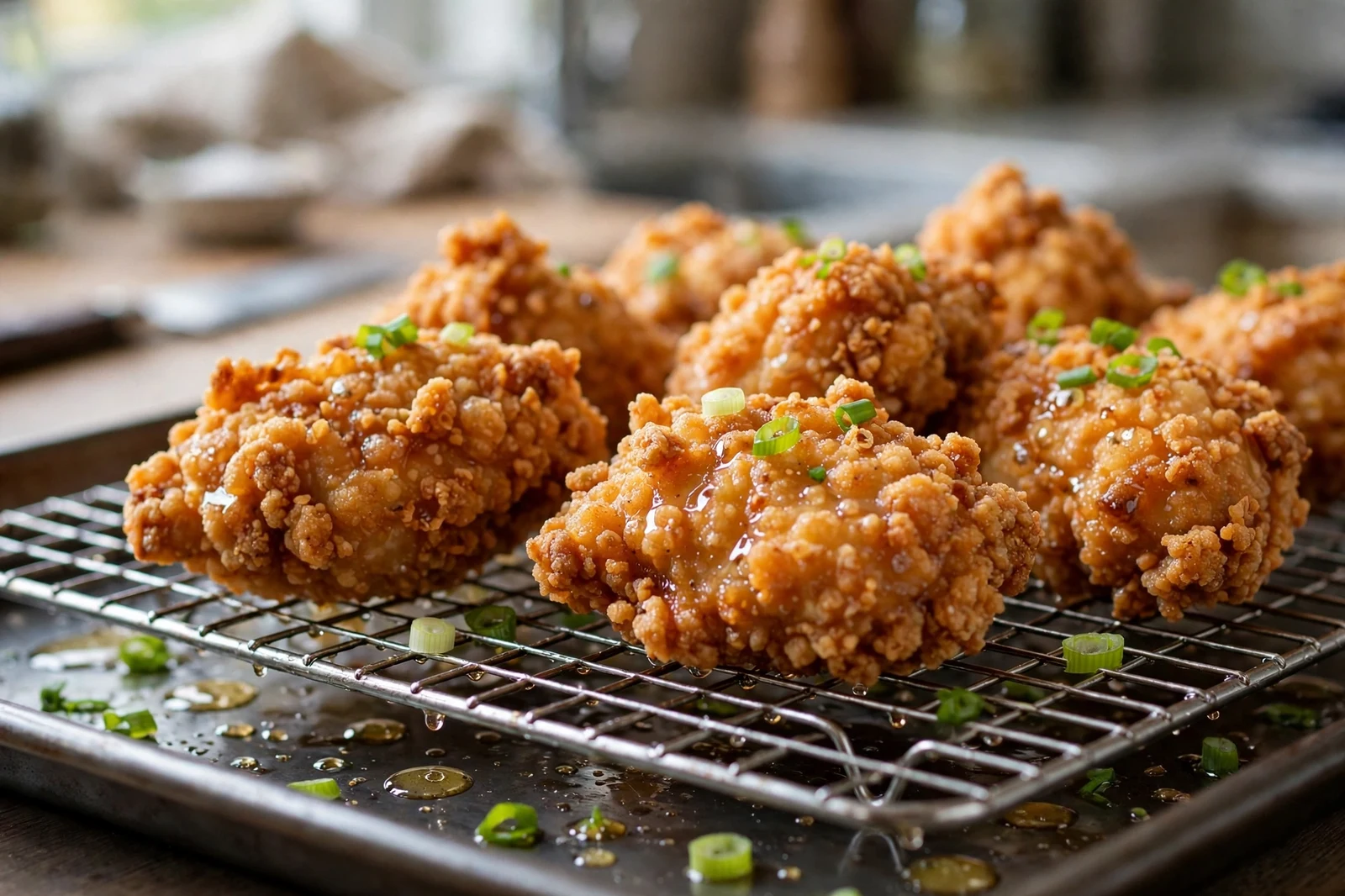
For a crisp coat, potato starch, rice flour, and sweet rice flour are the strongest swaps. Potato starch gives a light, shattering coat. Rice flour gives a harder crunch. Sweet rice flour gives a coat that stays crisp a little longer after frying. Dry the food well before coating, since surface water steams the coat soft from inside. My How to Fry Tofu So It Stays Crisp covers the drying and resting steps that matter more than the starch choice, and my Chicken Karaage: Japanese Fried Chicken uses a starch coat for its crisp finish.
For pies and puddings
For a fruit pie, tapioca starch is the first pick, since it sets clear and holds juice without turning cloudy. Arrowroot is the second pick for a glaze or a filling served soon after baking, since it also sets clear but does not reheat well. Flour is the last pick here, since it clouds the filling and can taste pasty. For a pudding, tapioca starch and arrowroot both work, and the same slurry rule applies: mix with cold liquid first, then heat gently until thick.

When to skip a swap
Skip arrowroot in a dairy sauce, skip potato starch and tapioca starch in a sauce that must boil hard for a long time, and skip flour in a dish where a clear finish matters. A sauce that will be frozen also favors tapioca starch over cornstarch, since cornstarch can turn thin after thawing. When a recipe calls for cornstarch as a main structure, as in some shortbread or a large baked custard, a 1:1 swap can change the set, so start with half the batch if you are trying a new starch in that kind of recipe.
More pantry guides to try
Four more from the same shelf: Cornstarch vs Potato Starch: Which One for Frying? compares the two starches head to head; How to Fry Tofu So It Stays Crisp puts a starch coat to work; A Home Cook’s Guide to Asian Vinegars covers the acid side of the pantry; and Fish Sauce Substitutes for Every Situation covers the other bottle that runs dry just as often.
1 thought on “Cornstarch Substitutes for Every Situation”