

Both powders sit in my pantry in identical-looking bags, and both fry up crisp. Yet they do not fry up the same. Potato starch builds a pale, shattering shell that stays crisp for hours. Cornstarch builds a sturdier, more golden crust that browns faster and holds its crunch under sauce. The right pick depends on the dish in front of you.
The difference comes down to granule size. Potato starch granules run much larger than cornstarch granules, so they lock together into a glassier, more rigid shell in hot oil. Cornstarch’s smaller granules pack tighter and form a denser, crunchier coat, the same crunch you know from Chinese restaurant sweet and sour pork. Once you can picture those two textures, every recipe that names one starch starts making sense.
The quick verdict
- Reach for potato starch when the crust itself is the star: chicken karaage, Korean fried chicken, tempura-style vegetables. You get a lighter, more delicate crunch that holds up long after the pieces leave the oil.
- Reach for cornstarch when you want a hard-working, golden crust: velveted stir-fry meat, sweet and sour pork, salt-and-pepper shrimp. It browns faster and forms the sturdier coat that stands up to tossing in sauce.
- If you only keep one, keep cornstarch. It covers the most jobs acceptably, from thickening to dredging, and it is the starch most Asian home cooks reach for first. Buy the small bag of potato starch the day you fry karaage. You will taste why that recipe names it specifically.
Our guide to how to reheat fried food so it stays crispy covers what to do the day after, because even the best crust needs the right second act.
Cornstarch vs potato starch at a glance
| Detail | Cornstarch | Potato starch |
|—|—|—|
| Source | Corn endosperm | Potato tuber |
| Granule size | Small, fine | Much larger |
| Fry crust | Denser, harder crunch; browns to golden | Light, glassy shatter; stays paler |
| Crisp retention | About an hour before softening | Two or more hours, often overnight |
| Thickening sauces | Classic choice; clear finish | Works but breaks down faster; thin under acid |
| Velveting stir-fry meat | The standard coating | Fine, but the classic uses cornstarch |
| Double-fry behavior | Darkens a touch faster on the second fry | Holds its color; this is why Korean shops use it |
| Availability | Every supermarket | Asian markets and the international aisle |
| 1:1 swap | Yes, with adjustments below | Yes, with adjustments below |
The one-line version: potato starch is the crisp-preservation starch, and cornstarch is the all-rounder.
What each starch actually is
Cornstarch is milled from the endosperm of the corn kernel. It is the white box most of us grew up with, used for thickening gravies and dusting proteins before a quick fry. Potato starch is extracted from crushed potatoes, washed and dried into a powder. It has been a Japanese and Korean pantry staple for much longer than most Western cooks have known about it. Karaage is unthinkable without it.
In a dry dredge they look and feel different the moment you touch them. Cornstarch is silky and fine. Potato starch feels faintly gritty between the fingers because of those larger granules. That texture difference is exactly what you will hear in the finished dish.
The crust test: shatter against crunch
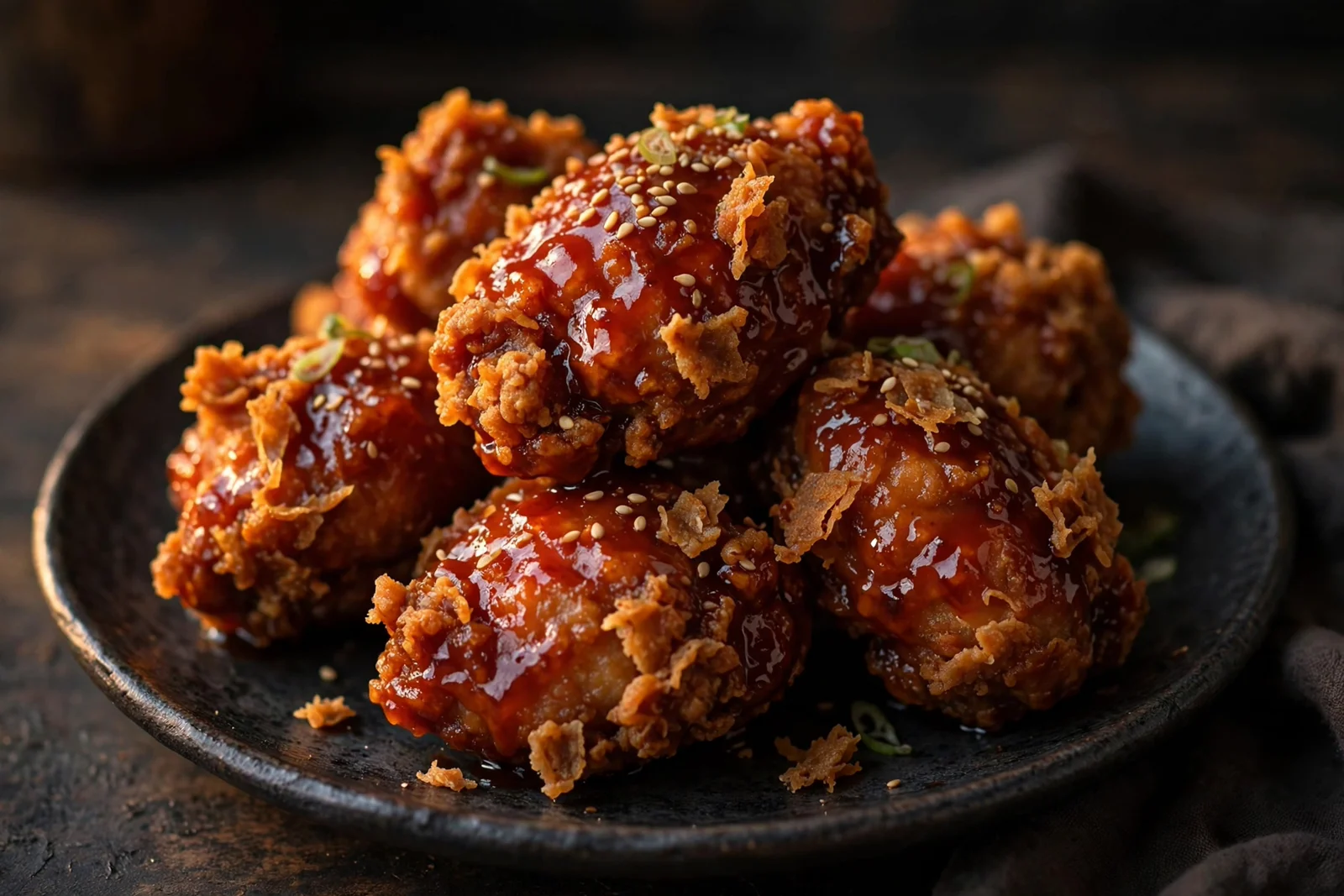
Fry the same chicken piece in each and the difference is immediate. Potato starch fries into a thin, glass-like shell that breaks with an audible crackle and almost melts as you chew. The oil stays cleaner and the pieces stay pale even after a double fry, which is the practical reason Korean fried chicken shops standardized on it for yangnyeom and other sauced styles.
Cornstarch fries into a crust with more chew and more crunch: thicker-feeling, more golden, with a satisfying hard bite. It also absorbs sauce better, which is why a cornstarch coat clings to sweet and sour pork and salt-and-pepper shrimp instead of sliding off. The trade is timing. Cornstarch browns noticeably faster, so watch the color rather than the clock: cornstarch-dredged pieces usually need to come out about 30 seconds before you think they are done.
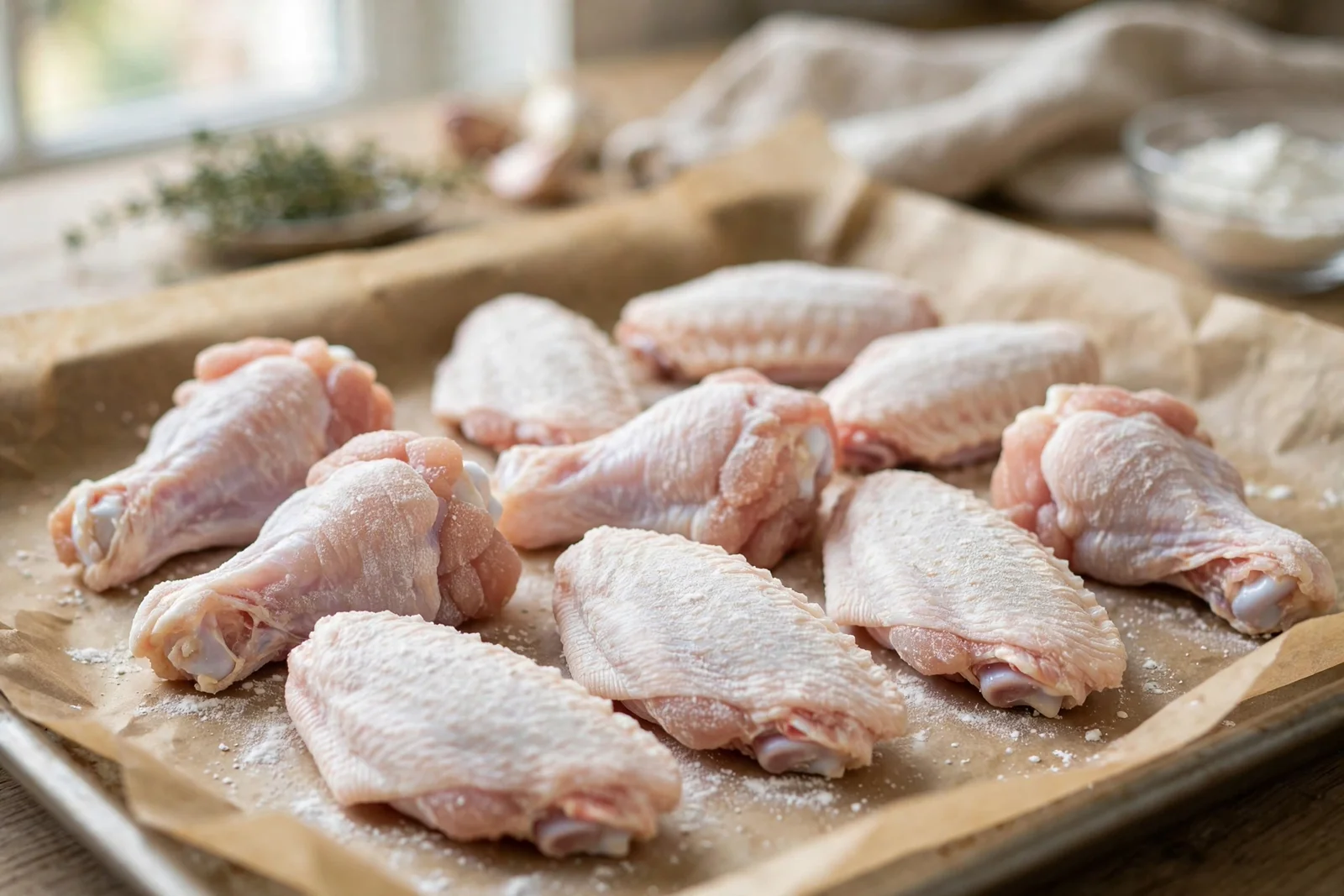
Neither is forgiving about moisture. Both will slide off wet meat, so pat proteins dry with paper towels before dredging. This matters more with potato starch, whose larger granules have less contact area to grip with.
When potato starch wins
This is the starch for crusts you want to eat plain, with nothing but salt or a squeeze of lemon.
Chicken karaage is the textbook case. Our chicken karaage recipe coats marinated thigh pieces in potato starch alone, and the result is the crisp, pale, almost translucent shell that defines the dish. Cornstarch would make it darker and heavier. Korean fried chicken is the same story: double-fried wings stay crisp for hours and stay pale through the second fry. That color stability is why the shops use it, and it is worth copying at home. A light dusting on tempura-style vegetables (zucchini, shiso, mushrooms) fries up brittle instead of bready. And for food that has to wait on a party table, potato starch holds up best: pieces fried two hours earlier still crackle.
My working ratio for a general potato starch dredge: 2 parts potato starch to 1 part all-purpose flour, with 1 teaspoon baking powder per cup of mix. The flour adds browning and a bit of body, and the baking powder lifts the crust. Season the mix well with salt and white pepper. Plain starch tastes like nothing.
When cornstarch wins
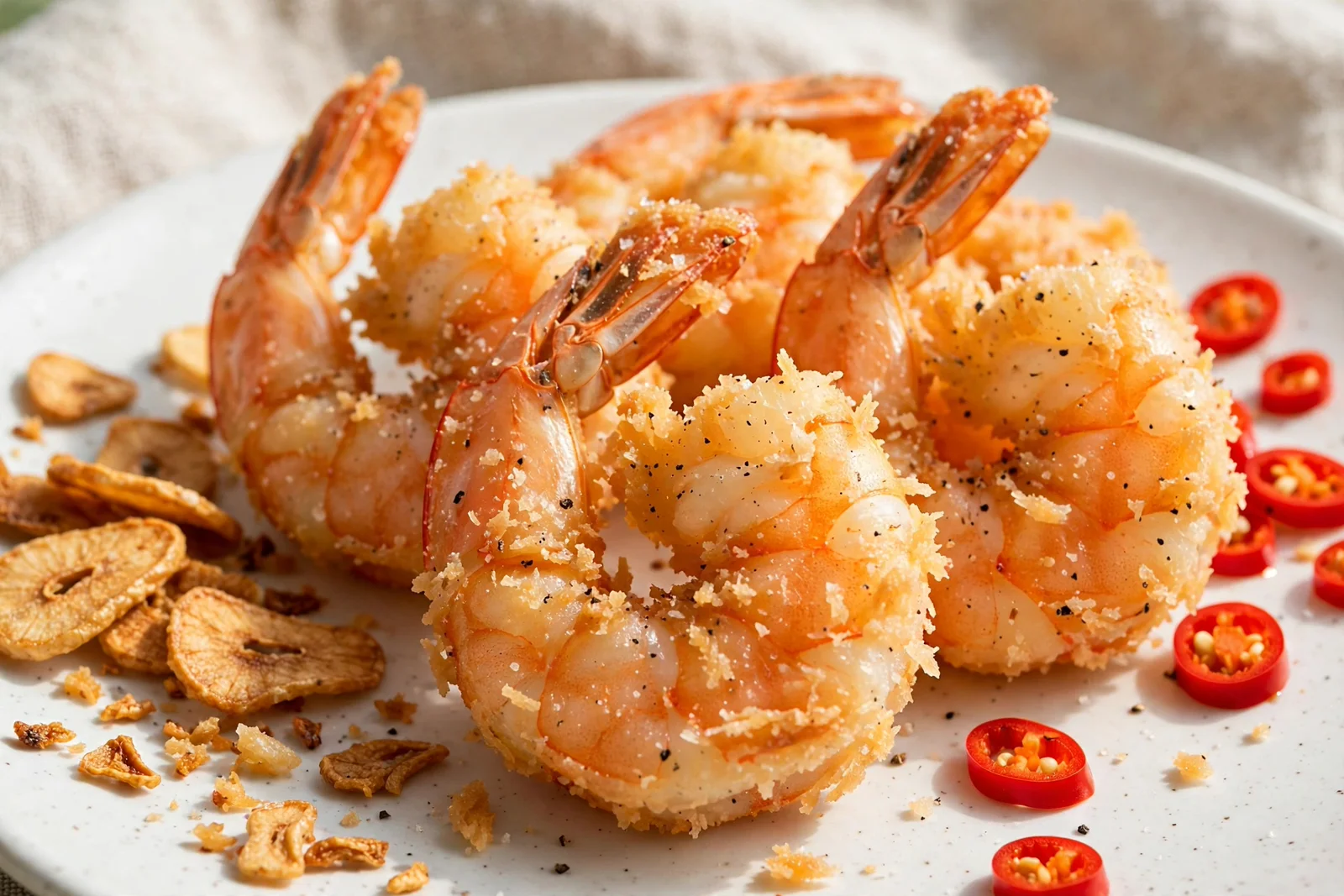
Cornstarch is the starch for coatings that have work to do beyond crunching. In velveting, the cornstarch coating on thin-sliced beef, chicken, or pork is what keeps the meat silky in a blazing wok. Our walkthrough of how to slice meat paper-thin for stir-fry sets up the cuts, and the cornstarch coat finishes the technique. Cantonese sweet and sour pork shows the other strength: its sturdy, golden crust survives a toss in glossy sauce without going soft on contact. Salt-and-pepper shrimp works the same way, with a thin cornstarch coat that fries crisp and grabs the seasoning (see our salt-and-pepper shrimp for the full technique). Cornstarch also thickens cleanly and holds its gel in sauces, where potato starch thins out faster, especially under acid.
Cornstarch’s one habit to manage: in thick layers it can turn faintly chalky instead of crisp. The fix is a thin, even coat: shake off the excess in a colander before the pieces hit the oil, and never dredge twice in the same bowl of starch.
Can you swap them 1:1?
Yes, and for most weeknight frying you will never notice. A karaage fried in cornstarch still tastes great; it just comes out a little darker and a little heavier, with a crust that softens sooner. A sweet and sour pork coated in potato starch still works; the crust is lighter and paler, and the sauce beads on it a bit instead of clinging.
Adjust for the swap this way: when using cornstarch in place of potato starch, pull the pieces about 30 seconds earlier. The color moves fast. When using potato starch in place of cornstarch, give the pieces a full rest on a rack before the second fry; the crust sets up better when it has a minute to cool between passes.
If you want the best of both, blend: half potato starch, half flour, plus a pinch of baking powder. It fries up crisp and golden with better hold time than pure cornstarch. This is the mix to reach for when the recipe does not specify.
Keeping the crust crisp after frying
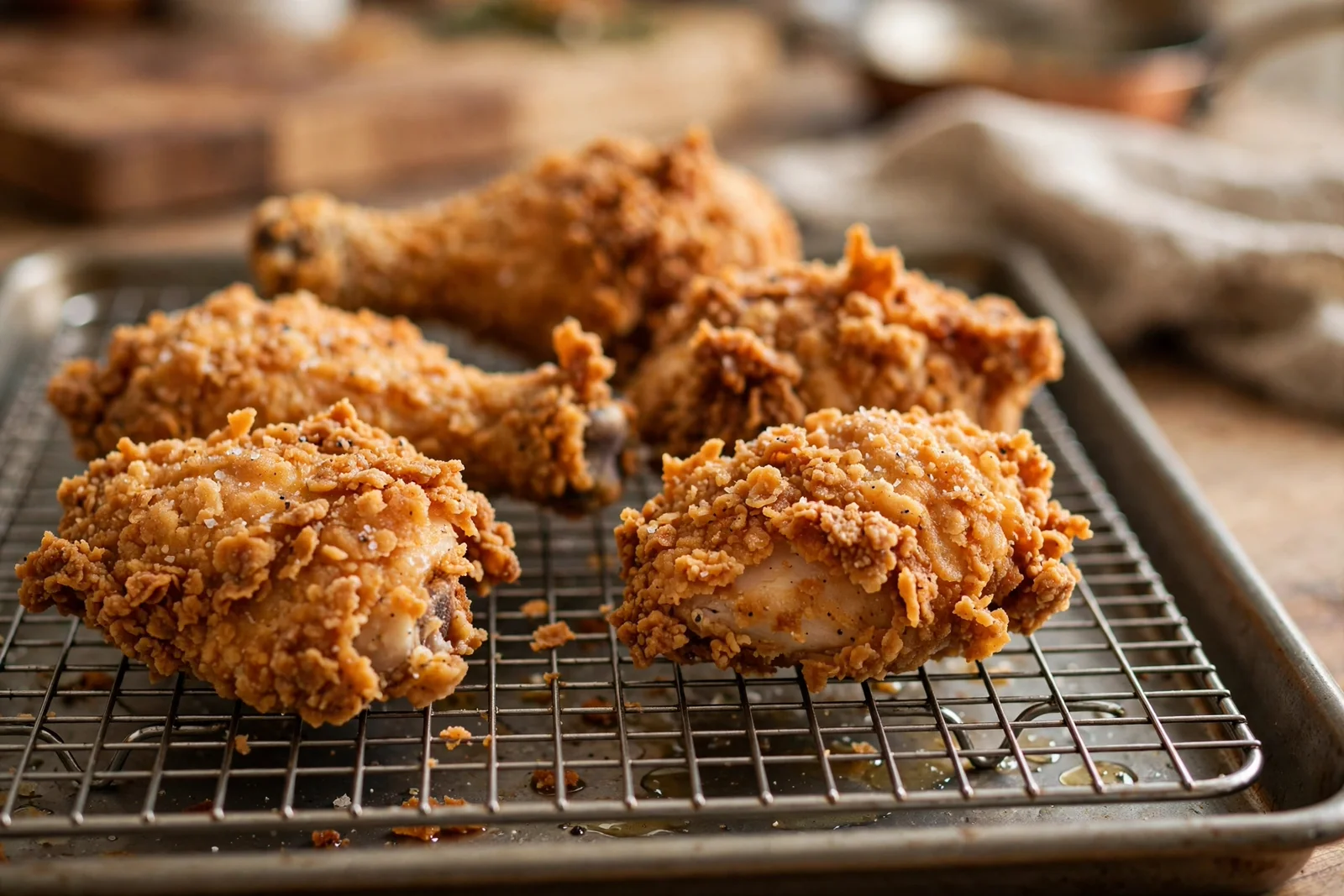
Starch choice matters, and the rack matters just as much. Always drain fried pieces on a wire rack set over a sheet pan, never on paper towels, which trap steam against the crust and undo your work in minutes. Let the pieces sit undisturbed for two or three minutes so the shell finishes setting.
Leftovers go into the refrigerator uncovered or loosely covered for up to two days. Reheat in a 400°F oven or air fryer for 5 to 8 minutes, straight from cold. The full routine is in our crispy reheating guide. A microwave will erase whatever the starch bought you.
More fried favorites to try
- Chicken karaage (Japanese fried chicken), where potato starch does the work.
- Korean fried chicken (yangnyeom), double-fried and glazed.
- Cantonese sweet and sour pork, cornstarch crust, glossy sauce.
- Salt-and-pepper shrimp, thin cornstarch coat, big seasoning.
The bottom line
Cornstarch vs potato starch is sturdiness against delicacy. Choose potato starch when the crust should shatter and stay crisp for hours: karaage, Korean fried chicken, tempura vegetables. Choose cornstarch when the coating has a job beyond crunching: velveted stir-fry meat, sauced classics like sweet and sour pork, anything that needs a golden, sauce-grabbing crust. Keep both bags; they are cheap, and reaching for the right one is the difference between a good fried dish and the one people talk about.
4 thoughts on “Cornstarch vs Potato Starch: Which One for Frying?”