
The first time I made a big batch of gyoza for a party, I shaped all forty, slid them onto one plate, and stacked the plate straight into the freezer. The next week I tried to pry them apart and tore the wrappers on half of them. Fillings leaked everywhere in the pan, and the ones I did manage to separate cooked up lopsided and bald. The problem was not the filling or the pleating. I had frozen them touching, and wet dumpling wrappers plus contact equals glue.
Since then I have frozen hundreds of dumplings this way and it has never failed me: space them on a floured tray, freeze them hard while separated, then bag them once they are solid. It takes ten extra minutes of tray time and saves every single dumpling.

Why dumplings stick in the freezer
A dumpling wrapper is raw flour and water, and it is damp on the outside the moment you seal it. Press two damp wrappers together and put them in the freezer, and the moisture between them freezes into one solid bridge. It is the same reason ice cubes in a tray weld together when they melt and refreeze — contact plus water plus cold.
Thawing does not fix it. The wrappers turn soft and tacky as they warm up, so frozen-together dumplings actually tear worse if you let them sit on the counter. The sticking has to be prevented before the freezing, not repaired after.

Step 1 — Give every dumpling its own space
Line a rimmed baking sheet with parchment paper and dust it lightly with flour or cornstarch — about a teaspoon across the whole sheet, rubbed over the paper with your hand. The dusting is insurance: even if a wrapper touches the paper, the starch layer keeps it from grabbing.
Set the shaped dumplings on the tray with about a half inch of clear space between each one. They do not need to be far apart; they just must not touch each other or the rim of the tray. If a batch overflows one sheet, use a second sheet rather than crowding. One plate of stuck dumplings taught me that a crowded tray is not worth the saved dishwashing.
If your kitchen is warm or the dumplings have been sitting out while you shape them, chill the tray first. Wrappers get tacky fast at room temperature — within about fifteen minutes in my kitchen — and tacky wrappers stick to the paper even before the freezing starts. A cold tray from the fridge keeps the bottoms firm while you work.
Step 2 — Flash-freeze them solid
Slide the uncovered tray into the freezer and leave it until the dumplings are frozen hard, about 2 to 3 hours depending on their size. Do not cover the tray: a lid or plastic wrap traps the moisture rising off the wrappers and deposits it back on the surface as frost, which defeats the spacing.
Test one before moving on. Pick up a dumpling and press its side with a fingertip — it should feel rock hard with no give at the seam. A half-frozen dumpling still has soft spots that weld to its neighbors the moment it lands in a bag. When in doubt, give the tray another 30 minutes. Frozen time is cheap; torn wrappers are not.

Step 3 — Bag them once they are solid
Only now do the dumplings go into a freezer bag. Frozen solid and dry, they can tumble against each other freely without sticking. Slide them off the parchment with a thin spatula — they should pop off with a light tap — and drop them into a zip-top freezer bag.
Press the air out of the bag before sealing. Air is what turns a dumpling’s exposed edges gray and leathery over weeks (freezer burn), and a tight bag slows that down far more than any double-bagging trick. I press the bag flat against the counter from the bottom up, seal it nearly shut, then squeeze the last bit of air through the small opening and close it.
Label the bag with the date and what is inside. Three months from now every pale crescent in the freezer looks identical, and “pork cabbage” versus “shrimp” matters when guests are coming. A permanent marker on the bag takes five seconds.

How long frozen dumplings keep
Frozen dumplings keep best for 2 to 3 months. They stay safe well past that — a freezer at 0°F holds food indefinitely from a safety standpoint — but the texture starts to change. Past the three-month mark, wrapper edges pick up freezer flavors and the filling can dry out a little around the seams, especially lean pork fillings.
I once found a bag I had forgotten for almost five months. The dumplings cooked fine and nobody would have noticed in a pot of wonton soup, but eaten plain from the pan, the wrapper edges were noticeably drier than a two-month-old batch of the same recipe. So: two months is the sweet spot, three is still excellent, and anything older goes into soup or dumpling stew where the broth covers the difference.
Cook them straight from frozen — do not thaw
Thawing is the single biggest mistake after freezing them touching. A thawed wrapper turns gummy and fragile, and the filling softens into a texture that squeezes out of the seams. Frozen dumplings go straight from the bag into the heat.
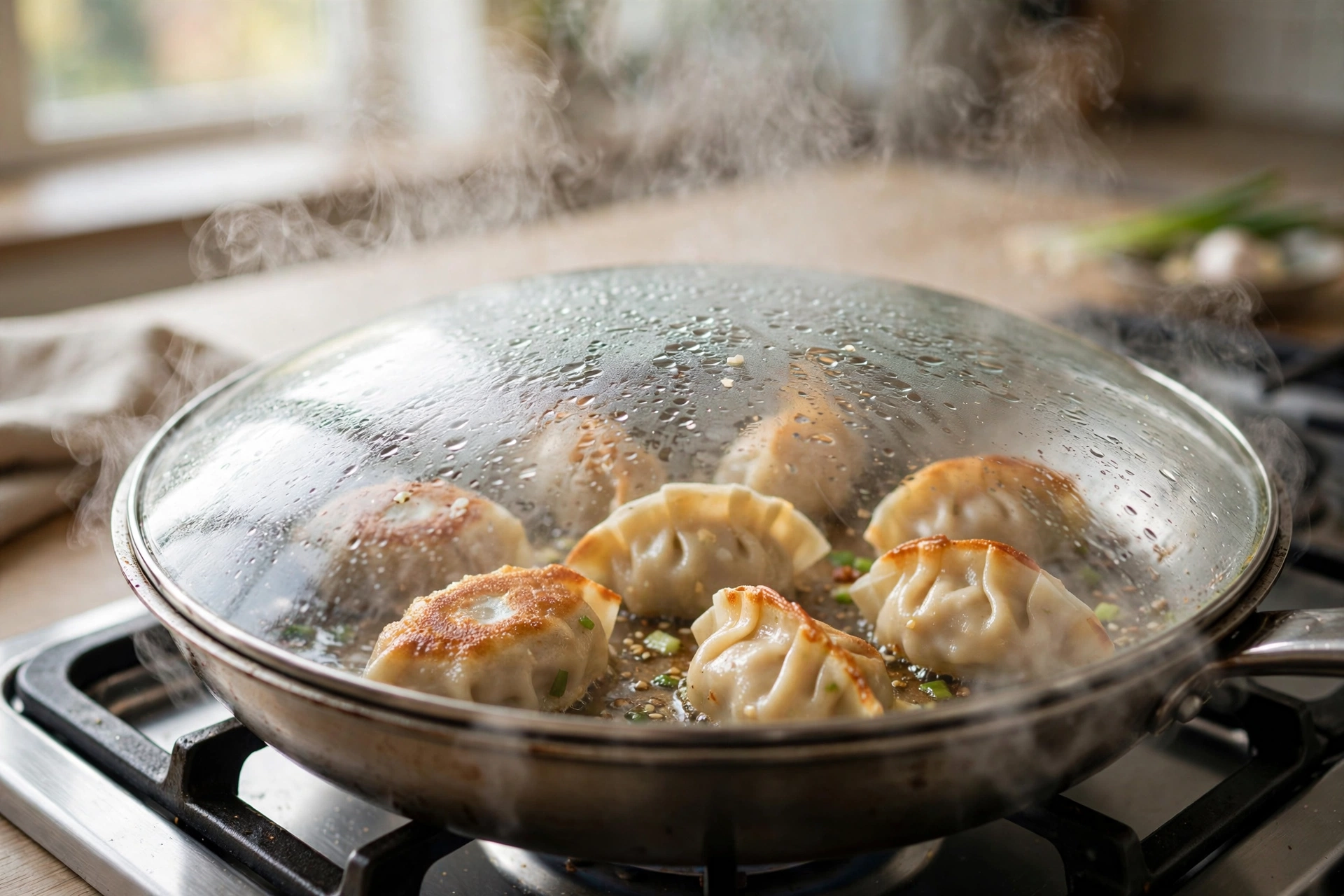
Pan-fry (potstickers): Heat a tablespoon of oil in a nonstick or well-seasoned pan over medium heat. Arrange the frozen dumplings upright with a little space between them and cook for 2 minutes until the bottoms start to color. Add about 1/3 cup of water — enough to come a quarter inch up the sides — clamp the lid on, and steam for 6 to 8 minutes. Uncover, let the last of the water boil off, and cook 1 to 2 minutes more until the bottoms crisp again. That last crisping step is what from-frozen dumplings need most; the bottoms come out of the steam pale and flabby without it.
Boil: Drop frozen dumplings into a rolling boil and stir once so they do not catch on the pot bottom. When the water returns to a boil, add a cup of cold water, and repeat two more times. They are done when they float and the wrappers look slightly translucent — about 1 to 2 minutes longer than fresh dumplings of the same recipe.
If they already stuck together
Maybe you found this post with a bag of fused dumplings already in the freezer. Do not force them apart — torn wrappers are worse than patient ones.
If the whole mass is frozen solid, work cold: twist, do not pull. Hold one dumpling and give its neighbor a gentle quarter-turn while both are still rock hard. Solid wrappers release from each other more cleanly than half-thawed ones. If a seam resists, stop and cook the fused pair together as one; a double dumpling fries up fine and tastes exactly the same.
If they have started to thaw into each other on the counter, stop what you are doing and put them back on a tray in the freezer for an hour. They will separate better frozen than they ever will gummy.
More dumpling recipes
A few more from the dumpling side of the site: Homemade Gyoza with Pork and Cabbage — the recipe I freeze most — Wonton Soup for the best use of an older bag, Cha Gio: Crispy Vietnamese Fried Spring Rolls when you want something shattering instead of soft, and Lumpia: Filipino Spring Rolls for the thin-wrapper cousin.
From the Garden
The dumpling filling I freeze in the largest batches uses garlic chives instead of scallions, and I started doing that the year a single pot of them on my balcony produced far more than any stir-fry could use. Garlic chives hold their flavor through freezing better than scallion greens do, and a chopped handful per pound of pork is all the seasoning the filling needs beyond salt, ginger, and a spoonful of sesame oil. If you have a pot going, this guide has the basics covered — growing garlic chives in containers.
2 thoughts on “How to Freeze Dumplings Without Sticking”