
The first time I made Korean fried chicken, I made the same mistake most home cooks make: I sauced the chicken ten minutes before dinner. By the time everyone sat down, that glassy crust I had worked so hard for had softened into something closer to a napkin. The sauce was right. The chicken was right. The timing was wrong.
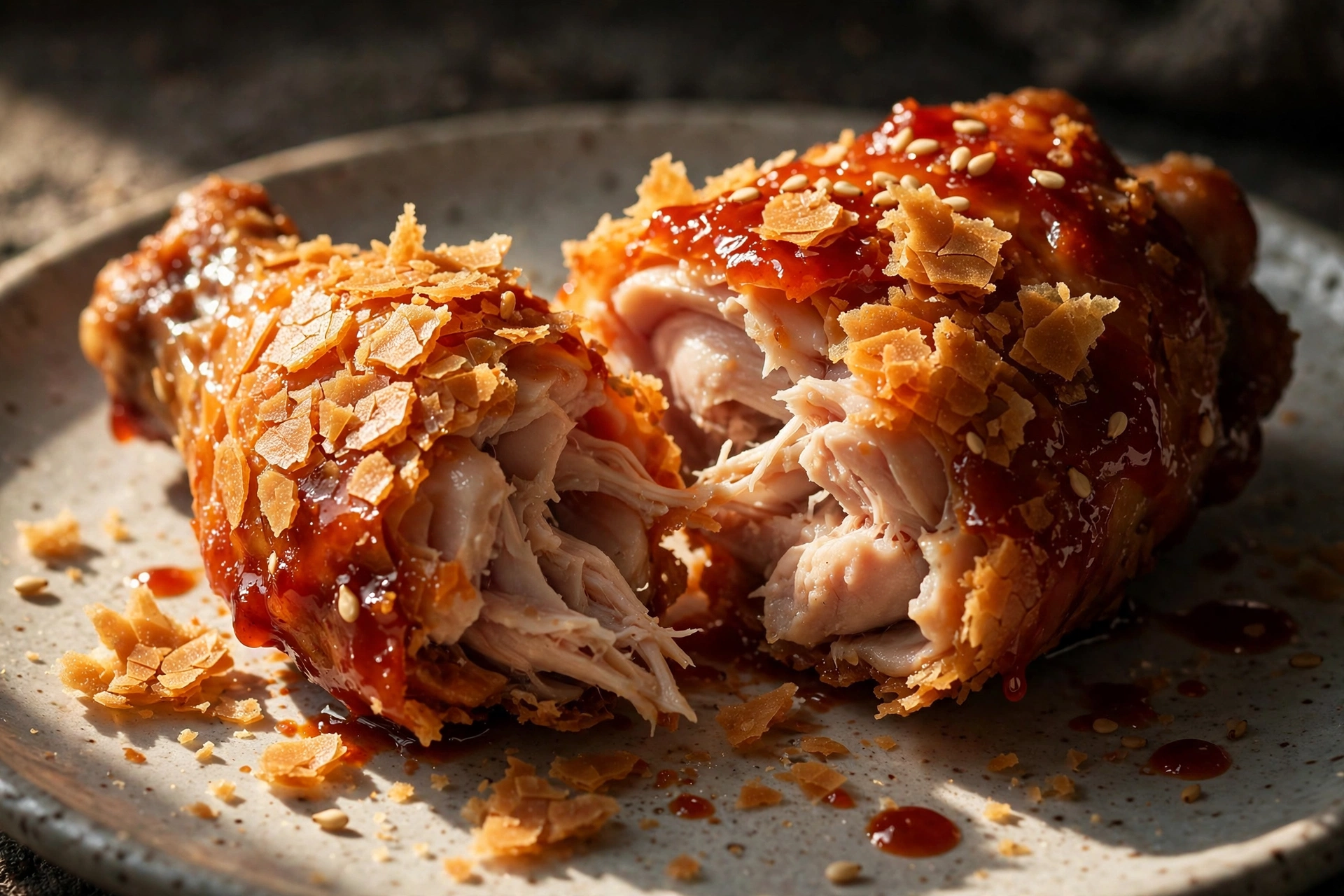
This recipe fixes that. The chicken gets fried twice (6 minutes at 325°F, a 10-minute rest, then 3 minutes at 375°F), the yangnyeom sauce simmers down to a glaze that sets instead of soaking in, and the two meet in the bowl within two minutes of serving. What you get is the real thing: a crackling thin crust, juicy meat, and a sweet-spicy glaze that clings instead of sliding off.
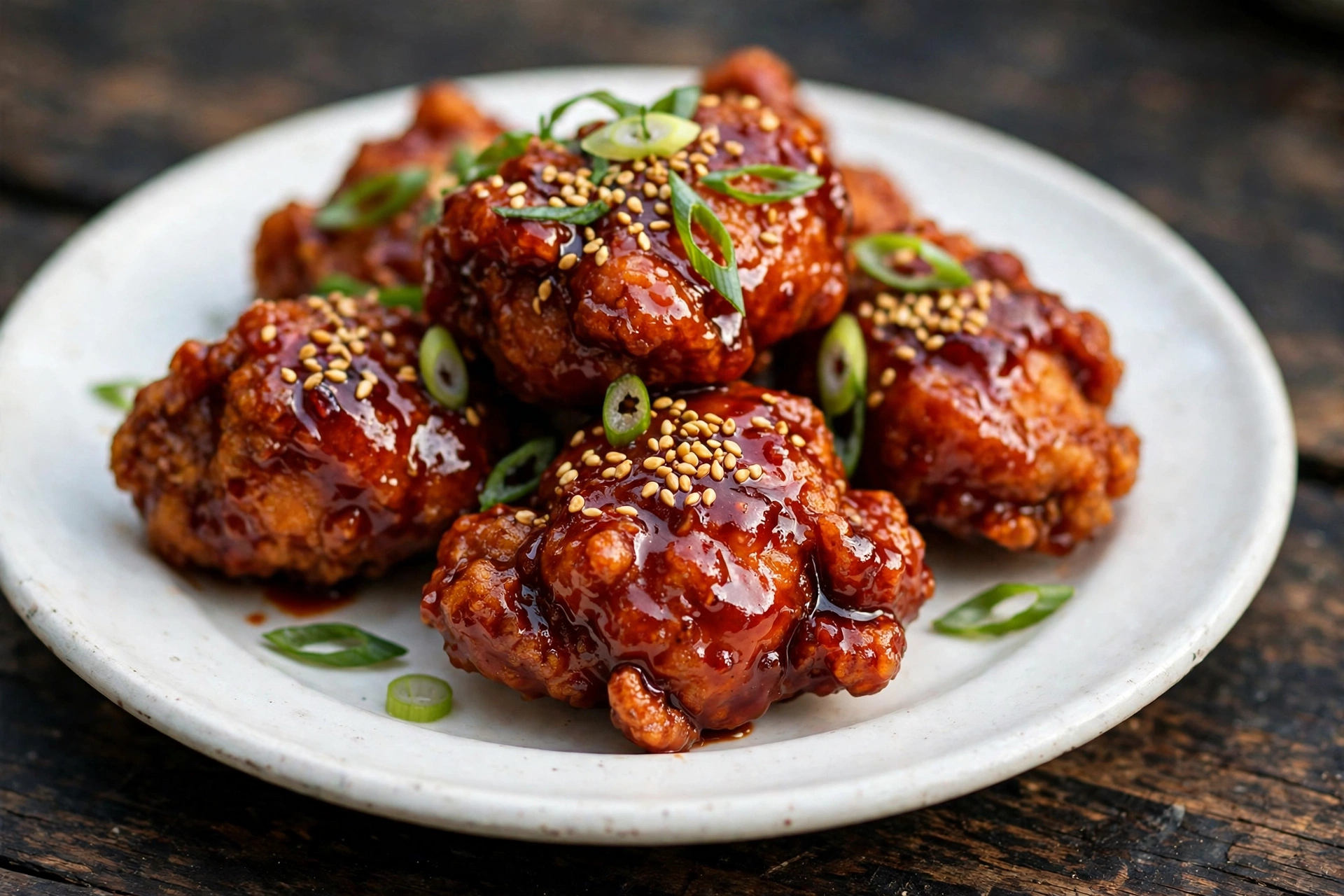
What is Korean fried chicken?
Yangnyeom chicken (양념치킨) is the sauced member of the Korean fried chicken family, which grew out of the chimaek (chicken-and-beer) shops that spread across South Korea in the 1980s and 1990s. Where Southern-style fried chicken wears a thick flour crust, Korean fried chicken wears a thin starch crust (usually potato starch or cornstarch), and it is almost always fried twice. The first fry cooks the chicken through at a gentler temperature; the second, hotter fry drives surface moisture off and turns the crust brittle.
Yangnyeom means "seasoned," and the seasoning here is a glaze of gochujang, honey, ketchup, soy sauce, garlic, and rice vinegar. It tastes sweet first, then warm heat, then a little tang. Eat it the way the chimaek shops serve it: hot, with cold beer and a plate of pickled radish alongside.
The coating: potato starch, pressed thin
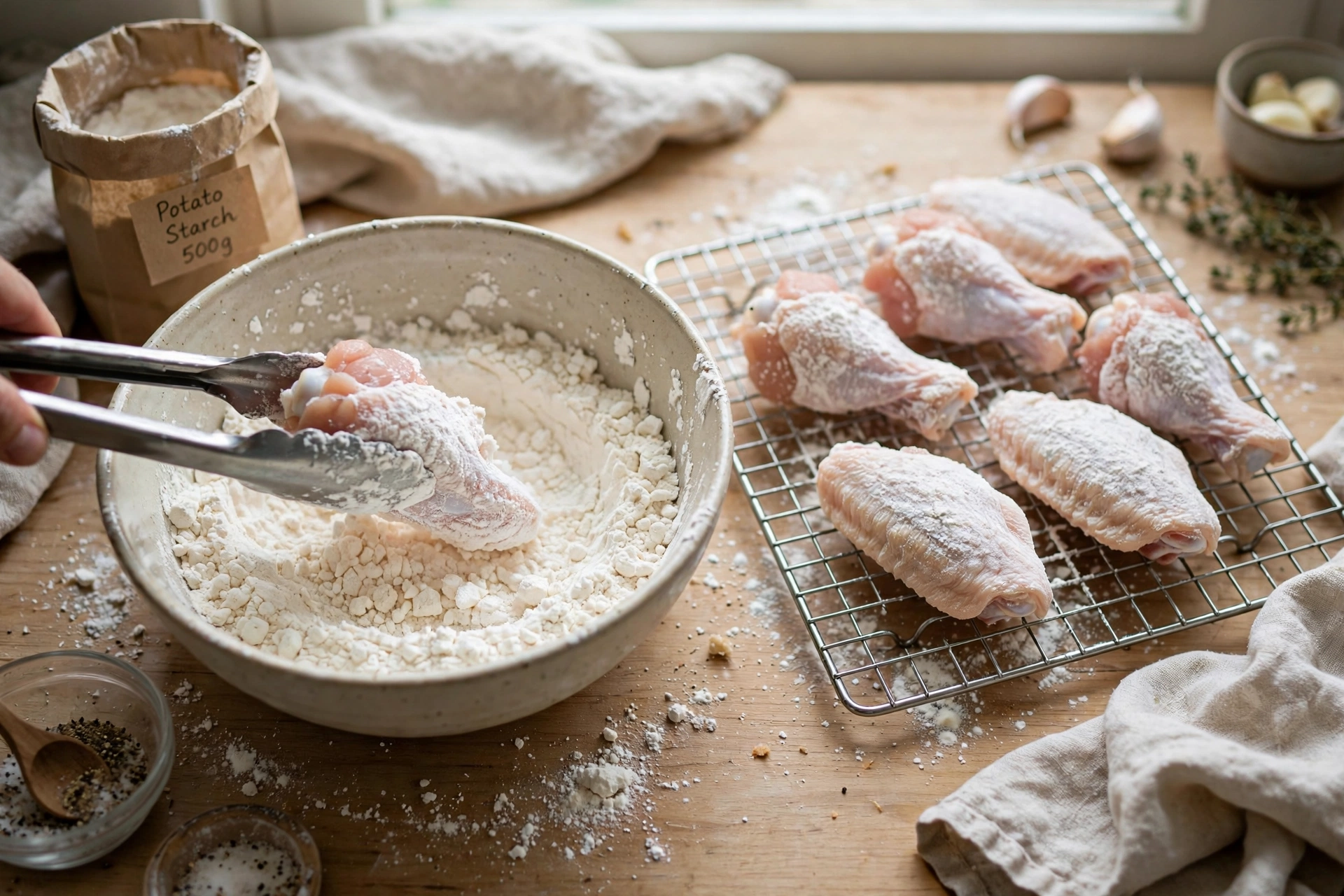
All-purpose flour gives a thick, bready crust. Potato starch gives the opposite: a thin, almost glassy shell that snaps under your teeth. I use three parts potato starch to one part flour: the starch for the crunch, the flour for a little body so the crust does not shatter off the bone.
Two details make the difference between a coating that clings and one that sloughs off in the oil. First, pat the chicken completely dry before it touches the starch; surface moisture turns to steam under the crust and pushes it loose. Second, after dredging, let the coated pieces rest on a wire rack for 10 minutes. The starch hydrates in that time and bonds to the skin instead of sitting on it like dust.
The double fry, with numbers
Use a thermometer. Guessing oil temperature is how chicken ends up greasy (too cool) or scorched outside and raw inside (too hot). When mine is buried in a drawer, the chopstick test from the stir-fry oil guide is close enough for frying.
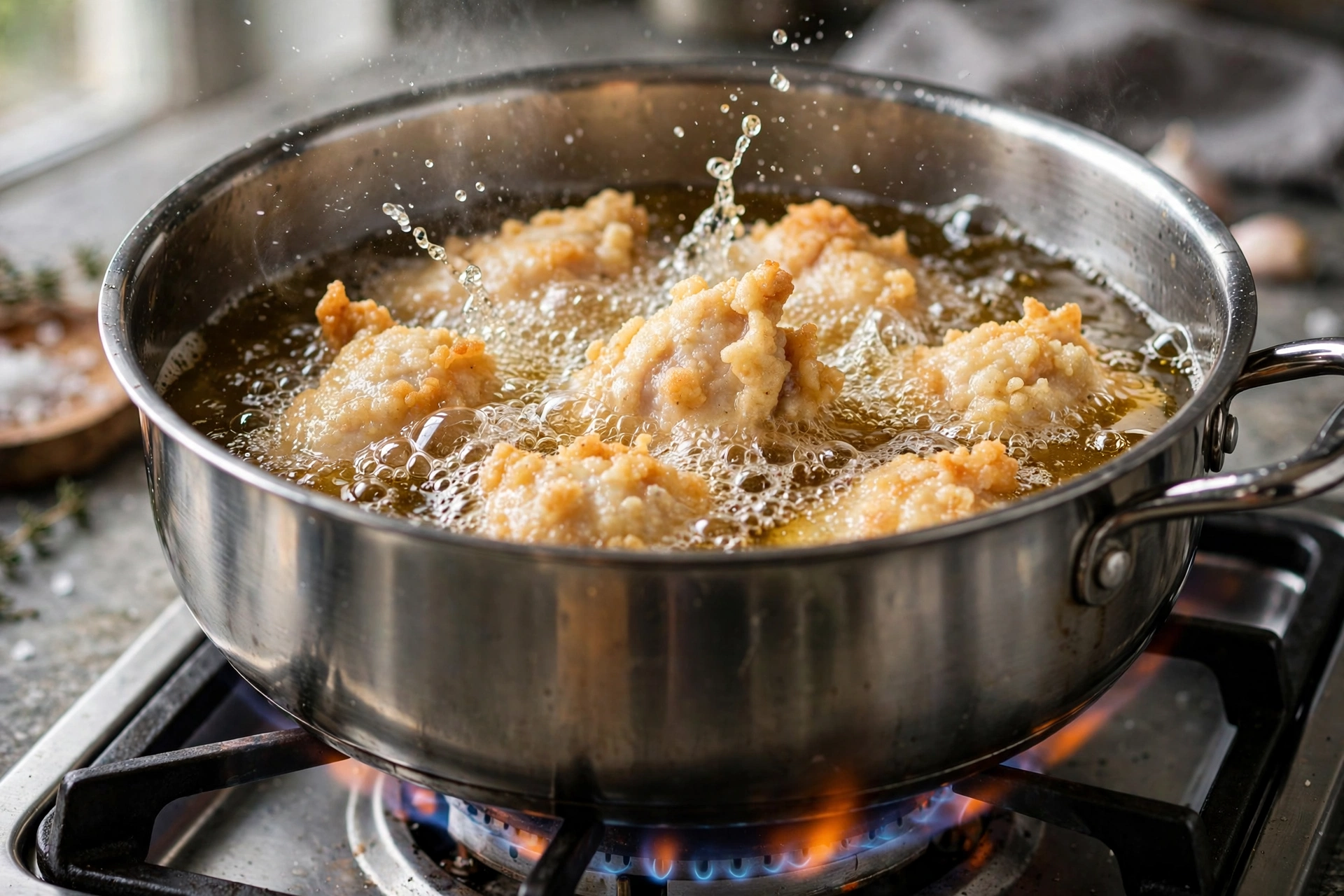
First fry: 325°F, about 6 minutes for wings, until pale gold and just cooked through. This fry is about the inside, not the color. Lift the chicken out onto a wire rack (not paper towels, which trap steam underneath) and rest it for 10 minutes. That rest matters: steam escapes instead of sitting under the crust, which is what keeps the second fry from turning gummy.
Second fry: 375°F, 2 to 3 minutes, until deep gold. You will hear the difference: the sizzle turns sharper and higher-pitched. Drain on the rack again. The crust at this point is thin, dry, and loud. That is exactly what you need it to be before the sauce goes on, because a thin dry crust resists sauce far better than a thick damp one.
The yangnyeom sauce, simmered to a glaze
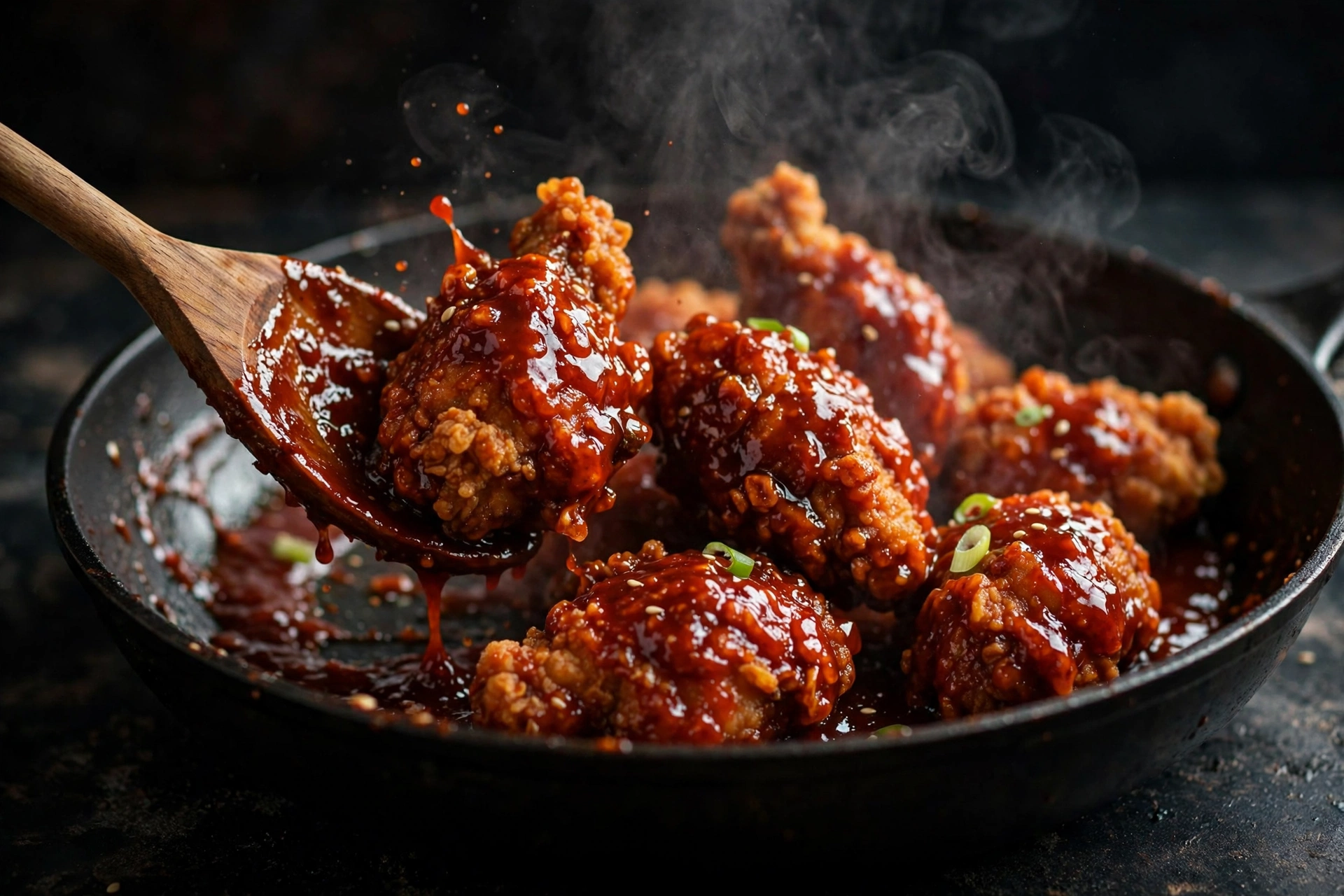
A sauce that is too thin slides right off; too thick and it tears the crust when you toss. The target is a syrup that coats the back of a spoon and holds a line for a second. Simmer the gochujang, honey, ketchup, soy sauce, garlic, and rice vinegar together for 2 to 3 minutes until it reduces by about a third. It should look glossy and drip off the spoon in a slow ribbon, not a waterfall. Pull it off the heat and stir in the sesame oil. If the jar of gochujang is nearly empty, gochujang substitutes covers the best pinch-hitters.
Let the sauce cool for a minute or two before the chicken arrives. A boiling-hot sauce steams the crust on contact, and that is one of the most common ways people lose the crunch they just built. Warm, not bubbling.
Bringing it together
Work fast at the end. Move the chicken from its rack into the biggest bowl you own, pour over just enough warm sauce to coat (about three-quarters of what you made, since you want glaze, not soup), and toss gently until every piece shines. Garnish with toasted sesame seeds and sliced scallions, and serve within two minutes. If people are gathering at the table, toss then, not before.
Leftovers reheat best with dry heat: 10 to 12 minutes at 375°F on a wire rack brings the crust back. The microwave turns it rubbery, and no trick fixes that.
Troubleshooting: Fix My Korean Fried Chicken
Saucing, frying, and timing all have to line up, so here are the five failures I see most often and exactly how to avoid or fix them.
HERB & LIME · KITCHEN HELP
Fix My Korean Fried Chicken
Choose what went wrong to see a practical next step.
Possible cause
What to try next
For next time
From Paul's kitchen. Results vary with chicken size, oil, and stove heat, adjust timing to your setup.
Quick reference (also works without JavaScript)
The crust went soggy after saucing
Cause: The sauce went on too early, too hot, or in too large a quantity, and the steam plus sitting time softened the crust.
Try: Next time, toss the chicken in warm (not boiling) sauce within a couple of minutes of serving, using just enough to coat. For a party, keep the chicken and sauce separate and let guests toss their own right before eating.
Prevent: Sauce the chicken right before it hits the table, never minutes ahead; use a large bowl and only enough glaze to coat, not drown.
The chicken came out greasy
Cause: The oil was too cool, often because too many pieces went in at once and dropped the temperature, so the crust absorbed oil instead of crisping.
Try: If it is already greasy, there is no fix that fully restores the crust; serve it plain and dry-brine shorter next time. Reheat on a wire rack at 375°F to drive off some surface oil.
Prevent: Fry in small batches so the oil temperature recovers between additions, and use a thermometer: about 325°F for the first fry and 375°F for the second.
The coating fell off in the oil
Cause: The chicken surface was too wet when it was dredged, so the starch sat on top of moisture instead of bonding to the skin.
Try: Fished pieces are lost causes, but for the rest of the batch pat them dry with paper towels and press the starch on firmly before frying.
Prevent: Pat every piece completely dry before dredging, and let the coated chicken rest 10 minutes on a wire rack so the starch hydrates and adheres.
The crust is soft, not glassy and crisp
Cause: Skipping the second fry, or going straight from the first fry into the second without a rest, leaves surface moisture trapped under the crust.
Try: Return the pieces to the oil at 375°F for 2 to 3 minutes until they sizzle sharply and turn deep gold.
Prevent: Rest the chicken 10 to 15 minutes on a wire rack after the first fry so steam escapes, then give it the full second fry, that hotter pass is what makes the crust brittle.
The crust is thick and doughy
Cause: An all-purpose-flour coating bakes up thick and bready; Korean fried chicken relies on starch for its thin, shattering shell.
Try: Serve what you have as is, it is still good chicken, and rebuild the coating next time with a starch-based dredge.
Prevent: Use potato starch or cornstarch for most or all of the dredge (a 3:1 starch-to-flour blend works well) and keep the coating thin rather than building up layers.
Korean Fried Chicken (Yangnyeom)
Ingredients
Method
- Season the wings. Pat the wings very dry with paper towels — press between two layers if needed. Toss with the salt and black pepper and let them sit for 15 minutes while you set up the dredge and sauce.
- Dredge. Mix the potato starch, flour, and garlic powder in a large bowl. Add the wings a few at a time, turning until every piece wears a thin, even coat. Shake off the excess, then rest the coated wings on a wire rack for 10 minutes so the starch hydrates and adheres.
- Make the sauce. Combine the gochujang, honey, ketchup, soy sauce, rice vinegar, and grated garlic in a small saucepan. Bring to a gentle simmer over medium heat, stirring, and cook 2 to 3 minutes until glossy and reduced by about a third — it should drip off a spoon in a slow ribbon. Take off the heat, stir in the sesame oil, and let it cool to warm, not bubbling.
- First fry. Pour the oil into a heavy pot to a depth of about 3 inches and heat to 325°F (165°C). Fry the wings in batches of 6 to 8, about 6 minutes per batch, until pale gold and cooked through. Move to a clean wire rack. Let the oil come back to 325°F between batches.
- Rest. Let the fried wings rest on the rack for 10 minutes while the oil climbs to 375°F (190°C). The rest lets surface steam escape so the second fry crisps rather than steams the crust.
- Second fry. Fry the wings again in batches, 2 to 3 minutes per batch, until deep golden and audibly crisp — the sizzle turns sharper and higher-pitched. Drain on the rack.
- Toss. Move the hot wings to your largest bowl. Pour over about three-quarters of the warm sauce — enough to glaze, not drown — and toss gently until every piece shines.
- Serve. Scatter with the sesame seeds and scallions and serve within 2 minutes, while the crust is still crisp.
Notes
More Korean recipes
A few more from the Korean side of the site: Tteokbokki: Spicy Korean Rice Cakes for chewy heat, Japchae: Korean Glass Noodle Stir-Fry when you want a mellow contrast, Kimchi Jjigae for something brothy, and Korean Bulgogi Chicken if you want the same flavors without the fryer.
2 thoughts on “Korean Fried Chicken (Yangnyeom)”