
—
If you cook Vietnamese food at home, you already know rau den, even if you have never grown it. It is the leafy green that goes into a quick shrimp soup on a weeknight, or gets stir-fried with garlic in the time it takes the rice to finish. In the garden it is one of the easiest greens to grow: it loves heat, it shrugs off the summer sun that makes lettuce bolt, and a pot of it can feed a household for weeks. This guide covers the variety to pick, when to sow, what pot to use, and how to keep the leaves coming all summer.

What amaranth is
Amaranth is a warm-season leafy green in the same family as spinach and beets. The leaves are the crop here, not the grain: leaf types like Amaranthus tricolor and Amaranthus blitum are grown for tender greens that cook down soft in a minute or two, much like spinach but with a slightly earthier taste and a sturdier leaf that holds up in soup.
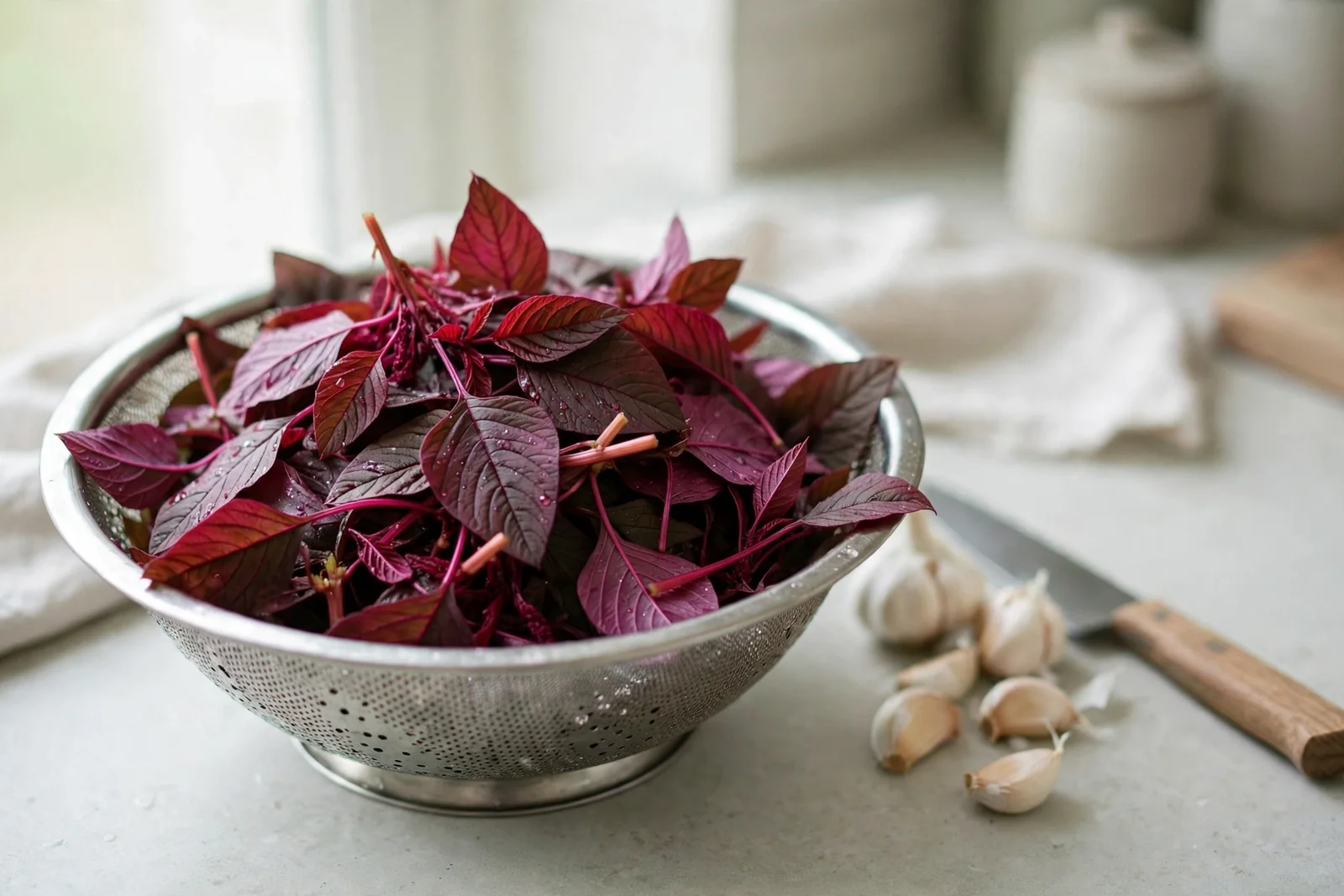
In Vietnamese cooking it is called rau den, and two kinds show up most often. Rau den do, red amaranth, has deep red stems and leaves with a red center, and it turns cooking water a soft pink. Rau den xanh, green amaranth, is all green and a little milder. Both cook the same way, and both grow the same way, so pick the one you like to eat. If your local Asian market sells it in bunches, the red kind is the one you will see most.
A note on names: garden amaranth and the weed redroot pigweed are cousins in the same genus, and they look alike when young. Buy seed from a seed seller, not a plant you found, and you will not have to guess which one you are growing.
Picking a variety
For leaves, buy a leaf variety, not a grain variety. Grain amaranths grow five feet tall and put their energy into seed heads. Leaf varieties stay shorter, branch more, and keep making new leaves after you pick. Good choices are any packet labeled leaf amaranth, red amaranth, or rau den. Amaranthus tricolor, sold as Joseph’s coat or tampala, is the red-leafed type most often sold for cooking, and it is also the prettiest plant in the pot.
One packet holds hundreds of seeds, and the seeds are tiny, about a millimeter across. That matters at sowing time: a pinch goes further than you think, and the packet will last you several seasons if you keep it dry.
When to sow
Amaranth is a strict warm-season crop, and soil temperature decides the sowing date, not the calendar. Wait until the soil has warmed to at least 65°F, about a week or two after your last spring frost in most places. Below 50°F the seed sits in cold soil and rots instead of sprouting. A soil thermometer costs little and takes the guesswork out of it: push it two inches into the pot mix in the morning, and sow when it reads 65°F or higher for a few days running.
In warm climates with no real frost, sow any time from late spring through midsummer. Amaranth grows fastest when daytime temperatures sit between 72°F and 85°F, and it keeps going in heat that stops lettuce and spinach cold. That is the whole point of growing it: it fills the gap in the garden when the cool-season greens have given up.
Start seeds indoors only if you want a head start, and sow no more than three weeks before transplanting. The seedlings grow fast and do not like sitting in small pots. Direct sowing in the final pot is simpler and works just as well.
Containers and soil
Amaranth grows well in a pot, which suits it because the plant is a heavy feeder that likes soil fed with compost and steady water. Use a container at least 12 inches deep and 12 inches across for one or two plants, or a wider tub for a small patch. A five-gallon pot holds one plant comfortably, with room for the roots and enough soil to hold moisture through a hot afternoon. Make sure the pot has drainage holes: amaranth likes damp soil, not soil that stays soggy.
Fill the pot with a loose mix with plenty of compost. Equal parts potting soil and compost works well, with a handful of perlite mixed in if your potting soil runs heavy. The mix should hold water but drain freely when you water it. Amaranth is not fussy about pH, and it grows in soil from slightly acidic to slightly alkaline, so there is no need to test or adjust.
Set the pot where it gets at least six hours of direct sun a day. A south-facing balcony or a sunny patio is ideal. In very hot climates, a spot that gets morning sun and a little afternoon shade keeps the leaves tender, but full sun is fine in most places. If you are short on sunny spots, the same planning that goes into a container garden plan for a Vietnamese herb garden applies here: put the sun lovers together and the shade-tolerant herbs where the light is weaker.
Sowing and thinning
Sow the seed shallow. The rule is no deeper than a quarter inch: scatter the seed over the surface of damp mix, press it down gently with the flat of your hand, and mist it to settle it in. Buried seed does not come up. Keep the surface damp with a fine mist until the seedlings appear, which takes four to ten days in warm soil.

Thin the seedlings once they have two true leaves, and do not skip this step. Crowded amaranth grows tall and thin, with small leaves and weak stems. Thin to six inches apart for leaf harvest, pulling the extra seedlings out by the roots and eating the thinnings as baby greens. If you sowed a wide tub densely for baby greens, you can leave them closer, about two inches apart, and cut the whole patch young instead.
Feed lightly. A scoop of compost worked into the top inch of mix at sowing time is enough for most pots. If the leaves look pale after a month of picking, water in a half-strength liquid feed once. Too much nitrogen gives you big soft leaves that wilt fast in the pan and a plant that flops over in the wind.
Water, sun, and feeding
Water when the top inch of soil feels dry, then water deeply until it runs out the drainage holes. Pots dry out faster than beds, so in hot weather that can mean watering every day, and twice a day for small pots in a heat wave. A two-inch layer of mulch, straw or shredded leaves, slows the drying and keeps the soil temperature steadier.
Amaranth handles dry spells better than most greens once it is established, but leaves picked from a thirsty plant taste tougher and more bitter. Steady water is what keeps the leaves tender, so the watering can matters more than the fertilizer here.
Watch for flea beetles on young seedlings: tiny black beetles that chew small holes in the leaves. A light row cover over the pot until the plants have four or five true leaves keeps them off, and older plants outgrow the damage. Aphids sometimes cluster on the growing tips in warm weather; a strong spray of water knocks them off, and picking the affected tip solves it in one move.
Harvesting the leaves
Start picking about 30 days after sowing, when the plants are eight to twelve inches tall and the leaves are palm-sized. Pick in the morning, when the leaves are crisp and full of water, and take the outer leaves first, leaving the central growing tip alone. The plant keeps making new leaves from that tip, so a few plants picked this way give you greens for weeks. That cut-and-come-again habit is the same one that makes growing water spinach in containers such a good deal, and it works the same here.
For baby greens, cut the whole plant when it is four to six inches tall, snipping just above the soil line. For full-size leaves, pinch or snip individual leaves and take no more than a third of the plant at once, so it keeps growing. Once the plant sends up a flower spike, the leaves turn tougher and more bitter, so pick heavily before that point and let the plant go. In a long warm season, sow a fresh batch every two to three weeks and you will always have a pot at the picking stage.

Store picked leaves the way you would spinach: rinse them gently, shake them dry, and keep them in a breathable container in the fridge. They hold for three to five days, but they taste best the day you pick them.
Cooking with rau den
Cook amaranth leaves the way you cook spinach, but give them a minute longer. The leaves wilt fast in a hot pan and shrink to about a third of their raw volume, so a big bowl of raw leaves makes a small side dish. Rinse them well first: the leaves hold grit in their folds.
The simplest use is a garlic stir-fry, the same treatment as rau muong xao toi, Vietnamese stir-fried water spinach with garlic. Heat oil in a wok, fry sliced garlic until it smells fragrant, add the leaves with a pinch of salt, and toss for one to two minutes until just wilted. A splash of fish sauce at the end is all it needs.
The other classic is soup. Rau den goes into a light broth with shrimp or minced pork, the way spinach goes into a weeknight soup: bring the broth to a boil, add the shrimp, then the leaves, and take the pot off the heat the moment the leaves wilt. The red kind tints the broth pink, which is normal and part of the charm. Do not boil the leaves for long: they turn muddy and lose their shape.
One practical note: amaranth leaves carry soluble oxalates, the same compounds in spinach and beet greens. Cooking and draining them takes care of most of it, which is another reason to cook rau den rather than eat it raw in a salad. Young baby leaves are fine raw in small amounts, but the cooked dish is the point of this plant.
Quick troubleshooting
| Problem | Likely cause | Fix |
|---|---|---|
| Seeds never sprouted | Soil below 50°F, or seed sown too deep | Wait for 65°F soil; sow no deeper than 1/4 inch |
| Seedlings thin and leggy | Not enough light | Move the pot to a spot with at least 6 hours of sun |
| Plants tall and floppy, small leaves | Never thinned | Thin to 6 inches apart; stake tall plants if needed |
| Leaves full of small holes | Flea beetles on young plants | Cover with row cover until plants have 4–5 true leaves |
| Leaves taste bitter and tough | Plant left too long, or too dry | Pick younger leaves; water on a steadier schedule |
| Plant flowered early | Heat stress or old age | Pick heavily before spikes form; sow a fresh batch |
| Leaves wilt in the pan to nothing | Normal: leaves shrink by two-thirds | Sow more than you think you need; pick a big bowlful |
More garden guides
- How to Grow Japanese Eggplant in Containers
- How to Grow Bok Choy in Containers
- How to Grow Thai Chili Peppers in Pots
- When to Plant Asian Greens: A Seasonal Calendar
From the garden
A pot of amaranth taught me to trust the soil thermometer over the calendar. The first year I sowed by the date on the packet and watched the seed sit there doing nothing for two weeks. The second year I waited for 65°F, and the seedlings were up in five days. The plant itself had not changed. The only difference was that I finally listened to what the soil was saying, and that is a lesson that applies to every warm-season crop in the garden.
Sow it warm, thin it to six inches, and pick it young, and one pot of rau den will carry you through the hottest part of summer with a green that asks for almost nothing and gives back every week.
1 thought on “How to Grow Amaranth (Rau Den) for Asian Cooking”