
Sweet potato leaves are the green most people walk past. The vine is famous for the tubers underground, but the young leaves and tips are a common green across Asia, cooked like spinach in garlic, soups, and stir-fries. In a pot they grow fast, ask for little, and give you a first picking in about a month. This guide covers the pot, the soil, the slips, and how to cut the leaves so the plant keeps growing.
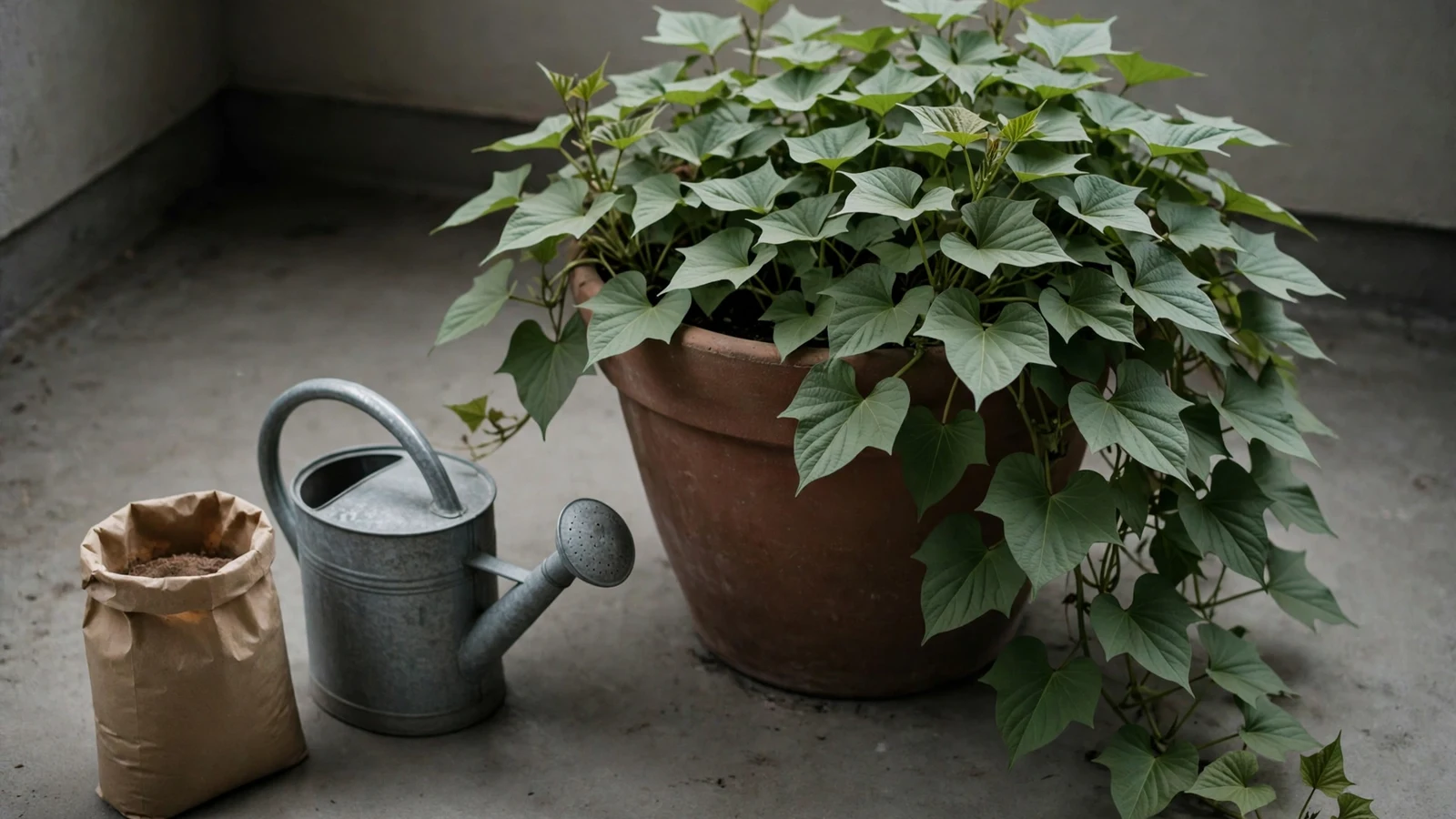
What sweet potato leaves taste like
The leaves come from Ipomoea batatas, the same plant as the sweet potato. Young leaves are soft, mild, and a little earthy, with a faint bitter edge like chicory. Older leaves turn tough and fibrous, so pick the tips and the young leaves and leave the older growth alone. Cook them the way you cook spinach: wilted in a pan with garlic, simmered in soup, or tossed into a stir-fry in the last minute.
Filipino cooks add the tips, talbos ng kamote, to sinigang. Vietnamese cooks boil the leaves, rau lang, and eat them with a dipping sauce. In the garden they sit next to kangkong as one of the easiest leafy greens for a small space, and our guide to growing water spinach covers the other one.
Pick the right pot and soil
A 5-gallon pot is the smallest that works well. Smaller pots dry out fast, and the plant flowers early instead of making leaves. Look for a pot 12 to 16 inches deep and at least 16 inches across, with drainage holes in the bottom. One slip per pot is enough, since the vine fills the space fast. In a wide planter, space slips 12 to 18 inches apart.
The soil should be loose, well draining, and slightly acid, with a pH of 5.5 to 6.5. Mix 2 parts potting soil, 1 part compost, and 1 part perlite or coarse sand. Skip heavy garden soil in a pot. It packs down, holds water, and the roots rot. A 2-inch layer of straw mulch on top keeps the soil damp and stops soil from splashing onto the lower leaves in a rain.
Start from slips, not seed
Sweet potatoes grow from slips, leafy shoots cut from a sprouted tuber, not from seed. Buy slips from a nursery or seed company in spring, or sprout your own by setting a sweet potato in water until the shoots reach 6 to 8 inches. Plant after the last frost, when the soil is warm, at least 65 degrees F. Sweet potatoes hate cold, and a slip planted in cold soil sits still or rots.
Bury the slip so only the top leaves show above the soil, water it in well, and keep the soil damp for the first week while roots form. A slip planted in warm soil takes off in days. If you grow for leaves only, the variety matters less than the vigor. Beauregard is a common choice and grows well in pots. Skip the ornamental vines sold for hanging baskets. They are bred for leaf color, not for eating.

Sun, water, and feeding
Give the pot 6 to 8 hours of direct sun. Less sun means slower growth and pale, thin leaves. The sunniest spot you have is the right one, and a pot on concrete or a paved patio does well because the surface holds warmth into the evening.
Water when the top inch of soil feels dry. A 5-gallon pot in full sun may need water every day in July. In cooler weather, every two or three days is enough. Water the soil, not the leaves, and let the pot drain. Leaves that yellow and drop usually mean the soil stayed wet too long.
Feed lightly. A spoonful of balanced fertilizer or a watering can of compost tea once a month is enough. Too much nitrogen pushes soft, leafy growth and no tubers, and the leaves turn watery and bland. For a leaves-only pot, that trade is less of a problem, but a plant fed too hard still grows soft stems that flop and snap.
Train the vines
The vine trails and roots wherever a leaf node touches soil. In a pot that means it will try to climb out and root in the ground below, which pulls energy away from the leaves. A 6-foot trellis, a bamboo teepee, or a fence gives the vine somewhere to go and keeps the leaves up in the sun and off the soil. Tie new growth in with soft twine every week or so. The vine grows fast in warm weather and will find its own way if you leave it alone.
If you have no room for a trellis, let the vine trail over the edge of the pot and pinch the tips often. Pinching is what makes a full plant instead of one long stem.
How to harvest the leaves
Wait until the plant is 4 to 6 weeks old, when the vine has several long stems. Cut the top 6 to 8 inches of a stem, just above a leaf node, with clean scissors. The plant branches from the node below the cut, so each cut makes two new stems. Pick in the morning, when the leaves are crisp, and take no more than a third of the plant at once. A plant picked this way gives you a new round of tips every 7 to 10 days, from late spring until the first frost.
Eat the young tips the same day. Older leaves further down the stem are tougher, so cook them longer or leave them on the plant. Wash the leaves well, since soil splashes up in a rain, and strip off any stem thicker than a pencil.

How to cook what you pick
Sauteed with garlic is the simplest way. Heat oil in a pan, add 2 cloves of garlic sliced thin, add the washed leaves, and cook 2 to 3 minutes until they wilt. A spoonful of fish sauce or a squeeze of lime at the end keeps the flavor bright. The leaves also go into soup. Add them in the last 3 to 4 minutes so they stay green. Our sinigang takes the tips the same way, and pinakbet uses leafy greens from the garden in the same pot.
A big handful of tips wilts down to a small serving, so pick more than you think you need, about 4 cups of loose leaves per person. Leftover cooked leaves keep one day in the fridge, and they reheat best in a hot pan, not the microwave, which turns them soft and grey.
Problems and fixes
– Yellow leaves that drop: the soil stayed wet too long, or a cold night below 50 degrees F. Let the top 2 inches dry between waterings, and move the pot inside before cold nights.
– Slow growth all summer: too little sun, or a pot too small. Move the pot to 6 to 8 hours of direct sun, and move up to a 5-gallon pot.
– One long stem with leaves only at the tip: never pinched. Cut the tip at 8 to 12 inches, then pinch every stem after that.
– Holes in the leaves: slugs, or flea beetles. Pick slugs off at night, and keep the pot off the ground on bricks.
– New leaves curled and sticky: aphids on the soft tips. Spray the tips hard with water, and check again in 3 days.
– Leaves turn bitter and tough: picked too late, or the plant went dry. Pick tips at 6 to 8 inches, and water before the soil dries out.
The biggest mistake is picking too much too soon. A young plant with a third of its leaves gone cannot feed new growth, and it stalls for weeks. Wait until the vine has several long stems, take a third at most, and the plant will give you tips all summer.

More garden guides
– How to Grow Water Spinach (Kangkong) at Home
– How to Grow Amaranth (Rau Den) for Asian Cooking
From the garden
The pot by my back door gets morning sun and afternoon shade, and it still gives me a colander of tips every week from June to October. I cut them for sinigang most often, and the plant has never once minded the cutting. It asks for water, sun, and a trellis to climb, and it pays that back in leaves.
Start with one slip and one pot. By the time the vine reaches the top of the trellis, you will know whether you want two pots next year.