
Japan’s Answer to “What’s for Dinner?”
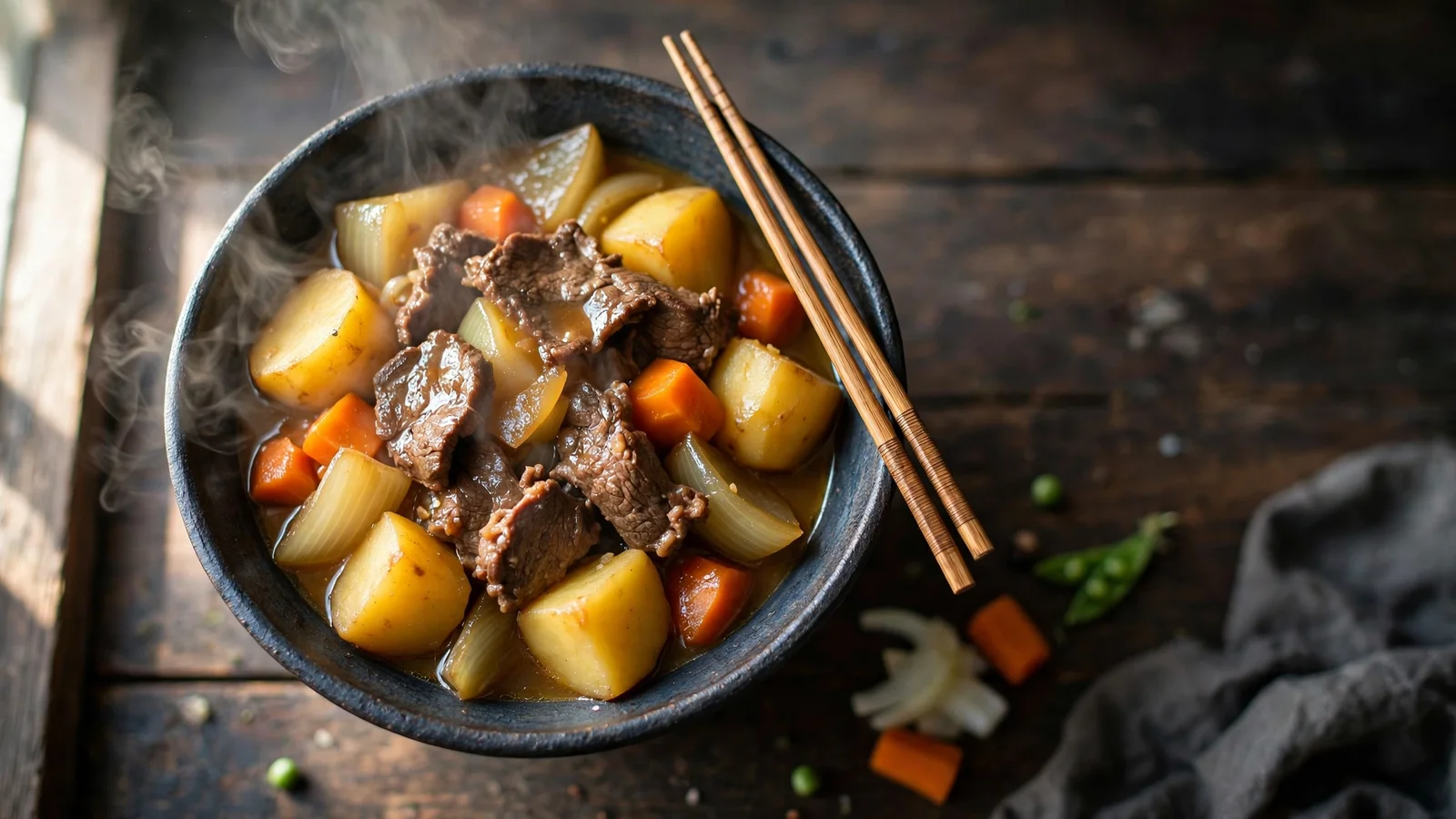
Nikujaga is the dish Japanese home cooks make when they want dinner to feel like a hug. Thin slices of beef, big chunks of potato, sweet onion wedges, and carrots simmer together in a savory-sweet dashi broth until everything is tender and glossed with flavor. It’s nikujaga — literally “meat and potatoes” — and it’s been Japan’s weeknight comfort food for over a century.
The whole thing happens in one pot in about 40 minutes, and most of that is hands-off simmering. It also does something rare: it genuinely tastes better the next day, after the potatoes have had a night to drink in the broth. Make it on a Sunday and Monday’s lunch is already solved.
If you’ve never made dashi from scratch, my homemade dashi guide walks through the 15-minute version — though instant dashi granules work perfectly well here too.
What Is Nikujaga?
Nikujaga (niku = meat, jaga = potato) is a Japanese nimono — a simmered dish — built on beef or pork, potatoes, onion, and carrot in a broth of dashi, soy sauce, sugar, mirin, and sake. It’s homestyle cooking in the truest sense: no restaurant invented it, no chef owns it, and every family has a slightly different ratio.
Expect savory-sweet first, with the gentle umami of dashi underneath. The potatoes should be creamy all the way through, the onions nearly melted, and the beef tender in thin ribbons. It’s served in a bowl with some of its broth, always over or next to steamed rice — the rice is non-negotiable, because the broth-soaked grains are half the point.
The Ratios and Timings That Make It Work
Nikujaga has five ingredients in the broth, and the order they go in matters more than the exact amounts. Here’s what actually controls the outcome:
- Seasoning ratio: 2 cups dashi, 3 tablespoons sugar, 3 tablespoons mirin, 2 tablespoons sake, 1/4 cup soy sauce. That’s the sweet-savory backbone. Taste the broth before the beef goes in — it should read clearly sweet-savory, almost too bold on its own, because the potatoes will dilute it as they cook.
- Sugar and mirin go in BEFORE the soy sauce. This is the rule that separates good nikujaga from mediocre. Salt and soy sauce firm up the surface of potatoes, so if they hit the pot first, the potatoes can simmer for ages and still stay chalky in the middle. Sugar and mirin first, let them work for 10 minutes, then the soy sauce.
- Gentle simmer, never a rolling boil. A hard boil batters the potato chunks against each other until they disintegrate into the broth. Keep it at the laziest possible bubble — the kind where you see movement but hear almost nothing.
- Use a drop lid (otoshibuta). A circle of parchment or a small plate sitting directly on the food keeps the pieces from bobbing and breaking, and it circulates the broth so everything seasons evenly. It’s the single biggest upgrade to any simmered Japanese dish.
- Rest 20 to 30 minutes off the heat before serving. This is the part most recipes skip and shouldn’t. The potatoes keep absorbing broth as everything cools slightly, and the difference between “served immediately” and “rested half an hour” is the difference between seasoned surfaces and seasoned centers.
Ingredients
- For the stew: 1 lb (450 g) thinly sliced beef (chuck or ribeye; thinly sliced pork works too), 4 medium Yukon Gold potatoes (about 1.5 lb / 680 g) peeled, 1 large yellow onion, 1 large carrot, 7 oz (200 g) shirataki noodles, 1 tablespoon neutral oil
- For the simmering broth: 2 cups (480 ml) dashi, 3 tablespoons sugar, 3 tablespoons mirin, 2 tablespoons sake, 1/4 cup (60 ml) soy sauce
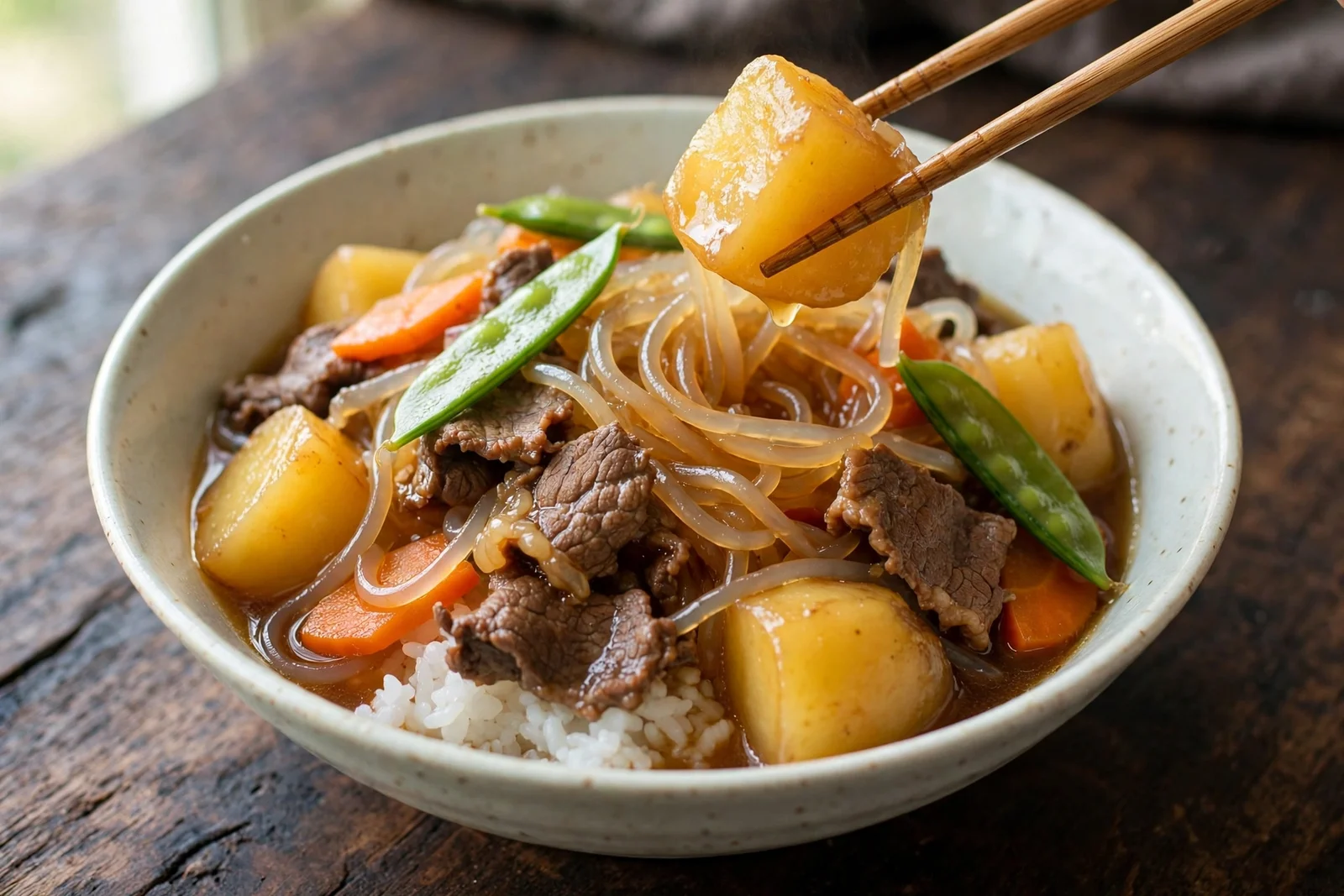
- For serving: steamed short-grain rice, blanched snow peas (optional, for color)
Prep: 15 minutes. Cook: 25 minutes. Total: 40 minutes. Serves 4.
How to Make Nikujaga, Step by Step
- Prep the vegetables. Cut the potatoes into large chunks and shave off the sharp corners with your knife — this Japanese technique, mentori, keeps the pieces from knocking apart during simmering. Soak the chunks in cold water for 10 minutes to rinse off surface starch, then drain. Cut the onion into 8 wedges and the carrot into rolling wedges (rangiri). Blanch the shirataki noodles in boiling water for 1 to 2 minutes to remove their packaged odor, drain, and cut into shorter lengths.
- Sear the vegetables. Heat the oil in a wide, heavy pot over medium heat. Add the drained potatoes, onion, and carrot and stir-fry for 2 to 3 minutes, until the edges of the potatoes turn slightly translucent. This quick sear builds a thin skin that helps the potatoes hold their shape.
- Add dashi and skim. Pour in the dashi and bring to a boil. Skim off any foam that rises — it keeps the broth clear and clean-tasting.
- Season sweet first. Stir in the sugar, mirin, and sake. Lay a drop lid (a parchment circle or small heatproof plate) directly on the food, lower the heat to the gentlest simmer, and cook for 10 minutes.
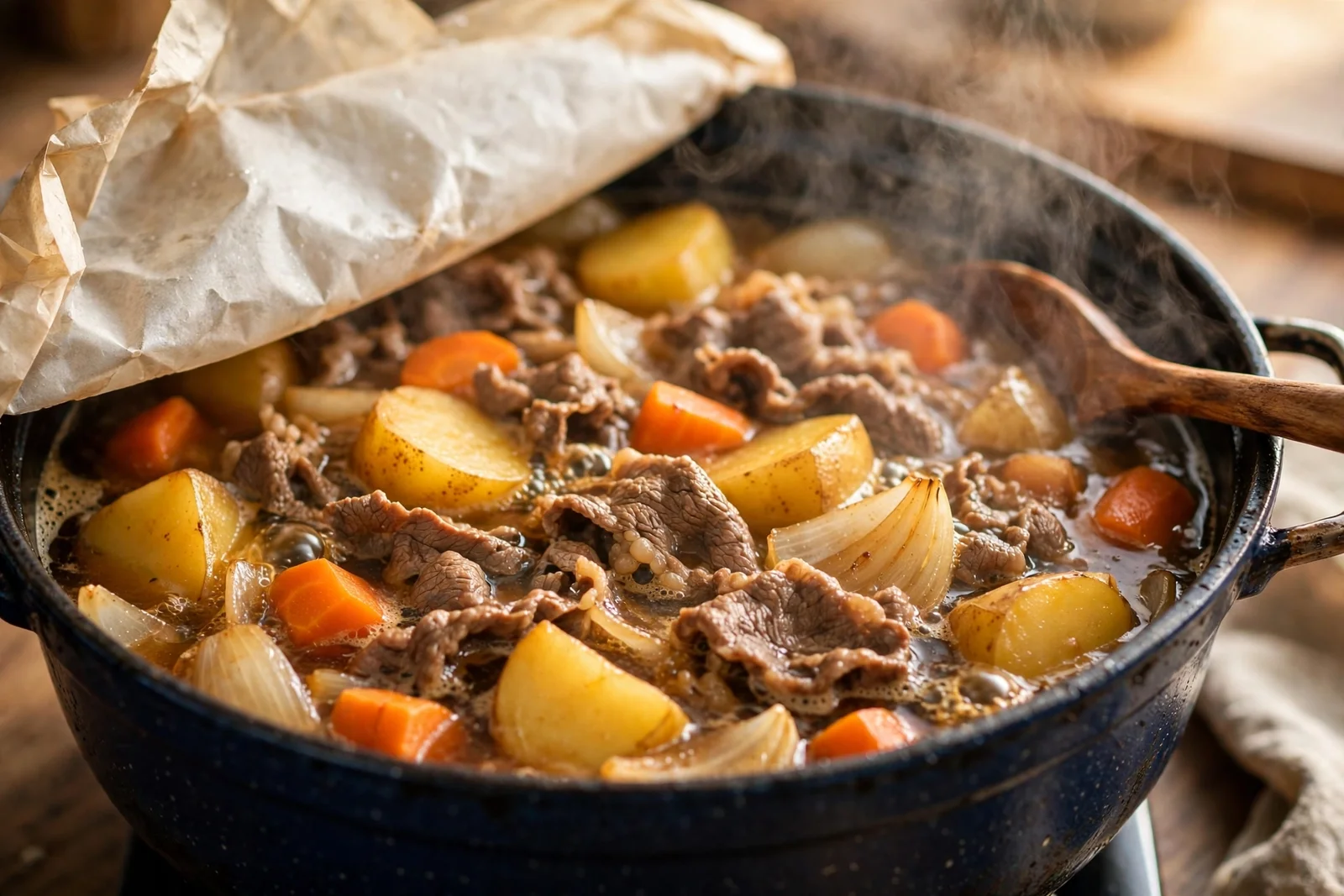
- Add the soy sauce and shirataki. Pour the soy sauce around the edge of the pot and tuck in the shirataki noodles. Replace the drop lid and simmer 8 minutes more, until a skewer slides easily through a potato.
- Add the beef last. Lay the beef slices over the top and push them gently into the broth. Simmer 5 to 8 minutes, just until the beef loses its pink color. Thin slices need no more than this — longer and they turn tough.
- Rest, then serve. Turn off the heat and let the pot sit, covered, for 20 to 30 minutes. Serve in bowls with plenty of broth, over or beside steamed rice, with snow peas scattered on top if you like.
Troubleshooting: Fix My Nikujaga
Even a simple simmer can go sideways. Pick what went wrong and get the practical fix:
HERB & LIME · KITCHEN HELP
Fix My Nikujaga
Choose what went wrong to see a practical next step.
Possible cause
What to try next
For next time
From Paul's kitchen. Results vary with potato size, beef thickness, and stove heat — adjust timing to your setup.
Quick reference (also works without JavaScript)
The potatoes fell apart into the broth
Cause: Sharp potato edges knock against each other in a hard boil and disintegrate; boiling too long or too vigorously breaks even well-cut chunks.
Try: Scoop out the pieces that are still intact and serve those; for the broken bits, mash them gently back into the broth — they thicken it nicely.
Prevent: Round off the sharp corners of each potato chunk (the mentori technique) and soak them in cold water 10 minutes before cooking; simmer gently with a drop lid and never at a rolling boil.
The beef turned tough and gray
Cause: Thin beef slices need only minutes in simmering broth; added early, they overcook into tough gray ribbons long before the potatoes are done.
Try: Lift the beef out now so it doesn't toughen further; slice any thick pieces thinner and return them only for the final 2-3 minutes.
Prevent: Add thinly sliced beef only during the last 5-8 minutes of simmering, pushing the slices into the broth so they cook through quickly without overcooking.
The potatoes taste bland inside
Cause: Potatoes absorb seasoning slowly; served straight off the heat, only their surfaces carry the broth's flavor.
Try: Turn the heat off and let the pot sit covered for 30 minutes — or refrigerate overnight and reheat gently; the potatoes will taste noticeably more seasoned.
Prevent: Rest the finished pot off the heat for 20-30 minutes before serving so the potatoes absorb the broth; nikujaga genuinely improves the next day.
The shirataki noodles smell fishy
Cause: Shirataki are packed in an alkaline liquid that carries a distinct odor; blanching washes it away before it can flavor the broth.
Try: Fish the noodles out, blanch them in fresh boiling water for 1-2 minutes, rinse, and add them back.
Prevent: Always blanch shirataki noodles 1-2 minutes in boiling water and rinse them before they go into the pot.
The potatoes stayed hard in the middle
Cause: Potato pieces cut too large, or soy sauce added before the potatoes softened, leaves chalky centers even after long simmering.
Try: Cut the remaining potatoes smaller and simmer until a skewer slides through easily before adding any soy sauce; next time, hold the soy until the potatoes are nearly tender.
Prevent: Add sugar, mirin, and sake first and simmer 10 minutes, then add the soy sauce — salty seasoning added too early firms potato surfaces and slows softening.
Variations and Ways to Serve It
- Pork instead of beef: Thinly sliced pork belly or shoulder is the other classic nikujaga meat — slightly richer, and traditional in western Japan. Same timing, same broth.
- Add green beans: A handful of trimmed green beans, added with the beef, gives the bowl some color and a fresh snap against all that softness.
- Make it a set meal: Nikujaga, rice, miso soup, and a small side like nasu dengaku is a complete Japanese home-style dinner.
- Next-day nikujaga: Refrigerate leftovers in their broth overnight and reheat gently. The potatoes will have absorbed so much flavor they’ll taste like a different, better dish.
More Japanese Recipes
- Agedashi Tofu — crisp fried tofu in savory dashi broth, another nimono-adjacent classic
- Classic Miso Soup — the bowl that belongs next to the rice
- Tamagoyaki: Japanese Rolled Omelet — sweet-savory layers that pair beautifully with simmered dishes
- Onigiri: Japanese Rice Balls Three Ways — packable rice for the nikujaga broth you’ll want to save
Recipe Card
Nikujaga (Japanese Simmered Meat and Potatoes)
Ingredients
Method
- Cut the potatoes into large chunks, shave off the sharp corners (the mentori technique), and soak in cold water for 10 minutes to rinse off surface starch; drain. Cut the onion into 8 wedges and the carrot into rolling wedges. Blanch the shirataki noodles in boiling water for 1 to 2 minutes, drain, and cut into shorter lengths.
- Heat the oil in a wide, heavy pot over medium heat. Add the drained potatoes, onion, and carrot and stir-fry 2 to 3 minutes, until the edges of the potatoes turn slightly translucent.
- Pour in the dashi and bring to a boil. Skim off any foam that rises.
- Stir in the sugar, mirin, and sake. Lay a drop lid (a parchment circle or small heatproof plate) directly on the food, lower the heat to the gentlest simmer, and cook 10 minutes.
- Pour the soy sauce around the edge of the pot and tuck in the shirataki noodles. Replace the drop lid and simmer 8 minutes more, until a skewer slides easily through a potato.
- Lay the beef slices over the top and push them gently into the broth. Simmer 5 to 8 minutes, just until the beef loses its pink color.
- Turn off the heat and let the pot sit, covered, 20 to 30 minutes. Serve in bowls with plenty of broth, over or beside steamed rice, with snow peas scattered on top if you like.
Notes
Prep time: 15 minutes · Cook time: 25 minutes · Total time: 40 minutes · Servings: 4