
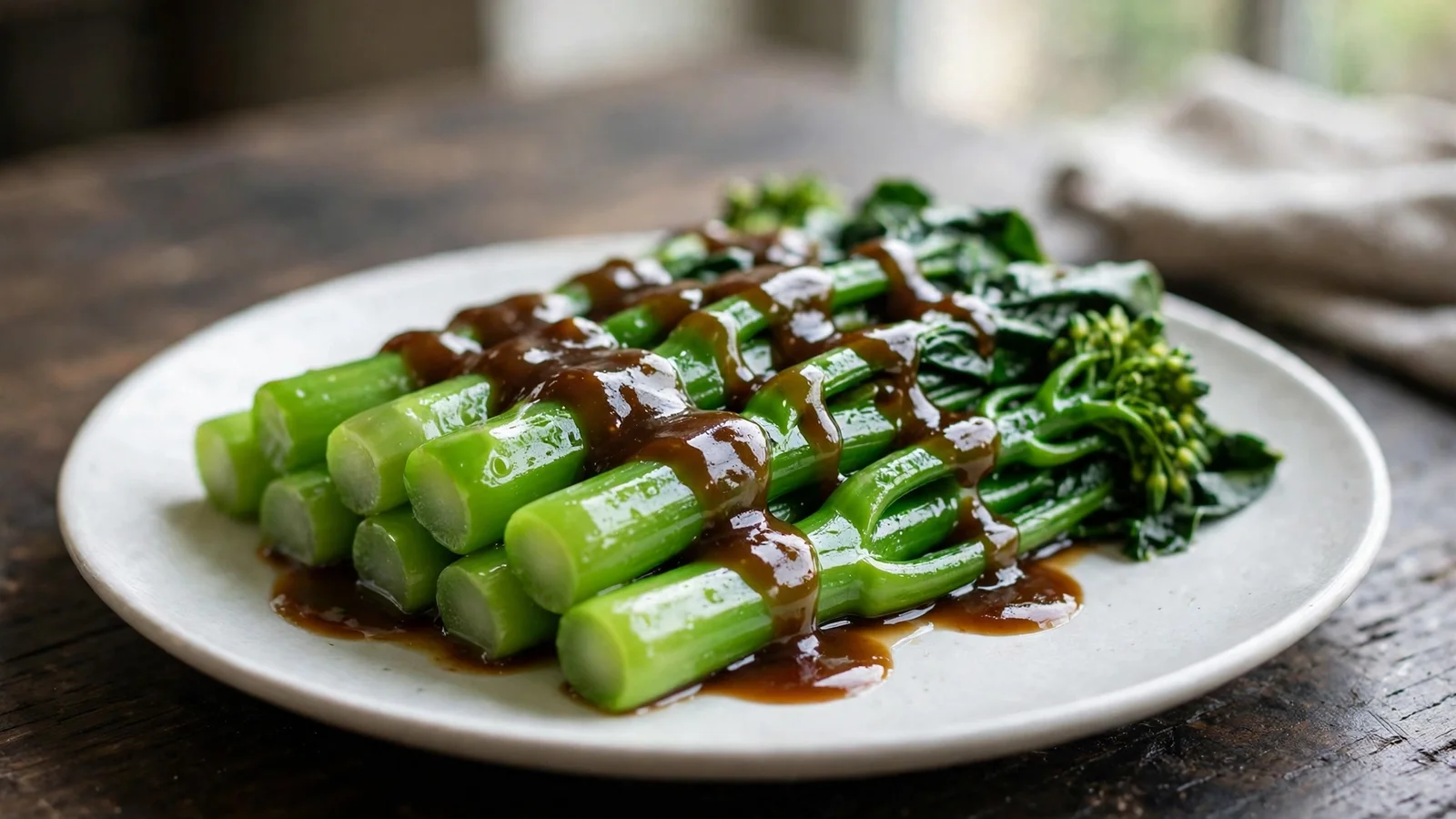
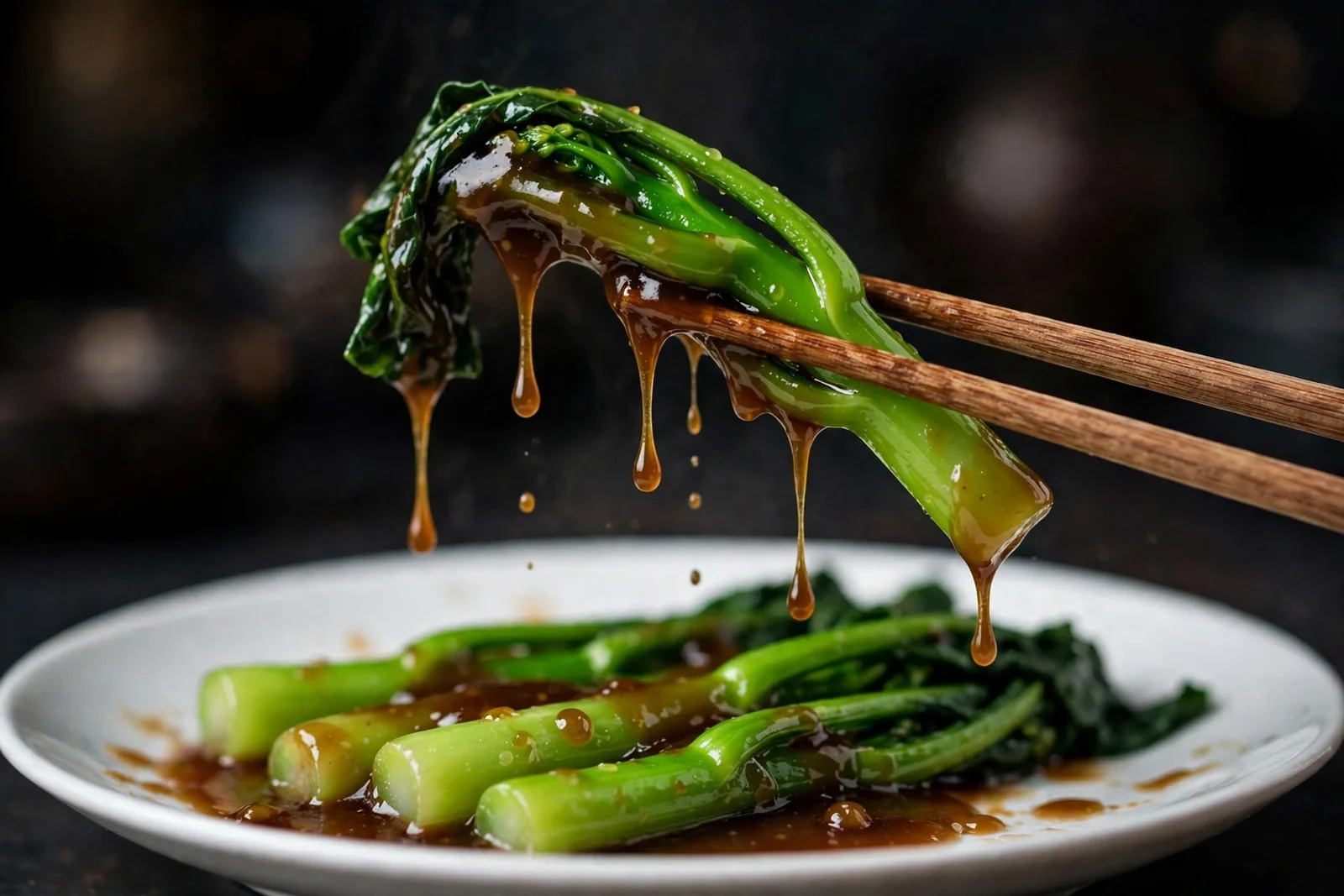
This is the plate of greens you see on almost every dim sum table: stalks of gai lan standing in a row, each one glossy with a spoonful of warm oyster sauce. It takes 15 minutes from a bare counter to the table, and almost nothing can go wrong once you know two things: when the stems are done, and how much sauce the greens can carry without pooling on the plate.
What is gai lan?
Gai lan is Chinese broccoli, a brassica grown for its thick stems, broad leaves, and small unopened flower buds. Raw, it tastes faintly bitter with a peppery edge, similar to broccoli rabe but milder. Cooked, the stems turn sweet and juicy while the leaves go silky. The buds are the sweetest part of the plant. You can read more about how to choose it at the market in our Chinese broccoli guide.
The classic restaurant treatment is blanching, which keeps the color bright and the stems crisp-tender, then dressing it with oyster sauce just before serving. Stir-frying works too, but blanching is the gentler route and the one that survives a distracted cook.
How to pick gai lan at the market
Buy bunches with stalks no thicker than your thumb, firm and heavy for their size. The buds should be tight and unopened; bunches with lots of open yellow flowers were picked late and taste more bitter. Snap the bottom of a stem. If it snaps cleanly, it is fresh and the stems will cook evenly. If it bends, the bunch is old and the thick stems will stay woody no matter how long you boil them.
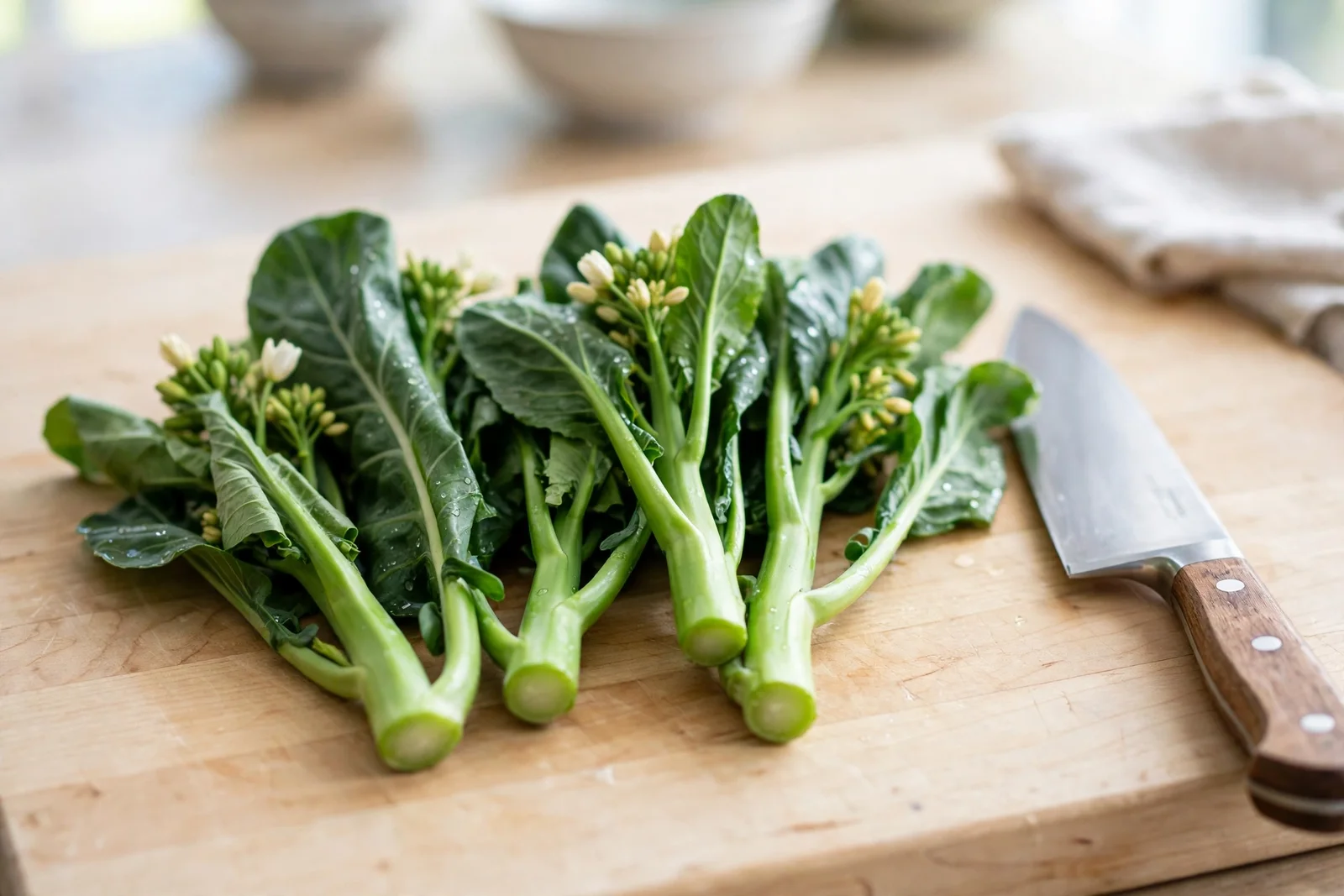
Trim the last inch off each stem, peel off any thick skin from the bottom two inches, and rinse the leaves well. Grit hides where the leaves meet the stem. If any stem is much thicker than the rest, split it lengthwise so everything finishes at the same time.
Blanching: the timing that decides everything
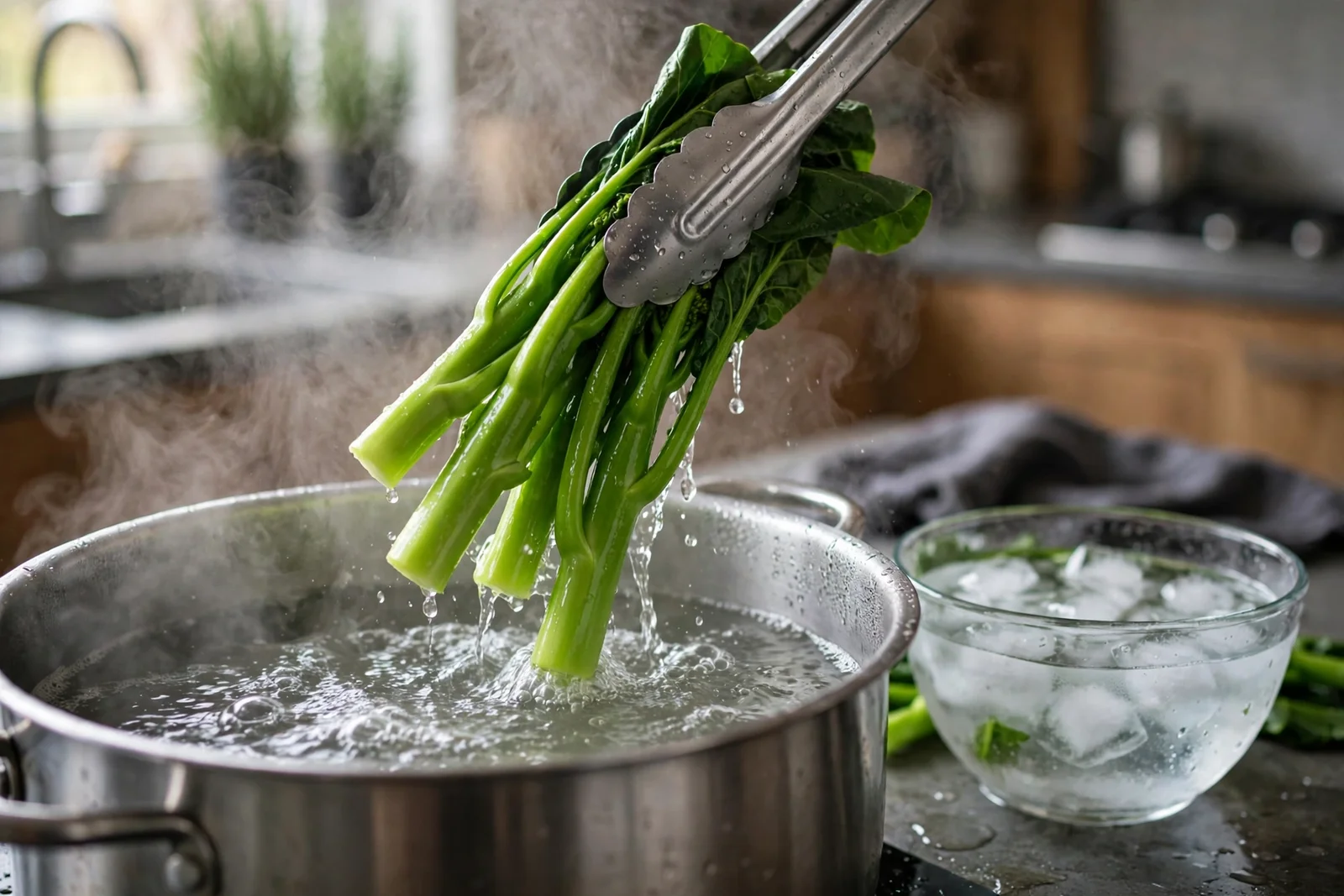
Bring a large pot of water to a full rolling boil and salt it until it tastes like the sea. Add a spoonful of neutral oil. The salt seasons the greens through, the oil leaves them glossy, and the large volume of water means the boil recovers fast when the cold greens go in. Our full walkthrough is in how to blanch Asian greens so they stay bright.
Lower the stems in first, leaves last, because stems need a full head start. Here is the timing that worked in my kitchen: thick stems get 90 seconds alone, then the leafy tops go in for another 60 to 90 seconds. A stalk is done when it bends under its own weight when you lift it with tongs but does not flop flat. Flopping means it is over. Pull the greens straight into a bowl of ice water for a minute, then lift them out and let them drain. That ice bath is what locks in the green color instead of letting the stalks fade to olive.
The warm garlic oyster sauce
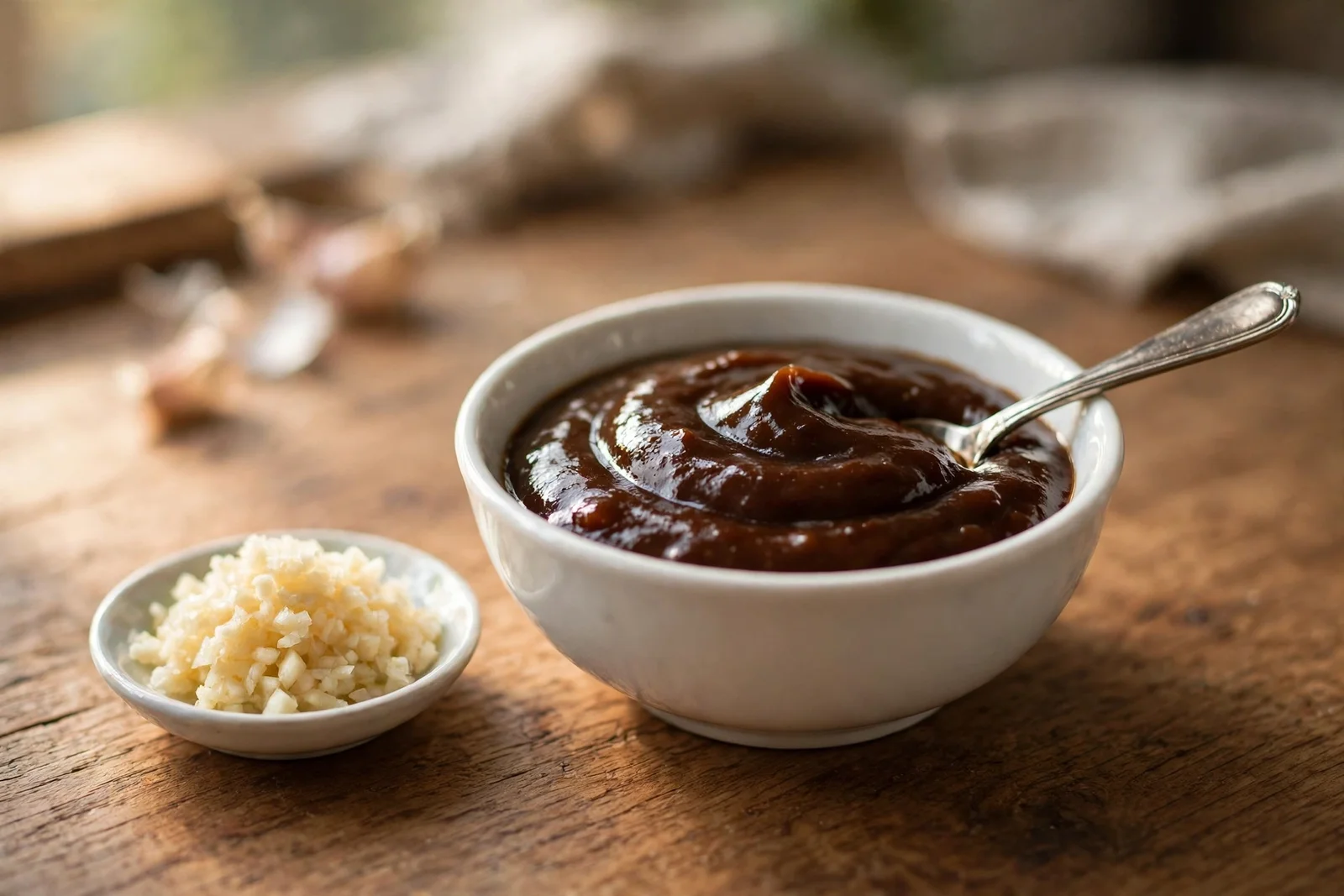
Straight-from-the-bottle oyster sauce is too thick to drizzle; it sits in blobs on top of the greens and slides off in clumps. Warm it in a small pan with a spoonful of water, a clove of minced garlic, a splash of soy sauce, and a pinch of sugar. Two tablespoons of oyster sauce plus one tablespoon of warm water coats one pound of gai lan in a thin glaze with nothing pooling on the plate. That 2-to-1 ratio is the number to remember. The sauce should look pourable, like thin caramel, not like paste. If you want to learn what separates a good bottle from a mediocre one, read our oyster sauce guide.
Drain the greens as dry as you can, shaking them in a colander and patting with a towel. Water left on the stalks thins the glaze and sends it running to the edge of the plate. Arrange the stalks in a row on a warm platter, spoon the sauce over the middle, and serve right away. The whole dish cools fast once the water bath is gone.
Serving and variations
This feeds four as a side next to steamed rice, and it fits next to anything rich, from char siu to clay pot rice, because the bitterness cuts through fat. Leftovers keep one day in the fridge; eat them cold straight from the container rather than reheating, since a second round of heat turns the stalks mushy.
For a vegetarian version, swap in mushroom vegetarian stir-fry sauce one-to-one. Our vegetarian oyster sauce page explains the difference. You can also trade the oyster sauce for the same quantity of garlic-and-sesame drizzle, but then the dish stops being this dish.
Troubleshooting: Fix My Gai Lan
Five things that can go wrong with this dish, and each one has a plain cause. The Troubleshooter below walks through the fix for each, one step at a time.
HERB & LIME · KITCHEN HELP
Fix My Gai Lan
Choose what went wrong to see a practical next step.
Possible cause
What to try next
For next time
From Paul's kitchen. Results vary with stalk thickness, pot size, and stove heat, adjust timing to your setup.
Quick reference (also works without JavaScript)
The greens turned dull olive instead of bright green
Cause: The blanching water was not at a full rolling boil, the pot was overcrowded, or the greens cooked too long before shocking.
Try: Serve them anyway if they are cooked through, the color will not recover. Next time use a big pot of rapidly boiling salted water and move the greens to an ice bath right away.
Prevent: Salt the water until it tastes like the sea, add a spoonful of neutral oil, and never let the boil stop for more than a few seconds after the greens go in.
The stems are tough while the leaves are overcooked
Cause: Thick stems take longer than the leaves, so everything blanched together means one part is always wrong.
Try: Fish out the tough pieces and give them another 60 seconds in the boiling water on their own, then shock them separately.
Prevent: Split stalks thicker than a thumb lengthwise, and lower the stems into the water 60 to 90 seconds before the leafy tops go in.
The stalks are limp and mushy
Cause: They blanched too long or skipped the ice bath, so the residual heat kept cooking them.
Try: Serve them cold as a salad-style side, they are still fine to eat, but do not reheat them.
Prevent: Pull the stalks at crisp-tender, when they bend under their own weight but do not flop flat, and shock them in ice water for a full minute.
The sauce slides off and pools on the plate
Cause: Water left on the stalks thinned the sauce, or straight-from-the-bottle oyster sauce was too thick to cling.
Try: Tilt the plate and spoon off the pooled liquid, then drizzle a little fresh sauce over the top right before serving.
Prevent: Shake the greens dry in a colander and pat them with a towel, then warm the oyster sauce with a spoonful of water so it pours like thin caramel.
The dish tastes too bitter
Cause: The bunch was picked late, with thick woody stems or lots of open yellow flowers, which taste more bitter.
Try: Blanching softens bitterness somewhat, but for a rescue, serve the greens with extra sauce and pair them with something rich like roast pork.
Prevent: Buy young bunches with tight unopened buds and firm stems that snap cleanly at the bottom, and trim off any woody ends before cooking.
Gai Lan with Oyster Sauce
Ingredients
Method
- Trim the gai lan. Cut the last inch off each stem, peel the thick skin from the bottom two inches of any thick stem, and rinse the leaves well where grit collects. Split any stalk thicker than a thumb lengthwise.
- Set up the blanching station. Bring a large pot of water to a full rolling boil and salt it until it tastes like the sea. Stir in the neutral oil. Fill a large bowl with ice water and set it next to the stove.
- Blanch stems first. Lower the stems into the boiling water, leaves last. Cook 90 seconds for the stems alone, then add the leafy tops and cook 60 to 90 seconds more, until the stalks bend under their own weight when lifted with tongs but do not flop flat.
- Shock and drain. Lift the greens straight into the ice water for 1 minute. Drain in a colander, shake them dry, and pat with a towel. Arrange the stalks in a row on a warm platter.
- Make the sauce. In a small pan over medium heat, stir the minced garlic in a drop of oil for 20 seconds until fragrant. Add the oyster sauce, warm water, soy sauce, and sugar and stir until it looks pourable, like thin caramel, about 1 minute. Add a splash more warm water if it is too thick.
- Serve right away. Spoon the warm sauce over the middle of the stalks and serve immediately, while the greens are still bright and crisp-tender.
Notes
More Chinese recipes
From the garden
Gai lan is one of the Asian greens in our seasonal planting calendar, which slots Chinese broccoli as a mid-August sowing for fall harvests in USDA Zones 5 through 9. That is why the best bunches show up at markets in fall: the cool weather keeps the stems sweet instead of pushing the plants to flower.
1 thought on “Gai Lan with Oyster Sauce”