
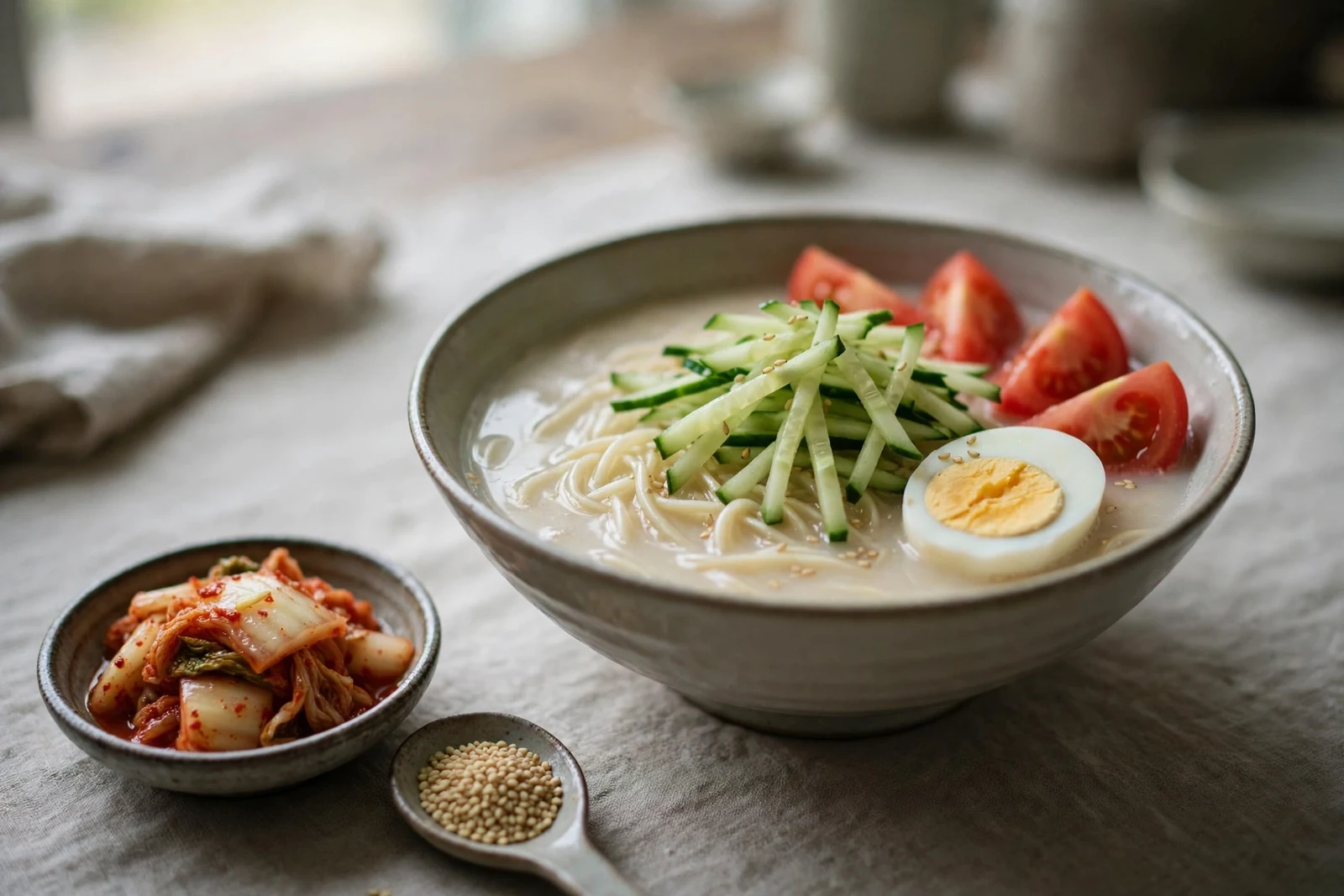
Kongguksu is the bowl I reach for on the hottest days, when the stove has already done enough and dinner still needs to happen. It is cold, pale, and quiet: thin wheat noodles under a creamy soy milk broth, topped with cucumber, tomato, and a halved egg. There is no spice heat to it, no rich stock, just a nutty, mild soup served ice cold. The first spoonful tastes plain in the best way, and then the salt wakes it up.
The work is mostly waiting. The soybeans soak overnight, then cook, then blend into milk. The noodles take three minutes. Everything after that is assembly, and the bowl goes straight to the table while it is still cold. If you have never made soy milk from scratch, this is a good place to start, because the whole dish forgives small mistakes and the broth tells you plainly when it needs more water or more salt.

What is kongguksu?
Kongguksu is a Korean cold noodle soup made from soybeans blended into a fresh soy milk broth, poured over cooked wheat noodles and served chilled. The name breaks down simply: kong means soybean, guksu means noodles. It is a summer dish in Korea, the kind of food people eat when the heat makes a hot soup unthinkable, and it shows up at home tables and noodle shops all through the warm months.
The broth is not the sweetened soy milk from a carton. It is savory, unsweetened, and made the same day from dried soybeans that are soaked, cooked, and blended with water, pine nuts, and sesame seeds. The flavor is mild and nutty, closer to fresh tofu than to anything sweet, and the salt goes in at the table, a little per bowl, so each person seasons their own. The noodles are somyeon, thin wheat noodles that cook in about three minutes, rinsed cold until they stop sticking together.
If you like cold noodle dishes, bibim guksu is the spicy cousin of this bowl, tossed in a gochujang sauce instead of a mild broth. Kongguksu is the calm one of the pair, and on a hot evening it is the one I want.
The broth: soy milk from scratch
The broth starts with 1 cup of dried soybeans, soaked in plenty of cold water for 6 to 8 hours or overnight. They nearly double in size, so use a big bowl. One cup of dried beans gives about 2 1/4 cups soaked, and that is the amount the recipe is built around. Drain them, rinse once, and pick out any beans that still look shriveled or dark.
Cook the soaked beans in a pot with 2 cups of water. Bring it to a boil over medium-high heat, then keep it at a steady boil for 15 minutes, uncovered, and simmer 5 more minutes over low heat with the lid on. Watch the pot at the start, because the water foams up and can boil over. A bean is done when you can squash it easily between your fingers and it tastes tender with just a little bite left. Let the beans cool about 10 minutes, then rub them in cold water to slip off the skins. The skins float, so pour them off and repeat until most are gone. Skins left in the blender are the main reason a broth turns gritty.
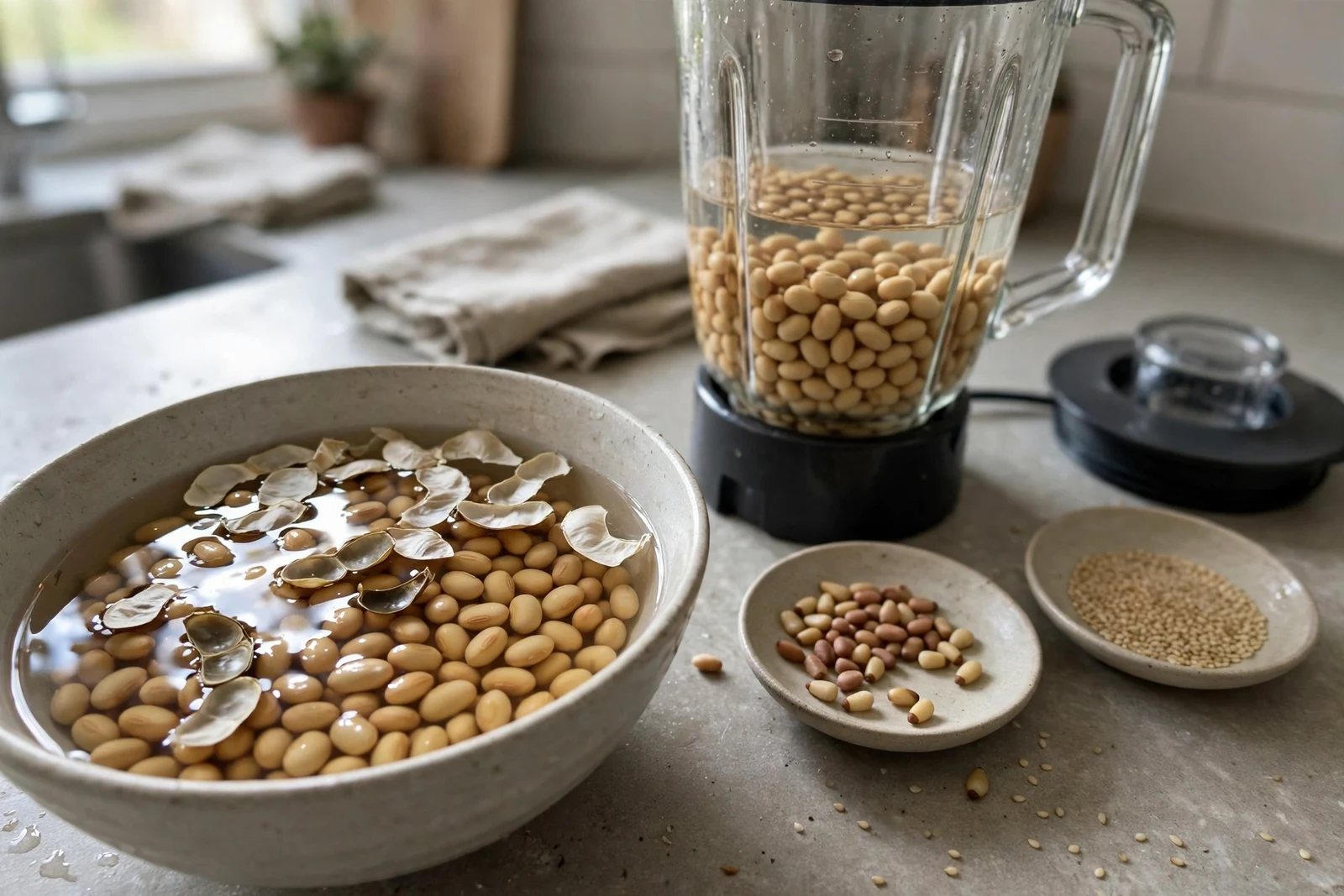
Blend the beans in two batches so the blender can do its work. Each batch gets half the beans, about 1/4 cup of the cooking water, 1 1/2 cups of cold water, 1 tablespoon of pine nuts, and 1 tablespoon of toasted sesame seeds. Blend on high for 1 to 2 minutes per batch, until the milk looks smooth and pours like thin cream. The ratio that works in my kitchen is 1 cup of dried beans to 3 cups of cold water in the blender, plus the small splash of cooking water. If the milk comes out thick like porridge, whisk in cold water a quarter cup at a time until it pours easily off a spoon.
Strain the milk if you want it silky. Pour it through a fine mesh strainer, pressing with a spoon to push the liquid through, and throw the solids away. I strain it every time now, because the difference between strained and unstrained is the difference between a smooth soup and a grainy one. Chill the milk in the fridge for at least 1 hour, or stir in a handful of ice cubes if you are serving right away. The broth keeps 3 to 4 days in the fridge, and it settles as it sits, so stir it well before you pour.
Do not salt the broth in advance. Salt goes in at the table, about 1/4 teaspoon of fine sea salt per 2 cups of milk, stirred in well. A bowl that tastes flat almost always needs salt, not more beans. Add it a pinch at a time and taste as you go.
The noodles: cook, rinse, squeeze
Somyeon cooks fast, so do not walk away from the pot. Bring a large pot of water to a boil, add 8 ounces of noodles, stir once so they do not stick, and cook 2 to 3 minutes, until they are tender with a little chew left. Drain them right away and rinse under cold running water, rubbing the noodles gently between your palms in the strainer until they feel cold and no longer slippery. That rinse is what keeps them from clumping into one solid mass in the bowl.
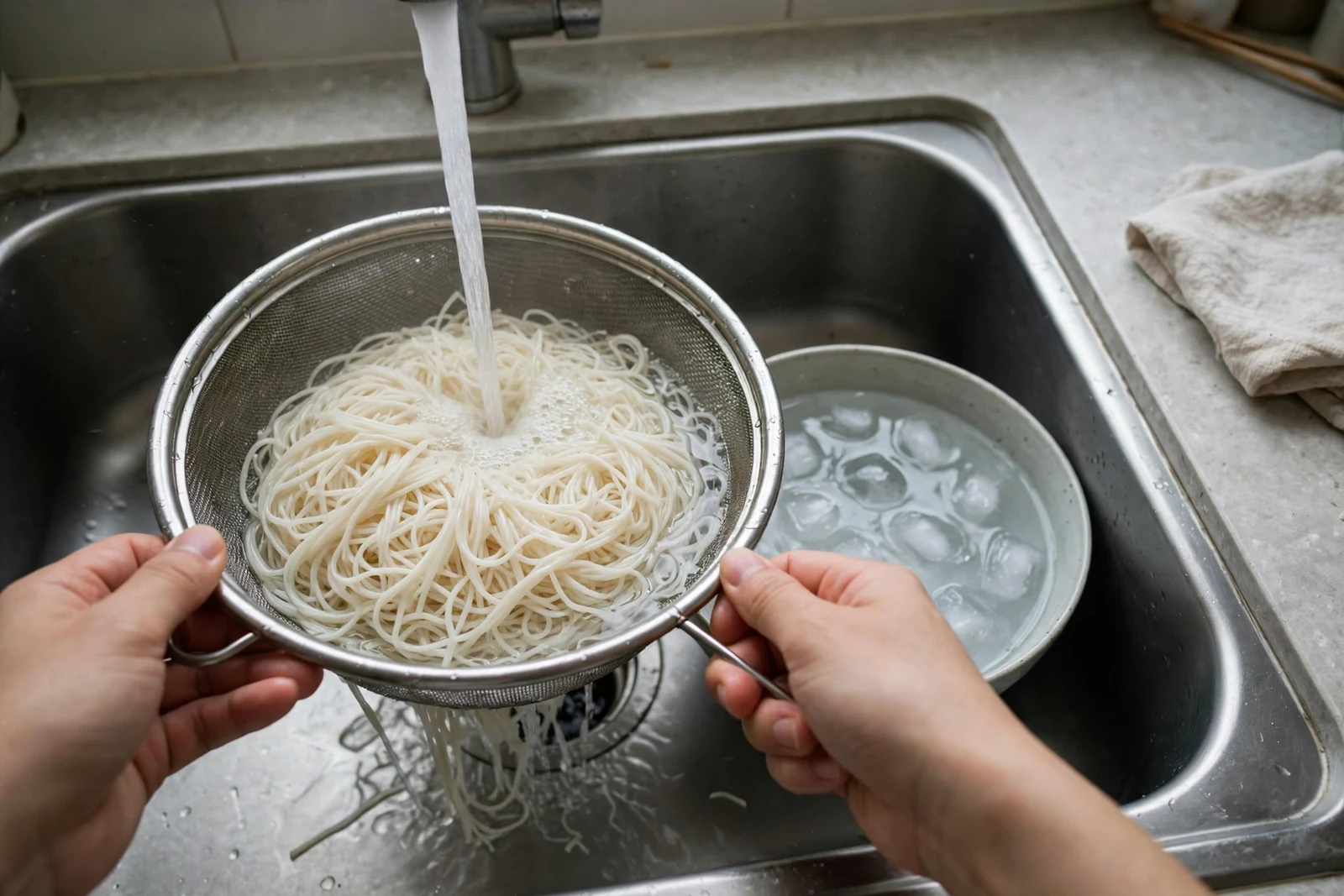
Divide the noodles into 4 bowls and squeeze each portion gently to get the water out before it goes in the bowl. Wet noodles water down the broth, and a watery bowl is the most common complaint with this dish. A loose mound in each bowl, not a packed ball, lets the broth reach all the noodles.
Tips and variations
Serve kongguksu with something salty and sharp on the side. Kimchi is the usual partner, and kimchi fried rice makes a filling plate next to it if the noodles alone feel light. Oi muchim, the Korean cucumber salad, is another good match, and its dressing adds the vinegar tang this mild soup does not have.
A few swaps work well. Chickpeas can stand in for the soybeans if that is what you have, though the broth comes out milder, and canned chickpeas skip the soaking entirely. Soybean powder from a Korean grocer is the fast route: whisk 1/2 cup of powder into 1 cup of cold milk with a pinch of salt and pour it over the noodles. Walnuts or almonds can replace the pine nuts, and a teaspoon of honey per bowl suits people who like the broth a little sweet. Toast the nuts and sesame seeds in a dry pan for 2 to 3 minutes first if you want a deeper nutty flavor.
Leftover soy milk keeps 3 to 4 days in the fridge in a covered jar. Cooked noodles do not keep well, so only cook what you will eat. The broth also works poured over cooked buckwheat noodles if you run out of somyeon, though the bowl gets chewier and heartier.
Troubleshooting: Fix My Kongguksu
Broth that turns gritty, too thick, or too thin, beans that taste bitter, or noodles that clump together. Each failure has a cause and a fix. Tell the tool what went wrong:
HERB & LIME · KITCHEN HELP
Fix My Kongguksu
Choose what went wrong to see a practical next step.
Possible cause
What to try next
For next time
From Paul's kitchen. Results vary with soybean size, blender power, and stove heat, adjust timing to your setup.
Quick reference (also works without JavaScript)
The broth feels gritty or coarse
Cause: Bean skins and coarse solids stayed in the milk because the beans were blended with their skins on and the milk was not strained.
Try: Pour the milk through a fine mesh strainer, pressing with a spoon to push the liquid through, and serve only the strained milk.
Prevent: Rub the cooked beans in cold water to slip the skins off and pour them away before blending, then blend on high for a full 1 to 2 minutes per batch.
The broth is too thick, like porridge
Cause: Too little water went into the blender for the amount of beans, so the milk came out paste-like instead of pourable.
Try: Whisk in cold water a quarter cup at a time until the milk pours easily off a spoon, then chill it again before serving.
Prevent: Use about 3 cups of cold water in the blender for each cup of dried beans, plus the small splash of cooking water, and add more only after blending.
The broth is too thin and watery
Cause: Too much water went into the blender, or the noodles carried rinse water into the bowl and diluted the milk.
Try: Blend a small extra batch of cooked beans with just enough water to move the blender, then stir it into the thin milk.
Prevent: Measure the blending water instead of pouring freely, and squeeze the rinsed noodles gently to remove extra water before they go into the bowl.
The broth tastes bitter or beany
Cause: The beans were overcooked, or old beans and leftover skins gave the milk a harsh edge.
Try: Season the bowl at the table with a pinch of fine sea salt, about 1/4 teaspoon per 2 cups of milk, and a teaspoon of honey if you like it a little sweet.
Prevent: Cook the beans only until tender with a slight bite left, about 15 minutes at a boil plus 5 minutes simmered, and remove as many skins as you can.
The noodles clumped together or turned mushy
Cause: The noodles overcooked in the pot or sat hot after draining, so the starch glued them into one mass.
Try: Rinse the noodles again under cold running water, rubbing them gently between your palms until they feel cold and not slippery, then divide them into bowls right away.
Prevent: Cook somyeon only 2 to 3 minutes until tender with a little chew left, drain at once, and shock in cold water to stop the cooking.
Kongguksu: Korean Cold Soybean Noodles
Ingredients
Method
- Soak the beans: rinse 1 cup of dried soybeans and cover with plenty of cold water in a large bowl. Soak 6 to 8 hours or overnight. Drain and rinse.
- Cook the beans: put the soaked beans in a pot with 2 cups of water. Bring to a boil over medium-high heat and cook 15 minutes, uncovered, watching so the pot does not boil over. Cover, lower the heat, and simmer 5 more minutes. A bean is done when it squashes easily between your fingers. Let the beans cool 10 minutes.
- Remove the skins: put the beans in a bowl of cold water and rub them with your hands to slip the skins off. Pour off the skins that float, add fresh water, and repeat until most skins are gone. Drain.
- Blend the milk: blend the beans in two batches. Each batch gets half the beans, 1/4 cup of the bean cooking water, 1 1/2 cups of cold water, 1 tablespoon of pine nuts, and 1 tablespoon of toasted sesame seeds. Blend on high 1 to 2 minutes per batch, until smooth and creamy.
- Strain and chill: pour the milk through a fine mesh strainer, pressing with a spoon, and discard the solids. Refrigerate at least 1 hour, or stir in ice cubes to serve right away. Do not salt it yet.
- Cook the noodles: boil 8 ounces of somyeon for 2 to 3 minutes, until tender with a little chew. Drain, rinse under cold water, and rub gently between your palms until cold and not slippery. Divide into 4 bowls and squeeze out the extra water.
- Assemble: stir the chilled milk well, then pour about 1 cup over each bowl of noodles. Top with cucumber, tomato, and half an egg. Add a pinch of salt to each bowl, about 1/4 teaspoon, and stir it in. Sprinkle with sesame seeds and add ice cubes if you like. Serve right away.
Notes
More Korean recipes
Bibim Guksu is the spicy cold noodle to try next; Kimchi Fried Rice is a quick pan dinner; Japchae is glass noodles with vegetables; and Tteokbokki is chewy rice cakes in a spicy sauce.
From Paul’s kitchen.