
In Taiwan’s night markets, vendors sell yan su ji by the bag: bite-size chicken fried to a rough golden crunch, shaken with salt, pepper, and five-spice, then tossed with fried basil leaves that turn crisp and almost peppery in the hot oil. This is my home version of it, built around the two things that make or break the dish: coarse sweet potato starch for the coating, and a two-stage fry.
What is Taiwanese popcorn chicken?
Yan su ji (salt crispy chicken) is Taiwan’s most loved fried chicken snack, sold at night market stalls across the island. Small pieces of chicken thigh are marinated in soy sauce, garlic, five-spice, and white pepper, dredged in sweet potato starch, and fried until the crust turns rough and deep gold. The chicken is seasoned while still hot, so no dipping sauce is needed. The fried Thai basil scattered over the top is traditional, and it fries crisp in seconds.
Why this recipe works
Three decisions carry the whole dish. First, chicken thighs instead of breast. These pieces are small and get fried twice, so breast meat dries out fast while thighs stay juicy. Second, coarse sweet potato starch for the coating. My breakdown of cornstarch vs potato starch for frying shows why cornstarch gives a smoother, paler crust here, while sweet potato starch fries up rough and craggy. Third, the double fry: a first fry at 170°C (340°F) cooks the chicken through, and a 60 to 90-second second fry at 190°C (375°F) drives off surface moisture and sets the crunch. The seasoning salt goes on while the chicken is hot enough to hold it.

How to make Taiwanese popcorn chicken
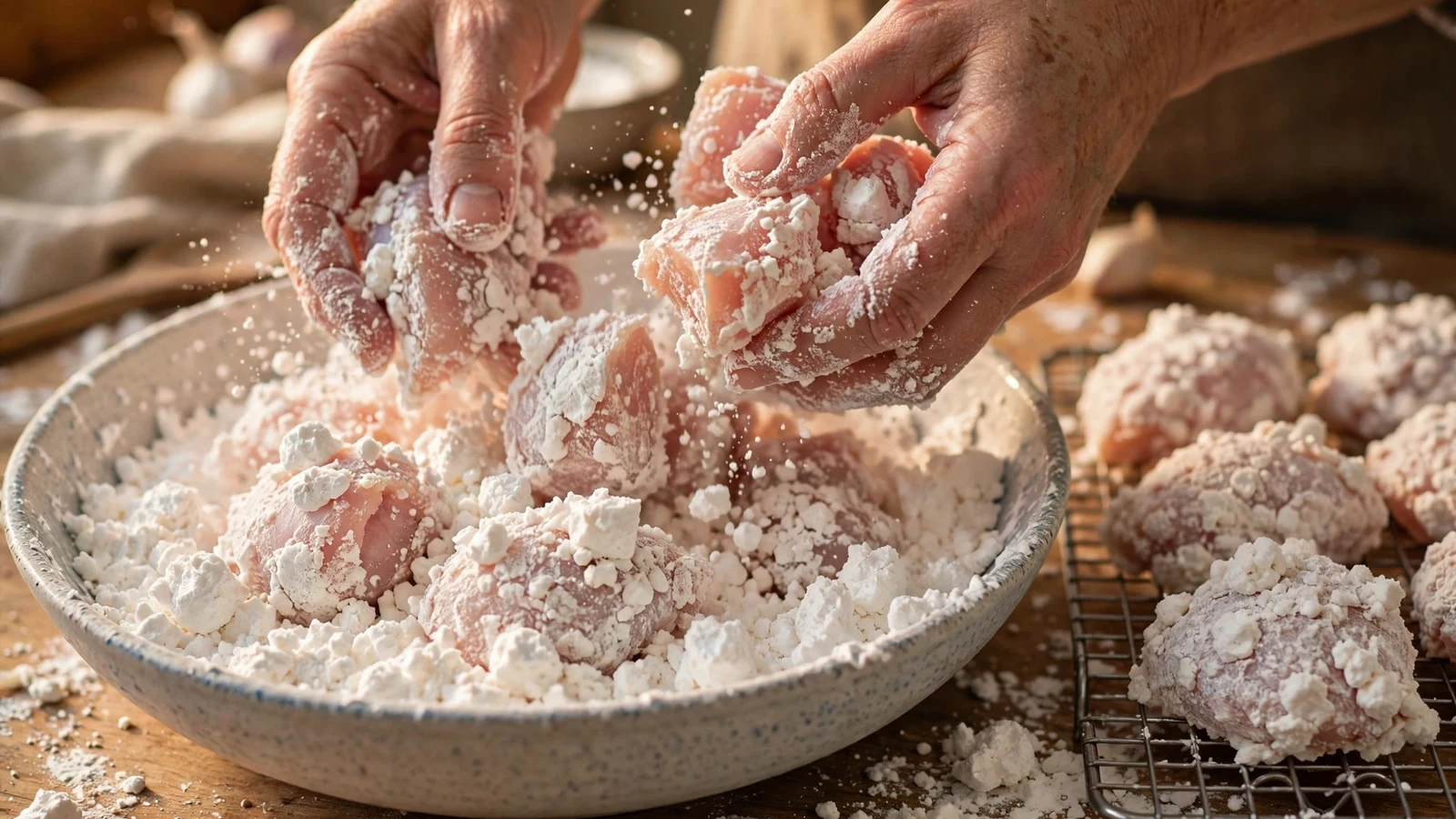
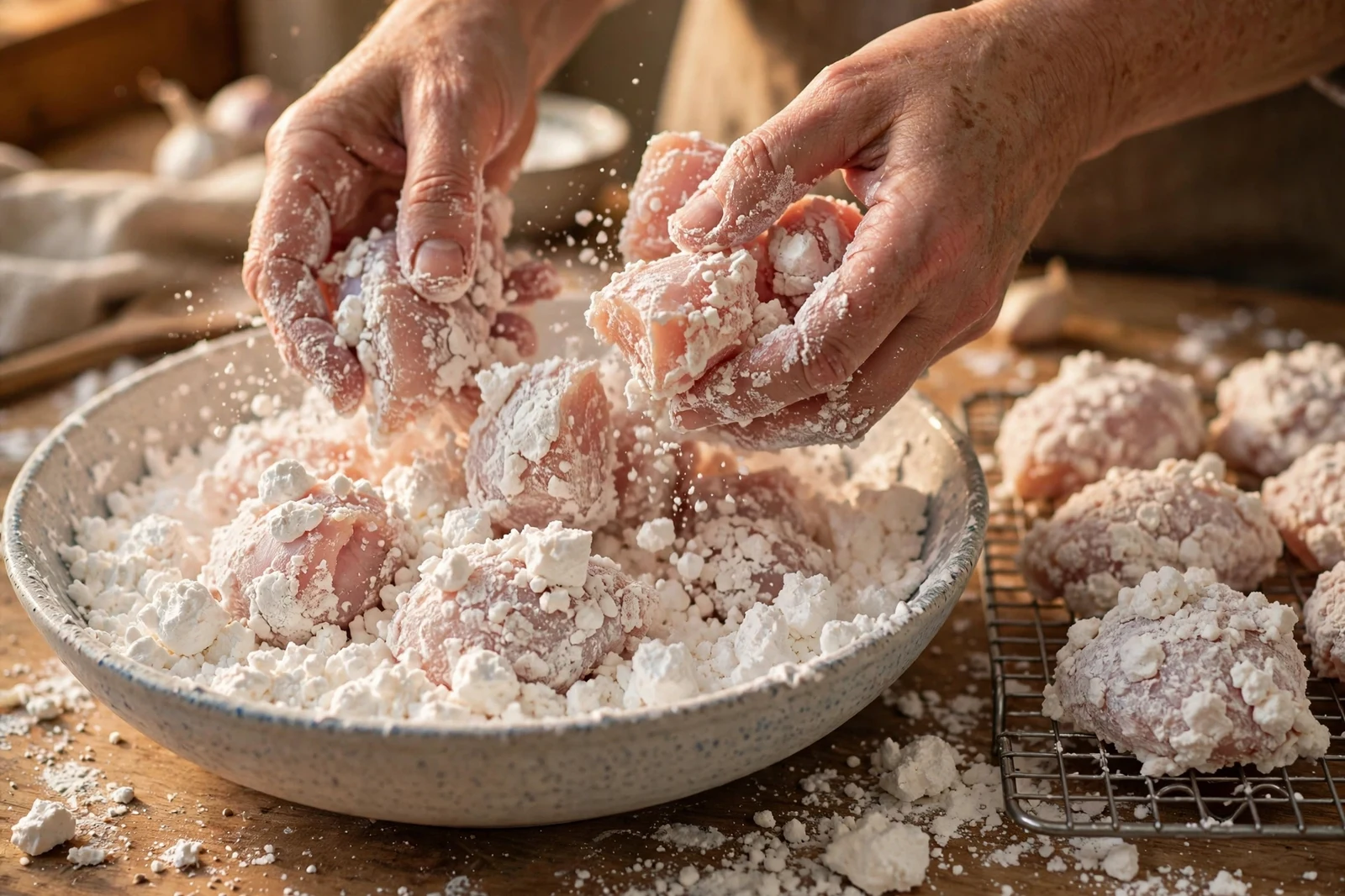
Marinate the chicken at least 1 hour, and overnight if you can. The small pieces pick up seasoning fast, and an overnight rest gives you noticeably deeper flavor. Then coat each piece in sweet potato starch, press it on so it clings, and let the coated chicken rest on a rack for 10 minutes. The starch will turn from chalky white to slightly translucent where it bonded with the marinade, and that is the sign it will stay on in the fryer instead of sliding off.
Fry in small batches so the oil temperature holds. The first fry at 170°C takes 3 to 4 minutes per batch and the chicken comes out pale gold. Let the oil recover between batches, then run everything through a second fry at 190°C for 60 to 90 seconds until deeply golden. Drain on a wire rack, not paper towels, so the crust stays crisp. Flash-fry the basil last, just 5 to 10 seconds until it goes translucent and crisp, and make sure the leaves are completely dry first or they will pop and spatter. Season the chicken while it is still hot and serve right away.

Troubleshooting: Fix My Taiwanese Popcorn Chicken
If a batch does not come out the way you wanted, start here. Most problems trace back to oil temperature, the starch rest, or wet basil, and all three are easy to fix on the next round.
HERB & LIME · KITCHEN HELP
Fix My Taiwanese Popcorn Chicken
Choose what went wrong to see a practical next step.
Possible cause
What to try next
For next time
From Paul's kitchen. Results vary with chicken size, oil, and stove heat, adjust timing to your setup.
Quick reference (also works without JavaScript)
The coating slid off in the oil
Cause: The starch went on dry and straight into the fryer before it had bonded to the chicken.
Try: On your next batch, rest the coated pieces on a wire rack for 10 to 15 minutes first, the starch turns slightly translucent where it bonds, and that is the sign it will stay on.
Prevent: Press the starch on firmly, shake off the loose excess, and never skip the rest.
The crust turned out soggy, not crisp
Cause: The oil was below about 170°C, or too many pieces went in at once and the temperature crashed.
Try: Run the finished chicken through a second fry at 190°C for 60 to 90 seconds to drive off the surface moisture.
Prevent: Fry in small batches, let the oil recover to 170°C between them, and always do the hot second fry.
The chicken came out dry
Cause: Small pieces fried too long dry out fast, especially with breast meat.
Try: Next time cut the pieces to 1 to 1 1/2 inches, use chicken thighs, and keep the second fry to 60 to 90 seconds.
Prevent: Use boneless thighs rather than breast, and pull the chicken as soon as the second fry turns it deep gold.
The chicken tastes greasy
Cause: Oil that is too cool lets the crust soak it up instead of crisping, and paper towels steam the crust after frying.
Try: Drain every batch on a wire rack so air circulates, and re-crisp cooled pieces with a quick hot second fry.
Prevent: Keep the oil at 170°C for the first fry and drain on a rack, never on paper towels.
The basil popped and burned
Cause: Wet basil leaves hit 190°C oil, which makes them spatter violently and burn before they crisp.
Try: Pat the basil completely dry and fry it for just 5 to 10 seconds until it goes translucent and crisp, then lift it out immediately.
Prevent: Wash the basil first, pat it thoroughly dry, and fry it last, right before serving.
Taiwanese Popcorn Chicken (Yan Su Ji)
Ingredients
Method
- Marinate the chicken. Put the chicken pieces in a bowl and add the soy sauce, Shaoxing wine, sugar, garlic, five-spice powder, white pepper, salt, and 1 tablespoon of sweet potato starch. Toss until every piece is coated. Cover and refrigerate at least 1 hour, or overnight for deeper flavor.
- Mix the seasoning salt. Stir the fine salt, white pepper, five-spice powder, and sugar together in a small bowl and set aside.
- Coat and rest. Spread the remaining sweet potato starch in a shallow bowl. Press each piece of chicken into the starch, turning to build a thick, craggy coating. Set the coated pieces on a wire rack and rest 10 minutes — the starch will look slightly damp and translucent where it bonded. That is the sign it will stay on in the fryer.
- Heat the oil. Pour 2 to 3 inches of oil into a wok or heavy pot and heat to 170°C (340°F). A coated piece should sizzle hard on contact without browning instantly.
- First fry. Fry in small batches for 3 to 4 minutes, until pale gold and cooked through. Lift out to a wire rack and let the oil come back up to 170°C between batches.
- Second fry. Raise the heat to 190°C (375°F) and fry all the chicken again for 60 to 90 seconds, until deeply golden. Drain on the wire rack, not paper towels, so the crust stays crisp.
- Flash-fry the basil. Fry the dry basil leaves for 5 to 10 seconds, until crisp and translucent. Lift out immediately — wet leaves will pop and spatter.
- Season and serve. While the chicken is still hot, sprinkle over the seasoning salt and toss. Scatter the basil on top and serve right away.
Notes
Variations
For an air fryer version, spray the coated pieces lightly with oil and cook at 200°C (400°F) for 8 to 10 minutes, shaking the basket halfway. The crust will not match the deep-fried version, but it still crisps. For more heat, add half a teaspoon of chili powder to the seasoning salt. If you cannot find Thai basil, sweet basil works, though the flavor is milder; my Thai basil vs Italian basil comparison explains the difference. The recipe is gluten-free as long as you use tamari instead of soy sauce.
More Taiwanese recipes
If you like the night market style, try Three Cup Chicken (San Bei Ji), the basil-heavy Taiwanese classic, or a bowl of Taiwanese Beef Noodle Soup for something heartier. For the same salt-and-pepper treatment on a meatless base, Salt and Pepper Tofu is the natural follow-up.
From Paul’s kitchen.
1 thought on “Taiwanese Popcorn Chicken (Yan Su Ji)”