
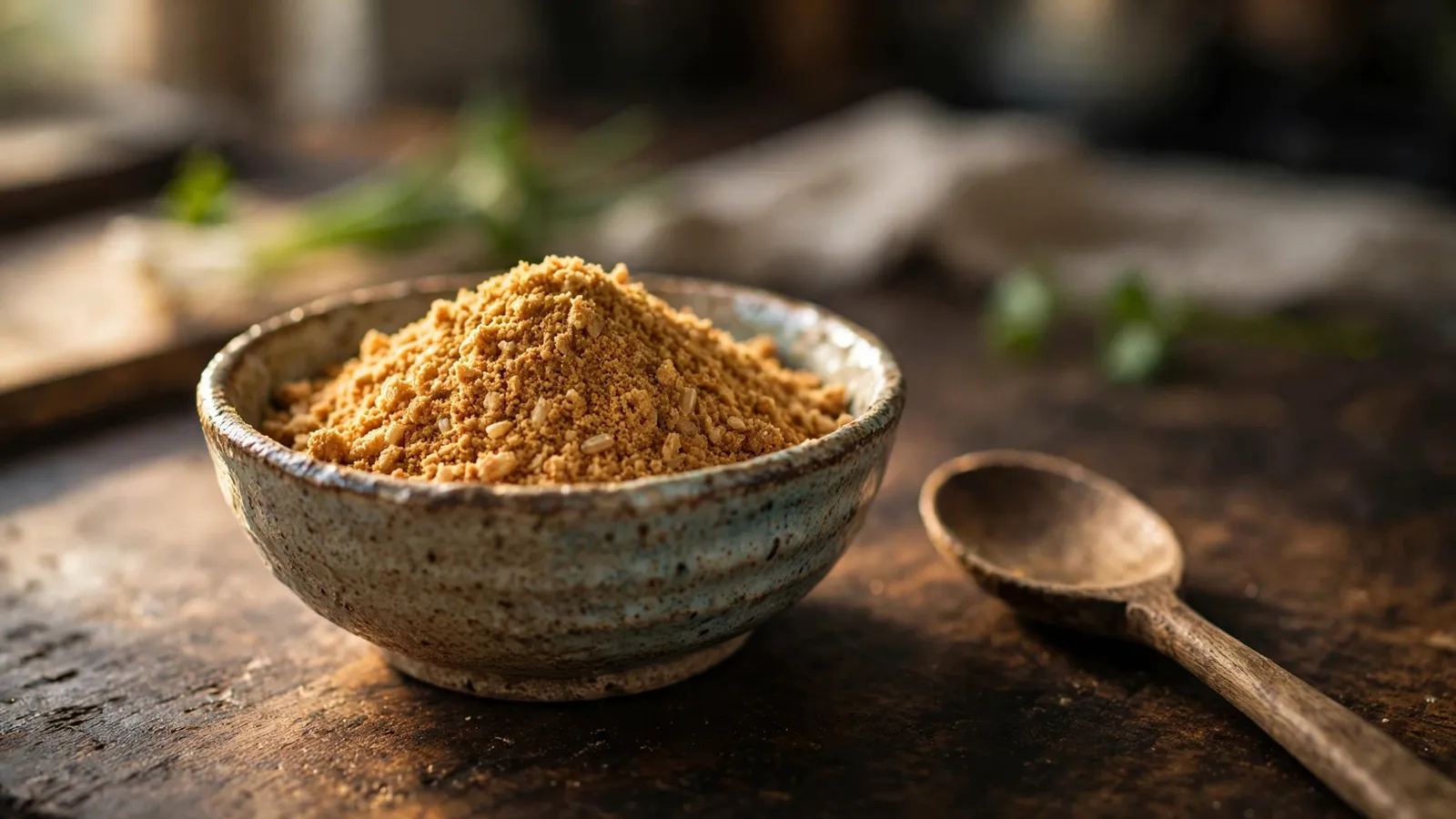
A Spoonful That Changes the Whole Bowl
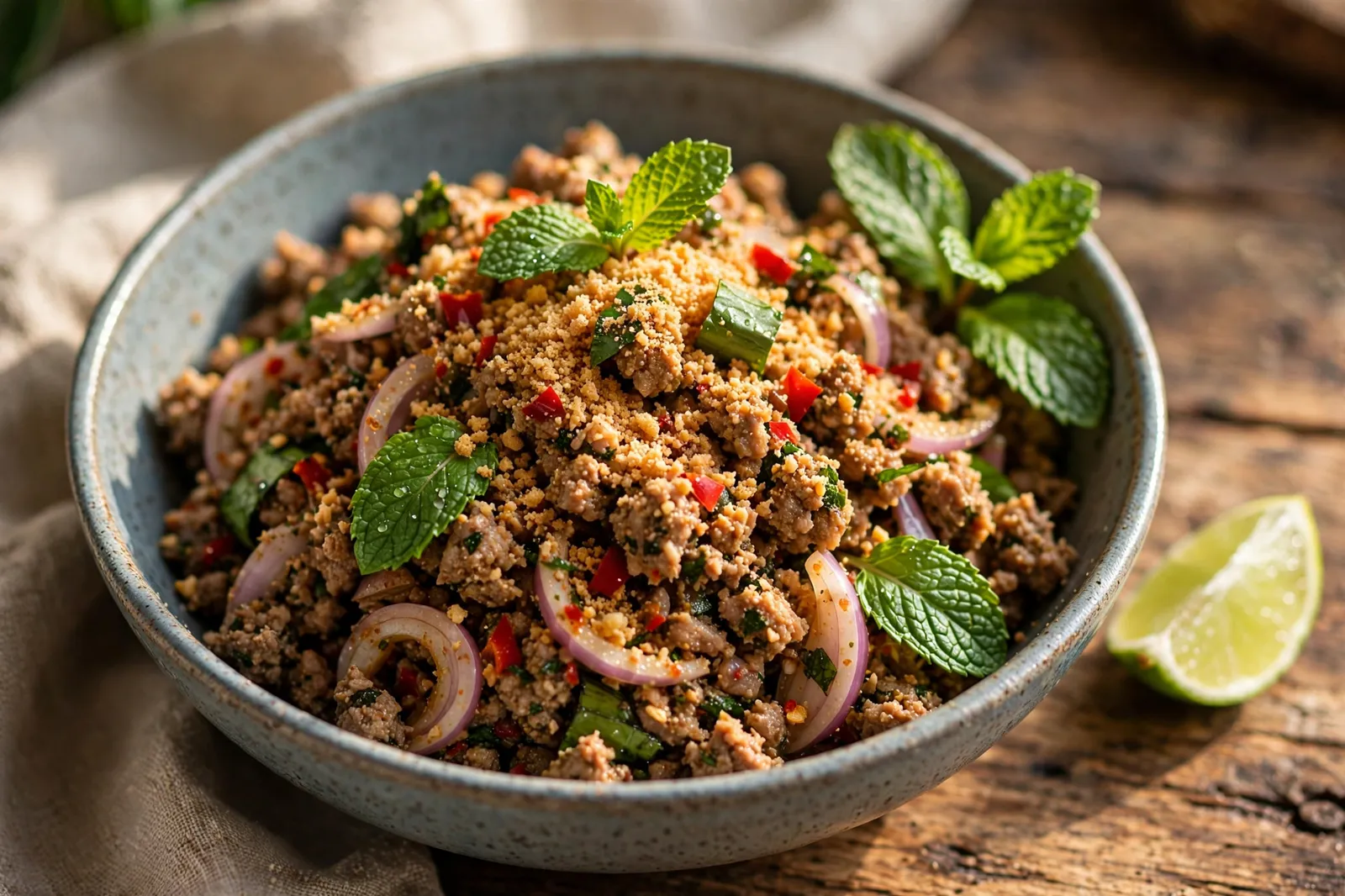
If you have ever eaten larb in a good Thai or Lao restaurant and wondered where that toasty, almost popcorn-like smell comes from, the answer is toasted rice powder. Called khao khua in Thai, it is just rice, toasted dry in a pan until golden, then ground coarse. It goes into larb and nam tok at the end, never cooked, and it does two jobs at once: it adds a roasted nut flavor, and its rough grains give the salad a light, sandy crunch that plain herbs cannot.
You can buy it pre-ground at Asian markets, but the bags lose their aroma fast once opened. Making it takes ten minutes from a pantry staple, and the difference between fresh and store-bought is the difference between smelling the toast and only reading the label. Here is the full method, including the timing I use and the one mistake that ruins a batch.
What toasted rice powder actually is
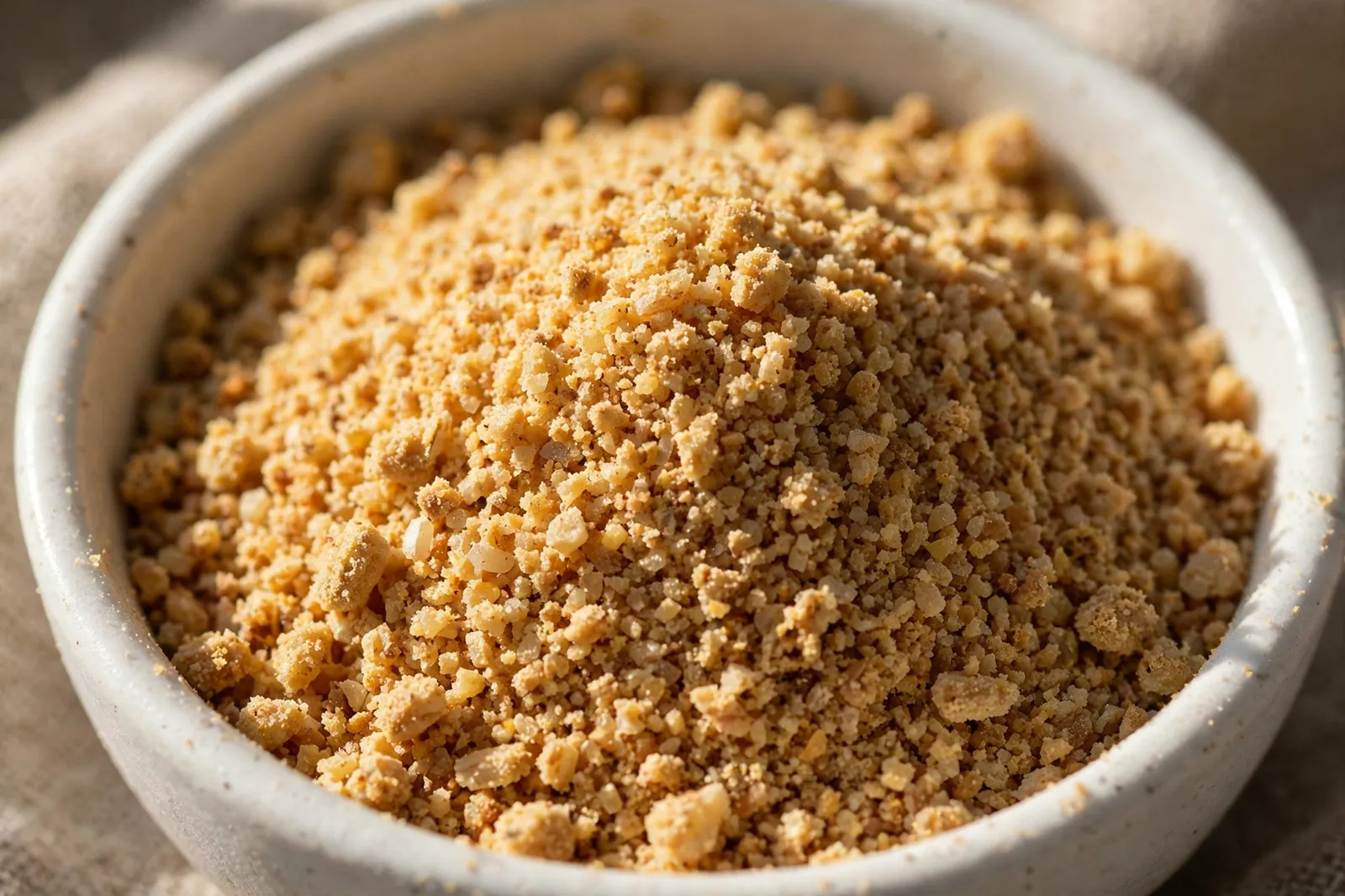
Khao khua is raw glutinous (sticky) rice, toasted in a dry pan and ground to a coarse powder. It is not a flour, and it is not meant to disappear into a dish. The grains stay rough enough to feel between your teeth, and they carry the roasted flavor of the toast. In chicken larb, one to two teaspoons per serving go in at the very end, off the heat, so the aroma stays in the bowl instead of cooking off.
Which rice to use
Glutinous rice is the traditional choice, and the one that gives the sweetest, most fragrant result. Its higher starch content browns more evenly and smells almost like popcorn as it toasts. If you already buy it for sticky rice, use the same bag.
Jasmine rice works as a backup. It toasts fine and tastes good, but the aroma is lighter and the grains brown less evenly, so watch it more closely. Do not use brown rice or parboiled rice. The bran on brown rice burns before the inside toasts through, and the batch turns bitter.
One ratio to remember: start with 1/3 cup of raw rice. That yields about 3 tablespoons of powder, enough for four to five servings of larb, and it is the amount that toasts evenly in a standard skillet without crowding.
Toast it dry, and watch it like popcorn
Put the rice in a dry wok or skillet over medium heat. No oil, no water. Shake the pan every 20 to 30 seconds, or stir constantly with a wooden spoon, so every grain spends time on the hot metal.
The color tells you everything. For the first three to four minutes, nothing seems to happen. Then the grains turn pale gold, then amber, then a deep golden brown like roasted peanuts. The whole process takes six to eight minutes. Pull it off the heat the moment the color is even and the smell is strongly nutty. If you wait for the grains to look dark brown, you have gone too far, and that batch will taste bitter no matter how finely you grind it.
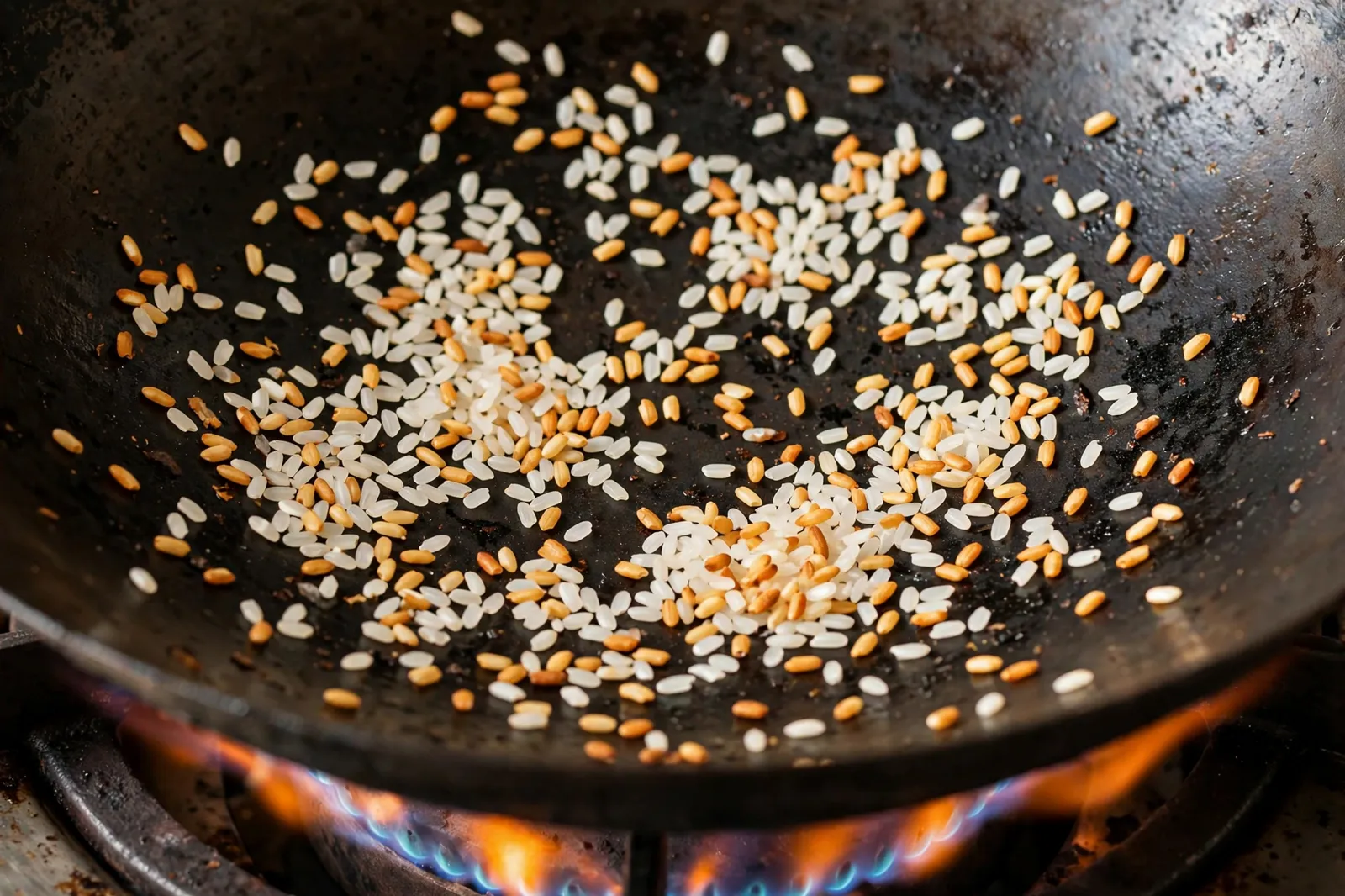
The failure I see most often is impatience with the heat. Turning the burner up to get it done faster browns the outside of each grain while the inside stays raw, and the powder comes out with black flecks and an acrid taste. Medium heat and constant movement are the entire technique.
Grind it only after it cools
Spread the toasted rice on a plate and let it cool for five minutes. This step matters more than it sounds: grinding warm rice releases steam, and the steam makes the powder clump into a paste instead of staying sandy. I have ruined a batch this way, and the clumps never break apart properly in the salad.
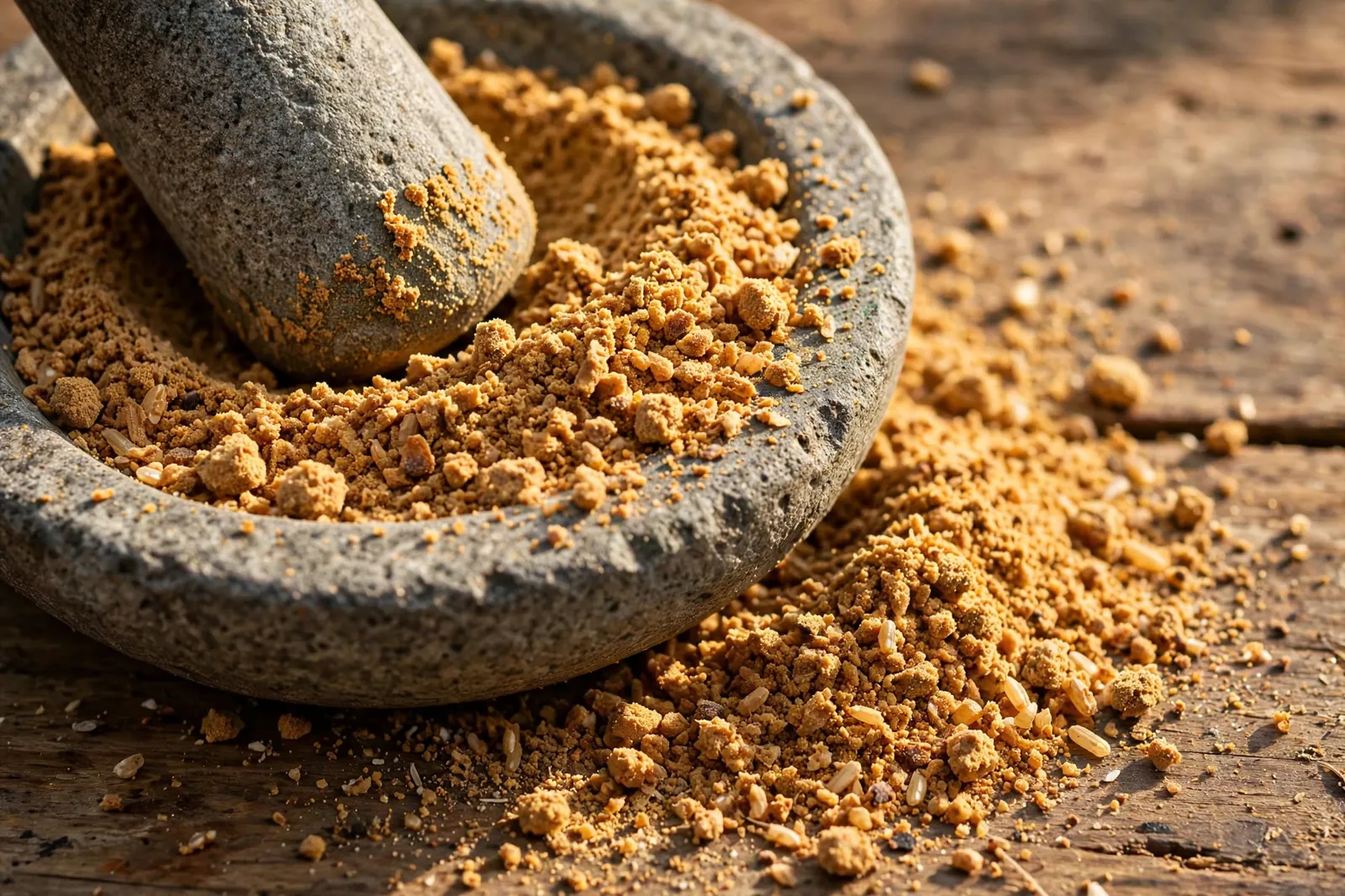
Grind to a coarse texture, like wet sand with a few larger bits mixed in. A mortar and pestle gives the best control. A spice grinder works too, in short pulses, but check after every pulse because it goes from coarse to flour in about three seconds. Do not aim for a fine, even powder. The rough bits are the crunch you are after, and flour-thin powder turns gummy when it meets lime juice in the dressing.
How to use it
Stir one to two teaspoons per serving into larb or nam tok at the very end, off the heat. It also works over grilled chicken or pork, folded into a dipping sauce for extra body, or sprinkled over a green salad for a toasty edge. Because it is never cooked, add it last in every case, the same way you would fresh herbs.
Store it fresh, in small batches
Put the powder in a small airtight jar at room temperature. It keeps its aroma for about two weeks; after that it fades, and month-old powder tastes like plain sand. The freezer buys you another month or two in a sealed bag. The practical lesson is to make only what you will use within two weeks. A third of a cup of raw rice is already a small batch, and ten minutes of work buys you the fresh smell every time.
More Thai recipes
- Pad Thai with Shrimp : the classic tamarind noodles, with the sauce balance that makes or breaks it.
- Thai Green Curry with Chicken : bright, herbal, and hot, built on fresh green curry paste.
- Som Tum: Thai Green Papaya Salad : pounded papaya with lime, fish sauce, and peanuts.
- Chicken Satay with Peanut Sauce : grilled skewers with a real peanut sauce, not the jarred kind.