
A good soup starts before the noodles go in. Water gives you a thin broth that leans on soy sauce and salt for all of its flavor. A pot of vegetable stock made for Asian cooking gives you a base that already tastes like something: light, clear, and savory, with ginger and shiitake in the background instead of the heavy roasted flavor of a Western stock.
This is the stock I keep in the freezer for weeknight soups. It takes about an hour, most of it unattended, and one pot makes enough for three or four meals. The method below is built around a few rules I learned by getting them wrong: char the onion and ginger, keep the simmer gentle, and season lightly, since soy sauce or fish sauce will do the rest at serving time.

What makes a stock work for Asian soups
An Asian-style vegetable stock is lighter than a Western one. There is no tomato paste, no long roast, and no dark color. The goal is a clean, pale gold liquid that supports noodles, dumplings, and tofu without taking over the bowl.
Three choices set the flavor. Charred onion and ginger give a gentle sweetness and a faint smoky edge. Dried shiitake gives the savory depth that fresh mushrooms alone do not. White pepper, used in a small amount, gives warmth without the dark specks black pepper leaves behind.
Salt stays light on purpose. One teaspoon for a full pot is enough. The stock will meet soy sauce, fish sauce, or miso later, and a stock that is already salty leaves no room to adjust.
Ingredients
Makes about 10 cups, from 12 cups of water.
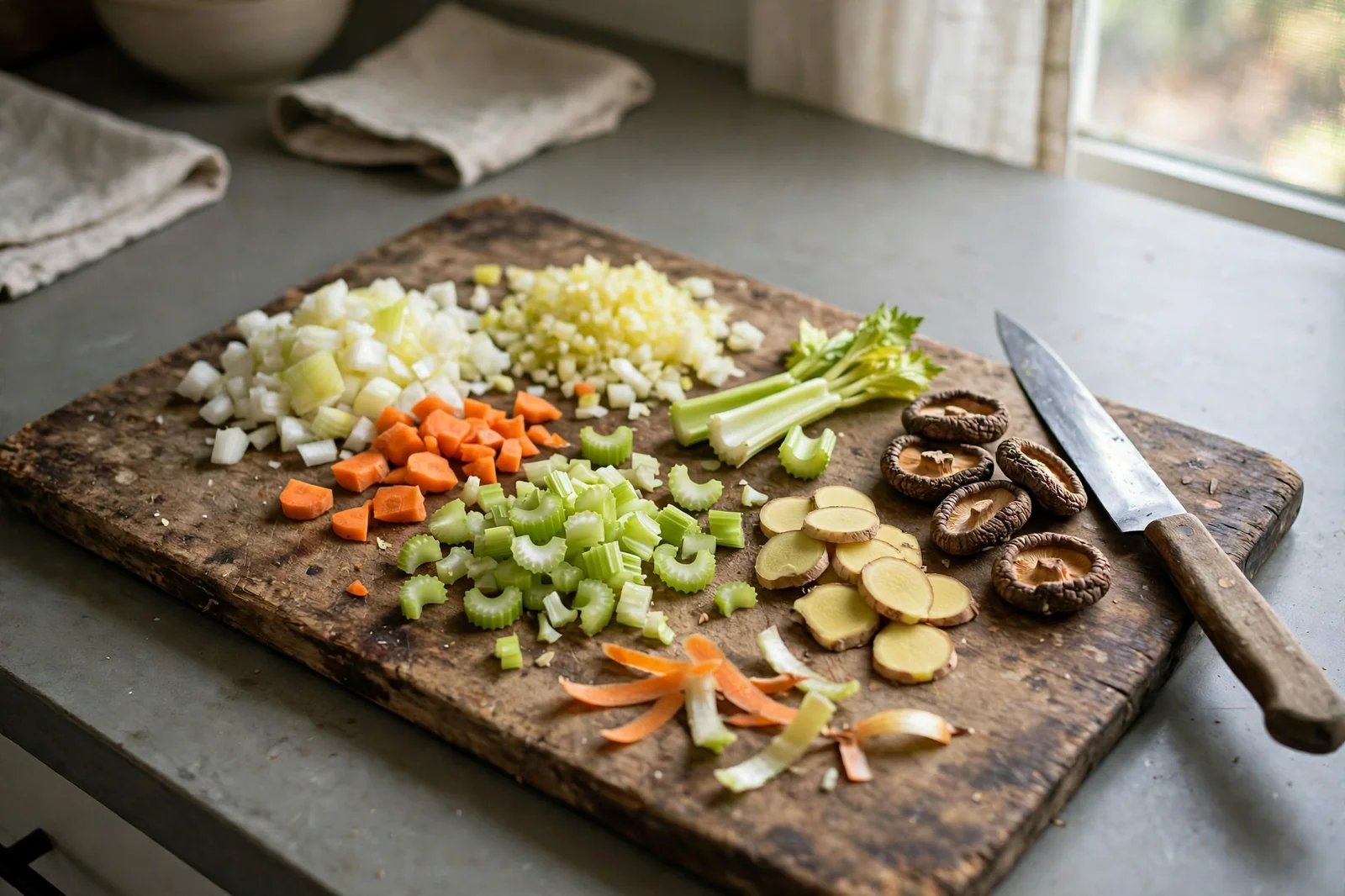
- 2 yellow onions, halved, skins left on one half for color
- 2 carrots, scrubbed and cut into 2-inch pieces
- 2 celery stalks, cut into 2-inch pieces
- 1 bunch scallion greens (the green tops, saved from a bunch used for cooking)
- 1 piece fresh ginger, about 2 inches, sliced into coins
- 4 garlic cloves, lightly crushed, skins on
- 4 to 5 dried shiitake caps, rinsed
- 1 small piece kombu, about 4 inches (optional)
- 1 teaspoon white peppercorns
- 1 teaspoon salt
- 12 cups cold water
Method
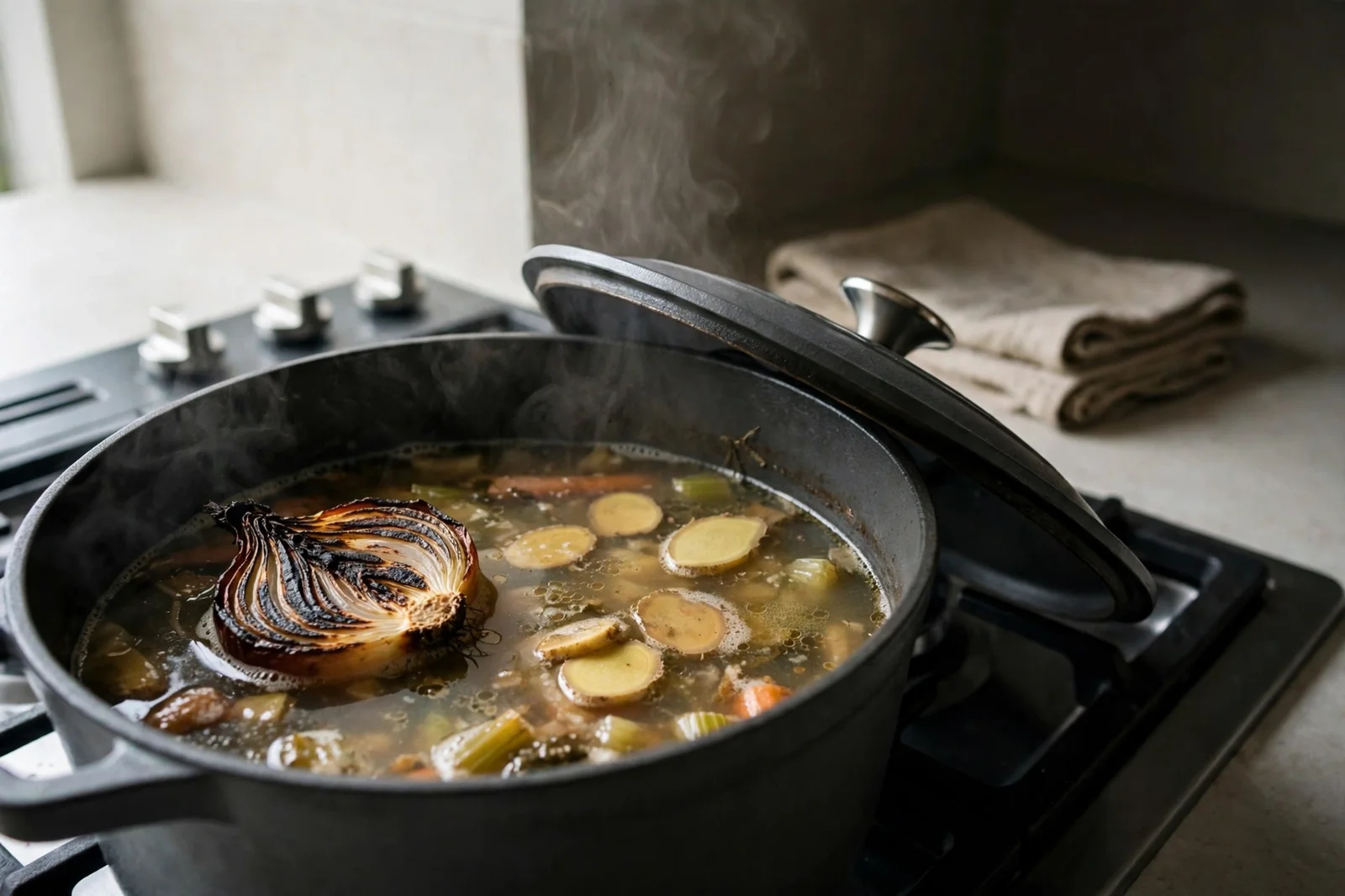
- Char the onion and ginger. Set a dry pot over medium-high heat. Place the onion halves cut-side down and the ginger coins in a single layer. Cook 3 to 4 minutes per side, until dark brown spots appear, then lift them out. This step takes five minutes and gives the finished stock its color and faint sweetness.
- Sweat the vegetables. Add a teaspoon of neutral oil to the same pot over medium heat. Add the carrots, celery, garlic, and scallion greens. Cook 8 to 10 minutes, stirring now and then, until the carrots soften at the edges and the pot smells sweet. Do not brown them hard; browned celery turns bitter.
- Add the water and seasonings. Return the charred onion and ginger to the pot. Add the dried shiitake, kombu if using, white peppercorns, salt, and 12 cups of cold water. Cold water matters here: it lets the flavor come out slowly instead of shocking the vegetables.
- Simmer gently for 45 to 60 minutes. Bring the pot just to a boil, then turn the heat down until the surface barely moves, with a bubble breaking every second or two. Skim off any foam in the first 10 minutes. If the kombu is in the pot, lift it out at 30 minutes so it does not turn slimy.
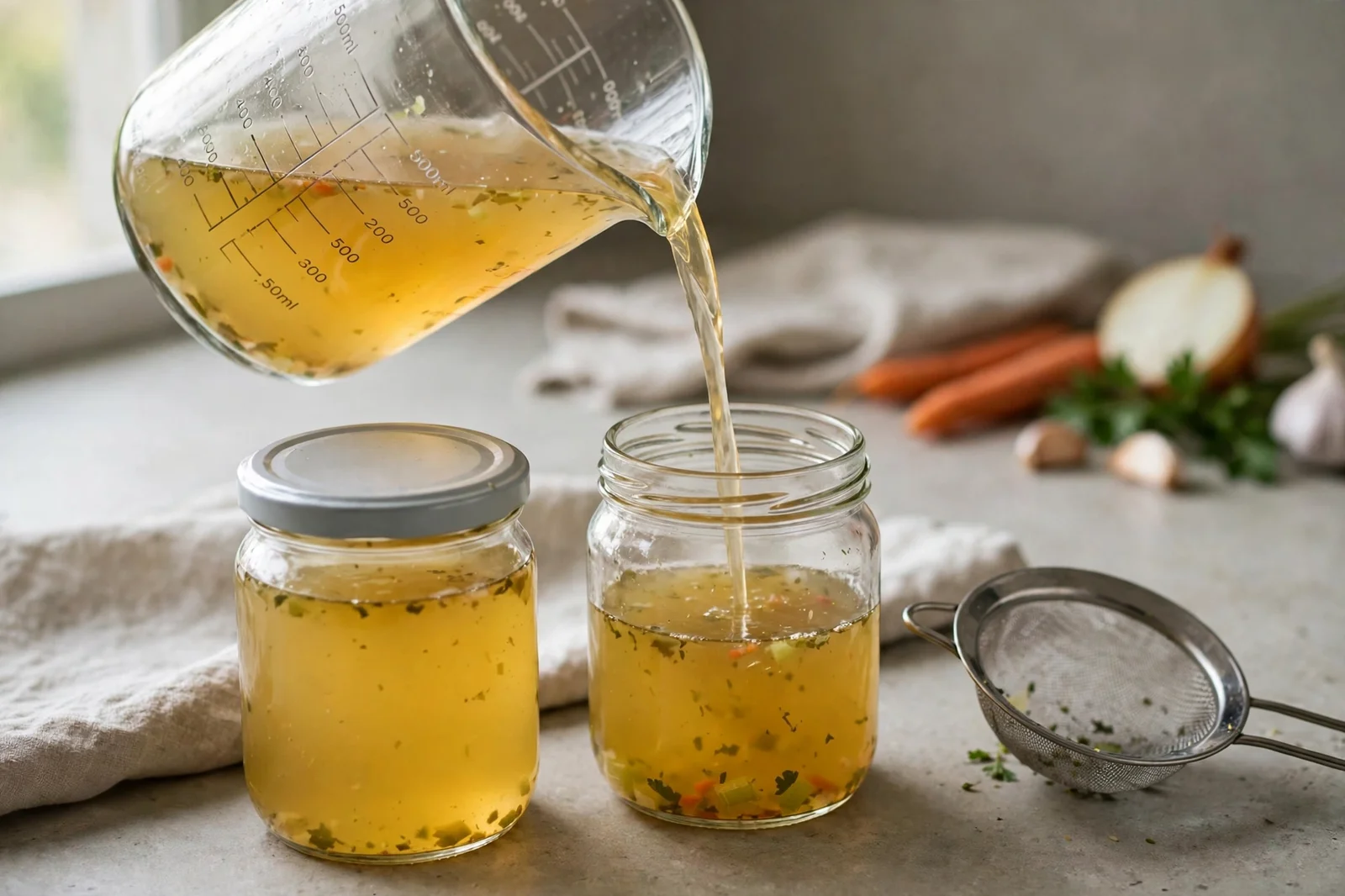
- Strain without pressing. Pour the stock through a fine strainer lined with a clean cloth into a large bowl or second pot. Let it drip on its own for a few minutes. Pressing the vegetables hard forces cloudy bits through and dulls the color.
- Taste and cool. Taste a spoonful once it is cool enough. It should taste savory and light, with ginger in the background. If it tastes flat, simmer 10 more minutes to concentrate it rather than adding more salt. Cool the pot in a sink of cold water before storing.
What to leave out
Some vegetables that work fine in a Western stock cause trouble here. Cabbage, broccoli, and cauliflower turn bitter after a long simmer and their flavor takes over the pot. Potatoes make the stock cloudy and starchy. Beets stain everything pink. Strong herbs like rosemary and thyme pull the flavor toward a roast dinner instead of a noodle soup.
Garlic also needs a light hand. Four cloves give background warmth. A full head makes the stock taste like garlic soup, and scorched garlic turns the whole pot bitter, so keep the heat at medium during the sweating step.
How to store it
In the fridge, the stock keeps 5 days in a covered container. For longer storage, freeze it. Ice cube trays are the most useful size: one tray of cubes is about 2 cups, enough to start a pot of noodles for two. Once frozen, move the cubes to a bag and label it with the date. Frozen stock keeps 3 months.
Leave headroom in jars, about an inch, since liquid expands as it freezes. A jar filled to the brim will crack in the freezer.
Three ways to use it
For noodle soup, use the stock straight from the pot and season at the bowl: a splash of soy sauce, a few drops of sesame oil, and white pepper to taste. It is the base I use for wonton soup and for a quick miso soup when I want something lighter than dashi alone.
For hot pot, bring the stock to a simmer in a wide pot and set out sliced vegetables, tofu, and noodles for the table. The yudofu tofu hot pot method works the same way: gentle heat, plain ingredients, and dipping sauces doing the seasoning.
For steaming and braising, swap stock for water wherever a dish needs liquid. Rice cooked in stock instead of water picks up a quiet savory note; the jasmine rice guide covers the same 1 to 1.5 rice-to-liquid ratio, and stock works in place of the water with no other change.
Fixes for common problems
Cloudy stock almost always means the pot boiled too hard. A rolling boil churns the vegetables apart and the bits stay suspended. Next time, keep the simmer barely moving, and strain through a cloth-lined strainer.
Bitter stock usually traces back to one of two things: a cabbage-family vegetable in the pot, or garlic that scorched during the sweating step. Leave those vegetables out and keep the heat at medium, and the bitterness goes away.
Flat stock needs more time, not more salt. Simmer 10 to 15 minutes longer to concentrate it, or add two more dried shiitake caps and give them 20 minutes. If the stock is already made and still tastes thin at serving, a teaspoon of soy sauce per bowl fixes it faster than re-seasoning the whole pot.
Stock that tastes too salty at serving is easy to save: add a cup of water and simmer 5 minutes, then taste again before adding any soy sauce or fish sauce.
More pantry guides
- How to Make Pickled Ginger at Home
- How to Make Chili Vinegar
- A Home Cook’s Guide to Asian Vinegars
- Chili Oil 101: Make It at Home
From the garden
Ginger is one of the few stock ingredients that grows well in a pot, and the guide to growing ginger in pots covers the same small-knob harvest this recipe uses. A knob pulled from a pot is smaller than a store-bought piece, so use two of them in place of one large piece.