
Classic miso soup is the quiet backbone of the Japanese table — a light, savory broth that opens a meal the way a good first sentence opens a book. It takes about 15 minutes from pantry to bowl: a simple dashi base, miso paste whisked in at the very end, cubes of soft tofu, and a tangle of rehydrated wakame seaweed. The flavor is deeply savory without being heavy, and the whole thing comes together faster than the rice it usually sits next to.
What makes this soup worth learning is how little separates a good bowl from a great one. Two habits carry the dish: never boiling the miso itself, and whisking the paste into hot broth until it disappears completely. Get those right and the soup turns silky and fragrant; get them wrong and it turns cloudy and dull. This recipe walks through both, with a classic four-ingredient base you can riff on once you know the bones.
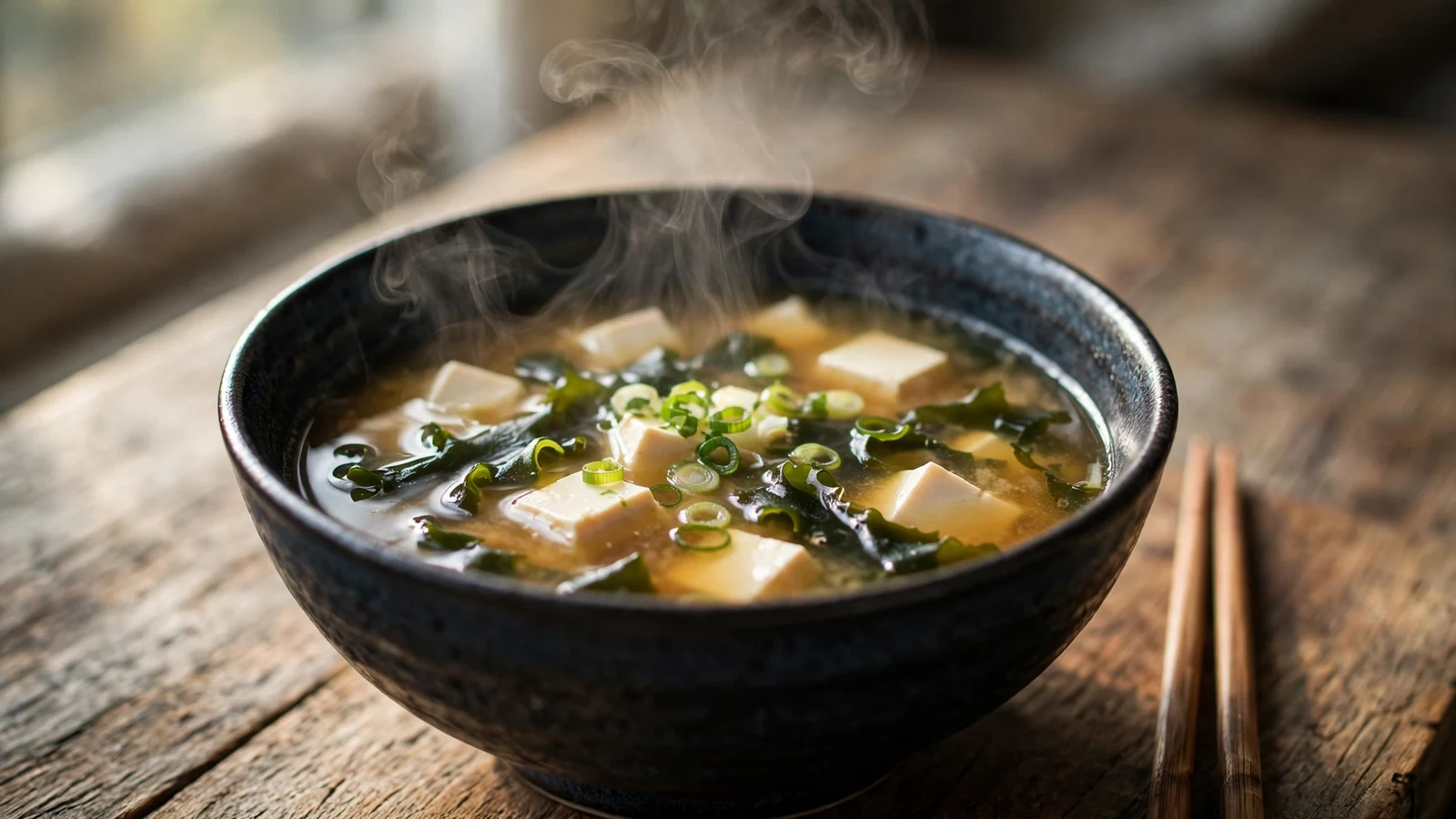
The Two Rules of Great Miso Soup
Rule one: never boil miso. Miso paste is a living fermented food, and a hard boil strips out the delicate aromas that make it taste alive. The standard move is to bring the dashi and add-ins to a bare simmer, take the pot off the heat — or lower it until the surface barely shivers — and only then stir in the miso. The broth should stay well below a boil from that moment on.
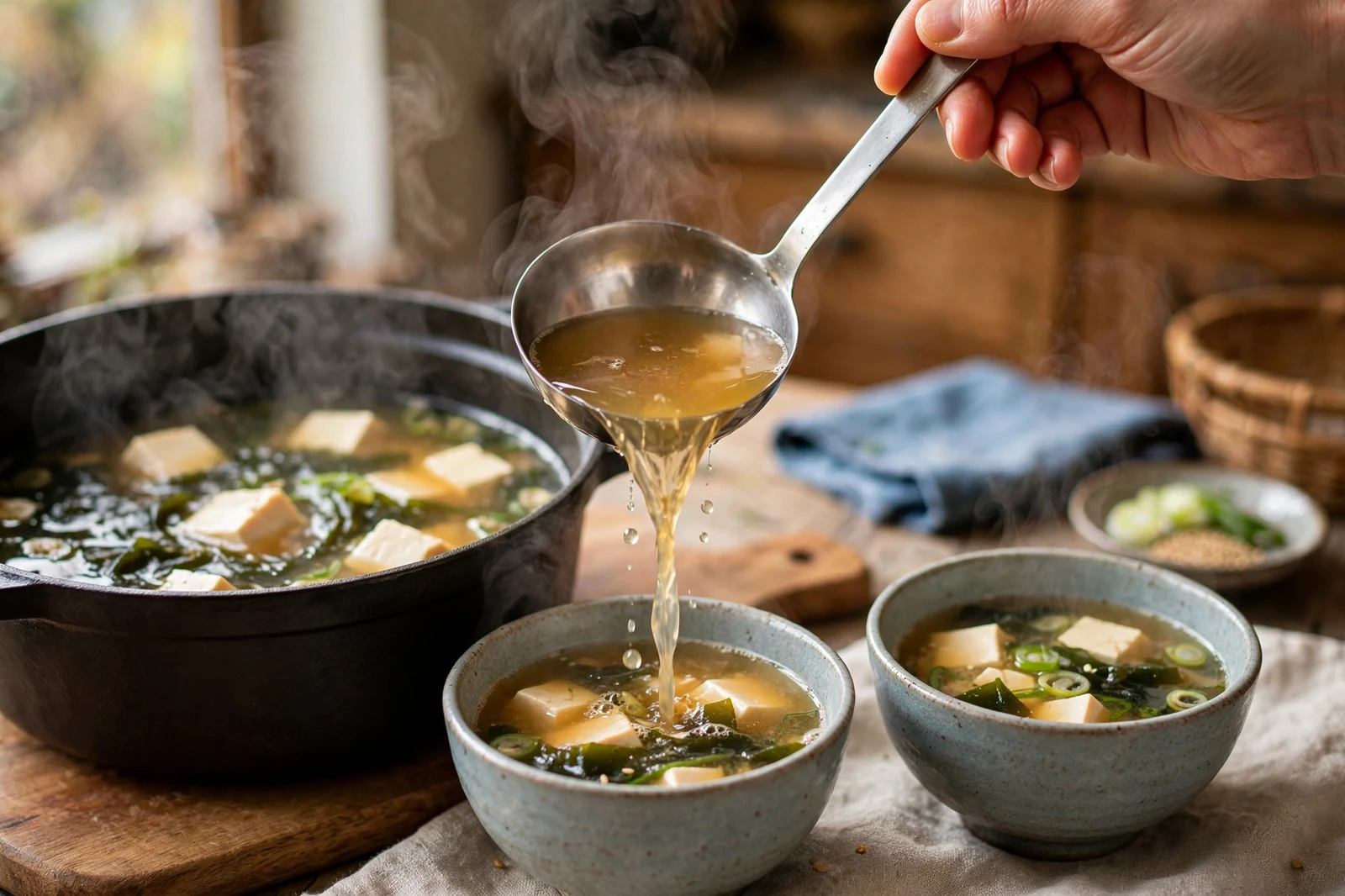
Rule two: whisk, don't dump. Miso paste straight from the tub clumps stubbornly in hot liquid. The fix is easy: ladle a little of the hot dashi into a small bowl, whisk the miso into that until smooth, then stir the slurry back into the pot. No lumps, no gritty pockets, just an even, velvety broth.
There is a third habit that follows naturally: season at the end. Different miso pastes have wildly different salt levels — white miso is sweet and mild, red miso is bolder and saltier — so add the paste in stages and taste as you go. You can always stir in more; you cannot take it back out.
A Quick Note on Miso and Dashi
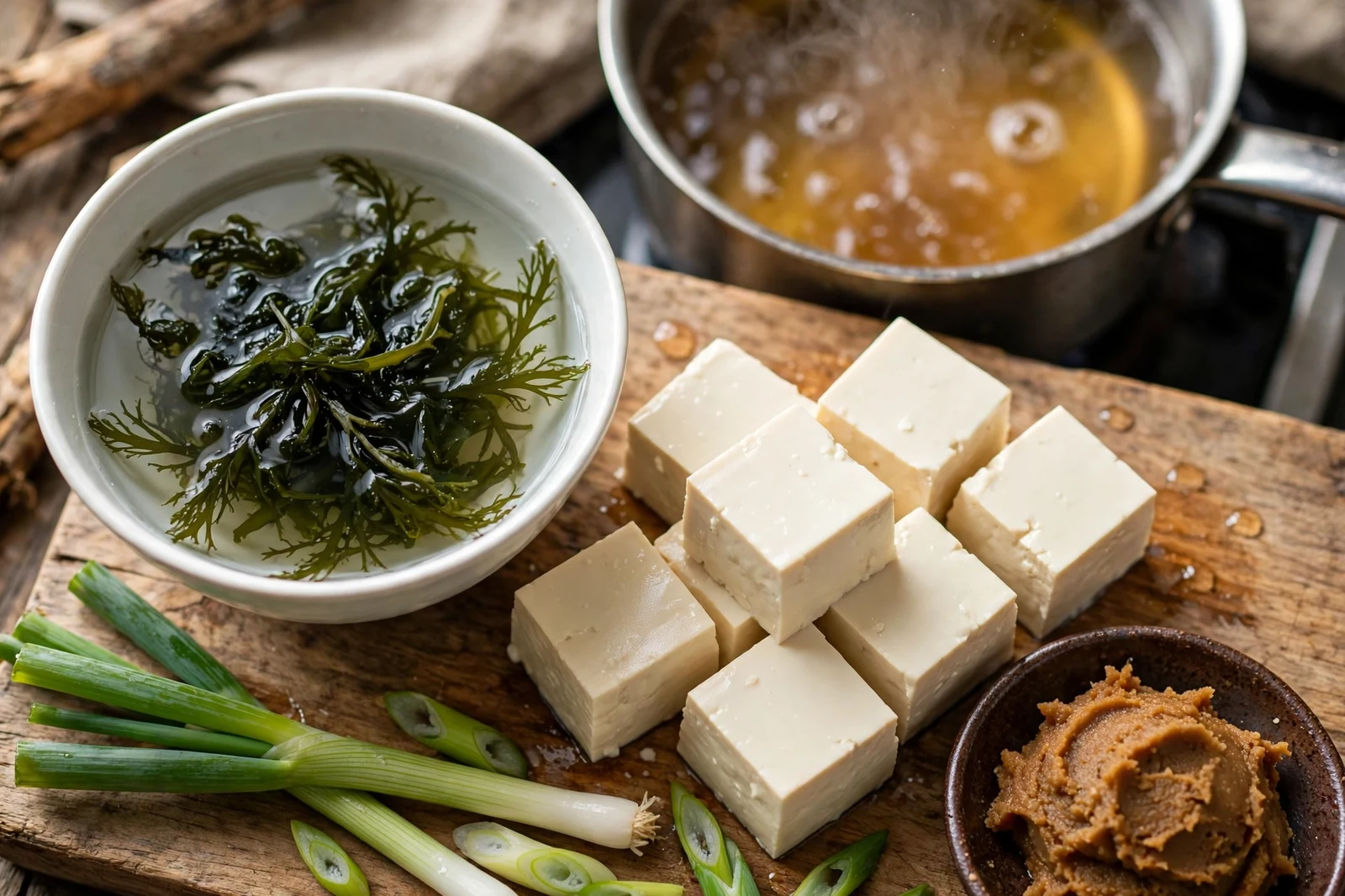
Miso comes in shades, and the label tells you what to expect. White miso (shiro) is fermented for a short time and tastes mild, sweet, and creamy — the classic choice for a gentle everyday soup. Red miso (aka) ferments longer and lands saltier and more robust. Mixed or awase miso sits in between. This recipe works with any of them; white or mixed gives the most familiar restaurant-style bowl.
Dashi is the savory backbone. The fastest option is instant dashi granules (the kind sold as hondashi) dissolved in hot water — it is genuinely good and what plenty of weeknight cooks reach for. If you want to make it from scratch, a simple kombu-and-bonito-flake dashi takes about 10 extra minutes and tastes cleaner and deeper. Either way works here; the method below gives you both options.
Ingredients
- 4 cups water (or dashi, if using homemade kombu-bonito dashi)
- 1 tablespoon instant dashi granules (skip if using homemade dashi)
- 3 tablespoons dried wakame seaweed
- 8 ounces soft or silken tofu, cut into 1/2-inch cubes
- 4 to 5 tablespoons white or mixed miso paste (awase miso works well)
- 2 scallions, thinly sliced (green parts only)
Instructions
1. Bloom the wakame. Place the dried wakame in a small bowl and cover with room-temperature water. Let it sit for 5 to 10 minutes until it expands into soft, glossy ribbons — dried seaweed grows dramatically, so a small handful is plenty for four bowls. Drain and set aside.
2. Heat the dashi. Pour 4 cups of water into a medium saucepan and bring it to a gentle simmer over medium heat. If you are using instant dashi granules, whisk them into the water now until fully dissolved. If you are using homemade dashi, warm it the same way. You want the surface shivering with small bubbles, not rolling.
3. Warm the tofu and wakame. Add the tofu cubes and the drained wakame to the simmering dashi. Let everything warm through for about 2 minutes, stirring once or twice very gently — silken tofu bruises if you bully it. Now lower the heat to low, or take the pot off the burner entirely.
4. Whisk in the miso. Ladle about 1/2 cup of the hot broth into a small bowl. Add 4 tablespoons of miso paste and whisk until completely smooth with no lumps. Pour this slurry back into the pot and stir gently to combine.
5. Taste and adjust. Ladle a spoonful of soup and taste. It should be savory and well-rounded — salt first, then a soft sweetness and a long umami finish. If it tastes flat, whisk in another tablespoon of miso in the same bowl-and-slurry way. Never let the pot boil after the miso goes in.
6. Serve right away. Divide among four bowls, sprinkle with sliced scallions, and serve hot. Miso soup is at its best in the first 10 minutes, while the broth is silky and the aromas are still rising.
Tips and Variations
- Choosing your miso matters most. White miso gives the gentle, slightly sweet bowl most people picture. If you only have red miso, start with 3 tablespoons and taste — it is saltier and more assertive. Blending a spoonful of each is a common restaurant trick.
- Add greens. Thinly sliced spinach, chopped bok choy, or a few handfuls of sliced shiitake mushrooms can simmer alongside the tofu for a heartier bowl. Add greens in step 3 and give them 2 to 3 minutes.
- Make it a meal. Drop in a handful of cooked udon noodles or a beaten egg drizzled in a thin stream for a more substantial soup. The egg turns into soft ribbons in the hot broth.
- Vegetarian dashi shortcut. Kombu-only dashi (just dried kelp simmered gently, no bonito) keeps the soup fully vegetarian without losing much depth. Shiitake soaking liquid stirred into the base adds even more savor.
- Seasonal add-ins. Japanese home cooks adjust the soup with the seasons: spring peas and new potatoes, summer eggplant, fall mushrooms, winter daikon and sweet potato. The base never changes — only the companions.
- Storing miso paste. An open tub of miso keeps for months in the refrigerator with the lid on tight. Press a piece of plastic wrap directly on the surface to slow darkening. It never really goes bad, but it deepens in color and flavor over time.
Reheated miso soup is fine the next day — warm it gently without boiling. The wakame will soften further and the broth may look a little murkier, but the flavor holds up well. It is best in the first 24 hours.
What to Serve with Miso Soup
A bowl of miso soup rarely travels alone. At a Japanese table it anchors a simple meal: a bowl of rice, some pickles, a small protein or vegetable dish. For a homestyle spread, serve it alongside something with more body, like our mapo tofu — the silky tofu in both dishes plays well together without feeling repetitive. If you want a second soup on a cold night, it sits nicely next to a heartier hot and sour soup: one light and clean, the other bold and peppery.
Classic Miso Soup
Ingredients
Method
-
Bloom the wakame: place the dried wakame in a small bowl and cover with room-temperature water. Let it sit 5 to 10 minutes until it expands into soft ribbons. Drain and set aside.
-
Heat the dashi: pour 4 cups of water into a medium saucepan and bring to a gentle simmer over medium heat. Whisk in the instant dashi granules until fully dissolved (skip if using homemade dashi). Keep the surface at a shiver, not a rolling boil.
-
Warm the tofu and wakame: add the tofu cubes and drained wakame to the simmering dashi. Warm through for about 2 minutes, stirring very gently. Lower the heat to low or take the pot off the burner.
-
Whisk in the miso: ladle about 1/2 cup of hot broth into a small bowl, add 4 tablespoons of miso paste, and whisk until completely smooth. Pour the slurry back into the pot and stir gently to combine.
-
Taste and adjust: taste the soup. It should be savory and well-rounded. If it tastes flat, whisk in another tablespoon of miso in the same bowl-and-slurry way. Do not let the pot boil after the miso goes in.
-
Serve right away: divide among four bowls, sprinkle with sliced scallions, and serve hot.
8 thoughts on “Classic Miso Soup”