
If rice shows up on your table most nights — a bowl under curry, a plate beside stir-fried greens, leftovers held back for fried rice tomorrow — a rice cooker stops being a gadget and starts being the hardest-working pot in the kitchen. The catch is that most buying advice is written for one kind of rice. Asian home cooking asks a single pot to handle fragrant jasmine, sticky short-grain, brown rice, and sometimes a thin pot of congee, and those jobs do not all want the same machine.
This guide walks through the decision the way a cook actually makes it: what you cook, how much you cook, and only then which buttons matter. If you are still getting the basics down, start with our method for cooking jasmine rice — the ratios there are the same ones a good cooker is built to repeat for you, night after night.
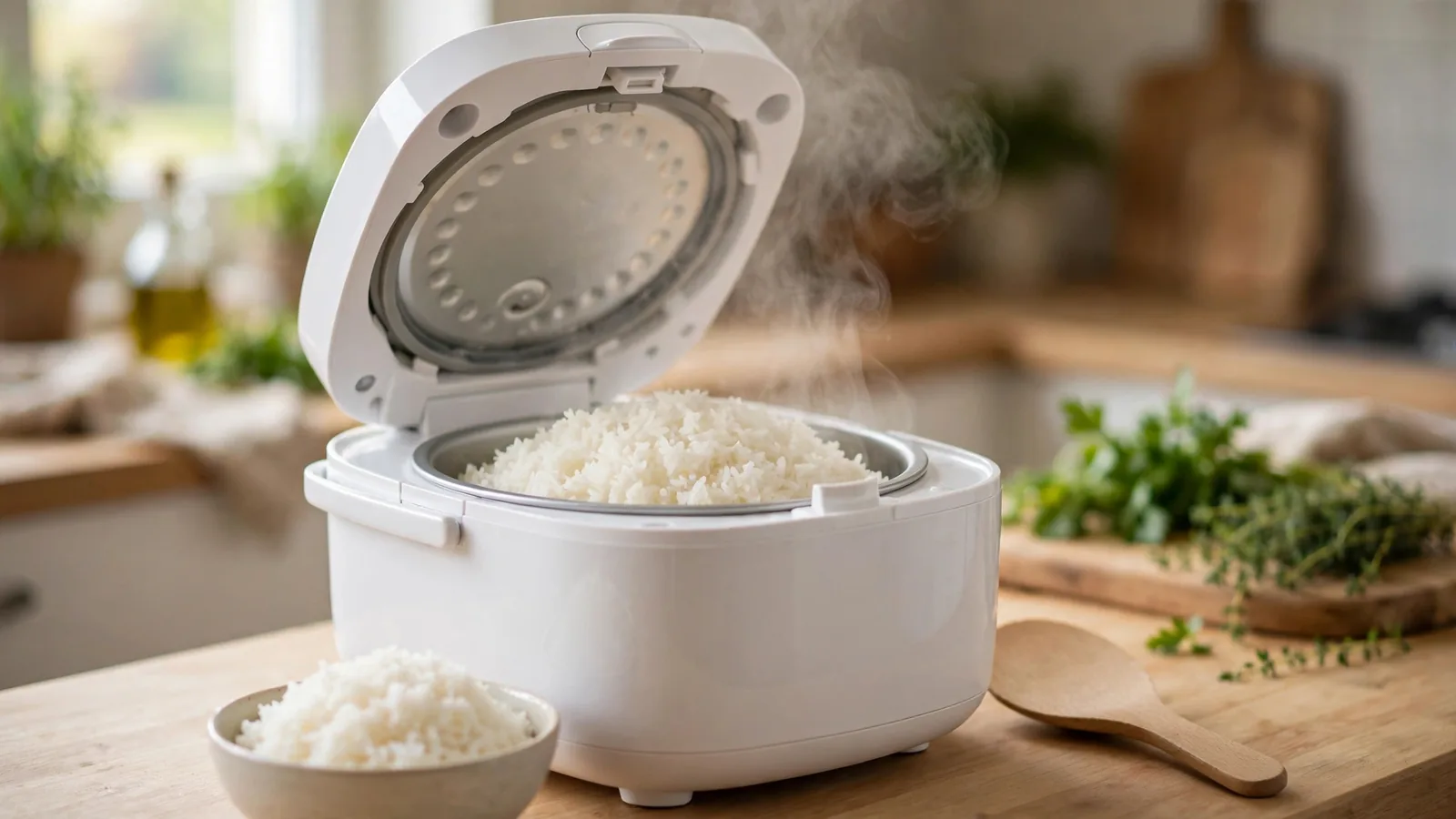
What Your Rice Cooker Actually Has to Do
A rice cooker has one core job: bring rice and water to a boil, hold it at a gentle simmer while the grains absorb the water, and then stop before the bottom scorches. Everything else is refinement. For Asian cooking, four jobs come up again and again, and it is worth checking your shortlist against each one.
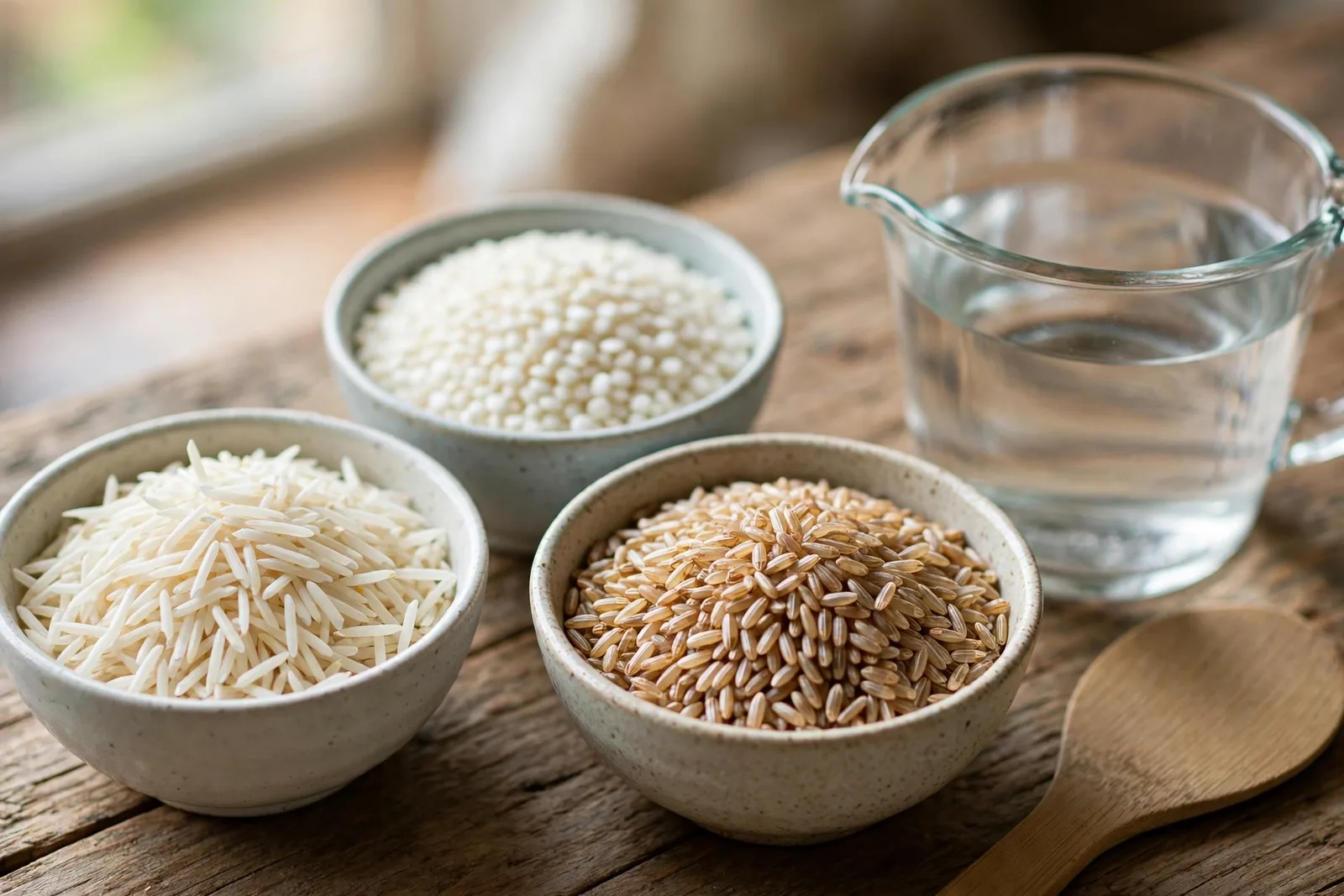
Jasmine and long-grain rice want a fairly short, hot cycle and a real rest at the end. Almost any cooker handles this well, which is why cheap basic models still have fans.
Short-grain and sticky rice want a softer, more even finish, and they punish a cooker that runs too hot. The grains should come out plump and cohesive, not blown out at the edges. A dedicated short-grain or sushi setting helps here far more than raw power does.
Brown rice is the slow job. The bran layer needs a longer soak-and-simmer than white rice, and a cooker without a brown setting often stops too early and leaves a chewy center. If brown rice is a weekly staple at your house, treat the brown setting as required, not a bonus.
Congee and rice porridge flip the problem: too much water for the normal cycle, and a long, lazy simmer. A porridge or congee setting holds the temperature just below a rolling boil so the pot does not foam over. Our chicken congee is exactly the kind of recipe that separates a cooker with a real porridge setting from one that just has a longer timer.
The Three Cooker Types, Side by Side
Nearly every electric rice cooker on the shelf falls into one of three families. The differences are about control, not speed — all three cook white rice in roughly 30 to 45 minutes.
| Type | How it controls heat | Best for | Typical price band | Watch out for |
|---|---|---|---|---|
| Basic on/off | One heat setting; switches to warm when the pot gets light and hot | Jasmine and long-grain rice, small batches, tight budgets | $20–$50 | No brown or porridge setting; keep-warm can dry rice out after a few hours |
| Micom (fuzzy logic) | A small computer adjusts time and temperature by grain type | Mixed households: jasmine, short-grain, brown, congee | $80–$180 | Slower to preheat than basic models; more settings to learn |
| Induction (IH), sometimes with pressure | Heats the whole inner pot evenly; pressure models cook under slight pressure | Daily short-grain rice, brown rice often, cooks who notice texture differences | $200–$450 | Highest price; pressure models need gasket care and a little more counter space |
For most pan-Asian home cooking, the middle row does the heavy lifting. A micom cooker is the first tier that treats jasmine, short-grain, and brown rice as three different jobs instead of one job with three names. Induction is a genuine step up in evenness — the grains at the edge of the pot cook more like the grains in the middle — but it shows most in short-grain rice eaten plain, bowl after bowl. If your rice nearly always lands under a saucy curry or stir-fry, that difference gets harder to taste, and the micom tier is usually the smarter spend.
Size First: The Cup Question Nobody Gets Right
Rice cookers are sized in cups, and this is where most first-time buyers go wrong, because the cup on the box is usually not the cup in your drawer. Most Asian and Asian-spec models measure with a 180 ml cup (about 3/4 of a US cup) — the small plastic cup that comes in the box. A "5.5-cup" cooker therefore holds about 5 1/2 of those small cups of uncooked rice, which is roughly 4 US cups uncooked, and yields about 8 to 9 US cups cooked.
A practical way to choose:
- Cooking for 1–2 people: a 3-cup (Asian measure) micom is the sweet spot. Small batches come out better in a small pot because the water depth stays right.
- Cooking for 3–5 people, or anyone who cooks once and eats twice: a 5.5-cup model gives you tonight's dinner plus a deliberate leftover for fried rice.
- Cooking for 6 or more, or batch-cooking for the freezer: a 10-cup model earns its counter space, but only if you actually fill it. A big pot cooking one small cup of rice spreads the grains too thin and the texture suffers.
One more rule that saves a lot of disappointment: buy for your usual pot of rice, not your biggest party. A cooker works best between about one-third and two-thirds full. If you host twice a year, it is kinder to your everyday rice to keep the smaller cooker and make two batches, or finish the party batch on the stove. And once that cooked rice is made, how you hold it matters as much as how you cooked it — our guide to storing rice and grains covers the pantry side, while the cooker-side rule is simple: plan to eat within 8 to 12 hours on warm, and refrigerate the rest.
The Features That Matter for Asian Rice
A long feature list is easy to sell and hard to use. These are the ones that change what lands in the bowl.
A keep-warm that does not keep cooking. Cheap warm modes hold rice hot enough to slowly dry and yellow the bottom layer. Better models hold a gentler, steadier warmth, and the best let you turn reheating pulses off. If your household eats in shifts, this feature matters more than any preset with a cuisine name on it.
A real porridge or congee setting. This is a lower, longer simmer, not just a longer clock. It is the difference between congee that thickens into silk and a pot that foams up through the steam vent. If congee, jook, or a thin okayu is in your rotation, check for this exact word in the manual, not just a soup setting.
A steamer basket that fits the pot you are buying. Many cookers include a shallow tray for steaming vegetables, dumplings, or a piece of fish over the rice. It is a genuinely useful weeknight move — the rice and the topping finish together — but only when the basket is deep enough to hold food without touching the lid. Check the depth in person or in the spec sheet, because the photo always makes it look roomier than it is.
A removable inner lid and a simple steam vent. Rice steam carries starch. A cooker whose inner lid pops out for washing stays fresh-smelling for years; one with a fixed lid slowly picks up a sour note that no amount of vinegar-water cycles fully clears. This is the least glamorous item on the list and the one owners mention most after a year of use.
Inner pot material you can live with. Nonstick pots are light, easy to scoop from, and easy to clean, but the coating is a wear item — expect to baby it with soft paddles and to replace the pot (or the cooker) if it scratches deeply. Stainless and heavy multi-layer metal pots cost more, last longer, and can leave a thin golden crust at the bottom if you leave rice sitting; some cooks prize that crust, others find it a nuisance. Neither is the right answer for everyone. Match it to how roughly your household treats a pot.
Features You Can Safely Skip
Cake, bread, and yogurt modes have their fans, but in a rice cooker they are usually a heating element doing an impression of another appliance, and they do not make the rice better. A dozen grain-specific presets beyond white, brown, short-grain/sushi, and porridge mostly overlap — the grains themselves vary less than the marketing suggests. And an app connection on a rice cooker solves a problem almost nobody has: you still have to rinse the rice, add the water, and walk over to the pot. Spend that money on the next tier of heating control instead, or keep it in your pocket.
This is also the honest place to say that some households do not need a cooker at all. If you cook rice twice a month, a heavy pot with a tight lid and the stovetop method in our sticky rice guide will serve you well. A rice cooker earns its counter space through repetition.
A Short Checklist Before You Buy
Run any model you are considering through these five checks. They take two minutes and they catch nearly every mismatch.
1. Size in real cups: convert the box rating (Asian 180 ml cups) into the cooked amount your household actually eats, and confirm your usual batch lands between one-third and two-thirds of the pot.
2. The four jobs: white/jasmine, short-grain, brown, and porridge — tick off the ones you cook weekly and make sure each has a real setting, not just a timer workaround.
3. Keep-warm behavior: look for a model known for gentle holding, especially if your household eats at different times.
4. Washable top: removable inner lid, a vent you can rinse, and a condensation collector that empties without tipping the whole cooker over the sink.
5. Replacement pot price: check what a spare inner pot costs before you buy. On a cooker you plan to keep for years, a fairly priced replacement pot is a sign the maker expects you to keep it, too.
Which One Fits Your Kitchen?
You cook jasmine rice a few times a week for one or two people. A 3-cup micom with white, brown, and porridge settings covers you completely. This is the best value in the whole category.
You feed a family and rice lands under everything. A 5.5-cup micom is the workhorse choice. Prioritize keep-warm quality and the removable lid over extra presets — those two details decide whether you still like the cooker in year three.
You eat short-grain rice plain, often, and you notice texture. This is the case for induction. The even heat shows in exactly this job, and if it fits the budget, it is the one upgrade a picky rice eater can actually taste.
You cook a lot of brown rice. Stay in the micom tier at minimum and confirm the brown setting is a true long-soak cycle. Undercooked centers are the number one complaint about cheap cookers, and brown rice is where they happen.
Your budget is firmly under fifty dollars. A basic on/off cooker still makes very good jasmine and long-grain rice. Put the savings toward good rice, eat the pot within a few hours instead of leaning on the warm mode, and read the jasmine versus sticky rice breakdown before you blame the cooker for a texture it was never set up to make.
Care So the Next Pot Tastes Like the First
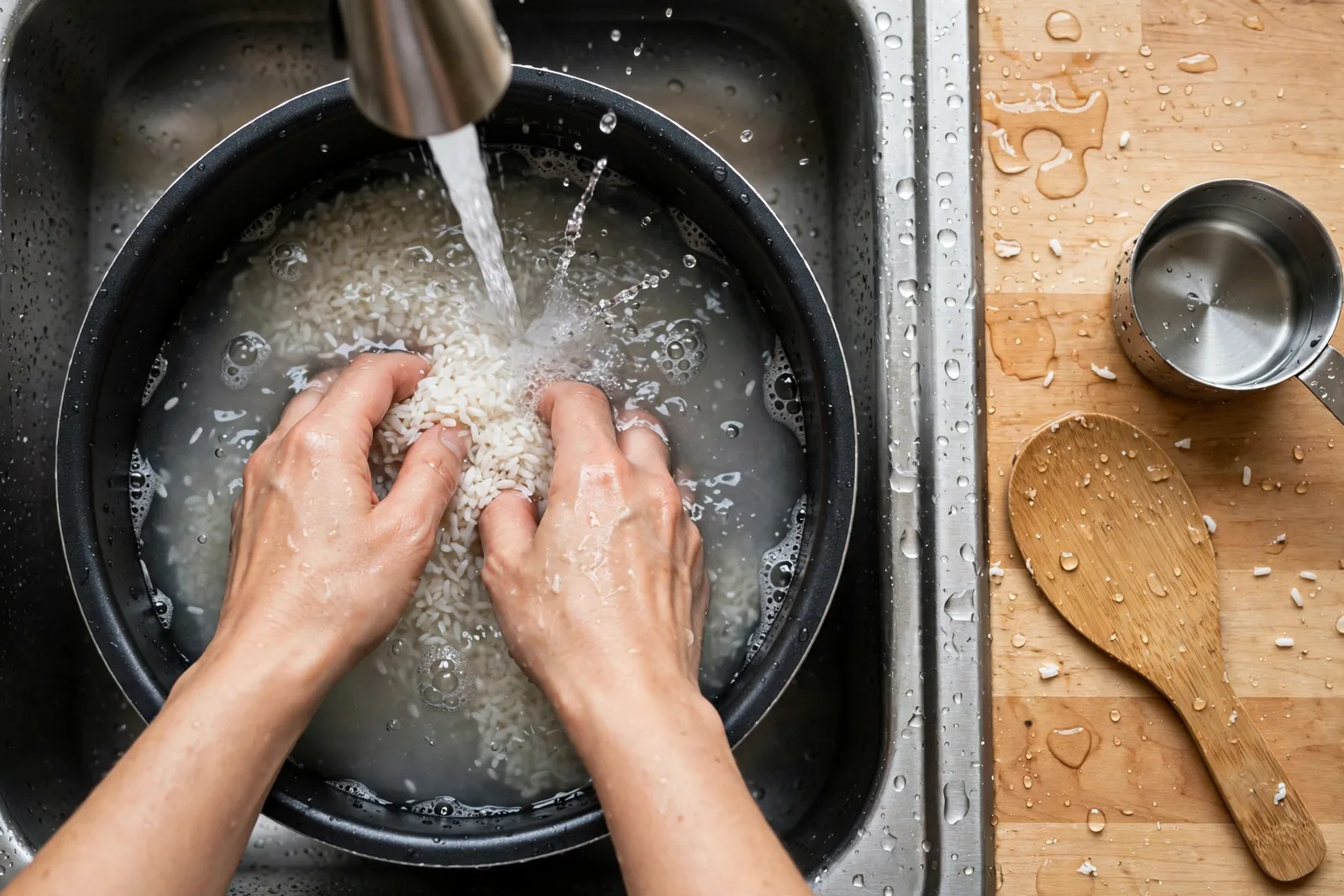
A rice cooker asks for very little, but it asks consistently. Wash the inner pot and the removable lid after every cook, even if it was plain rice — the starch film is what sours. Empty and rinse the condensation collector before it overflows onto the counter. Once a month, run a cup of water with a splash of vinegar on the white rice cycle if the pot picks up any stale smell, then rinse and run plain water once more. Keep the heating plate dry and free of stray grains; a single burnt grain trapped under the pot scorches a faint bitter spot into every batch until you wipe it away.
Do that, and the cooker quietly disappears into your routine, which is the whole point. The right model is not the one with the longest feature list. It is the one sized for your real pot of rice, honest about the four jobs Asian cooking asks of it, and easy to wash on a tired weeknight. Choose that one, and dinner's foundation takes care of itself.