
Kare-kare doesn’t taste like anything else in the Filipino table. The sauce is mild, almost sweet from the peanuts, thick enough to cling to rice, and the real salt doesn’t come from the pot at all: it comes from a spoonful of bagoong you stir in at the table. I make it with oxtail, the way my family expects it, and the sauce gets its body from two things: a measured amount of natural peanut butter and a spoonful of toasted ground rice.
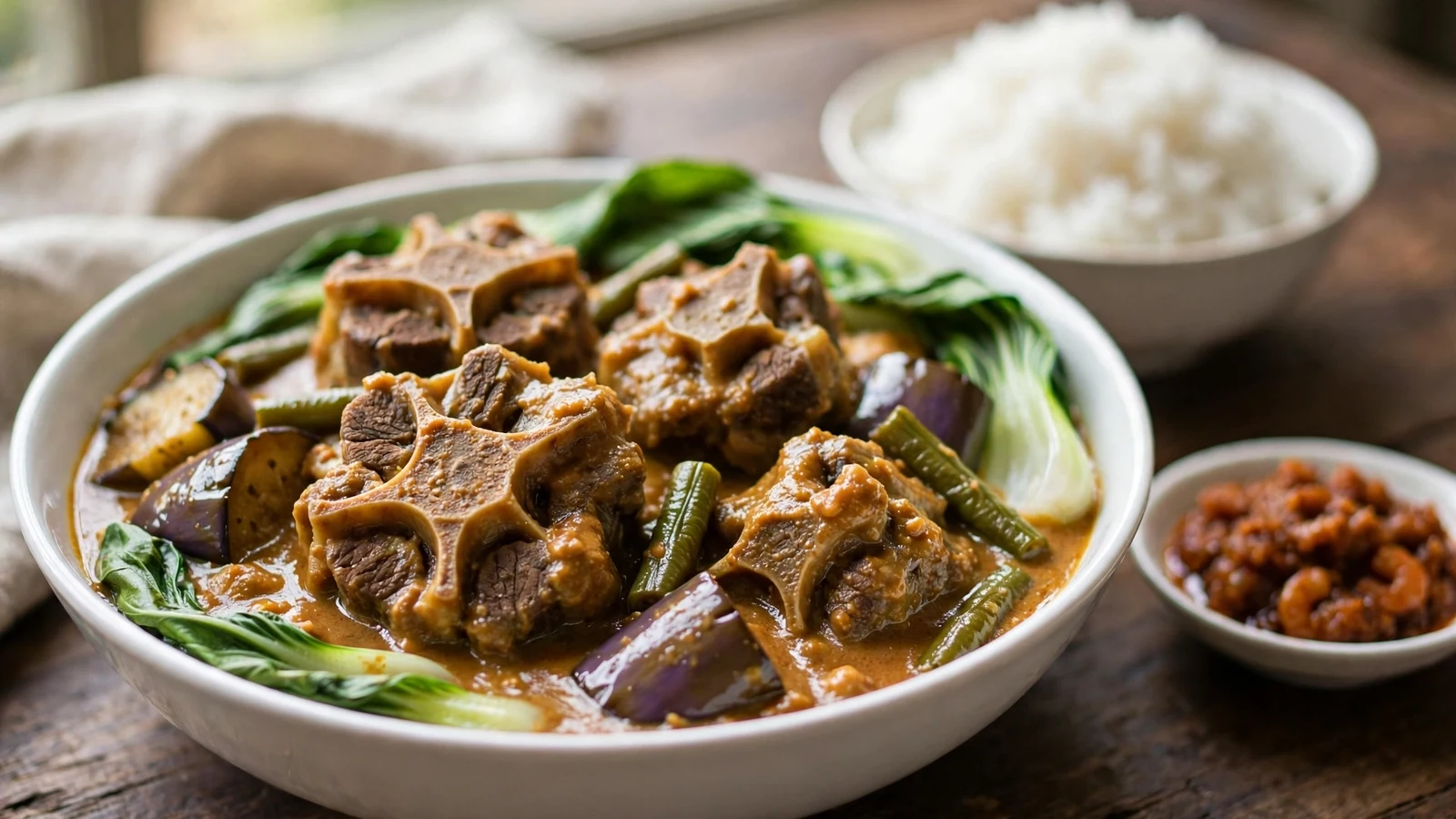
What is kare-kare?
Kare-kare is a Filipino stew of meat simmered until tender, then finished in a thick peanut sauce. Oxtail is the classic choice, though pork hock and beef short ribs show up in home versions too. The sauce is built on ground peanuts or peanut butter, thickened with toasted ground rice, and tinted a warm gold with annatto oil. A tumble of vegetables goes in near the end: eggplant, yardlong beans (sitaw), and bok choy (pechay) are the standard set.
It turns up at birthdays, fiestas, and holidays, always with steamed rice and always with bagoong, the fermented shrimp paste that supplies the salt the sauce deliberately leaves out. If you’ve had chicken adobo, the vinegar-soy classic, kare-kare is its mild-mannered counterpart: no sourness, no heat, just peanut richness and a salty counterpoint you control bite by bite.
The sauce: ratios and one hard rule
The part that takes practice is the sauce. My ratio is 3/4 cup of smooth, unsweetened peanut butter to 3 cups of the oxtail broth, plus 2 tablespoons of toasted ground rice. That gives a sauce that coats the back of a spoon and holds its shape on rice without turning into paste.
The hard rule I learned the messy way: stir the peanut butter in off the boil. The first pot I ever made went grainy because I let it bubble after the peanut butter went in. Now I pull the pot off the heat, whisk in the peanut butter and the toasted rice slurry, then return it to the gentlest simmer. Sweetened peanut butter is the other trap: it pushes the sauce toward candy. Buy natural, unsweetened peanut butter and read the label; some brands sneak sugar in.
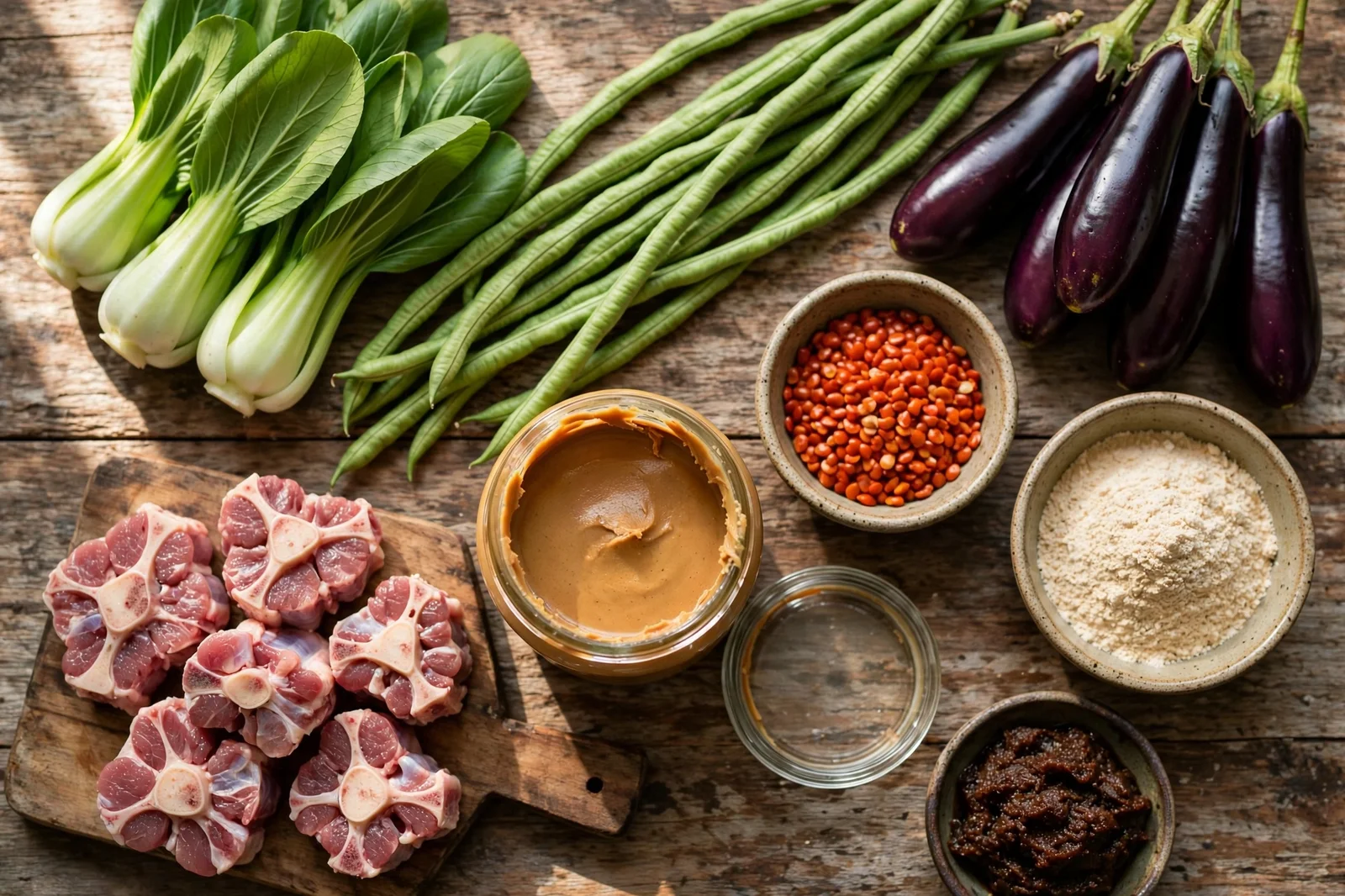
Ingredients
For the stew
- 3 lbs oxtail (about 1.4 kg), cut into 2-inch pieces
- 1 large onion, quartered
- 8 cups water
- 1 tablespoon salt
For the peanut sauce
- 3/4 cup smooth natural peanut butter, unsweetened
- 2 tablespoons rice flour, toasted golden in a dry pan
- 2 tablespoons annatto (atsuete) oil
- 3 cups of the reserved oxtail broth
The vegetables
- 2 Asian eggplants, cut into 2-inch chunks
- 1 bunch yardlong beans, cut into 3-inch lengths
- 1 bunch bok choy, separated into leaves
For serving
- Steamed rice (or sinangag, Filipino garlic fried rice)
- Bagoong (fermented shrimp paste), in a small dish on the side
How to make kare-kare

- Put the oxtail, onion, water, and salt in a heavy pot. Bring to a boil, skim off the foam, then drop to a bare simmer. Cover and cook 2 1/2 to 3 hours, until the oxtail is tender enough to pull from the bone. Top up with water if the level drops below the meat.
- Lift out the oxtail and strain the broth. Measure out 3 cups of broth and keep the rest for another use.
- Toast the rice flour in a dry pan over medium heat, stirring, until golden and nutty-smelling, about 2 minutes.
- In the same pot, warm the annatto oil over medium heat. Add the oxtail back and the 3 cups of broth. Bring just to a simmer, then pull the pot off the heat.
- Whisk the peanut butter into the hot broth until smooth, then whisk in the toasted rice flour. Return the pot to low heat and simmer gently for 10 minutes, stirring, until the sauce thickens and coats a spoon. Do not let it boil.
- Stir in the eggplant and yardlong beans. Simmer 8 minutes, then add the bok choy leaves and cook 2 to 3 minutes more, until just tender.
- Taste and hold the salt; the bagoong supplies it at the table. Serve over rice with the bagoong in its own small dish.

A note on the bagoong
If you’ve never cooked with bagoong, buy the sautéed kind (bagoong guisado) from a Filipino grocery: it’s ready to eat and less harsh than the raw paste. A teaspoon stirred into a bowl of kare-kare at the table is the whole point of the dish: the stew stays mild, and you season your own bowl. I keep it out of the pot so the peanut flavor stays clean.
Troubleshooting: Fix My Kare-Kare
Every cook hits at least one of these on their first kare-kare: the sauce thins out, the oxtail stays tough, or the flavor lands flat. Pick what went wrong below and you’ll get the fix that actually works, straight from real pots.
HERB & LIME · KITCHEN HELP
Fix My Kare-Kare
Choose what went wrong to see a practical next step.
Possible cause
What to try next
For next time
From Paul's kitchen. Results vary with meat cut, peanut butter brand, and stove heat, adjust timing to your setup.
Quick reference (also works without JavaScript)
The sauce is too thin and watery
Cause: The broth was never reduced and not enough toasted rice flour was used to give the sauce its thick, spoon-coating body.
Try: Keep simmering the sauce uncovered until it reduces, or whisk in more toasted rice flour slurry (dissolved in a little warm broth first) while simmering until it coats the back of a spoon.
Prevent: Simmer the broth down before adding the peanut butter, and use enough toasted rice flour to reach that thick, gravy-like consistency.
The sauce turned grainy or split
Cause: The peanut butter went in over too much heat, boiling after adding it makes the fats separate and the sauce turn grainy.
Try: Take it down to a gentle simmer and whisk gently to recombine; if lumps remain, blend the sauce and pass it through a fine-mesh strainer.
Prevent: Keep the pot at a gentle simmer once the peanut butter is in, and whisk continuously as you add it.
The sauce tastes cloyingly sweet
Cause: Sweetened peanut butter (like Jif or Skippy) carries added sugar that turns the mild, nutty sauce candy-like.
Try: Balance the sweetness with a pinch of salt and extra broth, and plan on unsweetened peanut butter next round.
Prevent: Use a natural, unsweetened peanut butter whose only ingredients are peanuts (and maybe salt) so the pure roasted nuttiness comes through.
The oxtail is tough and chewy
Cause: Oxtail is full of collagen that needs a long, slow simmer to break down, pulling it off the heat early leaves it rubbery.
Try: Put it back on low heat and keep simmering until a fork slides through with no resistance, even if that takes another hour or more.
Prevent: Simmer the oxtail low and slow for a full 2.5 to 3 hours (a lazy bubble, not a rolling boil) and test it with a fork before moving on.
The stew tastes bland, or the bagoong overpowered it
Cause: Kare-kare is intentionally cooked mildly under-seasoned; the salt and punch are meant to come from bagoong stirred in at the table.
Try: Season the sauce just for nuttiness and thickness, then serve sautéed bagoong on the side so each person seasons their own bowl to taste.
Prevent: Season the pot lightly while cooking and never fully salt the stew in the pot, save the final seasoning for bagoong at the table.
Kare-Kare: Filipino Peanut Stew
Ingredients
Method
- Simmer the oxtail. Put the oxtail, onion, water, and salt in a heavy pot. Bring to a boil, skim off the foam, then drop to a bare simmer. Cover and cook 2 1/2 to 3 hours, until the oxtail is tender enough to pull from the bone. Top up with water if the level drops below the meat.
- Reserve the broth. Lift out the oxtail and strain the broth. Measure out 3 cups of broth and keep the rest for another use.
- Toast the rice flour. In a dry pan over medium heat, toast the rice flour, stirring, until golden and nutty-smelling, about 2 minutes.
- Reheat the meat. In the same pot, warm the annatto oil over medium heat. Add the oxtail back with the 3 cups of broth. Bring just to a simmer, then pull the pot off the heat.
- Build the sauce off the boil. Whisk the peanut butter into the hot broth until smooth, then whisk in the toasted rice flour. Return the pot to low heat and simmer gently for 10 minutes, stirring, until the sauce thickens and coats a spoon. Do not let it boil.
- Add the vegetables. Stir in the eggplant and yardlong beans. Simmer 8 minutes, then add the bok choy leaves and cook 2 to 3 minutes more, until just tender.
- Serve. Taste and hold the salt — the bagoong supplies it at the table. Serve over rice with the bagoong in its own small dish.
Notes
More Filipino recipes
- Bistek Tagalog: Filipino Beef Steak with Calamansi
- Chicken Adobo: The Filipino Soy-Vinegar Classic
- Sinangag: Filipino Garlic Fried Rice
- Filipino Chicken Sotanghon Soup
From the garden
The yardlong beans in this stew are the reason I keep a trellis of them every summer: they produce handfuls a day at peak season and the young pods go straight from vine to pot in kare-kare. If you want to grow your own, my notes on spacing and harvest timing are in how to grow yardlong beans
2 thoughts on “Kare-Kare: Filipino Peanut Stew”