
Cold fried rice is a different problem from cold plain rice
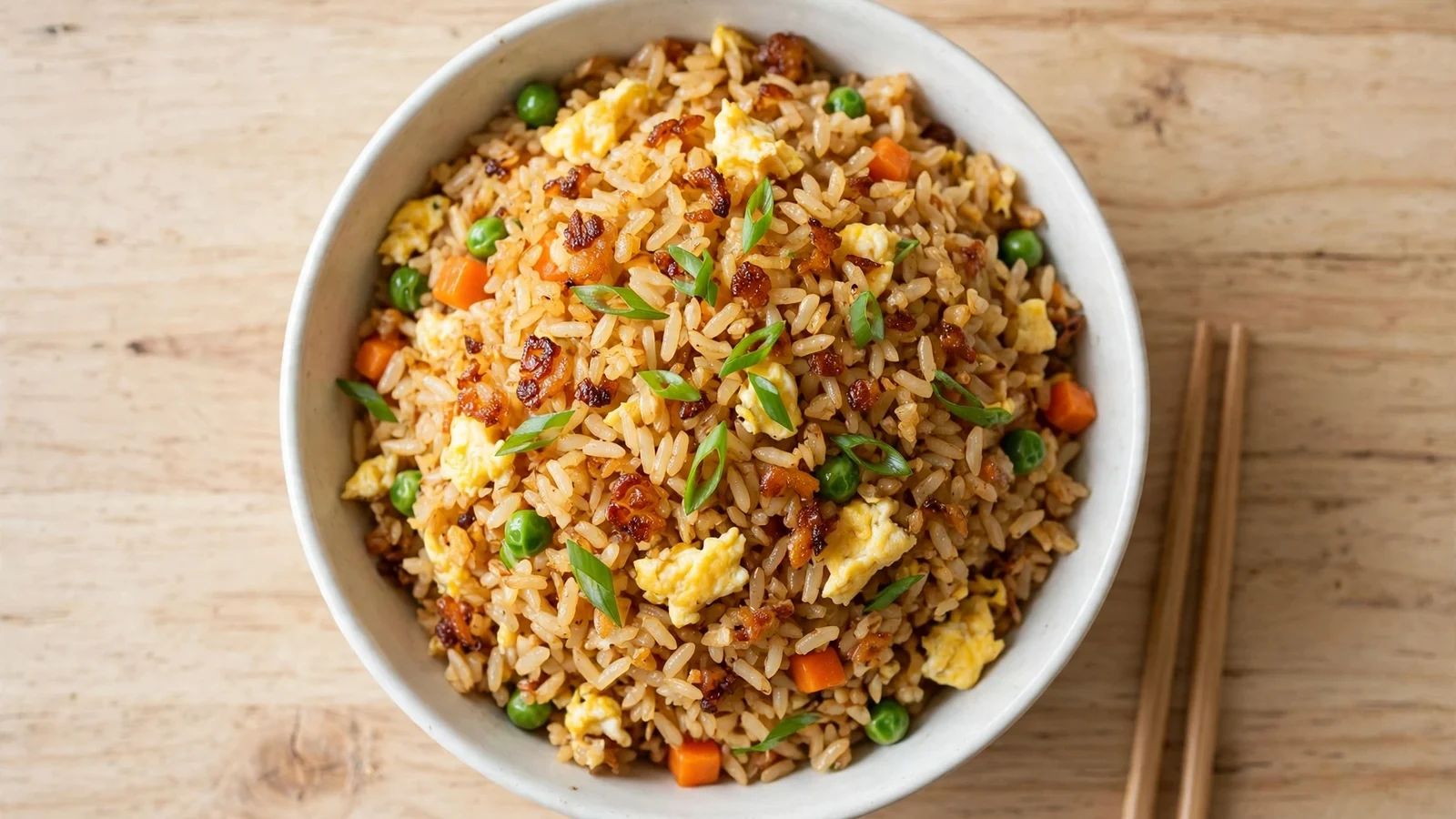
A container of leftover fried rice comes out of the fridge firm, dull, and a little greasy around the edges. The instinct is to treat it like plain cooked rice: add water, cover, steam it soft. That is exactly how you ruin it. Plain rice dries out in the fridge, so it wants moisture. Fried rice is already coated in oil and sauce, and its problem is the opposite: heat it with added steam and the grains turn soft and wet instead of separate and lively. Reheating fried rice well means driving moisture off, not adding it.
The quick answer
For a big portion: a hot wok with a little oil, re-fry until the grains are hot and crisped in spots. For one bowl: microwave at medium power with just a teaspoon of water, covered. For a whole tray: spread thin on a sheet pan and bake at 375°F until hot. Never use the steamer for fried rice. Timings and details for each are below.
Why reheated fried rice goes soggy
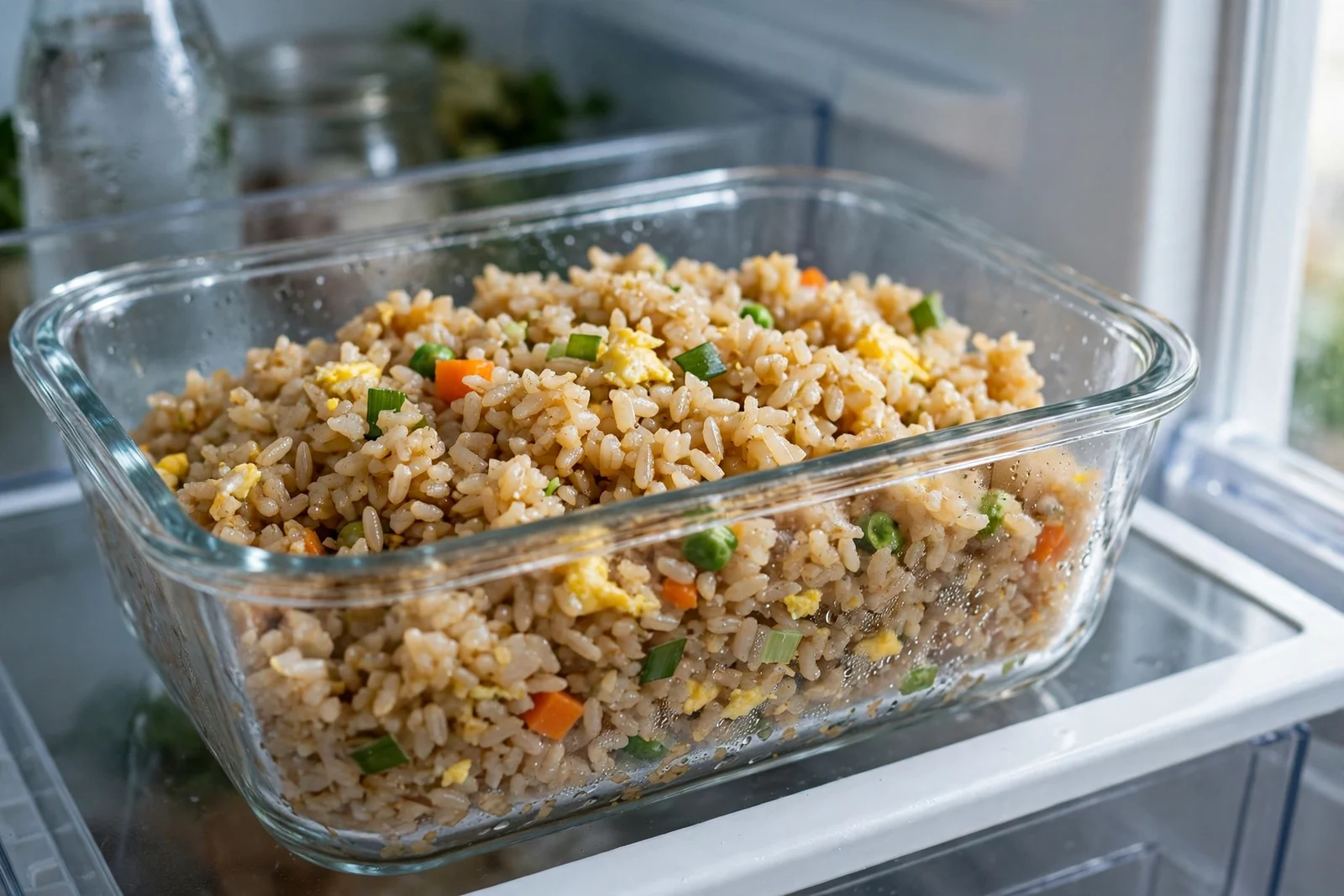
Two things happen in the fridge. The starches in the grains firm back up, the same as in plain rice. And the oil separates: it firms into a waxy film instead of a slippery coating, so the rice tastes flat and greasy at once. The fix is direct heat. A hot surface re-melts the oil, crisps the outside of the grains, and lets the firm starches soften from the inside out. Water poured over the rice before reheating steams through the oily coating and collapses the grains into mush. That is the one mistake behind nearly every bad plate of reheated fried rice.
Method 1: hot wok re-fry (the crispest)
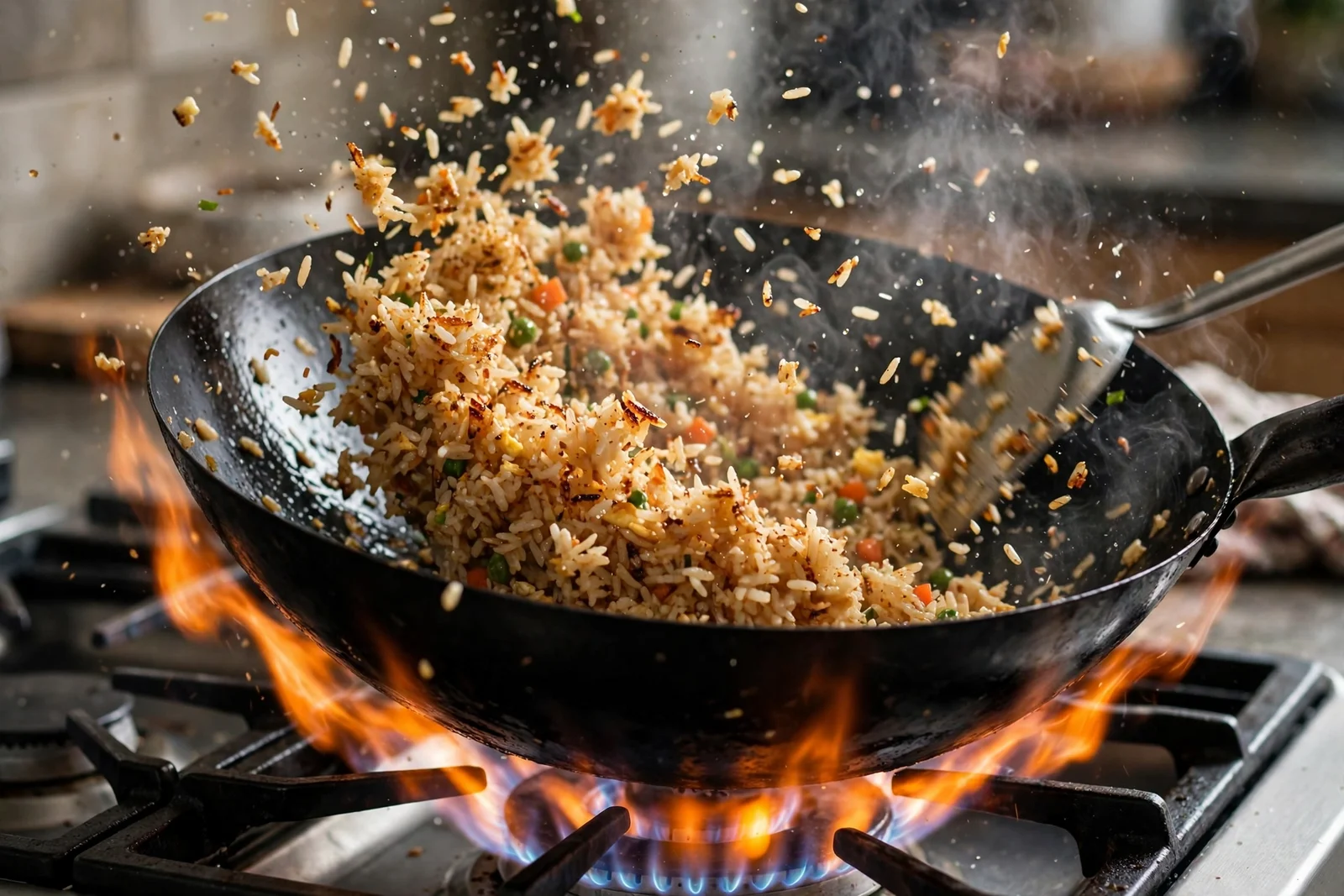
This is the best way to reheat fried rice, and it is also how it gets back some of the texture of the first day. Put 1 teaspoon of neutral oil per 2 cups of cold fried rice in a wok or large skillet. Less oil than you think: the rice brings its own. Heat over medium-high until the oil shimmers, not smokes.
Break the cold clumps apart with your hands or a spatula before the rice goes in. Add the rice, spread it in a thin layer, and then leave it alone for two full minutes. The untouched rest is the whole trick. The grains touching the hot metal re-crisp the way they did on day one. Toss once, let it sit another minute or two, and take it off when the rice is steaming hot all the way through, about four minutes total.
A detail that matters: cold rice, straight from the fridge, works better than rice you let warm up on the counter. Warm clumps mash when you break them; cold clumps crumble into separate grains. The same logic applies when you start fresh rice for frying, which is why How to Store Rice and Grains treats cooked rice as a two-day-ahead ingredient.
Method 2: microwave, one bowl (the fastest)
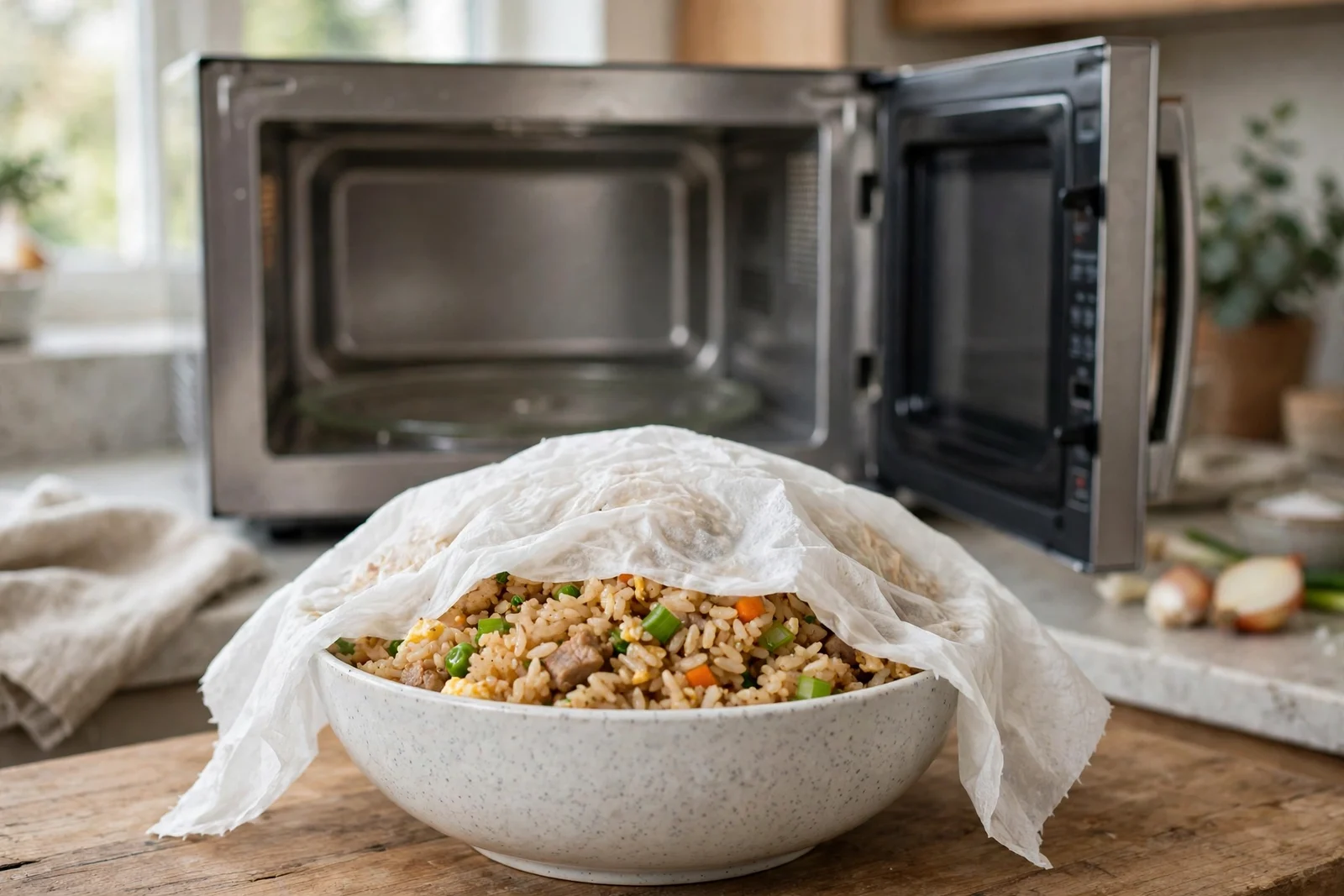
For a single serving the microwave is honest and quick, as long as you adjust the water down from what plain rice needs. Fried rice takes 1 teaspoon of water per cup, half the plain-rice ratio, sprinkled over the top. Break up the clumps first, cover with a damp paper towel, and microwave at 70 to 80 percent power for 90 seconds. Stir halfway so the egg bits do not go rubbery on the edges, then rest the bowl covered for one minute before eating.
Two notes from repeated tries. First, medium power instead of full: full power heats the rim while the center stays cold, and those hot edges turn chewy. Second, the rice comes out hot and soft, never crisp. If you want the crisp back, the wok above is the way. The plain-rice version of this method is in How to Reheat Leftover Rice Without Drying It Out.
Method 3: oven or toaster oven (for big batches)
Takeout containers and meal-prep trays reheat best in the oven. Spread the cold fried rice in a thin layer on a sheet pan or in an oven-safe dish. The thin layer matters more than the temperature: a deep pile steams in the middle while the top dries out. Bake at 375°F (190°C) for 12 to 15 minutes, stirring once halfway, until every part is steaming. The exposed grains get lightly crisped edges, which is about as close to fresh as reheated fried rice gets.

Skip the steamer
A steamer basket or a rice cooker’s reheat mode is the right tool for plain cooked rice. It is the wrong tool for fried rice. Steaming pumps moisture back into grains that are already carrying oil and sauce, and the result is soft, wet, and dull. If the goal was plain rice, the four methods in How to Reheat Leftover Rice Without Drying It Out cover it. For fried rice, stay with the wok, the microwave, or the oven.
Food safety, plainly
Fried rice usually carries egg, meat, or shrimp, so it deserves stricter storage than plain rice. Cool it within an hour of cooking and refrigerate it. Eat it within three days. When you reheat, get every part steaming hot, 165°F (74°C) through the middle, with no lukewarm spots left in the center. Reheat once. A second cooling and reheating cycle is where the risk lives, so only heat what you will finish.
From the garden
Reheating flattens the freshest flavors first, and no method brings back the sharpness of just-cut scallion greens. A small handful sliced over the top after reheating does more for the plate than any extra sauce would. I keep a pot of green onions on the sill for exactly this job, and the full routine is in the garden guides.
More fried rice recipes
- Sinangag: Filipino Garlic Fried Rice : crisped in garlic oil, and the one that reheats best of all because it starts dry.
- Kimchi Fried Rice : tangy and spicy, built for day-old grains.
- Khao Pad: Thai Fried Rice with Egg : the Thai baseline for any fried rice technique.
- Tom Yum Fried Rice : bold and sour-spicy, good practice for balancing sauces before the wok.