
Bibim guksu is the bowl I make when it is too hot to stand over the stove for long. Thin somyeon wheat noodles cook in about three minutes, get shocked icy cold, and then get tossed in a glossy red gochujang sauce that lands sweet, sour, and spicy in equal measure. The whole thing is on the table in fifteen minutes, and on a warm evening nothing else in my kitchen competes with it.

What is bibim guksu?
Bibim means mixed, and guksu means noodles: bibim guksu is Korean mixed cold noodles. It is a summer staple in Korea, the kind of food that shows up when the weather turns warm and nobody wants a hot broth. The base is always thin wheat noodles (somyeon or somen), served cold and dressed in a sauce built on gochujang, then topped with crisp vegetables, kimchi, and usually a halved boiled egg.
What makes it different from bibim naengmyeon, the buckwheat noodle dish it often gets confused with: bibim guksu uses soft wheat noodles instead of chewy buckwheat, and it is milder, simpler, and faster. If you like my kimchi fried rice, this is its chilled, saucy counterpart for hot days. The sauce does most of the talking, so the recipe below treats sauce balance as its own step rather than an afterthought.
The sauce, balanced before it touches the noodles
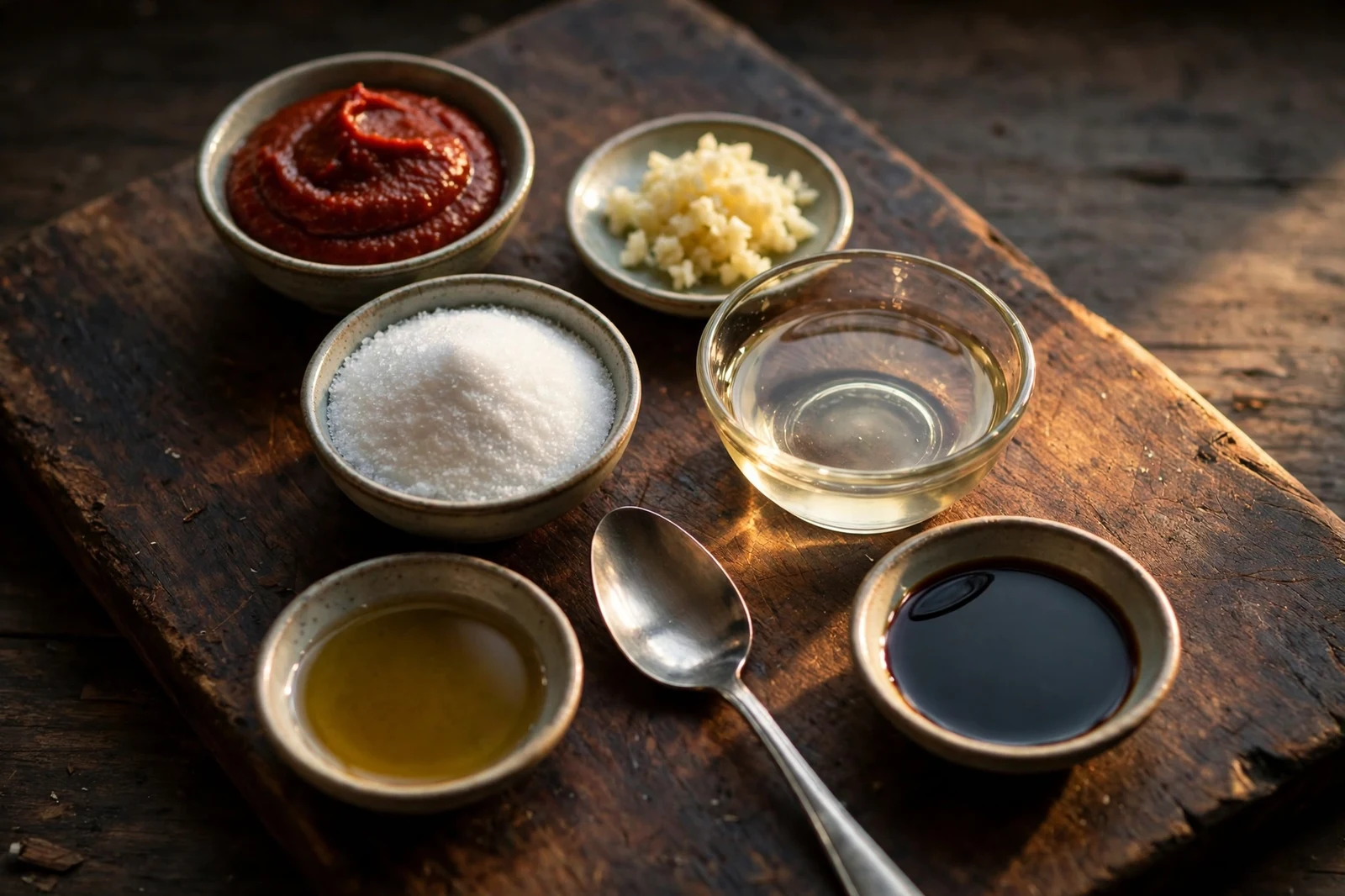
This is where most bowls go wrong: gochujang straight from the tub tastes one-note. The sauce needs four jobs at once, and my per-serving ratio handles them: 1 tablespoon gochujang for heat and body, 2 teaspoons sugar and 2 teaspoons rice vinegar for the sweet-sour frame, 1 teaspoon soy sauce for salt, 1 teaspoon toasted sesame oil for aroma, and 1/2 teaspoon minced garlic. Whisk it smooth in a small bowl and taste it before it meets the noodles. Gochujang brands vary a lot in sweetness and salt, so a sauce that tastes flat usually needs vinegar first, not more sugar.
One observation from my own kitchen: add only half the sauce to the noodles at first. Toss, taste, then add more. Fixing an over-sauced bowl is a project; fixing an under-sauced one takes five seconds.
How to keep the noodles springy
The failure mode with bibim guksu is not the sauce, it is the noodles. Somyeon cook in 3 to 4 minutes, and in my experience they go from perfect to mushy in under a minute past that. Use a big pot of well-boiling water so they have room, set a timer, and start tasting at the 3-minute mark. You want them tender but still with a little pull.
Then rinse, and rinse like you mean it. Drain the noodles and run cold water over them while rubbing the strands gently between your hands to wash off the surface starch. That starch is what glues cold noodles into one solid clump. For the best result, follow the rinse with a 30-second dunk in iced water. The noodles come out springy and properly cold, and cold noodles keep the toppings crisp and the sauce sharp instead of wilting everything on contact.

Assemble the bowls
Divide the cold noodles among serving bowls and twist each portion into a loose nest with chopsticks rather than piling them flat. Spoon over half the sauce, toss with tongs until every strand is coated, then taste and add more sauce if you want it. Lay the julienned cucumber, shredded cabbage, and chopped kimchi on top in small piles, set a halved egg on each bowl, and finish with sesame seeds and a thin drizzle of sesame oil. Serve right away: the noodles start softening the minute they sit, and this dish is at its best within minutes of tossing.
Keep the cucumber thin. Thick slices weep water into the bowl and dilute the sauce you just balanced.

Tips and variations
The sauce keeps in the fridge for up to a week and tastes better on day two, which makes this a good make-ahead lunch. One note: if you are storing the sauce, leave the garlic and sesame oil out and mix them in right before serving, since both taste best fresh. For more protein, add sliced rotisserie chicken or an extra egg. For a milder bowl, cut the gochujang in half and make up the difference with a spoon of sugar and a splash more vinegar rather than another chili sauce.
The kimchi you use matters more than you might think. Well-fermented, sour kimchi adds a depth that fresh kimchi does not, so if you keep a jar around, this is the recipe to use it in. My guide to homemade napa cabbage kimchi walks through getting a batch going. And if you want to understand the two chili pastes that show up in Korean cooking, my gochujang vs gochugaru comparison covers when to reach for each one.
Troubleshooting: Fix My Bibim Guksu
Every bowl of bibim guksu lives or dies on two things: the spring of the noodles and the balance of the sauce. If yours went sideways, pick your problem in the widget below for a practical next step.
HERB & LIME · KITCHEN HELP Choose what went wrong to see a practical next step. From Paul's kitchen. Results vary with noodle brand and gochujang sweetness, adjust sauce and timing to your setup. Quick reference (also works without JavaScript) Cause: The surface starch was never washed off, so the strands glued together as they cooled. Try: Break the clumps apart under cold running water while rubbing the strands gently between your hands, then toss with the sauce right away. Prevent: Rinse cooked somyeon under cold water, rubbing gently to remove the starch, then give them a 30-second dunk in iced water before saucing. Cause: Somyeon cook in 3 to 4 minutes and keep softening off the heat, so even one extra minute pushes them past springy. Try: The texture can't be recovered, but you can still dress the noodles and serve them warm-style; keep the toppings crisp so the bowl has contrast. Prevent: Set a timer and start tasting at 3 minutes; drain the moment they are tender with a slight pull, then rinse cold immediately to stop carryover cooking. Cause: Gochujang straight from the tub has heat but no frame, so the sauce reads as raw chili paste instead of sweet-sour-spicy. Try: Whisk in more sugar and rice vinegar a teaspoon at a time until the four corners (sweet, sour, salty, spicy) all show up. Prevent: Taste the sauce before it touches the noodles and adjust for your gochujang brand, since sweetness and salt vary a lot between jars. Cause: Thick-cut cucumber and other vegetables release water as they sit, diluting the sauce you just balanced. Try: Drain off the pooled liquid, whisk in an extra half spoon of gochujang with a splash of vinegar, and re-toss. Prevent: Slice the cucumber and vegetables thin, and assemble and serve immediately instead of letting the bowl stand. Cause: The noodles were still warm when tossed, which wilted the toppings and muted the sauce's sharpness. Try: Chill the whole bowl for 15 minutes to recover some refreshment, then add a fresh sprinkle of sesame seeds and a thin drizzle of sesame oil. Prevent: Cool the rinsed noodles completely (iced water dunk helps), and only toss with sauce and toppings right before serving.Fix My Bibim Guksu
Possible cause
What to try next
For next time
The noodles clumped into one sticky mass
The noodles turned mushy and soft
The sauce tastes one-note or too harsh
The bowl went watery and the sauce thinned out
The flavors taste flat and the toppings look wilted
Bibim Guksu: Korean Spicy Cold Noodles
Ingredients
Method
- Boil the eggs for 7 minutes, chill under cold water, peel, and halve them. Julienne the cucumber, shred the cabbage, and chop the kimchi. Mince the garlic.
- Whisk the gochujang, sugar, rice vinegar, soy sauce, sesame oil, and garlic in a small bowl until smooth. Taste it now — if it reads flat, add vinegar a teaspoon at a time; gochujang brands vary in sweetness and salt.
- Bring a large pot of water to a rolling boil. Add the somyeon and cook 3 to 4 minutes, tasting from the 3-minute mark — tender with a slight pull, not soft. Drain immediately.
- Rinse the noodles under cold running water, rubbing the strands gently between your hands to wash off the surface starch. Dunk in iced water for 30 seconds, then drain well.
- Divide the noodles between two bowls, twisting each portion into a loose nest with chopsticks. Spoon over half the sauce and toss with tongs until every strand is coated. Taste and add more sauce if you like.
- Top each bowl with cucumber, cabbage, and kimchi, set the halved eggs on top, and finish with sesame seeds and a thin drizzle of sesame oil. Serve immediately.
Notes
More Korean recipes
- Tteokbokki: Spicy Korean Rice Cakes, chewy rice cakes in a sweet-spicy gochujang sauce.
- Japchae: Korean Glass Noodle Stir-Fry, glass noodles with vegetables and a soy-sesame dressing.
- Korean Fried Chicken (Yangnyeom), twice-fried chicken in a glossy spicy glaze.
- Homemade Napa Cabbage Kimchi, the batch to keep for recipes like this one.
Enjoy it cold, eat it fast, and keep a cold drink nearby. This one earns its reputation on hot days.
2 thoughts on “Bibim Guksu: Korean Spicy Cold Noodles in 15 Minutes”