
A papaya does not ripen the way a banana does. It gives no loud signal, and the skin can turn yellow before the flesh catches up, so one check alone can mislead you. The reliable way is to run three checks together: look at the color, press it gently, and smell the stem end. Each check takes a few seconds, and together they tell you whether the fruit is ready to eat today, needs two more days on the counter, or should stay on the shelf. This post walks through all three, how the two common kinds differ, how to ripen a firm papaya at home, and when a green papaya is exactly what you want.
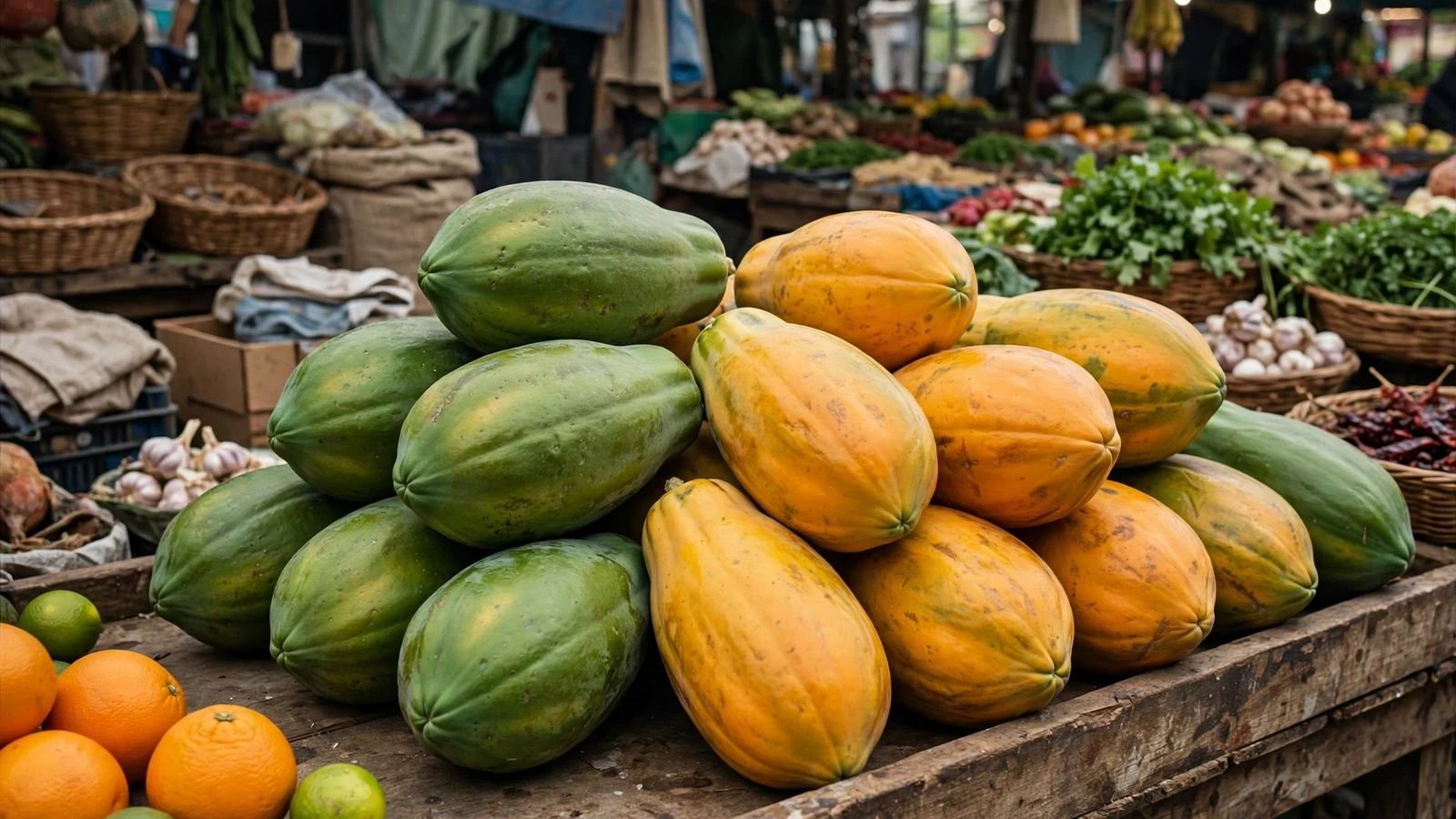
The three checks, in order
Color comes first because it is the fastest check, and it sorts the pile into three groups: mostly green, half yellow, and mostly yellow. Touch comes second because it catches the trap color misses: a papaya whose skin turned yellow early can still be firm and bland inside, a condition growers call skin ripening without pulp maturity. Smell comes third because it confirms what the first two checks suggest. A ripe papaya smells sweet and a little musky at the stem end. No smell means it needs more time. A sour or fermented smell means it has passed its peak. Use all three before you buy, and you will bring home far fewer papayas that sit on the counter and never turn sweet.
| Skin | Feel | Smell | What to do |
|---|---|---|---|
| All green | Rock hard | No smell | Not ready; buy only for green papaya dishes, or ripen at home for 3 to 5 days |
| Half green, half yellow | Firm, barely gives | Faint or none | Ripens in 2 to 3 days at room temperature |
| Mostly yellow, 75 to 100 percent | Yields slightly to thumb pressure | Sweet, a little musky at the stem | Ready to eat, or ready within a day |
| Yellow with soft spots or dark patches | Mushy in places | Sour or fermented | Past its peak; leave it on the shelf |
Check one: look at the skin
A ripe papaya is mostly yellow, with 75 to 100 percent of the skin turned from green to yellow or orange. Small green patches near the stem are fine. A few small brown speckles are normal too and do not affect the flesh. Large brown or black patches, wrinkled skin, or spots that look wet mean the fruit is overripe or starting to spoil. All green means underripe: the flesh inside will be hard, pale, and bland, and no amount of waiting in the fridge will fix it. A papaya at the color break stage, about one quarter yellow, ripens well at room temperature and is a good buy if you plan to eat it in two or three days. Our guide to how to pick a ripe mango uses the same color logic, and the same rule applies here: buy for the day you plan to eat it, not for the color that looks nicest on the shelf.

Check two: press it gently
Hold the papaya in one hand and press the skin near the middle with the pad of your thumb, not a fingernail. A ripe papaya yields slightly and springs back, about like a ripe avocado or a ripe peach. Rock hard means underripe, and it needs days at room temperature. Mushy, or soft in one spot while firm elsewhere, means bruised or overripe. Do not squeeze the whole fruit in your palm; a hard squeeze bruises the flesh under the skin, and the bruise shows up as a dark patch a day later. Press in two or three places, since one soft spot can hide a firm fruit. When the skin looks yellow but the fruit still feels firm, trust the press over the color. That mismatch is the most common way a papaya disappoints: the skin ripened, the flesh did not, and the fruit tastes flat even though it looks ready.

Check three: smell the stem end
Bring the stem end close to your nose, about 6 to 8 inches away, and take a short sniff. A ripe papaya gives off a sweet smell with a soft musky note, strongest right at the stem. The smell gets stronger as the fruit reaches its peak, usually within a day or two of the color change. No smell at all means the fruit is underripe and needs another 2 to 4 days at room temperature. A sour, yeasty, or fermented smell means it has passed its peak and started to spoil, and that sour smell is the most reliable single sign the fruit is no longer good to eat raw. A papaya that has been sitting in a cold store case may smell faint at first; let it sit on the counter for 20 minutes before you judge the smell, since cold dulls the scent.
Two kinds of papaya, two colors when ripe
Most papayas in American stores are one of two kinds, and they do not ripen to the same color. Hawaiian Solo papayas are small, about a pound, and turn bright yellow when ripe. Mexican Maradol papayas are much larger, up to 10 pounds, and turn orange-gold when ripe, sometimes keeping a green tint on parts of the skin even when the flesh is ready. For a Mexican papaya, color alone can mislead you, so lean on the press and the smell instead. Size tells you nothing about ripeness either way. A small Solo can be rock hard and a large Maradol can be ready to eat; judge each fruit by its own skin, feel, and smell. The flesh inside a ripe papaya is orange to salmon pink, with black seeds in the center. If you cut one open and the flesh is pale yellow and firm, it was picked too early; it will still work in a cooked dish, but it will not sweeten on the counter once cut.

How to ripen a papaya at home
Leave an underripe papaya on the counter at room temperature, stem end up, out of direct sun. A papaya that is half green and half yellow usually reaches eating quality in 2 to 3 days. One that is mostly green needs 3 to 5 days. To speed it up, put the papaya in a paper bag and fold the top closed; the bag traps the ethylene gas the fruit gives off, and the fruit ripens a day or two faster. Dropping a ripe banana or apple into the bag adds more ethylene and speeds it further. Check the fruit once a day with the thumb press, and move it to the fridge the day it gives slightly, since a ripe papaya goes from ready to overripe in about a day on a warm counter. Do not put an unripe papaya in the fridge. Cold stops the ripening, and a papaya chilled before it ripens stays hard and bland even after it warms up again.
How to store a ripe papaya
A ripe papaya keeps about 2 to 3 days in the fridge, whole. Once cut, scoop out the seeds, wrap the halves tightly, and eat them within 2 days; the cut surface dries out and picks up fridge smells fast. Cubed papaya in a covered container keeps about 2 days and works well in smoothies, fruit salads, and our mango sticky rice style desserts, where it can stand in for mango. For longer storage, freeze cubed ripe papaya in a single layer on a tray, then move the frozen cubes to a bag. Frozen papaya keeps for about 3 months and blends straight from frozen into smoothies. It loses its fresh texture when thawed, so use frozen cubes for blending, not for eating raw. Our guide to how to store fresh herbs covers the same first-in-first-out habit for the herbs that go with papaya salads, and the habit works the same way: use the oldest fruit first, and label the bag with the date it went in.
When to buy green on purpose
Green papaya is a different ingredient from ripe papaya, not a failed one. Unripe green papaya is firm, pale, and mild, and it shreds into crisp strands for salads. That is the papaya in som tum, the Thai green papaya salad, and in goi du du, the Vietnamese green papaya salad. It is also the base of tam mak hoong, the Lao papaya salad, and of atchara, the Filipino pickled green papaya. For those dishes, buy the greenest, firmest papaya on the shelf, the one you would reject for eating fresh. Peel it, halve it, scrape out the white seeds, and shred the flesh with a julienne peeler or a coarse grater. Wear gloves if your hands are sensitive, since the white sap of a green papaya can irritate skin. A green papaya keeps about a week in the fridge, wrapped, so one fruit covers several salads.
Mistakes to avoid
Pressing with a fingernail is the first one. Nails puncture the skin and the puncture turns dark within a day, so use the pad of your thumb. Judging by size is the second; size tells you the variety, not the ripeness. Buying the yellowest fruit without pressing it is the third, since skin can ripen ahead of the flesh. Putting an unripe papaya in the fridge is the fourth, since cold stops ripening for good. Ignoring a sour smell is the fifth, since a sour smell is the clearest sign the fruit has turned, even when the skin still looks fine. Cutting a papaya open to check it is the sixth: once cut, it cannot ripen further, so a firm pale half is a wasted fruit. Our guide to how to pick a good coconut makes the same point about judging by one sense alone, and papaya rewards the same habit: color, touch, and smell together, every time.
More recipes with papaya
Som Tum: Thai Green Papaya Salad, Goi Du Du: Vietnamese Green Papaya Salad, Tam Mak Hoong: Lao Papaya Salad, and Atchara: Filipino Pickled Green Papaya.