
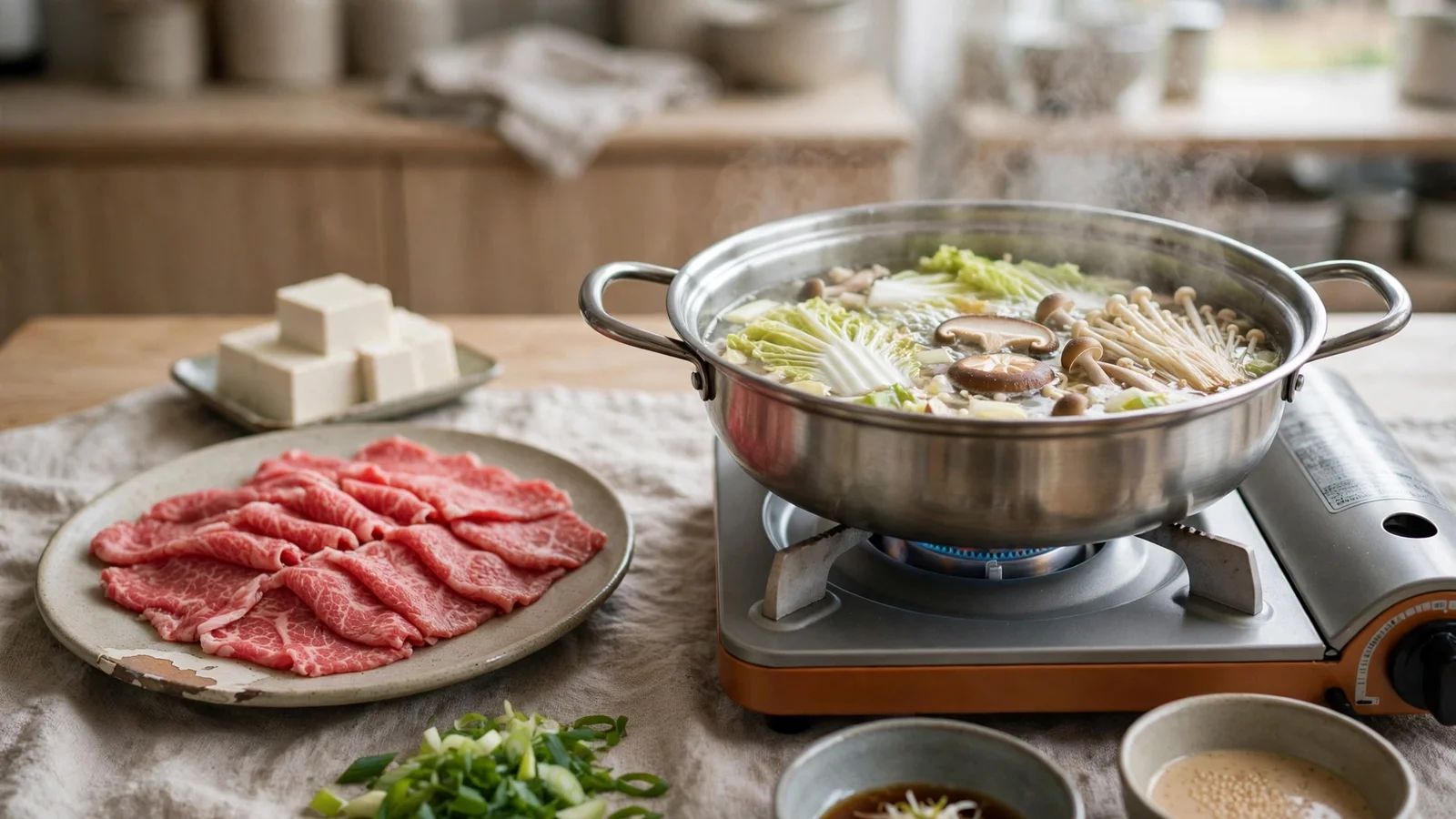
Shabu-shabu is dinner and a show at the same table. A pot of clear kombu broth simmers in the middle, and everyone cooks their own food in it, a few slices at a time. Thin beef goes in for seconds, comes out tender, and gets dipped in ponzu or sesame sauce. Vegetables, tofu, and noodles follow in the same pot. Nothing about it is hard once the broth is right and the meat is sliced thin enough. This is how I set it up at home for four people, with timings that keep the meat tender and the broth clear.
What is shabu-shabu?
Shabu-shabu is a Japanese hot pot where paper-thin slices of meat and vegetables cook in simmering broth right at the table, then get dipped in sauce and eaten. The name copies the sound of a slice swished back and forth in the broth, “shabu-shabu.” It came out of Chinese hot pot cooking and took on a Japanese shape: a light kombu broth, beef or pork sliced almost see-through, and two dipping sauces, ponzu and sesame. The broth stays plain on purpose. It seasons the food gently while it cooks, and the sauces do the rest at the table.
It differs from sukiyaki, its better-known cousin. Sukiyaki cooks its ingredients in a sweet soy sauce mixture that flavors everything in the pot. Shabu-shabu keeps the broth clean and puts the flavor in the dipping sauces. My Yudofu post covers another Japanese hot pot, a quiet simmered tofu pot, if you want a slower night. Shabu-shabu is the lively one, built for a group around one pot.
Start with the broth
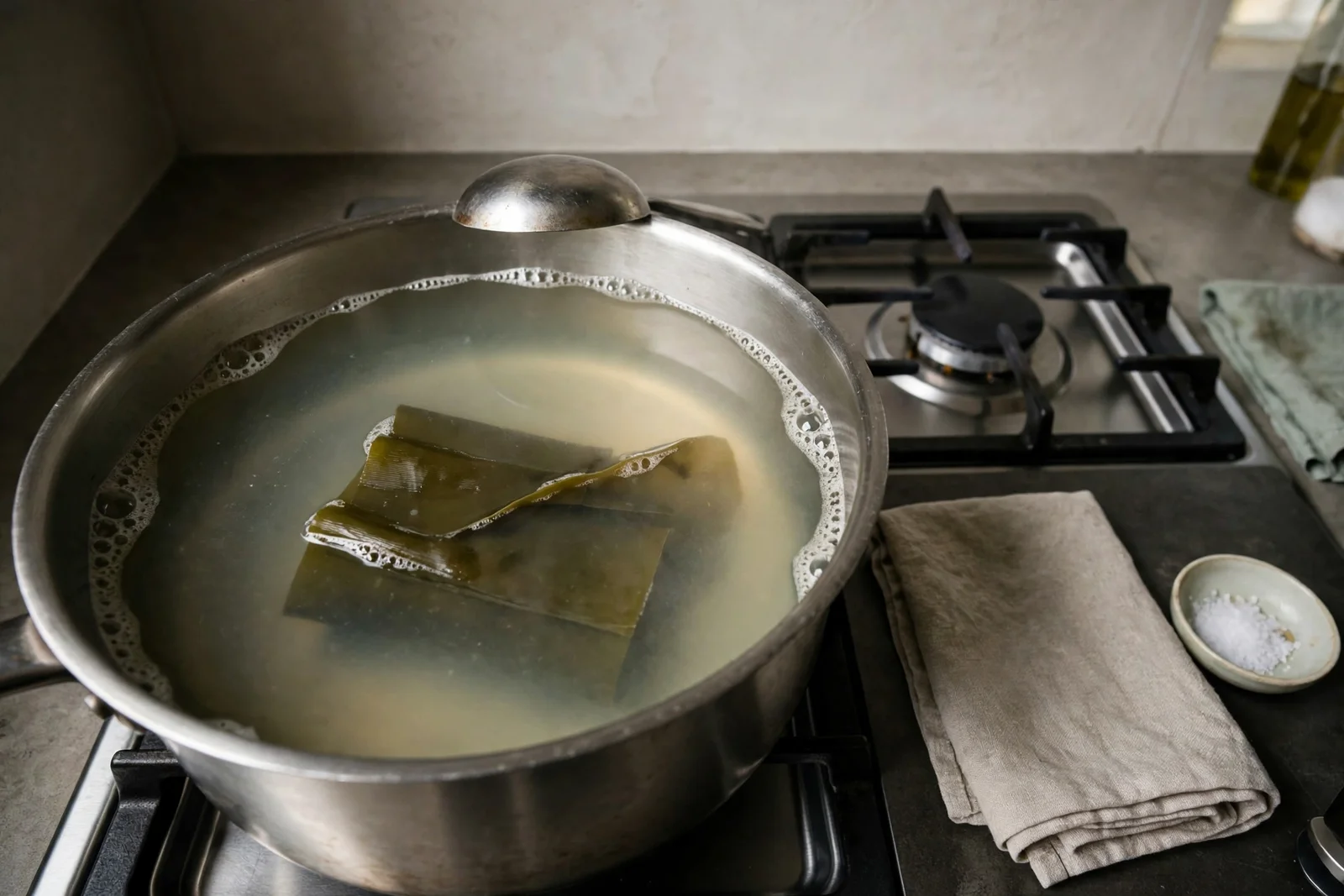
The broth is kombu dashi, and it takes almost no work. Wipe a 4-inch square of kombu with a damp cloth and put it in 8 cups of cold water. Leave it for 30 minutes. That cold soak pulls the savory flavor out of the kelp without the bitter, slimy notes that come from boiling it. Then set the pot over medium heat and bring it to a bare simmer, just as small bubbles start to rise. Pull the kombu out before the water boils. Kombu left in boiling water turns the broth bitter, and there is no fix for that once it happens. Stir in a tablespoon of sake and a teaspoon of salt, and the broth is done.
That is the whole recipe for the broth, and it is worth doing from scratch. My guide to homemade dashi walks through the same kombu step with more detail on timing and storage. A pot of shabu-shabu broth should look like pale tea and taste clean and lightly savory. If your broth is dark or heavy, it will fight the dipping sauces instead of letting them work.
Slice the meat paper-thin
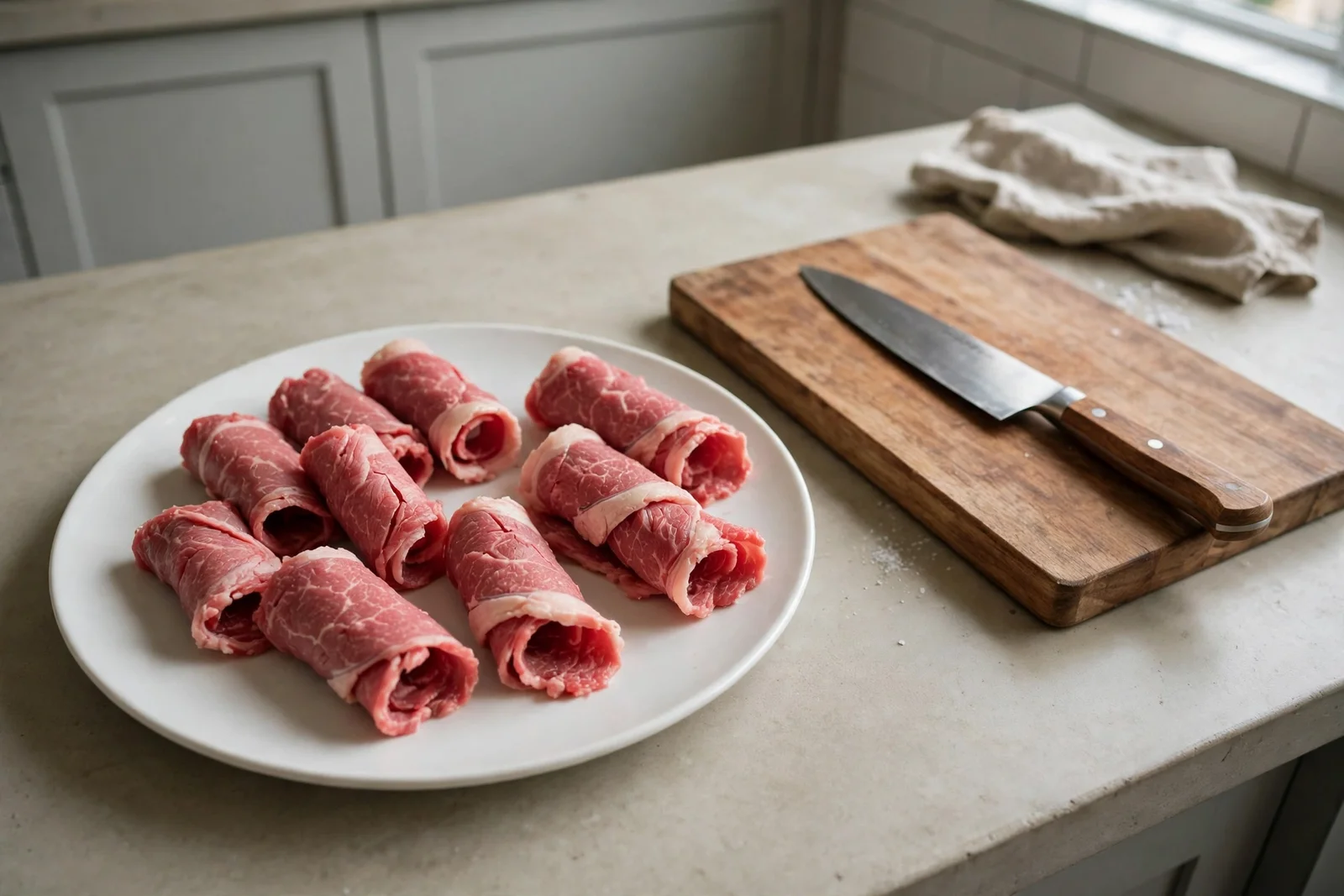
The meat makes or breaks this dish. It has to be thin enough to cook in seconds, about 1 to 2 millimeters. Ribeye is my pick, since its fat melts into the broth and keeps the slices tender, but sirloin or pork belly work too. The easy way to slice it at home is to freeze the meat for 30 to 45 minutes first, until it feels firm at the edges and still gives in the middle. Then slice it across the grain with your sharpest knife, as thin as you can. A partially frozen piece slices clean instead of squashing under the blade. If that sounds like too much knife work, buy pre-sliced shabu meat at an Asian grocery store. It is cut on a machine and comes out even every time.
Plan on about a pound of meat for four people, arranged in loose rolls or shingles on a plate. My guide to slicing meat paper-thin covers the freezing trick and the knife angle in more detail. Thick slices are the most common mistake with this dish. A slice cut at 5 millimeters needs real cooking time, and by the time the middle is done, the outside is tough.
Set the table
Everything goes on the table before the burner goes on. Cut half a head of napa cabbage into wide strips, slice 8 shiitake mushrooms in half, cut a block of firm tofu into cubes, and slice 2 green onions on a sharp diagonal. Add a carrot cut into thin coins, a bunch of enoki mushrooms with the roots trimmed, and 4 ounces of harusame glass noodles soaked in warm water for 10 minutes. Arrange each one on its own plate around the pot. A portable gas burner or an induction plate in the middle of the table keeps the broth at a gentle simmer where everyone can reach it.
Set out two dipping sauces per person, ponzu and gomadare sesame sauce, in small bowls. Ponzu is citrus and soy, bright and sharp. Gomadare is creamy, nutty, and sweet. My homemade ponzu sauce takes a few minutes and tastes cleaner than most bottled versions. Add grated daikon, sliced green onion, and a pinch of shichimi togarashi on the side so each person can season their own bowl.
Cook at the table
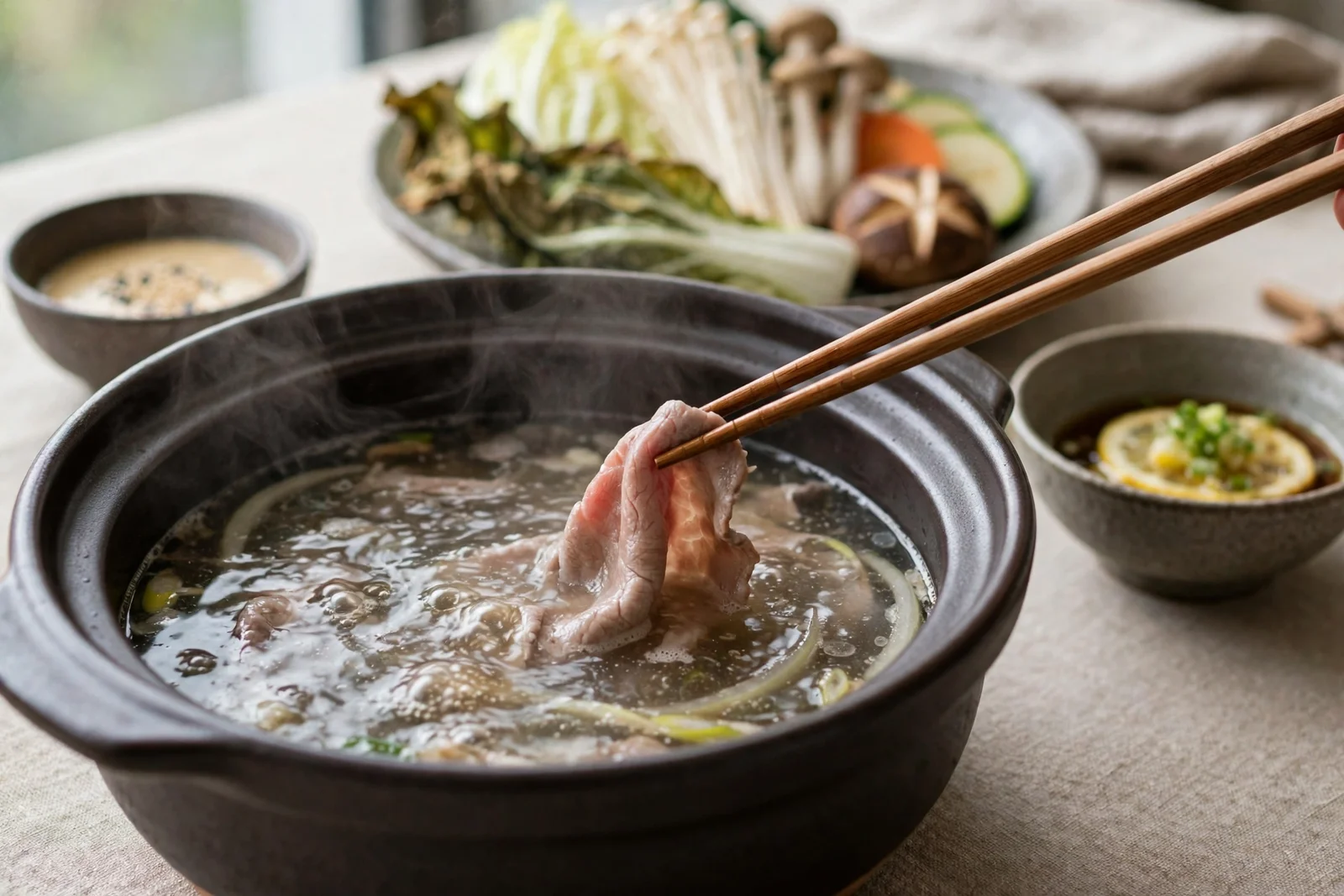
Bring the broth to a gentle simmer, around 180°F, where small bubbles rise steadily and the surface barely moves. That temperature is the whole game. A hard boil clouds the broth and toughens the meat, so turn the burner down until the pot calms. Start with the hard vegetables, cabbage stems and carrot coins, and let them cook for 2 to 3 minutes. Then add the tofu and mushrooms. The meat goes in last, a few slices at a time, and only the amount each person is about to eat.
Pick up a slice with chopsticks and swish it back and forth in the broth two or three times. Beef takes 10 to 20 seconds, just until it turns from red to light pink. Pull it out, dip it, and eat it. Pork needs longer, until it is cooked all the way through with no pink left, about 30 seconds for a thin slice. Cook the glass noodles at the very end, for 2 to 3 minutes, in the broth that has picked up flavor from everything else. They turn clear and slippery, and they fall apart if you leave them in too long.
Skim the pot as you go. A little scum floats up after the meat goes in, and a small mesh skimmer takes it off in seconds. Leave it, and the broth turns gray and starts to smell. The broth also gets saltier as the meal goes on, since water boils off and sauce drips back in from chopsticks. Keep a kettle of plain hot water nearby and top the pot up when the level drops. Start with unsalted or lightly salted broth, and let the dipping sauces carry the salt.
Troubleshooting: Fix My Shabu-Shabu
Five things go wrong with this hot pot more than any others, and each one has a clear cause and a fix you can use right away. Pick what went wrong below.
HERB & LIME · KITCHEN HELP
Fix My Shabu-Shabu
Choose what went wrong to see a practical next step.
Possible cause
What to try next
For next time
From Paul's kitchen. Results vary with meat thickness, pot size, and stove heat, adjust timing to your setup.
Quick reference (also works without JavaScript)
The beef turned tough and gray
Cause: Thin slices overcook in seconds when they stay in the broth past the color change.
Try: Pull each slice the moment it turns light pink, and cook only the amount you are about to eat.
Prevent: Swish each slice for 10 to 20 seconds, two or three passes through the broth, and never drop a whole plate in at once.
The broth turned cloudy
Cause: The pot boiled hard instead of holding at a gentle simmer, which clouds the broth and toughens the meat.
Try: Turn the heat down until only small bubbles rise, and skim the surface clean.
Prevent: Keep the broth near 180F, a bare simmer, and never let it reach a rolling boil.
The broth tastes bitter
Cause: The kombu stayed in the water after it started to boil, which pulls bitter notes out of the kelp.
Try: Pull the kombu out now. If the bitterness is strong, start the next round with fresh kombu and fresh water.
Prevent: Remove the kombu just before the water boils, after a 30 minute cold soak.
The meat is hard to chew
Cause: The slices were cut too thick, and thick slices need real cooking time, so the outside toughens before the middle is done.
Try: Slice the remaining meat thinner before it goes in, and give thick slices a longer swish, accepting a firmer bite.
Prevent: Freeze the meat for 30 to 45 minutes, then slice it 1 to 2 mm thick across the grain, or buy pre-sliced shabu meat.
The broth got too salty by the end
Cause: Water boils off during the meal while sauce drips back in from chopsticks, so the salt concentrates.
Try: Top the pot up with plain hot water, not more broth, until the salt level tastes right again.
Prevent: Start with lightly salted or unsalted dashi and let the dipping sauces carry the salt.
Shabu-Shabu: Japanese Hot Pot
Ingredients
Method
- Make the broth. Wipe the kombu with a damp cloth and put it in 8 cups of cold water. Leave it for 30 minutes. Set the pot over medium heat and bring it to a bare simmer, just as small bubbles start to rise. Pull the kombu out before the water boils. Stir in the sake and salt.
- Prep the pot ingredients. Cut the napa cabbage into wide strips, halve the shiitake, cube the tofu, slice the green onions on a sharp diagonal, cut the carrot into thin coins, and trim the roots off the enoki. Soak the glass noodles in warm water for 10 minutes. Arrange each item on its own plate.
- Slice the meat. Freeze the ribeye for 30 to 45 minutes, until it feels firm at the edges and still gives in the middle. Slice it across the grain as thin as you can, about 1 to 2 mm. Arrange the slices in loose rolls or shingles on a plate.
- Set the table. Put the pot on a portable burner or induction plate in the middle of the table. Set out small bowls of ponzu and gomadare per person, with grated daikon, sliced green onion, and shichimi togarashi on the side.
- Start the vegetables. Bring the broth to a gentle simmer near 180F, where small bubbles rise steadily. Add the cabbage stems and carrot coins and cook for 2 to 3 minutes, then add the tofu and mushrooms.
- Swish the meat. Pick up a slice with chopsticks and swish it back and forth two or three times. Beef takes 10 to 20 seconds, just until it turns from red to light pink. Pork needs about 30 seconds, until cooked all the way through with no pink left. Cook only the amount each person is about to eat. Skim the pot as you go.
- Finish with noodles. Cook the glass noodles at the very end, for 2 to 3 minutes, in the broth that has picked up flavor from everything else. Serve with steamed rice if you like. Top the pot up with plain hot water when the level drops.
Notes
More Japanese recipes
Four more from the same shelf: Yudofu: Japanese Simmered Tofu Hot Pot is the quiet tofu pot for a slow night; Homemade Gyoza with Pork and Cabbage is the pan-fried dumpling that starts a Japanese meal; Chicken Karaage is the crisp marinated fried chicken that works as a side or a main; and Salmon Teriyaki is the weeknight fish with a glossy soy glaze.
From the garden
The green onions in this pot came from a pot by the back door. I grow them from store-bought bunches, and I cut what I need and let the rest keep growing. My guide to growing green onions in pots covers the setup. Fresh-cut green onion holds its bite for a few minutes after cutting, which is why it goes into the dipping bowls at the last minute.
From Paul’s kitchen.