
Tomato beef stir-fry is a weeknight dish built on timing. The beef needs a fast, hot sear. The tomatoes need just long enough in the pan to soften and give up their juice, and no longer. Get both right and the sauce comes together on its own, savory and a little sweet, with tomato wedges that still hold their shape. Get either one wrong and you end up with gray beef in a watery pan.

What is tomato beef stir-fry?
Tomato beef stir-fry, fan qie chao niu rou in Mandarin, is a Chinese home-style dish of sliced beef cooked fast with tomato wedges. It is not a stew and it is not a pasta sauce. The tomatoes are the sauce base: as they soften, their juice mixes with soy sauce, a little sugar, and a cornstarch slurry to coat the beef. Onion adds sweetness, ginger and garlic add warmth, and scallions finish the pan.
It differs from the tomato dish many home cooks know best. Our tomato egg stir-fry uses the same soft-tomato technique, but eggs set in the pan and soak up the juice in a different way. Here, the beef is seared first and pulled out, so it stays tender while the tomatoes cook. The two dishes share a method, not a result.
The beef: slice thin, sear fast, pull early
Flank steak is my pick. It has enough flavor to stand up to soy and tomato, and it slices cleanly when partly firm. Put the steak in the freezer for 15 to 20 minutes first, then slice it about 1/4 inch thick against the grain. Our guide to slicing meat paper-thin for stir-fry covers the same freezer trick in more detail.
The marinade is short: for 1 pound of beef, 1 tablespoon light soy sauce, 1 tablespoon Shaoxing wine, 2 teaspoons cornstarch, 1 teaspoon sesame oil, and 1/4 teaspoon white pepper. Fifteen minutes is enough. The cornstarch gives the slices a thin coat that browns fast and keeps the inside juicy during a short sear.

The tomatoes: ripe, firm, cut in wedges
Use ripe but firm tomatoes, about 1 1/2 pounds, or 4 large ones. Cut each tomato into 6 to 8 wedges. Wedges matter: small dice collapses into sauce in under a minute, while wedges soften at the edges and stay intact in the middle. Underripe tomatoes stay hard and taste sharp, so pick tomatoes that give slightly when pressed and smell sweet at the stem end.
The ratio I use is 1 pound of beef to 1 1/2 pounds of tomatoes. Less tomato and the pan runs dry; more and the beef swims. Weigh the tomatoes once and you will know the look of the right amount after that.
The sauce: light, measured, added last
The sauce is 2 tablespoons light soy sauce, 1 tablespoon ketchup, 1 teaspoon sugar, 1 teaspoon sesame oil, and 1/4 teaspoon white pepper, mixed in a small bowl before cooking starts. The ketchup sounds out of place until you taste it: it adds a round sweetness that plain tomato juice lacks, and it helps the sauce cling. Keep the cornstarch slurry separate, 1 teaspoon cornstarch stirred into 1 tablespoon cold water, and add it only if the pan needs thickening. A sauce that is already thick from tomato juice needs no slurry at all.
Cooking: sear, remove, then build the sauce
Heat a wok or large skillet until it just starts to smoke, then add 1 tablespoon of oil and swirl it. Spread the beef in a single layer and sear for about 90 seconds, turning once, until the edges brown and the centers are still pink. Pull the beef out right away. Beef left in the pan while the tomatoes cook will overcook and turn tough.
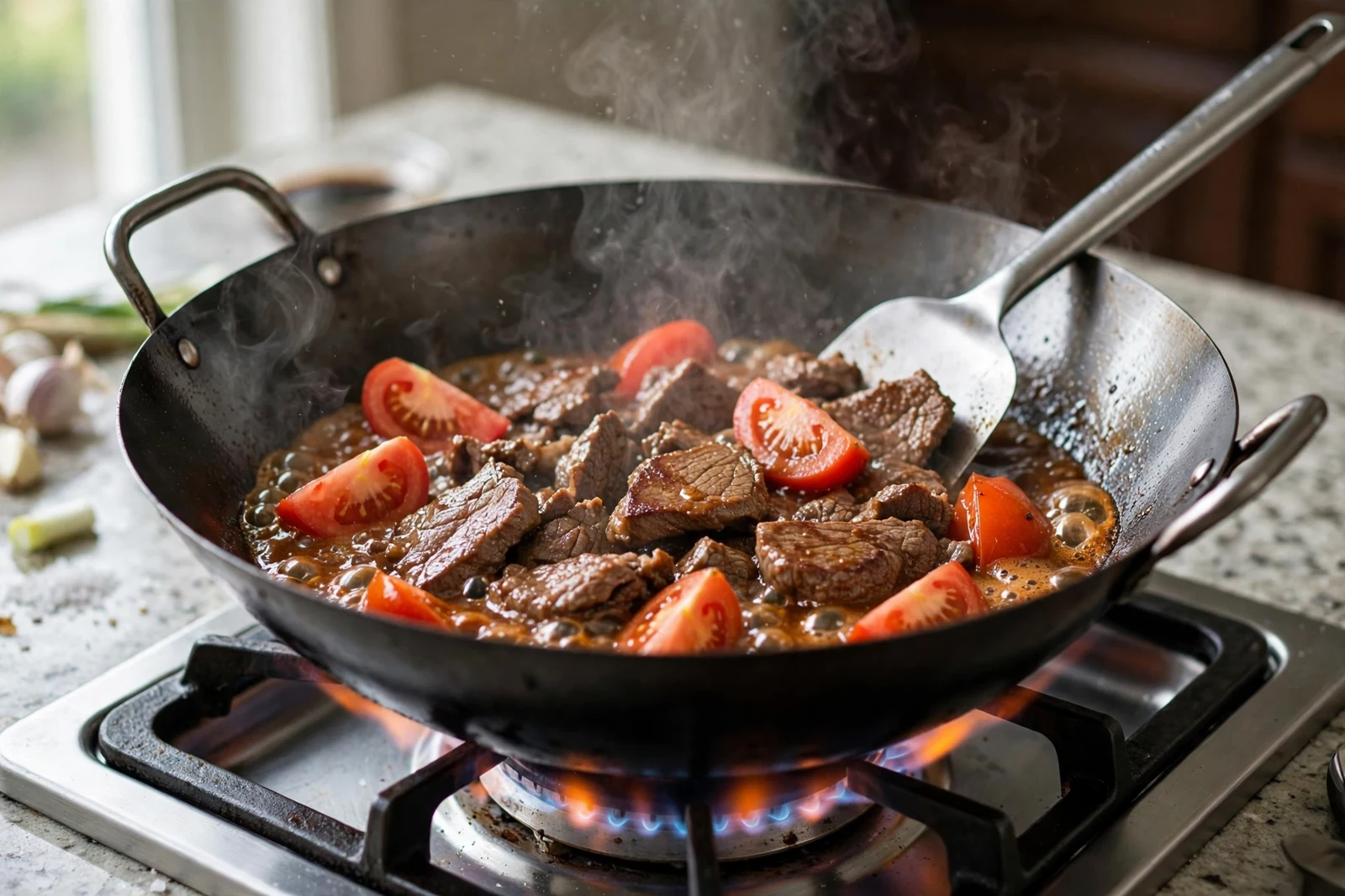
Add the remaining oil, then the onion, ginger, and garlic, and stir-fry for about 1 minute until the onion edges soften. Add the tomato wedges in a single layer and leave them alone for about 1 minute so the cut sides sear. Then toss gently for 2 to 3 minutes, until the wedges soften at the edges but still hold their shape. Pour in the sauce and toss once. If the sauce looks thin, stir the slurry and drizzle in half, toss for 30 seconds, and add the rest only if needed. Return the beef and the scallion greens, toss for 30 seconds, and plate at once.
If your pan is small, sear the beef in two batches. A crowded pan drops the heat, and the beef steams instead of browning. Two quick batches beat one gray one every time.
Tips and variations
- Swap flank for skirt steak if that is what your store carries, and slice it the same way.
- Add 1 sliced bell pepper with the onion for a sweeter pan and more color.
- For heat, toss in 1 sliced Thai chili with the scallions, or serve chili oil at the table.
- Leftovers keep in the fridge for 1 day. Reheat gently in a skillet just until warm; a hard boil turns the tomatoes to mush and firms the beef.
What to serve with it
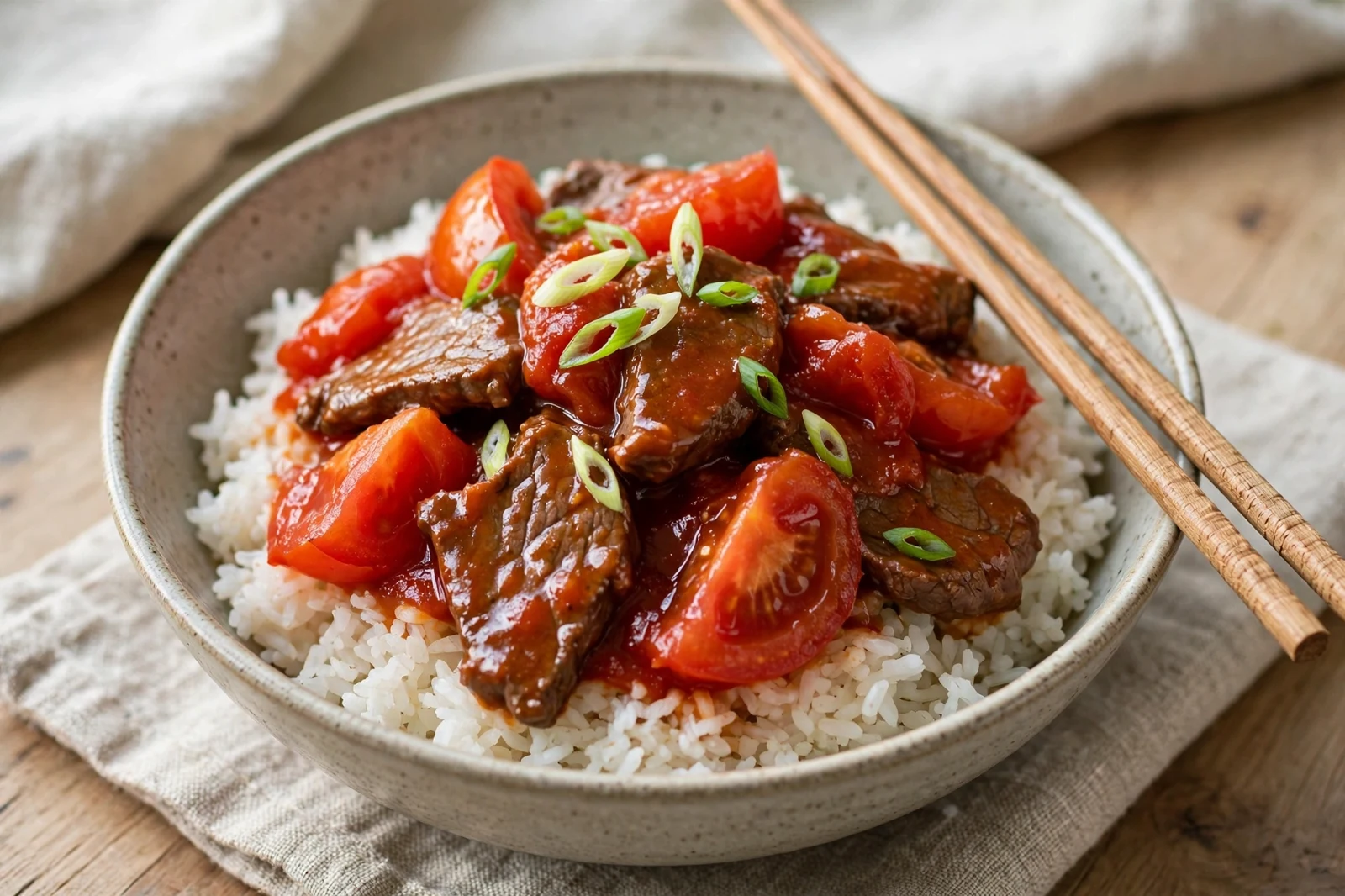
Serve it over steamed jasmine rice. Our guide to cooking jasmine rice covers the rinse and rest that keep the grains separate, and the rice soaks up the tomato sauce in a way noodles do not. A simple cucumber salad on the side gives the plate a cool crunch.
Troubleshooting: Fix My Tomato Beef Stir-Fry
Even a fast stir-fry has a few ways to go wrong. The section below covers the most common ones, with a practical fix for each.
HERB & LIME · KITCHEN HELP
Fix My Tomato Beef Stir-Fry
Choose what went wrong to see a practical next step.
Possible cause
What to try next
For next time
From Paul's kitchen. Results vary with beef cut, tomato ripeness, and stove heat, adjust timing to your setup.
Quick reference (also works without JavaScript)
The beef turned tough and chewy
Cause: The beef was sliced with the grain, crowded in the pan, or left in the pan while the tomatoes cooked, so it overcooked.
Try: Take the pan off the heat at once and serve right away, since beef left in hot sauce keeps firming up.
Prevent: Slice 1/4 inch thin against the grain, sear in a single layer for about 90 seconds, and pull the beef out before the tomatoes go in.
The tomatoes collapsed into mush
Cause: Small tomato pieces or a long cook time broke the wedges down before the sauce came together.
Try: Stop cooking now and serve the pan over rice as a soft tomato beef sauce rather than cooking it further.
Prevent: Cut ripe but firm tomatoes into large wedges and cook them only 2 to 3 minutes, until the edges soften but the wedges hold their shape.
The sauce came out watery
Cause: Tomato juice pooled in the pan and no thickener was used, so the liquid never coated the beef.
Try: Lift the beef and tomatoes out, boil the liquid for 1 to 2 minutes, stir in a cornstarch slurry, and return everything to the pan.
Prevent: Have the slurry mixed before cooking, add it only if the sauce looks thin, and avoid adding extra water to the pan.
The sauce tastes too sharp or sour
Cause: Underripe tomatoes gave the pan more acid than the sauce could balance.
Try: Stir in sugar 1/2 teaspoon at a time and taste after each addition, with a pinch of salt to round out the flavor.
Prevent: Pick ripe tomatoes that give slightly when pressed, and taste the sauce before serving so the sugar can be adjusted.
The beef steamed instead of browning
Cause: A crowded pan dropped the heat, so the beef released juice and stewed rather than searing.
Try: Take the beef out, heat the wok until it just starts to smoke, and sear the beef again in a single layer for a short time.
Prevent: Sear in two batches when the pan is small, keep the wok hot, and spread the slices out instead of piling them in.
Tomato Beef Stir-Fry
Ingredients
Method
- Firm and slice the beef: put the flank steak in the freezer for 15 to 20 minutes, then slice it 1/4 inch thin against the grain. Toss with the light soy sauce, Shaoxing wine, cornstarch, sesame oil, and white pepper, and set aside for 15 minutes.
- Mix the sauce: stir the light soy sauce, ketchup, sugar, sesame oil, and white pepper in a small bowl. Stir the extra cornstarch into 1 tablespoon cold water in a separate small bowl and keep it by the stove.
- Sear the beef: heat a wok or large skillet until it just starts to smoke. Add 1 tablespoon of oil and swirl it. Spread the beef in a single layer and sear for about 90 seconds, turning once, until the edges brown and the centers are still pink. Lift the beef out at once and set it aside.
- Soften the aromatics: add the remaining oil, then the onion, ginger, and garlic, and stir-fry for about 1 minute until the onion edges soften.
- Cook the tomatoes: add the tomato wedges in a single layer and leave them alone for about 1 minute so the cut sides sear. Toss gently for 2 to 3 minutes, until the wedges soften at the edges but still hold their shape.
- Finish and serve: pour in the sauce and toss once. If the sauce looks thin, drizzle in half the slurry, toss for 30 seconds, and add the rest only if needed. Return the beef and the scallion greens, toss for 30 seconds, and plate at once over steamed jasmine rice.
Notes
More Chinese recipes
Kung Pao Chicken, Mapo Tofu, Cantonese Soy Sauce Chow Mein, and Sichuan Dry-Fried Green Beans.
From the garden
Scallions are one of the easiest pot plants to keep near the kitchen, and this dish uses a full bunch. Our guide to growing green onions in pots covers starting from store-bought bases, which means the scallion tops for the next pan can come from the windowsill.