
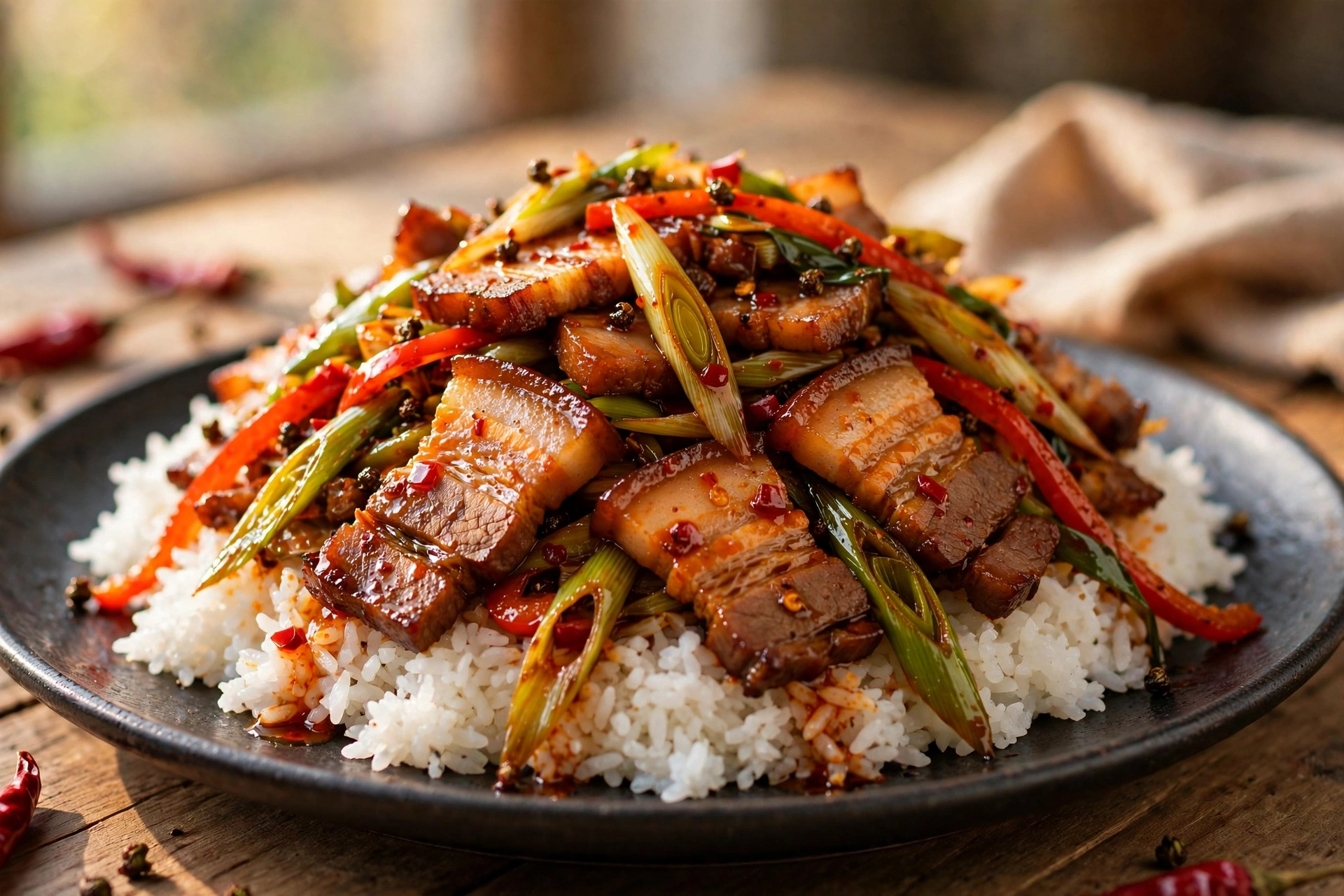
Hui guo rou is the Sichuan dish that shows why pork belly became famous in the first place. The name means "meat returned to the pan": the belly simmers first in a pot with ginger and scallions, cools, gets sliced thin, then goes back into a hot wok with Pixian doubanjiang, leeks, and peppers. What comes out eats like a contradiction: soft inside, crisp at the edges, coated in a red, savory sauce that was built for white rice. I cook this one when I want something bold on the table without much last-minute fuss, because the boil happens ahead and the stir-fry takes minutes.
What is hui guo rou?
Hui guo rou (回锅肉) is one of Sichuan's signature dishes, old enough that Chengdu cooks were making it before home refrigerators existed. Boiling the pork first was a way to cook it through and keep it, then slice and re-cook it as needed. The two steps stuck around because they make the pork better: the simmer renders fat and firms the meat so it slices cleanly, and the second fry crisps the slices while the sauce clings to them.
The flavor comes from doubanjiang, the fermented chili broad-bean paste from Pixian, fried in oil until it stains the oil red. My gochujang vs. doubanjiang comparison gets into how the two pastes differ, but the short version is that doubanjiang is savory and fermented rather than sweet, and it needs a balancing sweet note in the pan. That is traditionally tianmianjiang, sweet bean sauce, which is why the finished dish reads as savory first and never harshly hot.
The two-cook method
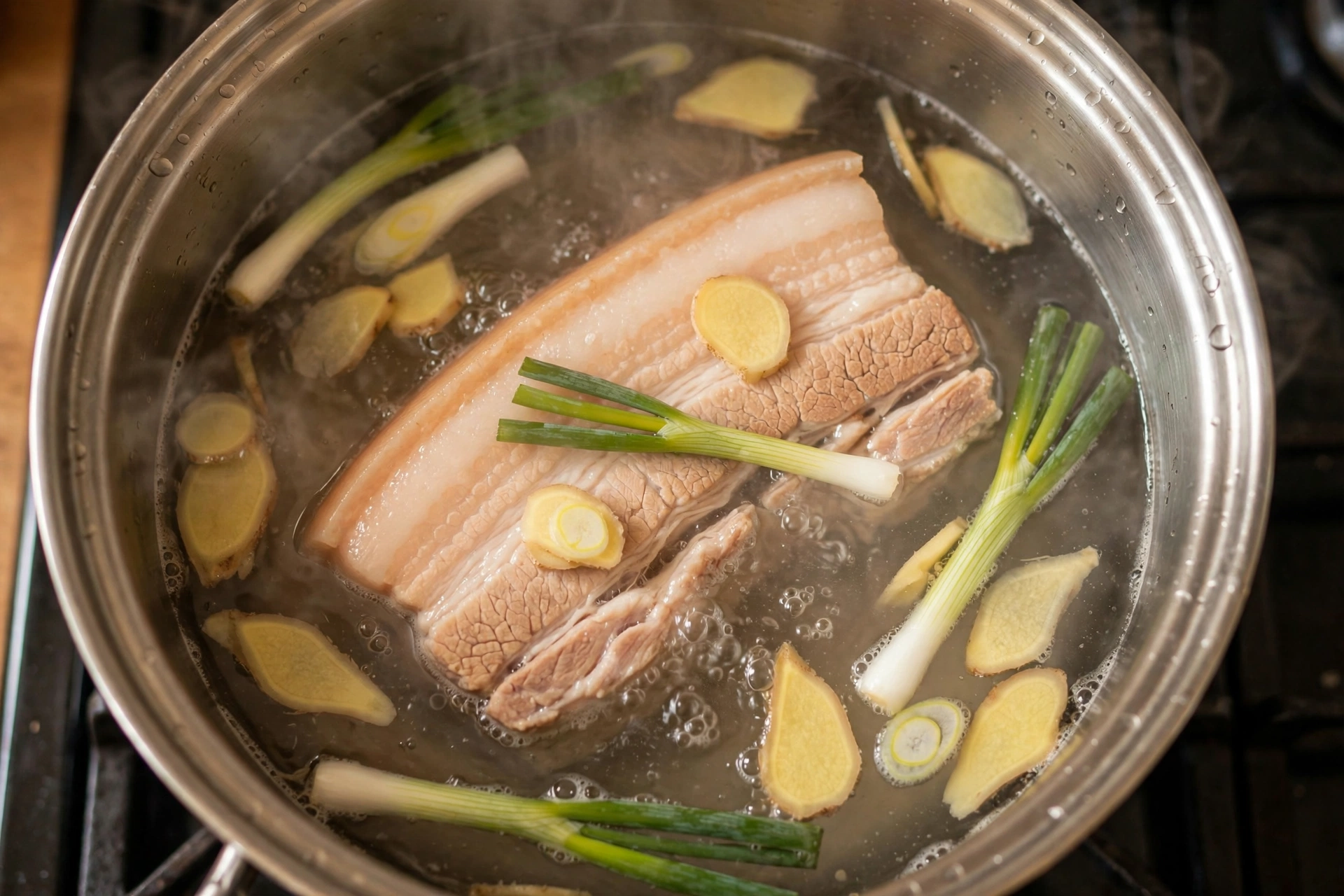
The whole dish hangs on the first cook. Cover a 2-pound piece of pork belly with cold water, add Shaoxing wine, ginger slices, scallion chunks, and a teaspoon of salt, then bring it to a boil and drop it to a gentle simmer for 25 to 30 minutes. The test is a chopstick: push it into the thickest part of the belly. It should slide in with slight resistance. If it meets real pushback, give it another 10 minutes. Too short and the fat stays rubbery; too long and the slices fall apart in the wok.
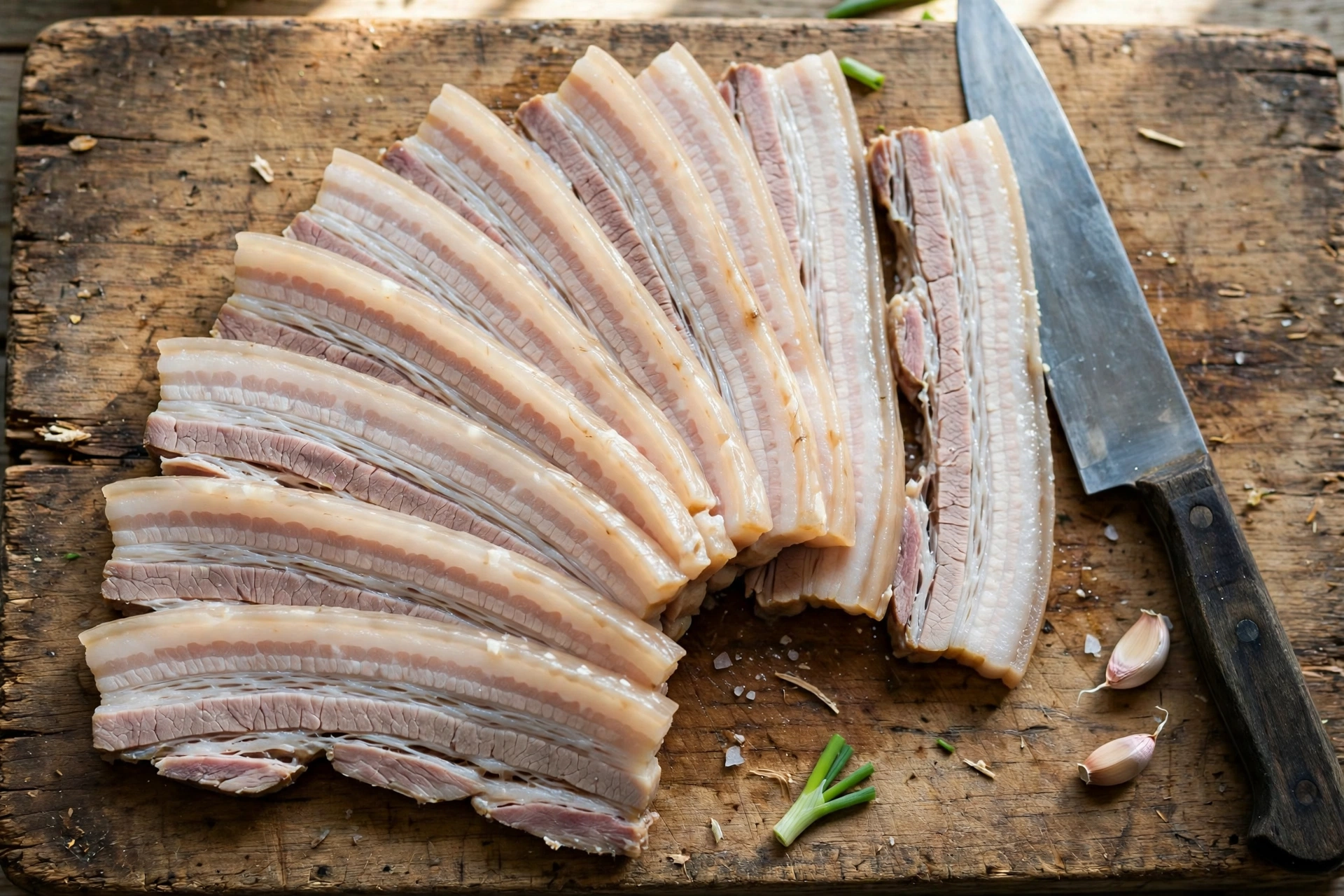
Cool the pork in an ice bath for about 10 minutes. Warm meat slices raggedly, cold meat slices clean. Then cut it into slices about 4 to 5 millimeters thick, roughly a quarter inch. My thin-slicing guide covers the knife angle that makes this easy. Thicker slices stay softer inside, thinner ones crisp more, and that window is the sweet spot for a home stove.
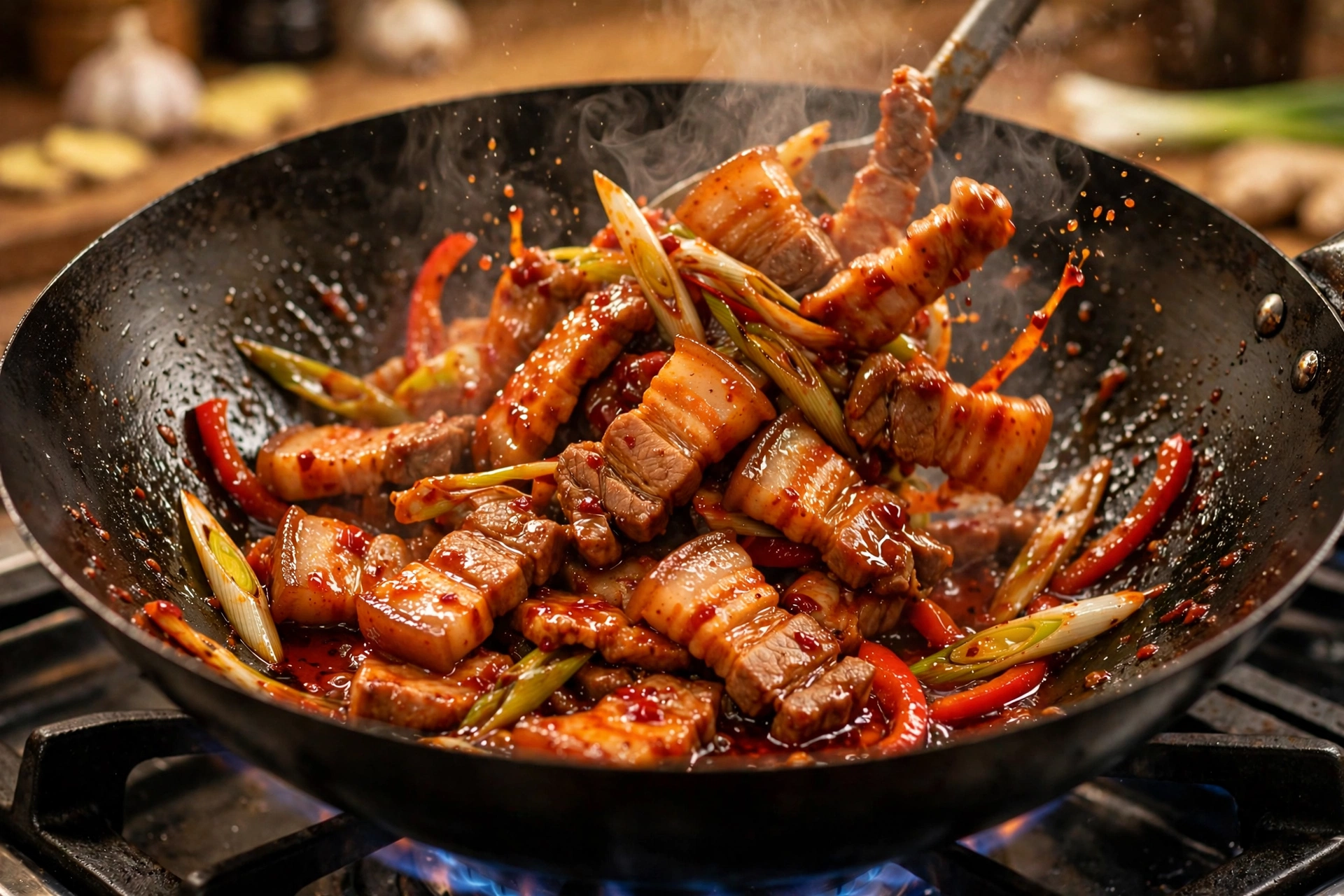
The second cook is fast. Sear the slices in a hot wok with a little oil for 3 to 4 minutes, until the edges brown and some of the fat renders out. This is the same wok hei principle as a hard sear on noodles, and the rendered fat becomes part of the sauce. Push the pork aside, drop the heat to medium, and fry the doubanjiang and fermented black beans for about 30 seconds, until the oil turns red and smells toasty. Longer than that and the paste scorches and turns bitter; shorter and it tastes raw and flat. Then the sweet bean sauce, a pinch of sugar, the leeks, and the peppers go in for a final 2 to 3 minutes.
Ingredients
For the boiled pork:
- 2 lb (900 g) skinless pork belly, in one piece
- 1 tablespoon Shaoxing wine
- 6 slices fresh ginger
- 3 scallions, cut into 2-inch pieces
- 1 teaspoon kosher salt
For the stir-fry:
- 2 tablespoons neutral oil
- 2 tablespoons Pixian doubanjiang (fermented chili bean paste)
- 1 tablespoon douchi (fermented black beans), rinsed
- 2 teaspoons tianmianjiang (sweet bean sauce)
- 1 teaspoon sugar
- 1 teaspoon dark soy sauce
- 4 cloves garlic, thinly sliced
- 1-inch piece ginger, julienned
- 2 leeks, white and light green parts only, cut into 1 1/2-inch pieces
- 1 red bell pepper, cut into strips
Steps
- Boil the pork. Put the pork belly in a pot and cover with cold water by 2 inches. Add the Shaoxing wine, ginger slices, scallions, and salt. Bring to a boil, then lower to a gentle simmer and cook 25 to 30 minutes, until a chopstick slides into the thickest part with slight resistance.
- Cool and slice. Transfer to an ice bath for 10 minutes, then pat dry. Slice into pieces about 4 to 5 millimeters thick, roughly 1/4 inch.
- Sear. Heat a wok over high heat with the oil until it shimmers. Add the pork slices in a single layer and sear 3 to 4 minutes, turning once, until golden at the edges and some fat has rendered.
- Bloom the paste. Push the pork to the sides, drop the heat to medium, and add the doubanjiang and douchi. Fry about 30 seconds, stirring, until the oil turns red and smells toasty.
- Sweeten. Stir in the tianmianjiang, sugar, and dark soy sauce until the pork is coated.
- Add the vegetables. Add the garlic, ginger, leeks, and bell pepper. Stir-fry 2 to 3 minutes until the leeks soften at the edges but still hold their shape.
- Serve. Slide onto a warm platter and serve immediately with steamed white rice.
Paul's notes
- The boil is the recipe. Everything downstream depends on it. Set a timer for 25 minutes and test with a chopstick. Under-boiled pork is the most common reason this dish comes out chewy.
- Cool it before you slice. Ten minutes in an ice bath firms the belly enough to cut clean 4-millimeter slices. Slicing while warm gives you torn, uneven pieces that cook at different speeds.
- Do not skip the sweet. Doubanjiang is salty and funky, and the tianmianjiang plus the pinch of sugar is what rounds it into something you want a second bowl of rice for. No tianmianjiang? A teaspoon of hoisin works, or a scant teaspoon of oyster sauce. My oyster sauce guide helps you pick a good bottle.
- Leeks, not onions. The white and light green parts turn sweet and silky in the hot pan, while the dark greens go into the boiling pot instead of the trash. If your market carries Chinese leeks (蒜苗, suan miao), that is the traditional pairing.
Variations
- Extra heat: add 2 or 3 dried red chiles with the doubanjiang, or swap in long red chiles instead of the bell pepper.
- Different green: garlic sprouts are the Chengdu classic. Baby bok choy stems work in a pinch, and they hold up the same way as in my garlic bok choy.
- No leeks: a large sweet onion, cut into wedges, stands in fine. Cut the stir-fry time by a minute, since onions soften faster.
Troubleshooting: Fix My Twice-Cooked Pork
Chewy pork, a greasy pan, or a sauce that turned bitter. Each one has a cause and a fix. Tell the tool what went wrong:
This troubleshooting guide is not available yet.
Twice-Cooked Pork (Hui Guo Rou)
Ingredients
Method
- Boil the pork. Put the pork belly in a pot and cover with cold water by 2 inches. Add the Shaoxing wine, ginger slices, scallions, and salt. Bring to a boil, then lower to a gentle simmer and cook 25 to 30 minutes, until a chopstick slides into the thickest part with slight resistance.
- Cool and slice. Transfer to an ice bath for 10 minutes, then pat dry. Slice into pieces about 4 to 5 millimeters thick, roughly 1/4 inch.
- Sear. Heat a wok over high heat with the oil until it shimmers. Add the pork slices in a single layer and sear 3 to 4 minutes, turning once, until golden at the edges and some fat has rendered.
- Bloom the paste. Push the pork to the sides, drop the heat to medium, and add the doubanjiang and douchi. Fry about 30 seconds, stirring, until the oil turns red and smells toasty.
- Sweeten. Stir in the tianmianjiang, sugar, and dark soy sauce until the pork is coated.
- Add the vegetables. Add the garlic, ginger, leeks, and bell pepper. Stir-fry 2 to 3 minutes until the leeks soften at the edges but still hold their shape.
- Serve. Slide onto a warm platter and serve immediately with steamed white rice.
Notes
More Chinese recipes
If this hit the spot, keep going: Sichuan Dry-Fried Green Beans (Gan Bian Si Ji Dou) for the other great Sichuan wok technique, Cantonese Soy Sauce Chow Mein for a noodle night, and Chinese steamed fish as the gentle counterpoint to all this red oil.