
The first beef stir-fry I cooked came out gray and limp, swimming in its own juices. The problem was not the marinade or the cut of beef. The oil was not hot enough. The meat dropped the temperature of the pan by half and steamed instead of searing, and no amount of sauce could fix what came out. Since then I have never cooked a stir-fry by clock. I read the oil. Here are the three tests I use, in order of how often they come out in my kitchen.

What temperature does stir-fry oil need to be?
Aim for 375 to 400°F (190 to 200°C) at the moment the first piece of food hits the oil. That is hotter than the usual deep-frying zone of 350 to 375°F, and it is hotter than most home cooks expect. A home burner cannot hold the blazing heat of a restaurant wok station (more on that in what wok hei is and how to chase it at home), so the oil has to carry the sear. At the right temperature, a slice of beef browns in seconds, its surface seals, and the juices stay inside instead of flooding the pan.
Below about 350°F, the food spends its time pushing water out, which is how stir-fries turn gray and soft. Past about 450°F, most cooking oils start smoking, which gives everything a bitter, burnt edge. The window between those two failures is where every good stir-fry lives.
The shimmer test (the one I use most)
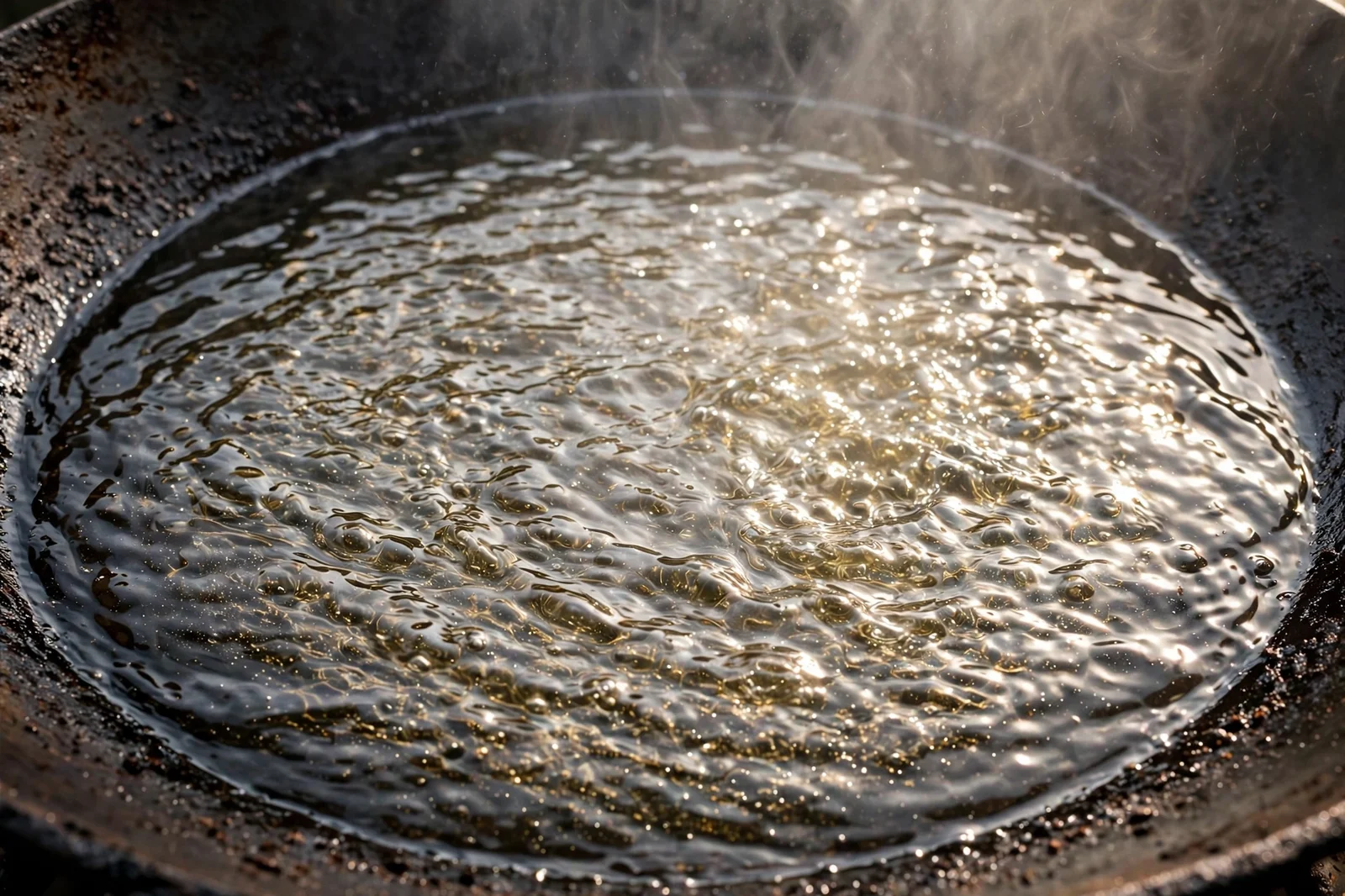
Pour 2 to 3 tablespoons of oil into the hot wok and watch the surface. Cold oil looks flat and mirror-like. As it warms, it thins and starts to ripple. You will see light moving across the surface, the way heat shimmers above a road in summer. That shimmer means you are close to the zone.
For a thin layer of oil, which is all a stir-fry needs, this visual test beats every gadget. A thermometer reads one spot and lies about the rest; the shimmer shows you the whole surface at once. When the ripples cover the oil from edge to edge, add the food within the next minute. If the oil sits still and glossy, give it more time.
The chopstick test (when you want a number)
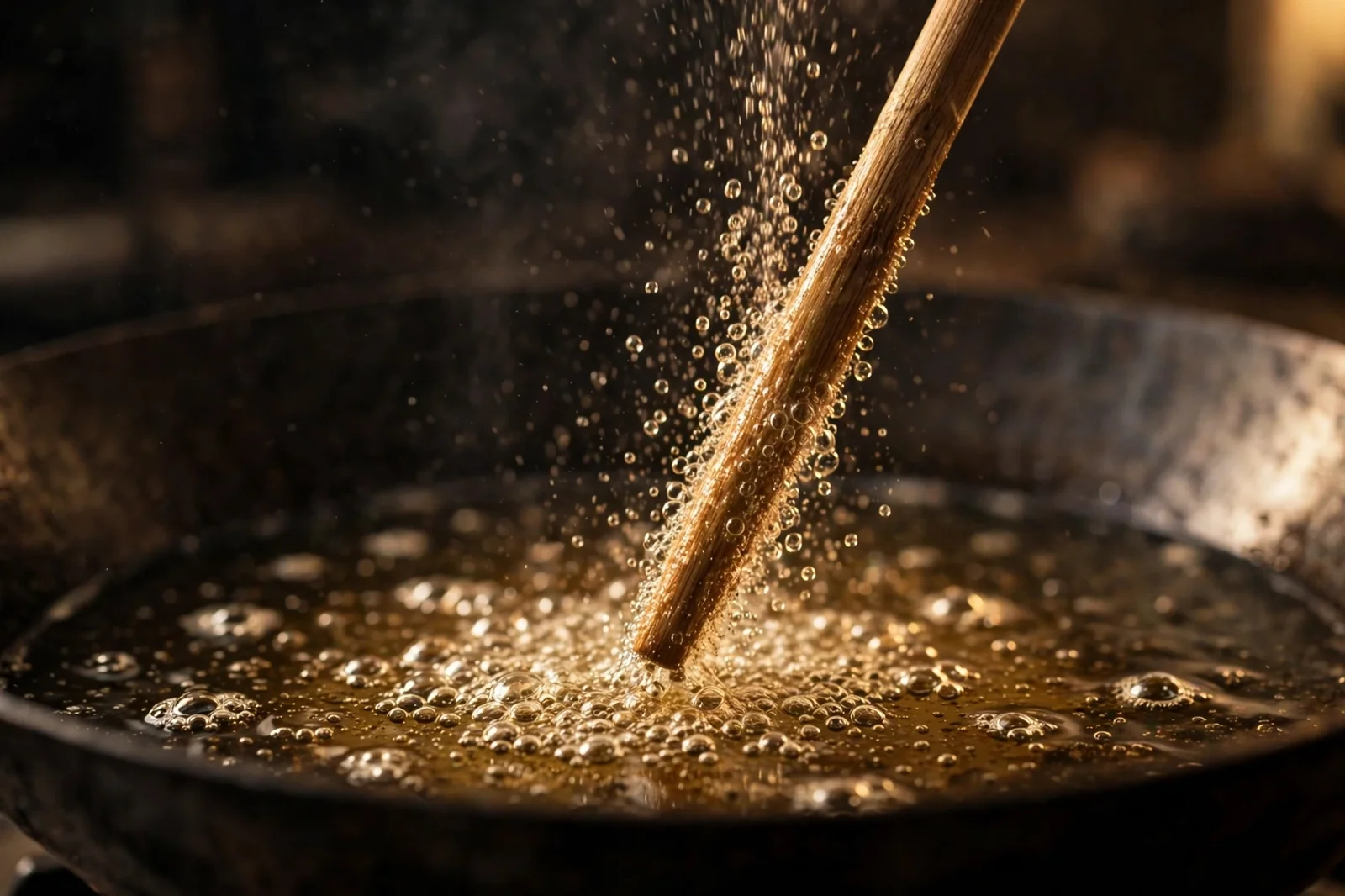
A wooden chopstick or the handle of a wooden spoon is a thermometer you already own. Dip the tip into the oil and watch the wood. Around 320°F, a faint, lazy line of bubbles clings to the tip. At 350°F, a steady swirl of bubbles rises around it. Near 375°F, the bubbling turns forceful. That forceful reading is the stir-fry zone.
This is not guesswork. Saveur tested it against a thermometer with Brian Farkas, a food science professor at North Carolina State, who explained that the bubbles are steam escaping from the tiny amount of moisture trapped inside the wood. The hotter the oil, the more of that moisture flashes off at once.
There is a sound version too. Wet the tip of the chopstick first, then dip and listen. Loud crackling means the oil is too hot. A steady, even sizzle means it is ready. Silence means it needs more time.
The water-drop test (wok first, then oil)
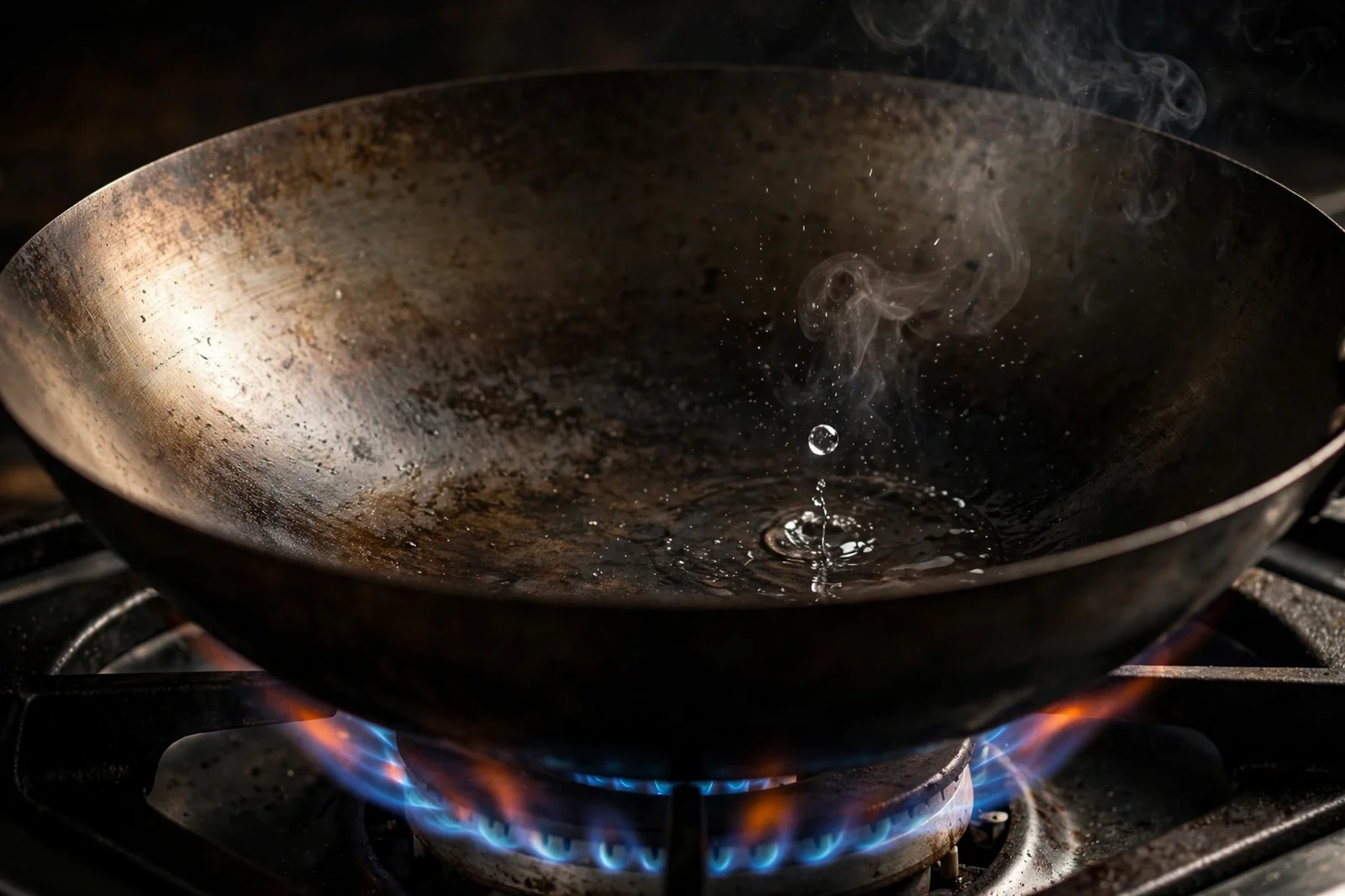
This one reads the wok, not the oil. Heat the wok empty, then flick a few drops of water off your fingertips onto the surface. If the water sits and hisses, the metal is not hot enough yet. If the drops dance and skitter across the steel in little beads, the wok is well past 350°F. Then add the oil and give it 20 to 30 seconds to catch up before the first piece of food goes in.
Order matters. Oil goes in after the wok is hot, never before the water test. And never flick water into hot oil. A drop hitting hot oil turns to steam instantly and spits, which is how people get burned.
What cold oil does to a stir-fry
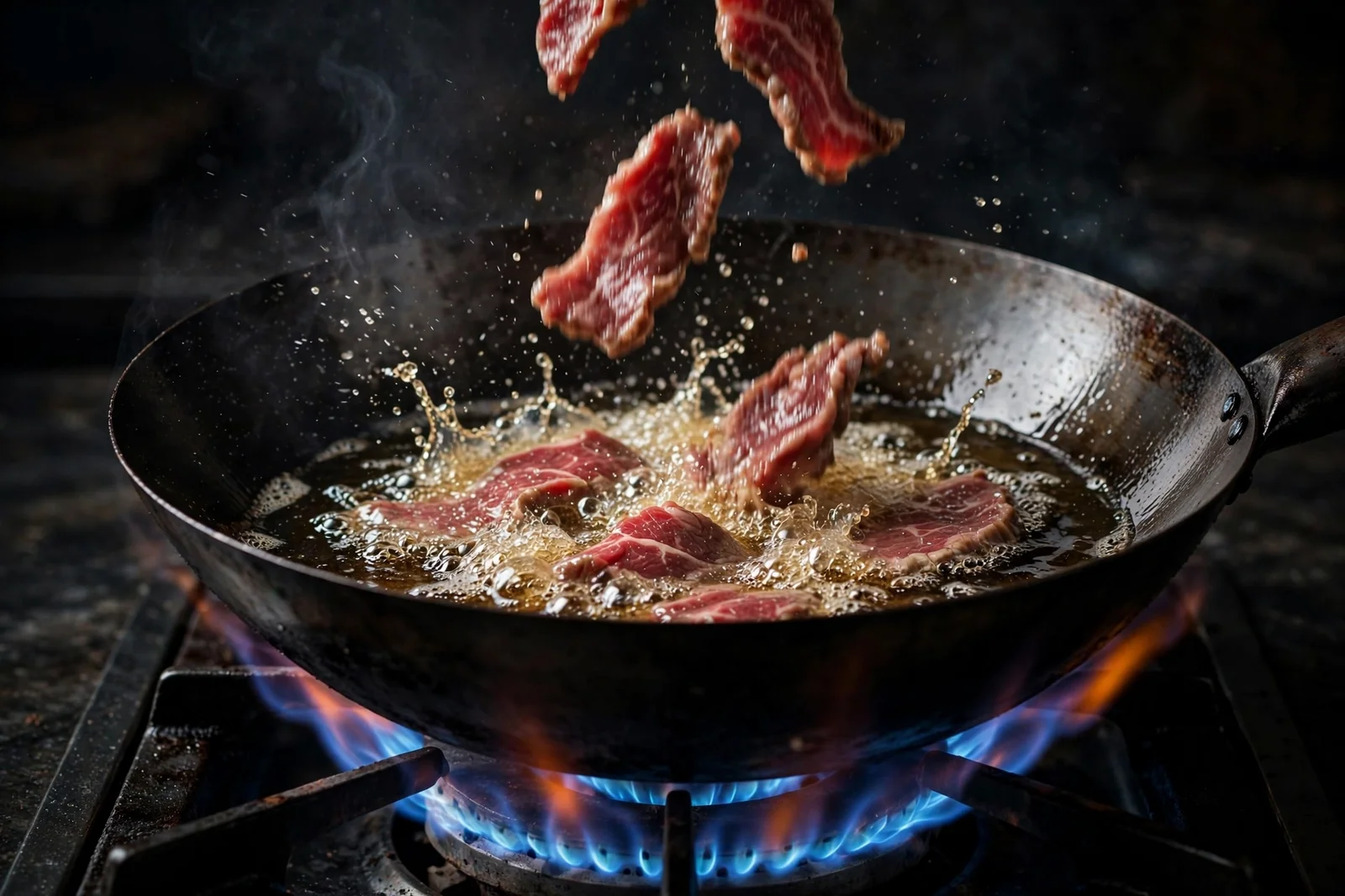
Too-cool oil is the most common reason home stir-fries come out sad. Cold oil cannot recover when a handful of food drops the temperature another 50 degrees. Moisture leaks out of the meat, pools in the wok, and everything steams in it. Cold oil also lets food stick. A properly hot wok keeps proteins from grabbing onto bare metal, which is one reason seasoning a carbon steel wok and preheating it are not optional steps.
The fix, if the food hits the pan with no sizzle: stop. Lift the food back out, let the oil climb back to a shimmer, then add the food again. It feels wrong to interrupt, but ten seconds of recovery beats five minutes of steaming. Thin cuts buy you margin too. Sliced paper-thin, meat sears before it has a chance to cool the pan down, and velveted chicken stays tender even at high heat.
What to do when the oil smokes
A thin wisp as the food lands is fine. A steady stream of blue-gray smoke before the food goes in is not. That means the oil has passed its smoke point, and smoking oil tastes bitter and acrid. That flavor ends up on the food and there is no way to cook it off.
Do not keep going. Take the wok off the heat, pour the oil out, wipe the wok with a paper towel, and add fresh oil. Starting over takes a minute. Serving a bitter stir-fry takes the whole meal.
Pick an oil with headroom. Refined peanut oil holds to about 450°F, rice bran oil to about 490°F, and avocado oil to about 520°F. All three handle stir-frying easily. Toasted sesame oil gives up near 350°F, so use it as a finishing drizzle off the heat, the way this sesame oil guide explains, never as the cooking fat.
More stir-fry recipes
A few more from the stir-fry side of the site: Black Pepper Chicken Stir-Fry for a weeknight classic, Tomato Egg Stir-Fry when you want fast and cheap, Pad Thai with Shrimp for noodle night, and Thai Basil Fried Rice to use up leftover rice.
4 thoughts on “How to Tell When Oil Is Hot Enough for Stir-Frying”