
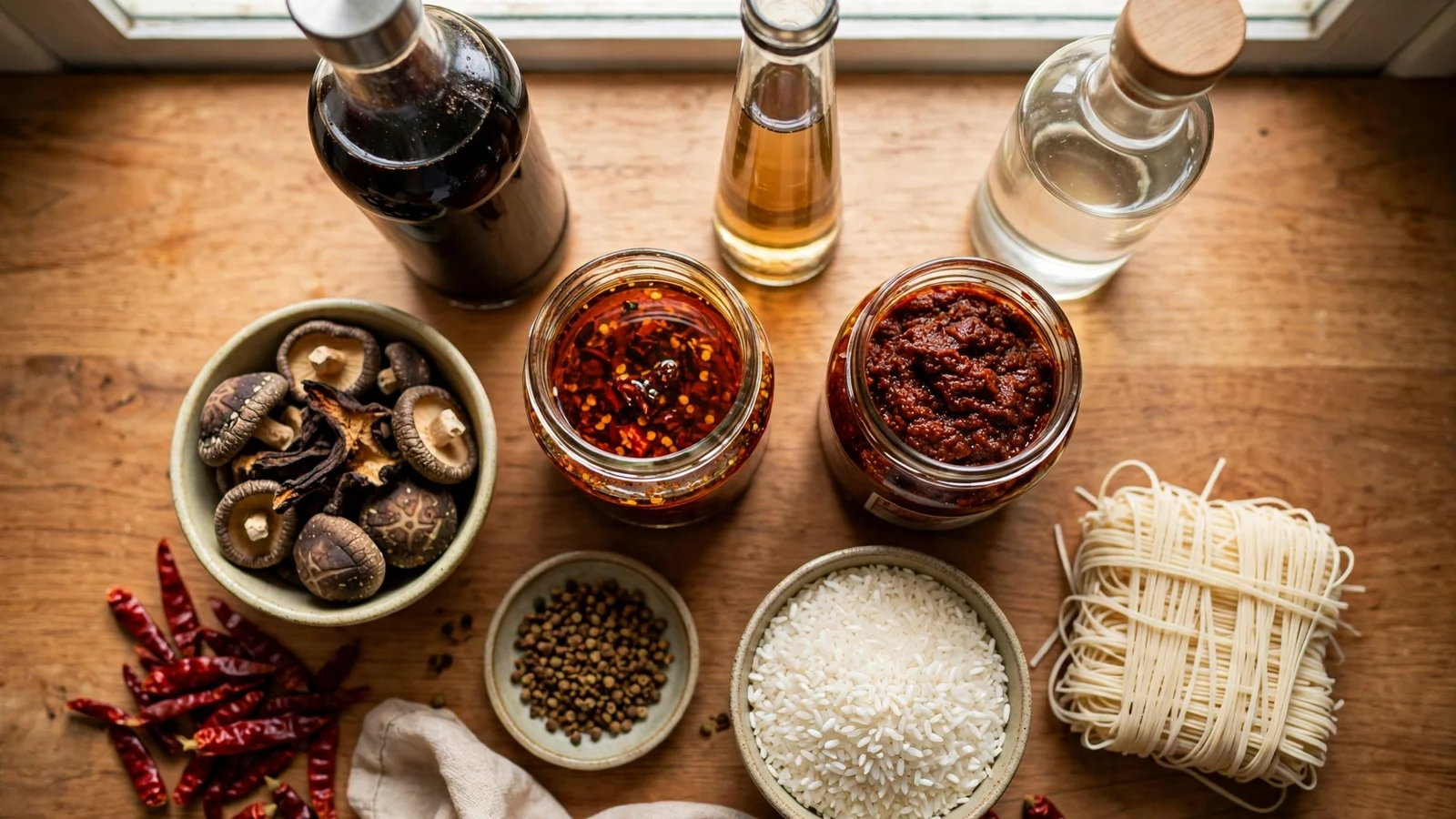
Walk into any well-stocked Asian market and the sauce aisle alone can run a full city block. Hundreds of bottles, jars, and brightly printed bags all promise to be the one thing your stir-fry is missing. Most of them are not. If you are just getting started with pan-Asian home cooking, you do not need a hundred specialty ingredients. You need about twenty, chosen well, and you need to know what each one actually does.
This guide lays out the twenty staples that cover the widest ground across Chinese, Japanese, Korean, Thai, and Vietnamese home cooking. With these on your shelf, you can make dishes like pad thai, mapo tofu, a pot of classic miso soup, and a fast weeknight kimchi fried rice without a special shopping trip every single time.
Buy a few at a time. Cook with them. Restock the ones you reach for. That is how a real pantry gets built.
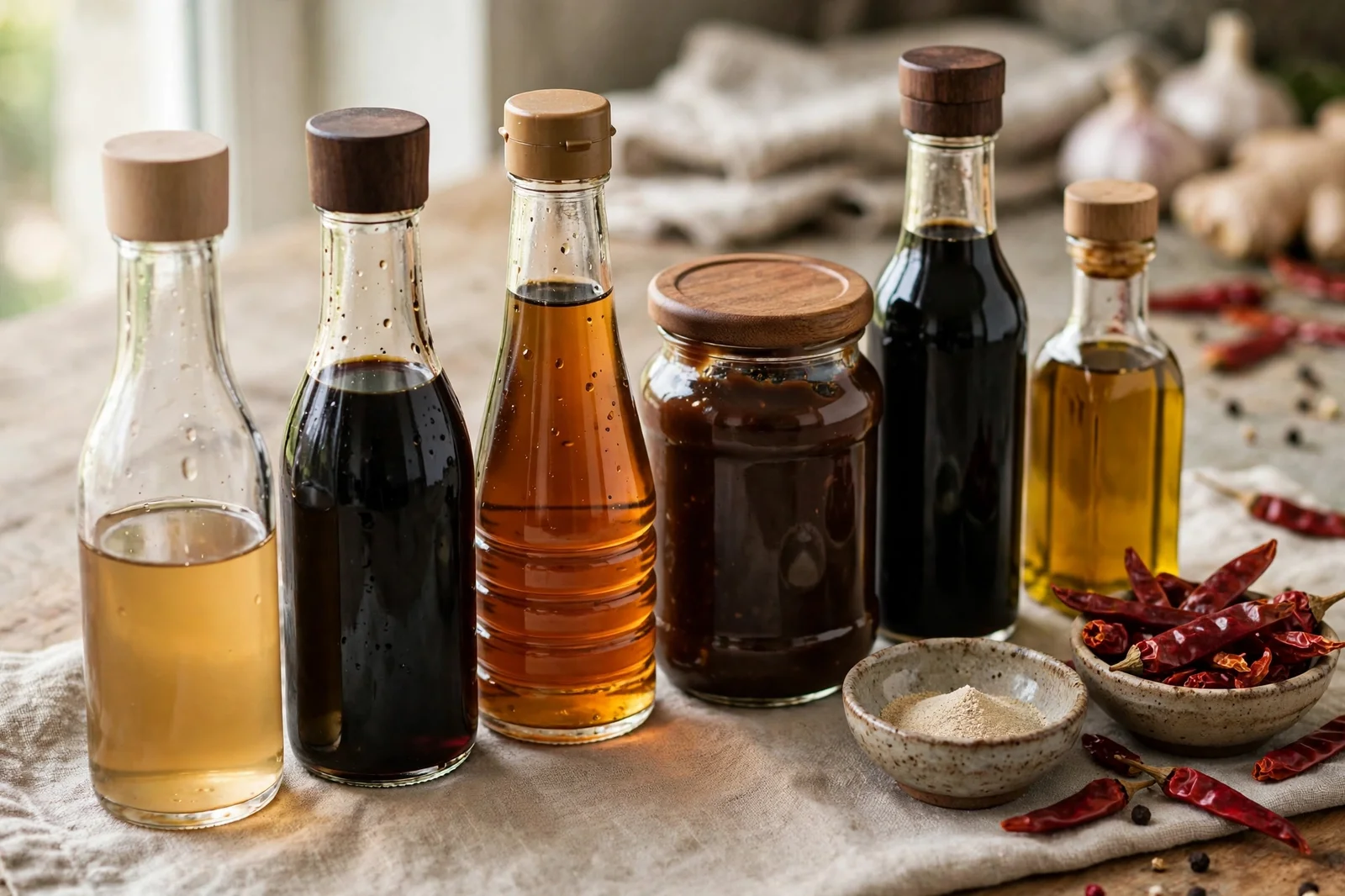
The Salty Foundations (Staples 1–5)
These five do the heavy lifting in almost every savory dish on this site. If you buy nothing else, start here.
1. Light soy sauce. Your everyday seasoning soy. Thin, salty, and meant for seasoning rather than color. Chinese light soy and Japanese shoyu are close cousins; either one works as your daily driver. Look for “naturally brewed” on the label and a short ingredient list: soybeans, wheat, salt, water.
2. Dark soy sauce. Thicker, darker, and slightly sweet from a longer aging process and often a touch of molasses. Dark soy is mostly about color. A teaspoon turns a pale braise into a deep mahogany one. Use it in smaller amounts than light soy, and almost always alongside it.
3. Fish sauce. Made from fermented anchovies and salt, fish sauce smells strong in the bottle and tastes round and savory in the pan. It is the backbone of Vietnamese and Thai cooking, and a small splash deepens Chinese and Korean dishes too. A good bottle lists just anchovy and salt. If you cook a lot of Thai and Vietnamese food, this bottle will empty faster than you expect.
4. Oyster sauce. A thick, glossy sauce made from oyster extract, sugar, and soy. It brings a gentle sweetness and a lot of body to stir-fries, marinades, and noodle dishes. It is not fishy when cooked. Keep it in the fridge after opening, where it stays good for months.
5. Tamari or a gluten-free soy alternative. Tamari is brewed with little to no wheat, tastes a touch richer than regular soy sauce, and keeps gluten-free cooks in the game without giving up depth. Even if gluten is not a concern at your table, a small bottle is handy for guests.
Vinegars and Brightness (Staples 6–8)
Salt builds the base. Acid wakes everything up. Three vinegars cover nearly every job.
6. Rice vinegar (unseasoned). Mild, clean, and only gently sharp. This is the one for dressings, quick pickles, dipping sauces, and sushi rice. Buy the unseasoned kind so you control the salt and sugar yourself. Seasoned rice vinegar has both already added, which sounds convenient until a recipe needs plain acid.
7. Black vinegar (Chinkiang vinegar). Aged, dark, and faintly smoky, with a malty depth that white vinegars don’t have. Black vinegar is the classic partner for dumplings, hot and sour soup, and Chinese smashed cucumber salads. A little goes a long way in a dipping sauce.
8. Shaoxing cooking wine. Technically a wine, not a vinegar, but it lives in the same flavor family of brightness and depth. A splash in a marinade or a hot wok adds aroma that water can’t match and helps mute any raw edge in meat. Dry sherry is the standard substitute if you can’t find it. Keep this bottle near the stove; you’ll use it constantly once you start stir-frying in a properly seasoned carbon steel wok.
Heat, Aroma, and Funk (Staples 9–13)
This is the group that makes a dish taste like a specific place instead of a generic stir-fry.
9. Dried red chilies. Whole dried chilies keep for a year in a sealed jar and give you heat you can control: a few whole pods for warmth, snipped and seeded for more bite. They bloom beautifully in hot oil at the start of a dish like kung pao chicken.
10. Sichuan peppercorns. These are not about heat. They bring a citrusy aroma and the famous tingling numbness that defines Sichuan cooking. Buy whole peppercorns, toast them lightly, and grind fresh. Pre-ground versions lose their sparkle fast.
11. Chili crisp or chili oil. A jar of chili oil with crunchy bits of chili, garlic, and sometimes peanuts or fried shallots. Spoon it over noodles, dumplings, eggs, rice, plain steamed vegetables — it fixes boring food in seconds. Every brand runs at a different heat level, so taste before you commit to a full spoonful.
12. White pepper. Ground white pepper shows up everywhere in Chinese home cooking: soups, congee, wontons, egg drop soup. It tastes earthier and sharper than black pepper, and it disappears into pale dishes without dark specks. If a recipe lists pepper without specifying, in a Chinese context it usually means white.
13. Fermented pastes: doubanjiang and gochujang. Doubanjiang is Sichuan’s broad bean chili paste, salty and deeply savory, and it’s the soul of mapo tofu. Gochujang is Korea’s fermented chili paste, sweeter and thicker, used in tteokbokki, marinades, and bibimbap sauce. Both live happily in the fridge for a long time. Start with one based on which cuisine you cook more, then add the other.
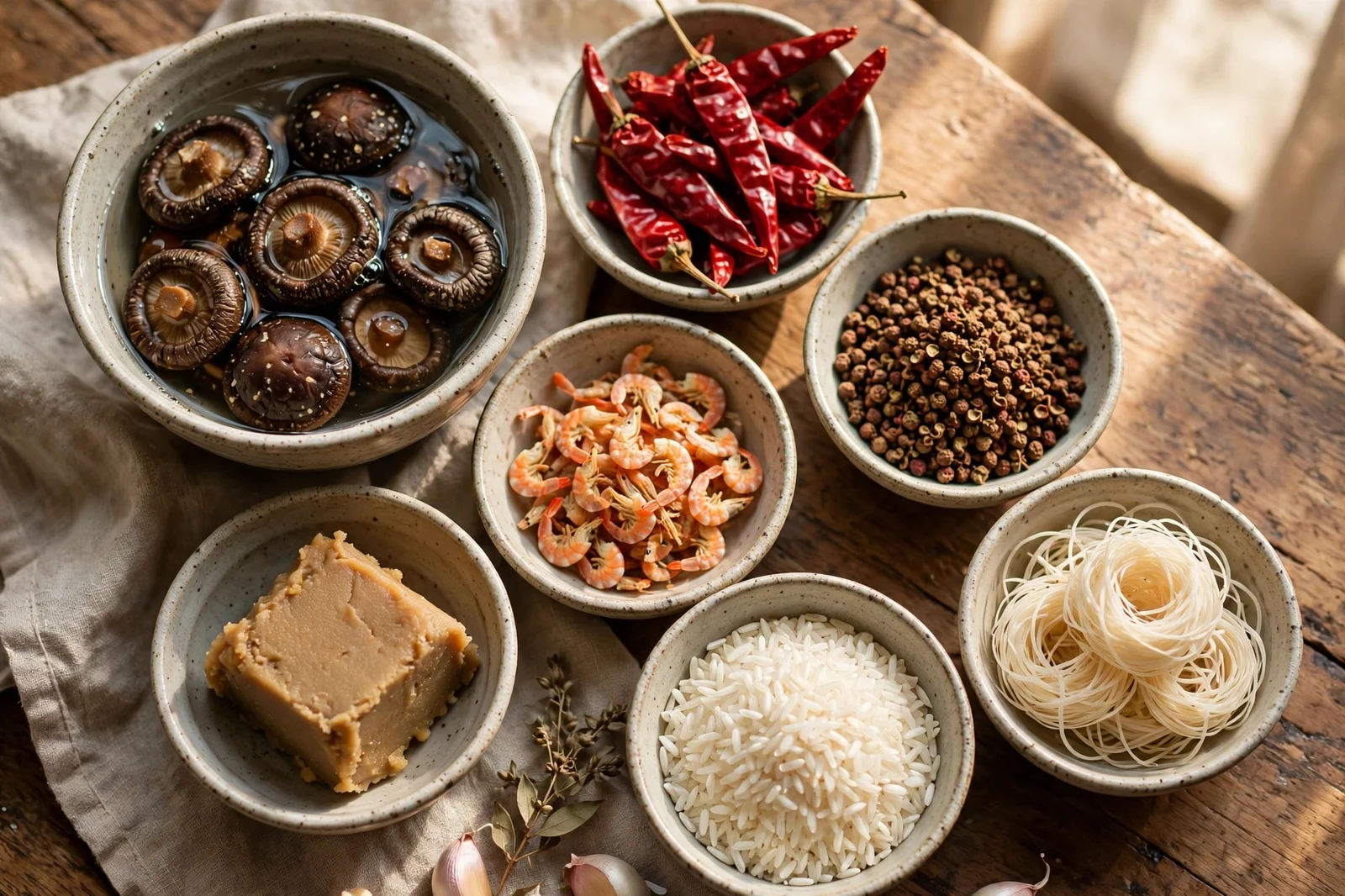
The Umami Pantry (Staples 14–17)
14. Dried shiitake mushrooms. Fresh mushrooms are lovely. Dried shiitakes are a pantry weapon. The drying process concentrates their flavor, and the soaking liquid becomes a savory broth base for soups, braises, and sauces. Soak in warm water for 30 minutes, squeeze dry, slice off the tough stem, and save every drop of that liquid. Let it settle and pour carefully so any grit stays in the bowl.
15. Miso paste. A fermented soybean paste that ranges from white (mild, slightly sweet) to red (deeper, saltier). White miso is the friendliest starting point for soup and dressings. Never boil miso hard; stir it in off the heat or at a bare simmer so the flavor stays round instead of harsh.
16. Dried shrimp or shrimp paste (belacan). Small amounts bring a big savory backbone to Southeast Asian cooking: sambals, laksa, fried rice, stir-fried greens. Dried shrimp are easier for beginners; soak briefly and chop fine. Shrimp paste is stronger and should be toasted or fried briefly to mellow it. Both keep well and both should be stored sealed, because the smell is enthusiastic.
17. Sesame oil (toasted). A finishing oil, never a cooking oil. Toasted sesame oil burns fast and turns bitter over high heat, but a few drops at the end of a dish add a warm, nutty aroma that nothing else quite matches. Buy a small bottle, store it away from the stove’s heat, and use it often enough that it stays fresh.
Dry Goods That Save Weeknights (Staples 18–20)
18. Jasmine rice and sticky rice. Long-grain jasmine is the daily rice for Thai and Chinese tables. Sticky (glutinous) rice is a different grain entirely, soaked and steamed rather than boiled. Keeping both means you can serve almost anything. Store rice sealed and dry; it keeps for months and improves weeknight cooking more than any gadget.
19. Two noodles: a wheat noodle and a rice noodle. Dried wheat noodles (for stir-fries and soup) plus flat rice noodles (for pad thai and noodle soups) cover most situations. Both cook in minutes and turn leftover vegetables and a handful of protein into dinner. Check the package thickness when you buy rice noodles; wide, medium, and thin are not interchangeable in every recipe.
20. Cornstarch. The quiet workhorse. Cornstarch velvets meat for stir-fries, thickens sauces to a glossy shine, and crisps up tofu and eggplant coatings. A small box lasts ages. Keep it dry and sealed, and whisk it with cold water into a slurry before it ever meets a hot pan, or you’ll get lumps instead of shine.
How to Shop Without Overspending
Start with the first five staples plus rice, one noodle, and cornstarch. That short list already unlocks a long run of dinners. Add vinegars and chili items the next trip. Buy pastes and dried goods last, since they’re the most cuisine-specific.
A few habits keep costs down:
- Buy the mid-size bottle of sauces you use weekly (soy, fish sauce) and the small bottle of anything new. Small bottles cost more per ounce but save you from a big bottle going stale.
- Check the ingredient list, not the front label. Good soy sauce is brewed, not blended with caramel color and corn syrup. Good fish sauce is anchovy and salt, nothing else.
- Asian markets usually beat general grocery stores on price for these items by a wide margin, and the selection is better. If you don’t have one nearby, most of these twenty are now easy to order online.
- Store opened sauces in a cool, dark spot. Fish sauce, oyster sauce, chili crisp, and fermented pastes do best in the fridge. Dried goods go in sealed jars, away from steam.
A Simple Way to Use This List
Don’t treat these twenty as a shopping list to complete in one trip. Treat this as a map. Pick a cuisine you want to cook this month. Buy the five or six staples that cuisine leans on hardest. Cook those recipes a few times until the bottles feel familiar in your hand. Then branch out.
Within a couple of months, you’ll notice something nice: weeknight cooking gets faster, because the flavor base is already in your kitchen. No special trip. No sad substitute. Just a well-built pantry doing its quiet job, one stir-fry, one soup, and one bowl of noodles at a time.
If you’re deciding between specific bottles, guides like our walk-through of wok hei and how to get it at home show how these staples behave over real home-stove heat, which is where a pantry either proves itself or gathers dust.
6 thoughts on “The Essential Asian Pantry: 20 Staples to Start With”